Industrial concrete floors fail where business pressure shows up first, in traffic lanes, at dock doors, and near checkout lines. Concrete floor slabs must be engineered to withstand both static and dynamic loads. If you’re weighing options for warehouse concrete floors or a customer-facing retail slab, the floor has to do more than look clean. It has to hold up under wheel loads, spills, and daily cleaning without turning into a maintenance project.
The right choice depends on how the space works. Traffic type, moisture, chemical exposure, and downtime matter more than trend pieces or brochure claims. Start with the job your floor does every day.
Key Takeaways
- Warehouse concrete floors demand finishes like epoxy coatings for heavy forklift traffic, abrasion resistance, and chemical exposure, while retail slabs prioritize polished concrete for reflectivity and easy cleaning.
- Proper surface preparation—grinding or shot blasting—is critical to prevent failures from moisture, old sealers, or poor bonding that lead to peeling, cracking, and spalling.
- Match the finish to the space: polyaspartic for fast cures, staining for decor, but always factor in maintenance, cure times, traction, and lifecycle costs over brochure hype.
- Call in pros for active moisture, widespread damage, or high-traffic repairs to ensure phased work and long-term performance.
Start with traffic, not color charts
A warehouse floor and a boutique floor can share the same slab, yet need different finishes. Forklifts hit hard at turning points. Pallet jacks create concentrated wheel pressure. Foot traffic spreads wear more evenly, but it also exposes every scuff in bright retail lighting.
In environments like distribution centers and manufacturing facilities, forklift traffic from heavy loads and material handling equipment used daily adds unique challenges to concrete floors.
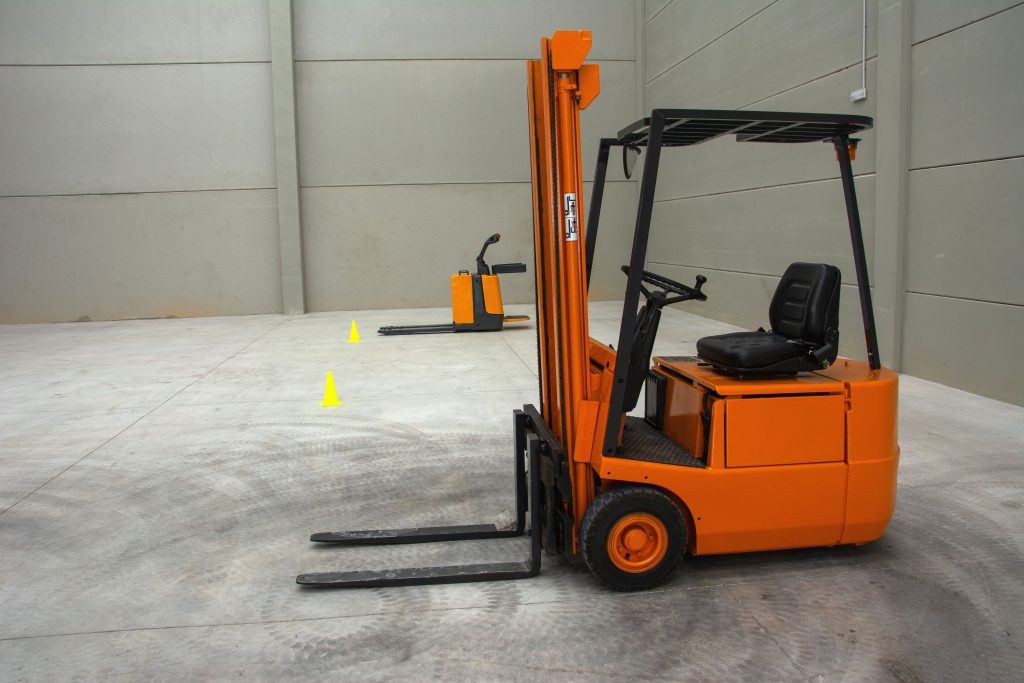
Photo by set aniset
For warehouse use, map the traffic before you pick a finish. Ask where loads stop, pivot, and drag. Also ask what lands on the floor, oil, battery acid, food residue, metal shavings, or plain dust. A floor that handles dry cartons may struggle in a battery charging area. Forklift traffic demands high abrasion resistance in high-traffic pivot points and loading zones to prevent surface wear.
Retail spaces ask for a different balance. Appearance matters more, and cleaning happens more often. Shopping carts, stock carts, and entry moisture can wear a finish fast near doors. In showrooms, gloss can lift the look of the space, but heavy gloss also reveals scratches and poor patch work.
Traction needs a plan too. Gloss does not make a floor unsafe by itself. Water, oil, and powder do. Entry mats, a textured topcoat, and the right cleaner often matter more than shine alone.
Forklift traffic punishes weak coatings faster than foot traffic ever will.
Maintenance goals belong in the same conversation. If your crew wants easy mop-down cleaning and less concrete dust, coatings and densified surfaces make sense. If downtime is tight, review cure time before you buy. National Concrete Coating Authority’s overview of warehouse systems gives a helpful snapshot of how epoxy and polyaspartic systems differ in heavy-duty settings.
Choosing the right finish for retail and warehouse floors
When the slab is sound, you usually narrow the field to epoxy, polyaspartic, polished concrete, or a decorative stain. If you need a thicker film and better chemical resistance, an epoxy coating is often the first option for back-room applications. If appearance and low maintenance lead the list, Atlanta concrete polishing services may fit better.
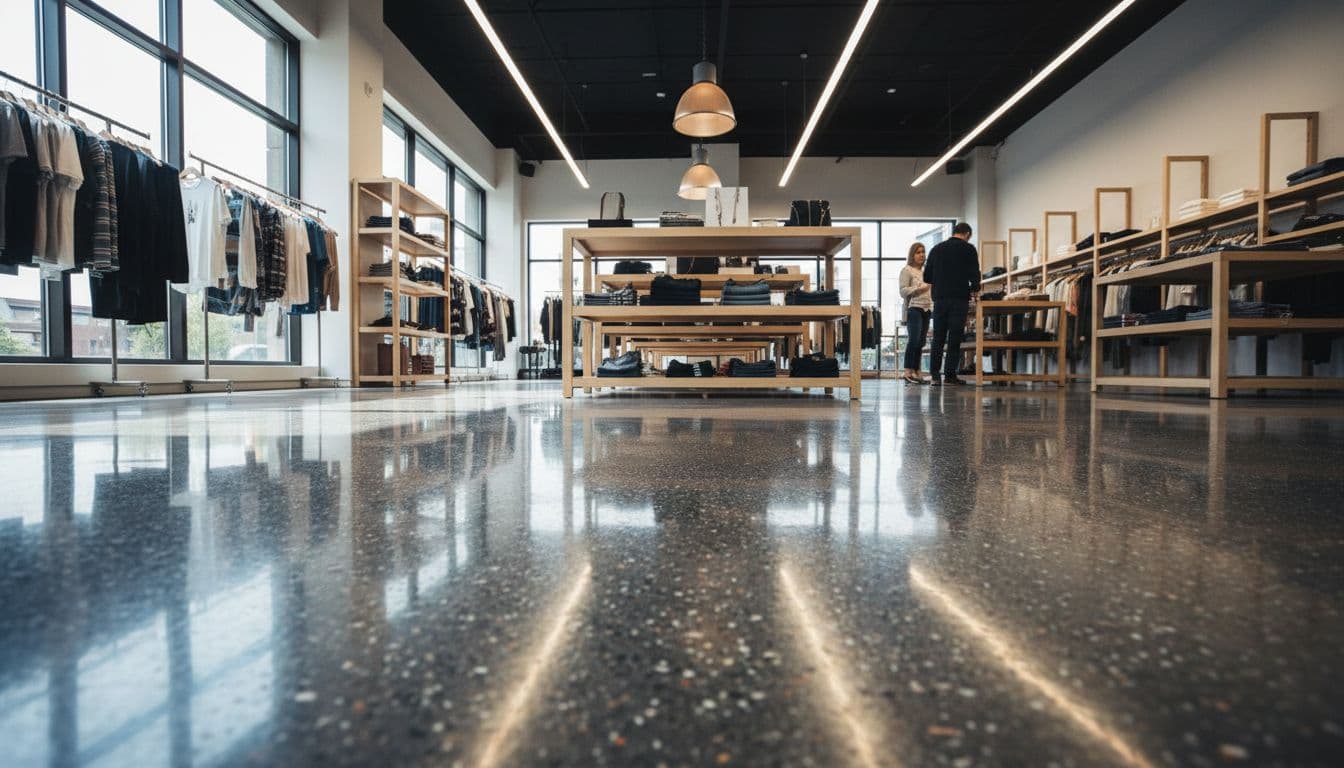
Retail owners also compare finish types because store lighting changes how every mark looks, and polished concrete floors provide a reflective surface that enhances retail lighting. This retail flooring comparison explains why epoxy, stain, and polished slabs stay popular in customer-facing spaces.
A quick side-by-side view
This quick table helps match the finish to the space.
| Finish | Best fit | Main upside | Main limit |
|---|---|---|---|
| Concrete epoxy coating | Warehouses, back rooms, service areas | Strong film build, superior chemical resistance, anti-slip surface options | Longer cure time, prep mistakes show later |
| Polyaspartic coating | Fast-turn projects, some retail, light industrial | Quick return to service, UV-stable topcoat | Often costs more, not every slab is a fit |
| Concrete polishing | Retail floors, showrooms, mixed-use interiors | Low dust, easy cleaning, bright reflective look | Limited chemical resistance without added protection |
| Concrete staining | Decorative retail, lobbies, low-impact areas | Natural color variation, no film to peel | Won’t hide slab flaws or repair scars |
The details still matter. A commercial concrete epoxy coating can take abuse, but it isn’t magic. Poor prep, moisture vapor, and weak concrete will shorten its life. The same is true of any epoxy coating for concrete.
For stores, concrete polishing stays popular because it reflects light and offers low maintenance without peeling. Still, it won’t hide rough repairs, and sugary spills or oils may call for added protection. A polyaspartic coating helps when overnight turnaround matters, but fast cure does not excuse rushed prep. Concrete staining adds character, yet it doesn’t build thickness or bridge cracks.
Common problems, lifecycle costs, and when to call a pro
Most floor failures start with inadequate surface preparation or subgrade preparation before the coating goes down. Old sealers, laitance, grease, and moisture break bond strength. That’s why surface preparation matters so much. If you want to understand the difference, this guide to concrete prep for epoxy explains why grinding and shot blasting are not interchangeable.
Cracking, spalling, peeling, and hot-tire pickup all point to mismatch. An epoxy coating for garage floor may work in a home, but a warehouse dock lane needs a tougher epoxy coating build. A basement concrete coating faces its own moisture issues, and it may need vapor control before any finish goes on. Even a garage floor epoxy coating company may not be the right crew for freezer rooms, food plants, or high-lift traffic.
Day-to-day care also changes lifecycle cost. Polished concrete floors need dust control and occasional burnishing. Sealed concrete or coated floors need prompt spill cleanup with floor scrubbers and floor sweepers for floor maintenance, plus soft scrub pads, not aggressive blades or harsh chemicals. Joint design deserves attention as well, because poor joint design leads to broken joints that chew up wheels and chip nearby coatings.
Repair small problems early. Whitening, bubbling, edge peel, and worn tire paths usually spread under traffic. For many owners, this kind of concrete dealing is part of daily facilities work, because the slab affects safety, upkeep, and downtime.
Bring in a professional when the slab has active moisture, widespread cracks, coating delamination, or known chemical exposure. Repair work also needs a pro when traffic can’t stop for long. Good crews phase the work, protect joints, and match the system to the way the building runs.
Frequently Asked Questions
What’s the best finish for high-traffic warehouse floors?
Warehouse floors under forklifts and pallet jacks need epoxy coatings for thick film build, chemical resistance, and anti-slip options. Polyaspartic works for fast returns but requires sound slabs. Map traffic lanes first to target abrasion-prone pivot points and loading zones.
How do retail floors differ from warehouse needs?
Retail prioritizes appearance with polished concrete for light reflection and low-dust cleaning, or staining for natural looks, since foot traffic and carts spread wear evenly. Warehouses focus on durability against heavy wheel loads and spills. Traction comes from mats and cleaners more than gloss alone.
Why does surface prep matter so much for coatings?
Poor prep like unremoved sealers, laitance, or moisture vapor breaks bond strength, causing peeling, bubbling, and early failure. Grinding or shot blasting ensures adhesion on any epoxy, polyaspartic, or topcoat. Skip it, and even the toughest system won’t last.
When should you call a professional for floor issues?
Bring in pros for active moisture, cracks, delamination, or chemical-heavy areas where DIY risks downtime. They handle phased repairs, joint protection, and system matching to traffic. Small whitening or tire paths can spread without expert fixes.
Conclusion
The best warehouse and retail concrete floors match the work, not the brochure. Heavy wheel traffic, cleaning habits, chemical exposure, and appearance goals all push the decision in different directions. High-performing slabs often utilize laser screed technology during the concrete pouring stage to ensure flatness and levelness, focusing on quality from the start.
If you remember one thing, make it this: prep and fit decide how long a floor lasts. For some specialty applications, interlocking floor tiles or dry shake hardeners might be considered as part of durable flooring solutions tailored to specific facility needs. A good-looking finish on the wrong slab won’t stay good-looking for long.