Epoxy Coating — Atlanta Metro
Epoxy Garage Floor Coating in Atlanta, GA
The most affordable, best-proven coating system in this market — a two-part resin bonded to diamond-ground concrete, with flake and metallic finish options.
Epoxy systems run $5–$10 per square foot installed.
Based on a standard epoxy system on a 2-car garage (about 400 sq ft) with normal surface prep. Extensive grinding or slab repair and garages larger than 2 cars are priced separately — every slab is different.
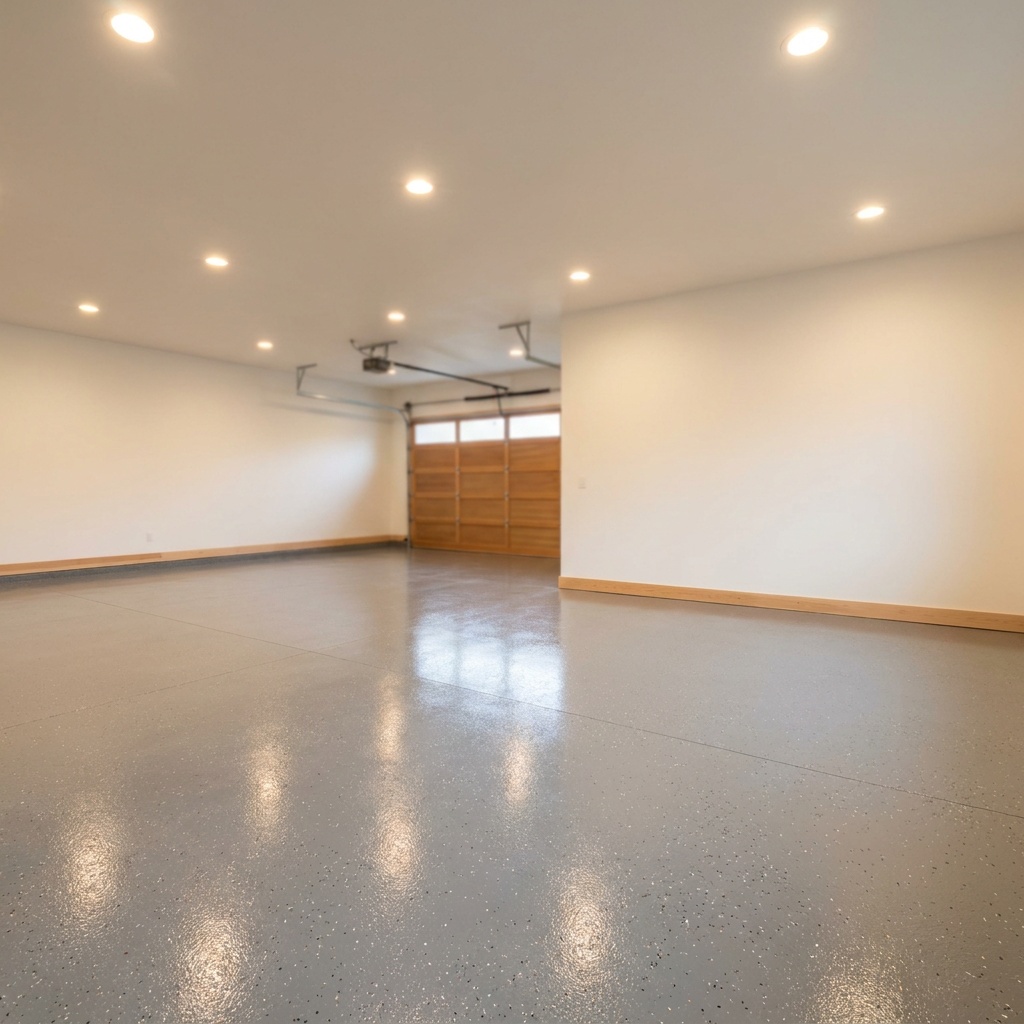
Epoxy garage floor coating is a two-part resin system — a liquid hardener mixed with a liquid resin — that cures into a hard, chemical-resistant surface bonded directly to diamond-ground concrete. It’s the most affordable, best-proven coating system in this market, typically running $5 to $10 per square foot installed, with a standard 2-car garage (about 400 sq ft) landing between $1,400 and $4,800 depending on how much prep the slab needs. A straight epoxy system needs real cure time: 24 to 72 hours before foot traffic, up to a week before vehicles return, which is why many installs pair it with a faster-curing polyaspartic topcoat. Epoxy is also the base under every flake and metallic finish we install.
The Material Science
What epoxy actually is, and how it’s applied.
Epoxy isn’t paint. It’s a two-component resin system — a resin and a hardener that stay separate until mixed on site — and once combined, they undergo a chemical cross-linking reaction, not a simple evaporative dry. That reaction turns a liquid into a hard, continuous, chemical- and abrasion-resistant layer, which is why epoxy holds up to tire traffic and dropped tools far better than a surface paint.
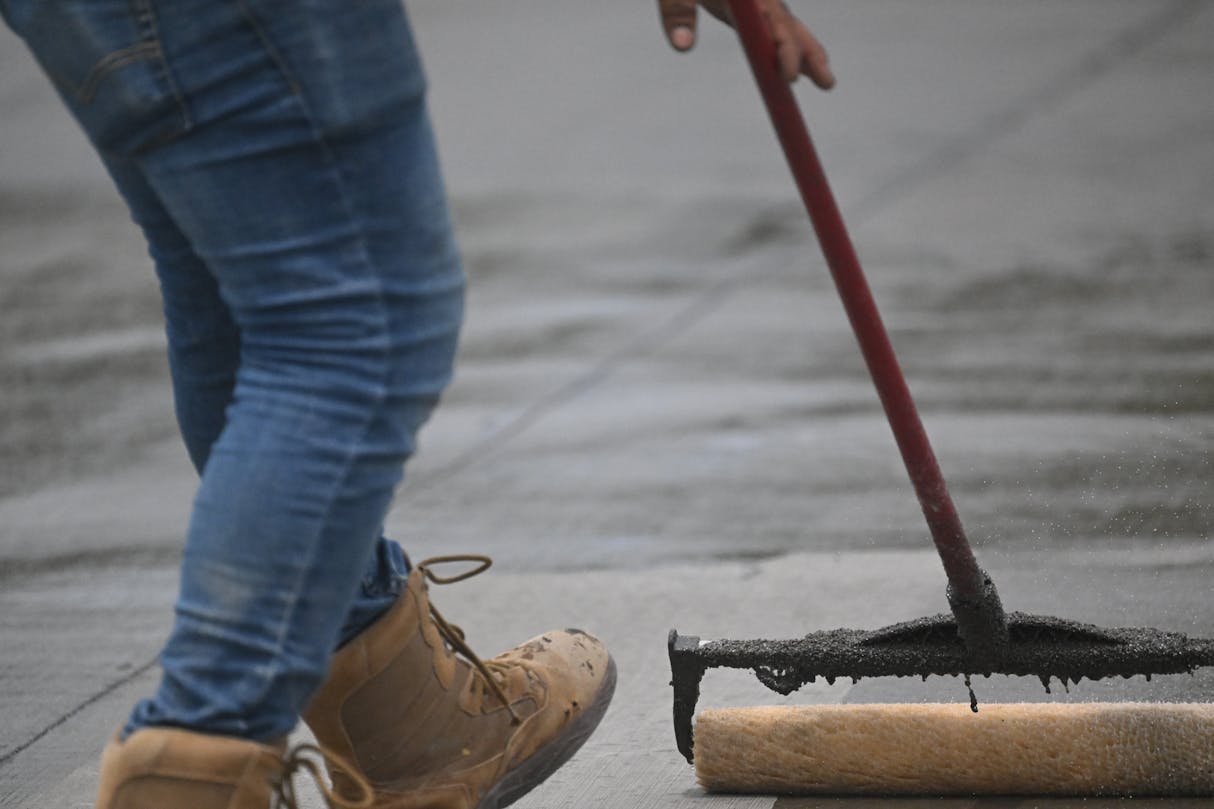
Installation follows a fixed sequence: after the slab is diamond-ground to open, structural concrete, we roll on a pigmented epoxy base coat that bonds mechanically into that surface. For a decorative finish, color flake or metallic pigment gets broadcast into the base coat while it’s still wet. Once cured, a clear topcoat — either another epoxy layer or a polyaspartic topcoat for extra UV stability and faster return to service — seals the finish.
- Base coat: pigmented epoxy resin, mechanically bonded to ground concrete
- Decorative layer (optional): color flake or metallic pigment broadcast while the base is wet
- Topcoat: clear epoxy or polyaspartic, for wear resistance and UV protection
- Cure: 24–72 hours foot traffic, up to 7 days for vehicles (straight epoxy)
Flake and metallic finishes are epoxy-based, not polyaspartic-based. Polyaspartic’s pot life — its working window before it sets — is too short for intricate color work. Epoxy’s slower cure gives us time to broadcast flake evenly or build a marbled metallic effect before it sets.
Prep, Not Product
An epoxy floor is only as strong as the concrete it’s bonded to.
Epoxy’s chemical bond depends on reaching open, structural concrete — not the thin, harder skin that forms at the surface as concrete cures. That skin looks solid but isn’t; resin rolled onto it bonds to the skin itself, not the slab underneath, so the whole system is only as strong as that thin layer. Under the heat and weight of a parked tire, that bond is the first thing to give, which is why peeling and hot-tire-pickup complaints trace back to a slab that was never ground.
We assess every slab and grind it down to open aggregate wherever the existing surface needs it, before any epoxy goes on, regardless of finish — a first-time install and a repair of a failed coating go through the same assessment. A base-coat-plus-flake system and a plain solid-color floor also get the same prep approach; the decorative choice changes the look, not how the concrete gets prepped.
Who Epoxy Is Right For
Three reasons homeowners land on epoxy specifically.
Your last DIY kit or budget install already failed
If a floor already peeled or flaked, epoxy done right — with real diamond-grind prep — is usually the fix, not the cause. The product wasn’t the problem; the surface it bonded to was. We grind off the failed coating and the weak layer underneath, then rebuild with the same proven chemistry, prepped correctly this time.
You want a showroom finish without the highest price tag
Color flake and metallic epoxy finishes deliver the “everyone asks about it” garage look at a lower cost than most polyaspartic-forward systems, since epoxy is the decorative base either way. If aesthetics matter more than same-day cure speed, epoxy gives the widest range of flake and metallic color options.
Budget matters more than a fast turnaround
Straight epoxy is the most affordable, best-proven coating system we install. If your timeline has some flexibility — you can wait up to a week before parking again — epoxy gets you a durable floor for less than a faster-curing system costs.
How Epoxy Compares
Epoxy vs. the other systems we install.
Epoxy is the most affordable option and the base for every flake or metallic finish, but it cures slower than polyaspartic (up to a week for vehicles vs. about 24 hours) and, alone, has weaker UV stability — why many installs pair an epoxy base with a polyaspartic topcoat. Polished concrete skips applied coating entirely, grinding the slab to a permanent satin sheen with nothing to ever peel. Stained concrete is a sealed-in decorative color effect suited to patios and interiors wanting character without a thick coating.
See the full side-by-side coating comparison, pricing table, and garage-size breakdown on the pricing guide.
Epoxy-Specific Questions
What people ask before choosing epoxy specifically.
Can epoxy be applied over an existing epoxy or painted floor?
Generally, no — not directly, and not as a shortcut worth taking. A new epoxy system needs to bond to open, structural concrete, not to an existing coating, paint layer, or the weak skin that sits under either one. If there’s an existing coating, we grind it off along with the concrete’s surface layer underneath before applying anything new, the same way we’d prep a bare, uncoated slab. Coating over an existing coating just stacks a new bond on top of whatever the old bond’s weaknesses were, which is a common reason recoats fail faster than the original install did.
What’s the difference between a flake system and a metallic epoxy finish?
Both start with the same pigmented epoxy base coat, but the decorative layer is different. A flake system broadcasts small color chips into the wet base coat, which gives a speckled, textured look that’s forgiving of minor surface imperfections and hides tire marks and dust well. A metallic finish uses metallic pigment powders worked into the epoxy while it’s curing, creating a marbled, three-dimensional, almost pooled-water effect that reads as more of a statement floor. Metallic finishes take more application skill and working-time control, which is reflected in the price; flake systems are the more budget-friendly decorative option. Both are epoxy-based, not polyaspartic-based, for the pot-life reasons covered above.
Is an epoxy garage floor slippery when wet?
A smooth, glossy epoxy topcoat can be slicker than bare concrete when wet, which matters in a Georgia garage where cars track in rain regularly. Flake and metallic finishes add real texture that reduces slip risk compared to a flat solid-color topcoat, and we can also broadcast a fine anti-slip additive into the final coat for garages where wet-weather traction is a priority — workshop floors and garages used as a secondary entrance are the most common requests. We’ll ask about how you actually use the space during your estimate so slip resistance is addressed up front, not after the floor is already down.
Does epoxy hold up to Georgia’s heat and humidity?
Yes, when it’s prepped and cured correctly. Georgia’s humidity affects two things specifically: how much moisture is in the slab before coating (which we check before starting, since trapped moisture can interfere with adhesion) and how the epoxy cures during application (temperature and humidity both affect cure time and working window). Properly ground concrete, correct moisture readings, and a cure schedule matched to actual site conditions — not just a generic label instruction — are what make an epoxy floor hold up through Atlanta’s summer humidity and swings between seasons, rather than bubbling or softening.
Get In Touch
Talk to us about your epoxy floor.
No obligation, just a conversation about your slab, your finish options, and what a fixed-price epoxy estimate would actually look like.