Water, vibration, soap drips, and heavy machines can punish a floor faster than most homeowners expect. If your laundry room sits on a slab, the good news is that the right concrete floor finish can handle that abuse without turning the room into a maintenance chore.
The wrong finish peels, stains, or gets slick when detergent residue builds up. The right one stays easy to clean, holds its grip, and shrugs off the daily bumps that come with wash day.
What a laundry room floor has to survive
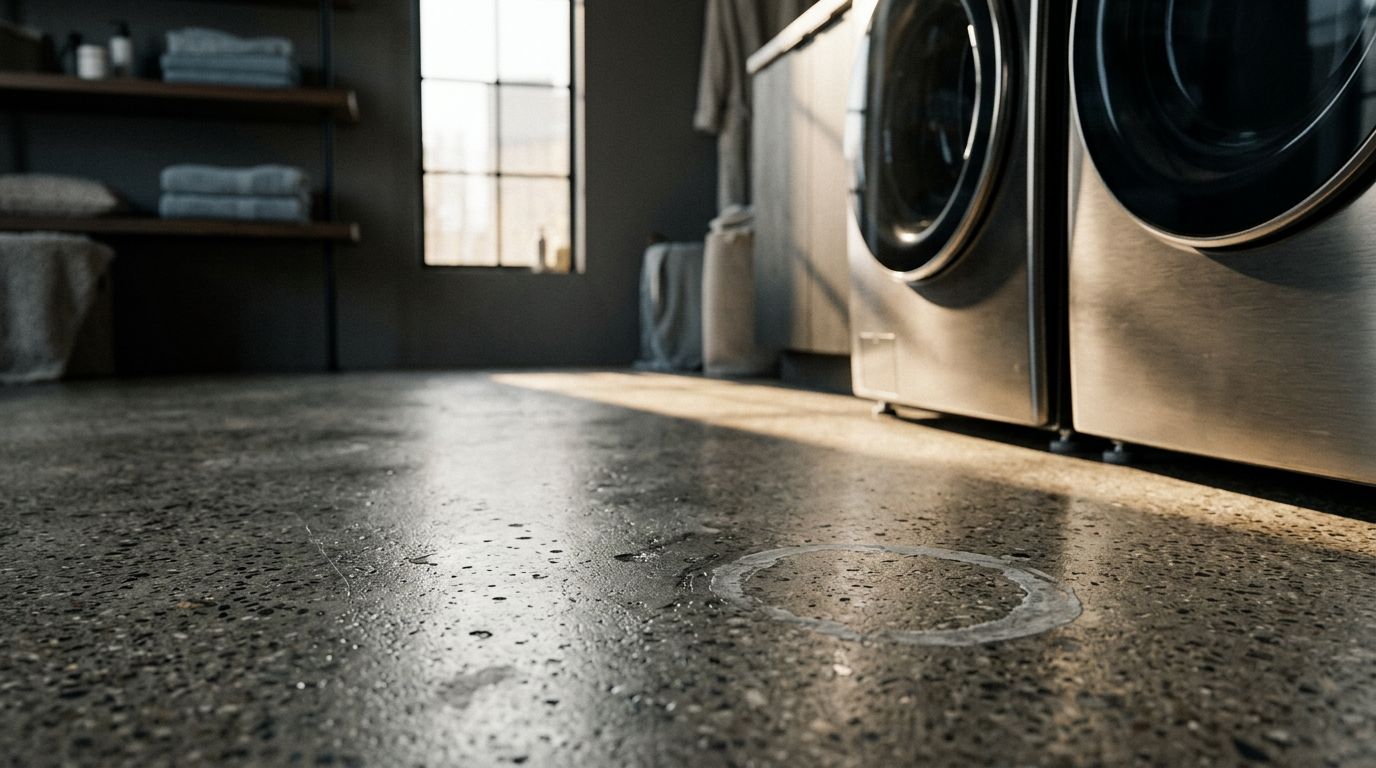
A laundry room may be small, but it works hard. Washers can vibrate for years in the same spot. Dryers throw heat into the room. Detergent bottles fall, bleach splashes happen, and wet clothes drip on the floor while you sort them.
Because of that, bare concrete often falls short. It can dust, soak up stains, and feel rough underfoot. Some general flooring roundups, including Builders Interiors’ laundry room flooring overview, also point to sealed or finished concrete as a practical option in rooms where water and wear are common.
A lot of online concrete dealing advice blurs the line between paint, stain, and real coatings. They are not the same. Paint sits on the surface and usually fails first. A true coating or properly sealed finish bonds better and lasts longer.
The main stress points are easy to miss at first. Water exposure is obvious, but appliance vibration matters too. Over time, tiny movements can wear weak finishes at the washer feet. Dropped detergent jugs create impact damage. Frequent mopping tests how well a finish stands up to repeated cleaning.
If your laundry room also works as a mudroom or pet area, the floor needs even more from its finish. Dirt, damp shoes, and paw traffic can turn a smooth surface into a slippery one. That’s why the best concrete floor finishes for these spaces balance water resistance with traction, not shine alone.
How the main concrete finishes compare
Four finish types come up most often for laundry rooms, and each has a different strength.
| Finish option | Water resistance | Handles vibration and impact | Cleaning and upkeep | Best fit |
|---|---|---|---|---|
| Epoxy with textured topcoat | Excellent | Excellent | Easy, low-maintenance | Busy laundry rooms, utility spaces |
| Epoxy with polyaspartic topcoat | Excellent | Very good to excellent | Very easy, fast cure | Homes needing quick return to service |
| Polished and sealed concrete | Good | Good | Easy, but reseal as needed | Low-splash rooms, modern look |
| Stained and sealed concrete | Fair to good | Good | Moderate, depends on sealer | Design-focused rooms with lighter use |
| Penetrating sealer only | Fair | Good | Easy, but limited stain protection | Low-budget refresh, not top durability |
For most homeowners, the table points to one clear winner: a textured epoxy system.
Epoxy is usually the toughest choice
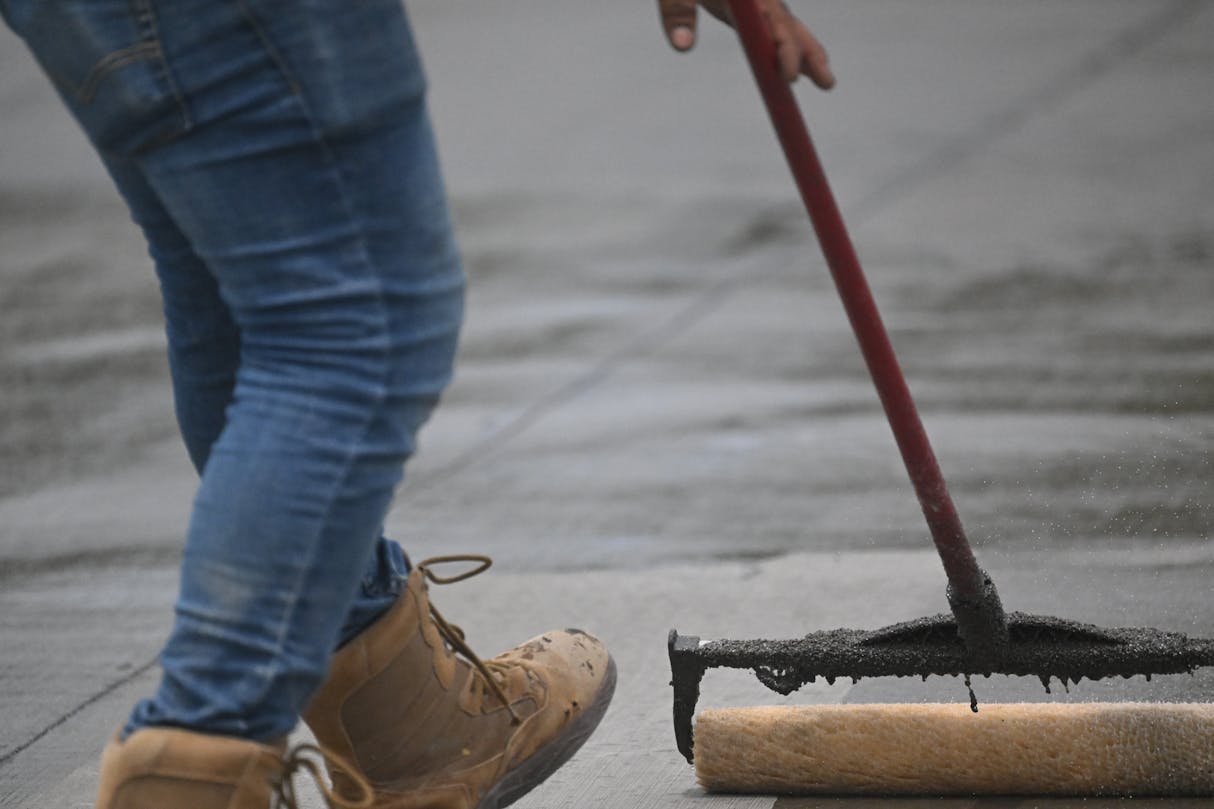
A concrete epoxy coating creates a hard, sealed layer over the slab. That makes it strong against water, detergent spills, abrasion, and dropped bottles. It also hides minor slab flaws better than polished concrete.
The same epoxy coating for garage floor projects often works well in a laundry room, although indoor spaces usually need a look and texture that feel more at home inside. A good epoxy coating for concrete can be finished in satin or light gloss, and it can include slip-resistant grit or decorative flakes.
If you want deeper detail on system types, these durable epoxy floor coatings for utility spaces break down the tradeoffs well. A commercial concrete epoxy coating is built for harsher conditions than most homes need, but that durability shows why epoxy performs so well in a laundry room.
The drawback is surface prep. Epoxy lasts when the slab is properly cleaned, repaired, and profiled, which means lightly roughened so the coating can bond. Moisture issues also matter. If water vapor is pushing up through the slab, any film-forming coating can struggle.
A polyaspartic topcoat adds speed and stain defense
Some systems add a polyaspartic coating over epoxy. That top layer cures faster, holds color better, and adds another barrier against household chemicals. It can be a smart upgrade if you want the laundry room back in use quickly.
Still, polyaspartic on its own is not always the first pick for every interior slab. Cost runs higher, and the installer needs to work fast because it cures quickly. In a laundry room, it shines most as part of a layered system rather than as a shortcut.
Polished concrete looks clean, but it is not the toughest shield
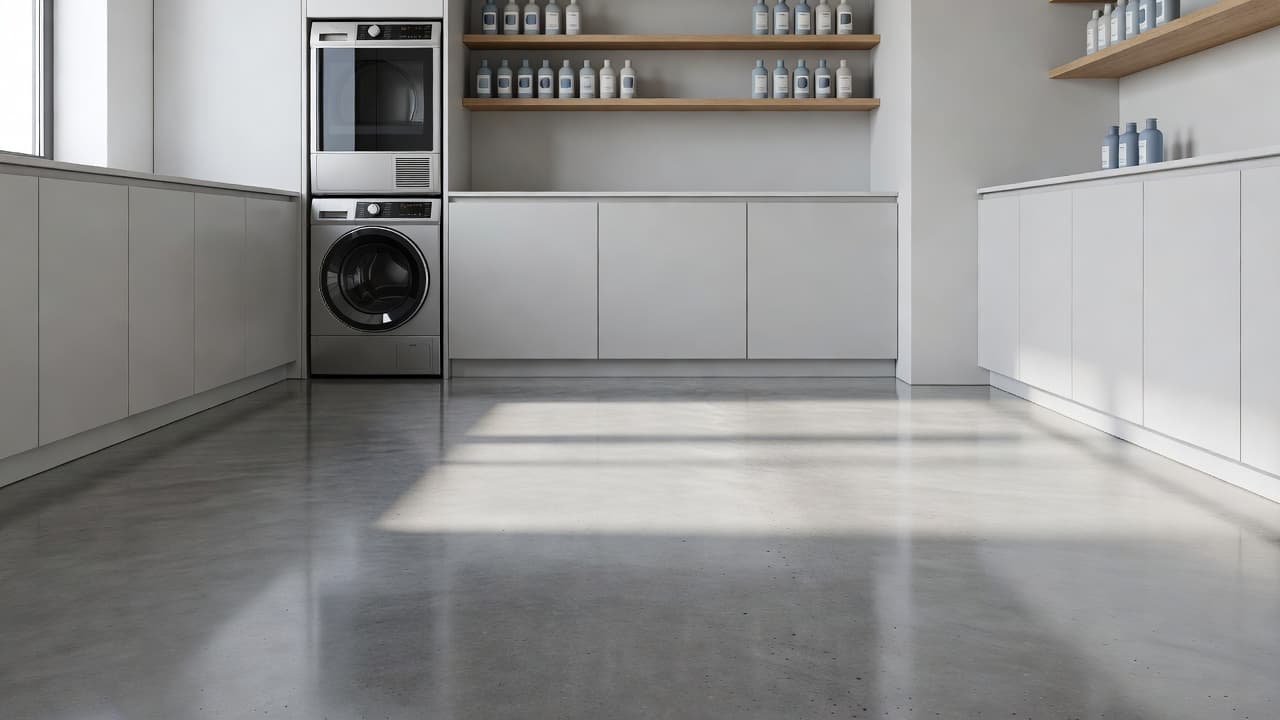
Concrete polishing gives the floor a smooth, refined look. It also cuts down on dust and makes daily sweeping easy. If your laundry room is more of a finished interior space than a splash zone, polished concrete can look sharp.
The tradeoff is protection. Polishing densifies and smooths the slab, but it does not create the same spill-proof shell as epoxy. Add a sealer and it performs better, yet bleach, dye, and standing water still deserve quick cleanup. For families who treat the laundry room like a work zone, polishing often comes in second.
Stained concrete is about appearance first
Concrete staining adds color without hiding the character of the slab. That makes it appealing if you want the laundry room to match a nearby hallway or finished basement.
However, stain is only part of the system. The sealer on top does the real protective work. Compared with a full basement concrete coating or epoxy build, stained concrete usually offers less impact resistance and less forgiveness around long puddles. The Spruce’s laundry room flooring options also puts concrete among the practical choices, but finish quality makes a huge difference.
Traction and cleanup matter as much as color
A shiny floor can still be safe, and a matte floor can still be slick. Traction depends more on texture, residue, and water than on sheen alone.
Gloss does not equal grip. In a laundry room, light texture matters more than a mirror-like finish.
For epoxy, that usually means a slip-resistant additive in the topcoat. It can be subtle enough to clean easily while still helping under wet shoes or socks. Decorative flake systems often help here because the broadcast texture breaks up the surface slightly.
Polished concrete needs more thought. A highly polished slab can feel slick when soap or fabric softener hits it. If you prefer that look, keep the sheen moderate and place absorbent mats near the washer, sink, and exterior door.
Cleanup also changes how the floor performs over time. Detergent residue is sneaky. A floor may feel fine for months, then become slippery because soap film builds up. Neutral cleaners and quick rinsing matter more than harsh products. These tips on the best way to clean indoor concrete flooring help keep the finish working as it should.
Dropped bottles create another real-life test. Epoxy and polyaspartic systems handle those hits better than simple sealers. Polished and stained concrete can still take impact, but the sealer may scratch or dull faster. Meanwhile, washer vibration is easier on any finish when the machine is level and has proper anti-vibration pads.
A short checklist before you choose
The right finish depends on how your laundry room actually gets used, not on the sample board alone. Messner Flooring’s take on laundry room floors makes the same basic point: durability and water resistance should lead the decision.
Use this quick checklist before you commit:
- Pick epoxy first if the room sees frequent splashes, heavy use, or rough treatment from pets and kids.
- Choose a textured topcoat if anyone may walk in on wet shoes or if the room doubles as a mudroom.
- Go with polished concrete when you want a cleaner, more natural look and the room stays fairly dry.
- Use stained concrete when color matters most and you are willing to protect it with a good sealer.
- Ask about moisture testing if the slab is on grade or has a history of damp spots.
- If you call a garage floor epoxy coating company, ask whether they install indoor systems with low odor and slip additives.
If your laundry room is also a pet cleanup spot, these ideas on using concrete floors for messy pet zones can help narrow the finish. The same logic applies whether the room sits near the garage, kitchen, or basement stairs.
Final thoughts
If you want the finish most likely to hold up, a textured epoxy system is hard to beat. It resists water, handles vibration well, cleans up fast, and takes the sting out of dropped bottles.
Polished or stained concrete can still work, especially in lighter-use rooms with a more design-focused look. The best concrete floor finish is the one that matches how wet, busy, and messy your laundry room really gets.