A concrete floor can look tough and still wear down fast when grit, moisture, and spills pile up. For busy households, concrete floor maintenance works best when it feels small, repeatable, and easy to remember.
You don’t need a long Saturday scrub session. You need a short routine that keeps stains from setting, scuffs from building, and minor problems from turning into repairs.
A low-effort routine you can keep
The best plan is the one you’ll still do next month. For most homes, that means quick touch-ups during the week and one simple mop session on the weekend.
Grit is the main troublemaker. It acts like sandpaper under shoes, chair legs, and car tires. So, if you only have two minutes, sweep the spots that see the most traffic first.
This simple schedule keeps most floors in good shape:
| When | What to do | Time |
|---|---|---|
| Most days | Sweep or dust mop entry points and busy paths | 2 to 3 minutes |
| Weekly | Damp mop with a pH-neutral cleaner | 10 minutes |
| Monthly | Check for stains, damp spots, and small cracks | 5 minutes |
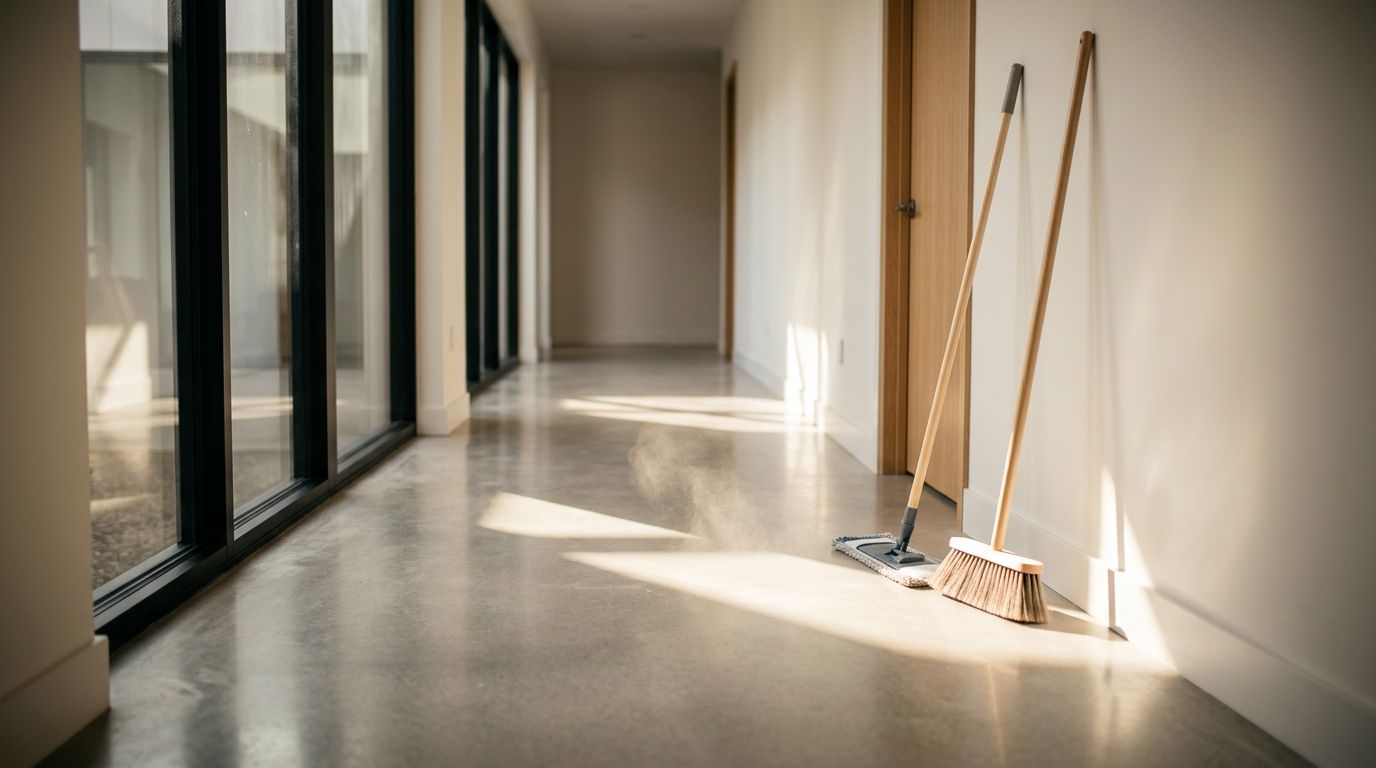
Keep a microfiber dust mop nearby, not buried in a closet. That one change makes upkeep easier. A soft-bristle broom works well in garages, while a flat microfiber mop is better for indoor floors.
Place doormats at every exterior door. Add felt pads under chairs, stools, and plant stands. Also, wipe pet bowl splashes before they dry into a ring.
If your floor already has a concrete epoxy coating, daily care should feel even easier because dirt stays on the surface instead of settling into raw concrete. The same habit helps polished and stained slabs too.
Cleaners and quick fixes that save time later
A small cleaning kit goes further than a shelf full of products. Most homeowners only need a few basics:
- A microfiber dust mop and soft-bristle broom
- A pH-neutral floor cleaner
- A damp mop or spray mop
- Soft towels or microfiber cloths
- A nylon brush for textured garage coatings
Use the mildest cleaner that removes the mess. Stronger products often dull the finish faster than the stain would.
Skip vinegar, bleach, citrus cleaners, abrasive powders, and wire brushes. Soap-heavy cleaners can leave a film, and steam mops can stress some coated surfaces. If you have concrete polishing or concrete staining indoors, harsh cleaners can dull the look over time.
For scuffs, start with a damp microfiber cloth and a little neutral cleaner. For oily spots in a garage, blot first, then use absorbent material such as cat litter or oil absorbent. After that, clean with a coating-safe degreaser or mild cleaner. An epoxy coating for concrete in a mudroom, laundry room, or shop usually releases stains faster than bare concrete, but quick cleanup still matters.
Moisture needs a different response. If a basement smells musty, shows white residue, or stays dark along the edges, keep the area dry and run a dehumidifier. For repeat dampness under a basement concrete coating, get moisture testing for epoxy before you add new products.
Small cracks are common. If a hairline crack stays the same size, keep it clean and dry, then ask about a simple filler when you refresh the floor. If it widens, crumbles, or keeps looking wet, bring in a pro. Good concrete dealing at home is mostly about catching problems early, while they’re still easy to manage.
Living spaces, garages, and basements need different habits
Indoor floors usually need gentler care than work zones. In living rooms, kitchens, and hallways, dust shows up faster than heavy grime. A dry mop every few days and a light damp mop each week is often enough.
If your home has Atlanta concrete polishing, use less water and clean up acidic spills fast. Juice, wine, and pet accidents shouldn’t sit for long. Floors with concrete staining often hide dust better, but they still need soft pads under furniture and rugs in high-wear paths.
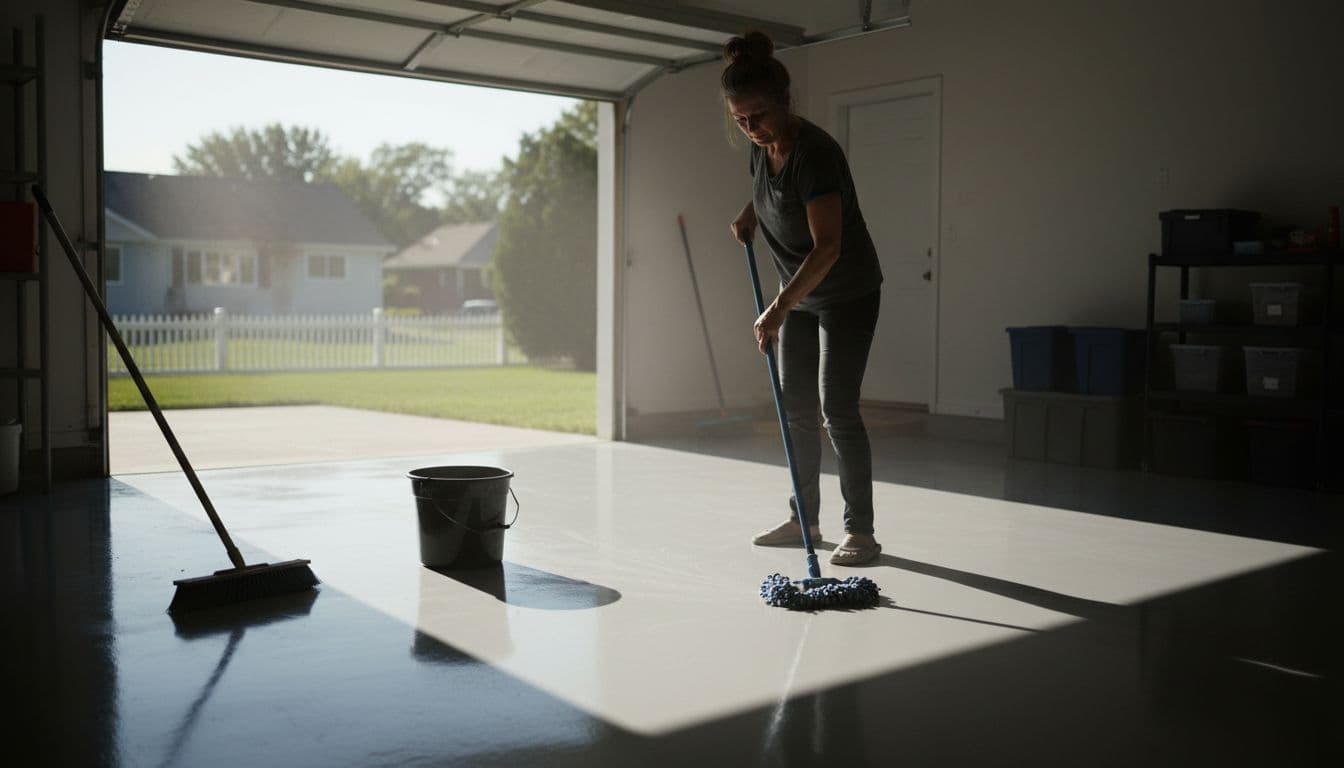
Garages live a harder life. An epoxy coating for garage floor surfaces sees road salt, tire grit, oil, mulch, and lawn tools. Sweep more often there, especially near the garage door. A nylon brush helps on textured finishes, and a tray under mowers or trash cans prevents drips. Many systems also include a polyaspartic coating top layer, which helps with wear and cleanup, but it still benefits from fast spill removal.
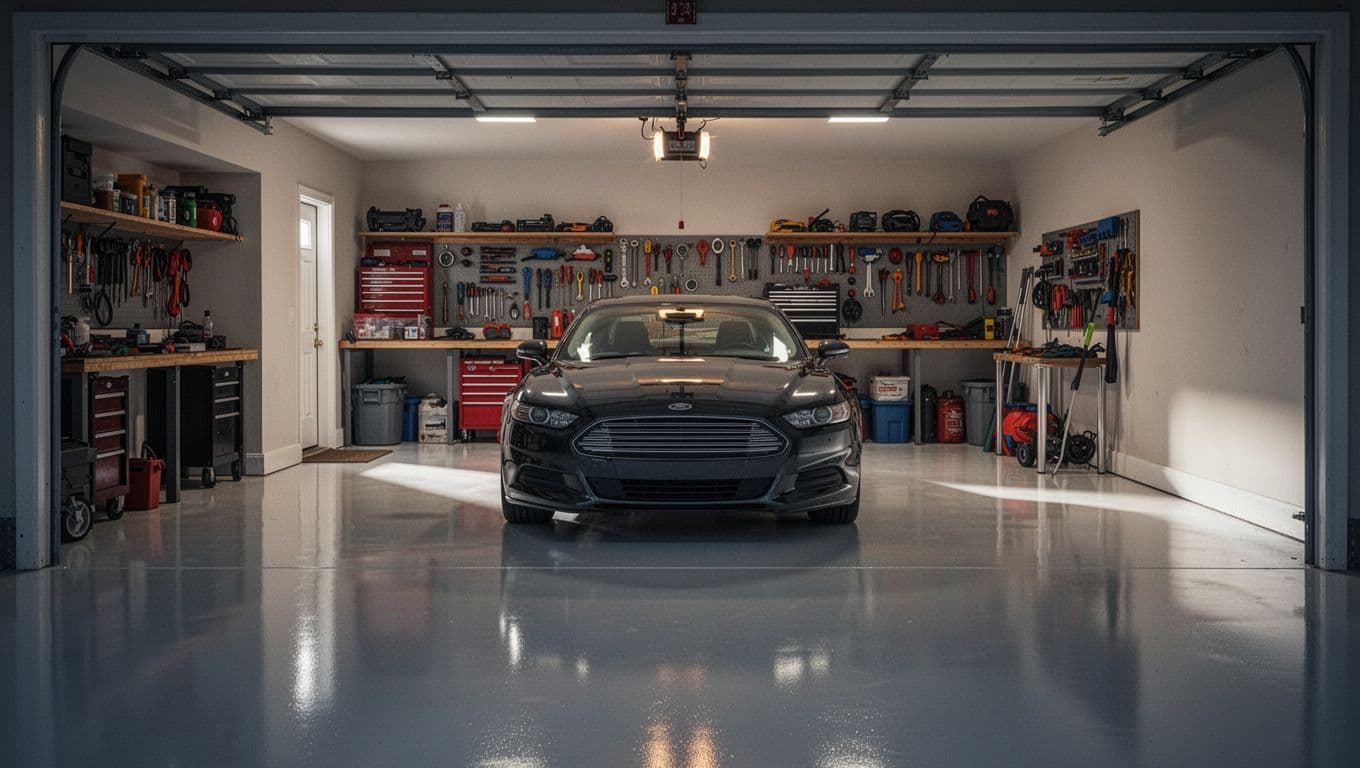
Any garage floor epoxy coating company will tell you that prevention beats scrubbing. Cardboard under a leaking car is fine for one night, but a drip pan is better for the long run.
Basements are different again because moisture, not dirt, is the main threat. Use a dehumidifier, avoid soaking the floor when mopping, and keep cardboard boxes off the slab. The same habits used for a commercial concrete epoxy coating help here too, only on a smaller scale: keep it dry, keep it clean, and deal with spills early.
Ten minutes a week usually beats one deep clean every few months. That’s the whole point of concrete floor maintenance for busy homeowners.
When the floor stays dry, grit-free, and quickly cleaned after spills, the finish lasts longer and looks better. A simple routine keeps garages, basements, and living spaces from turning into repair projects.