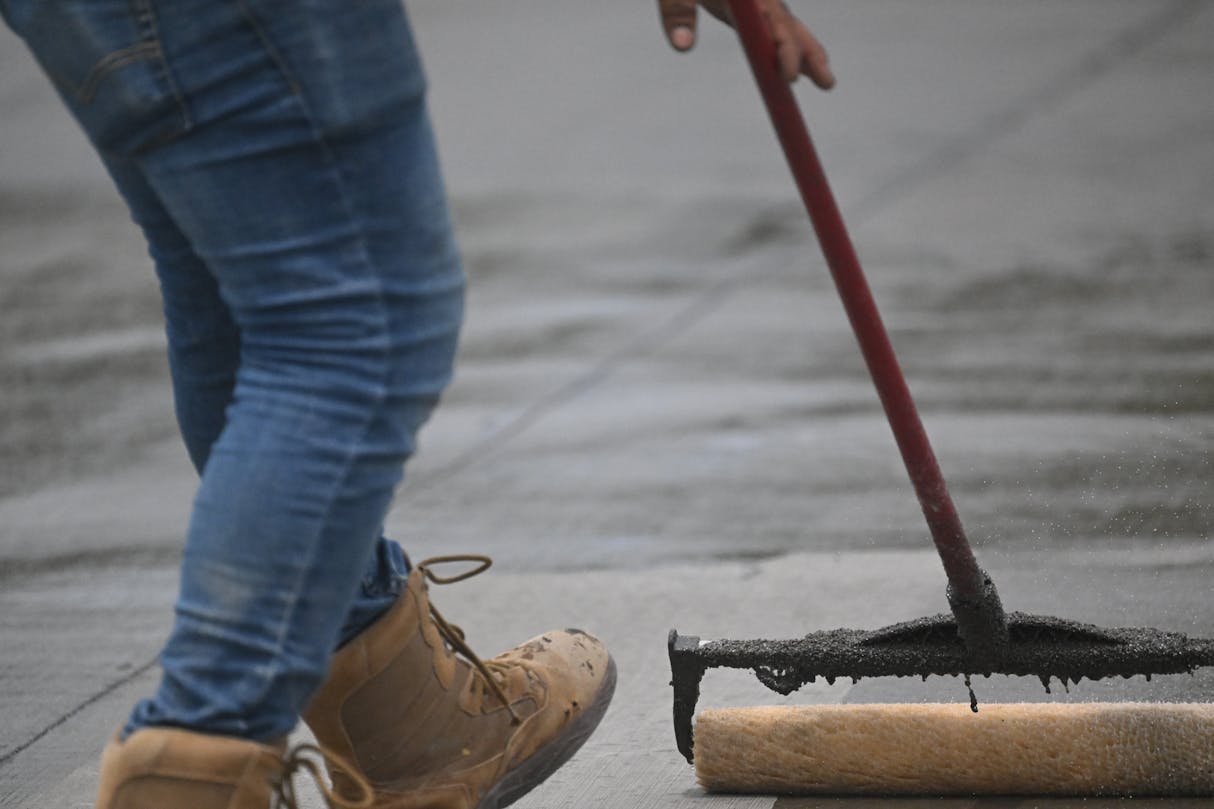
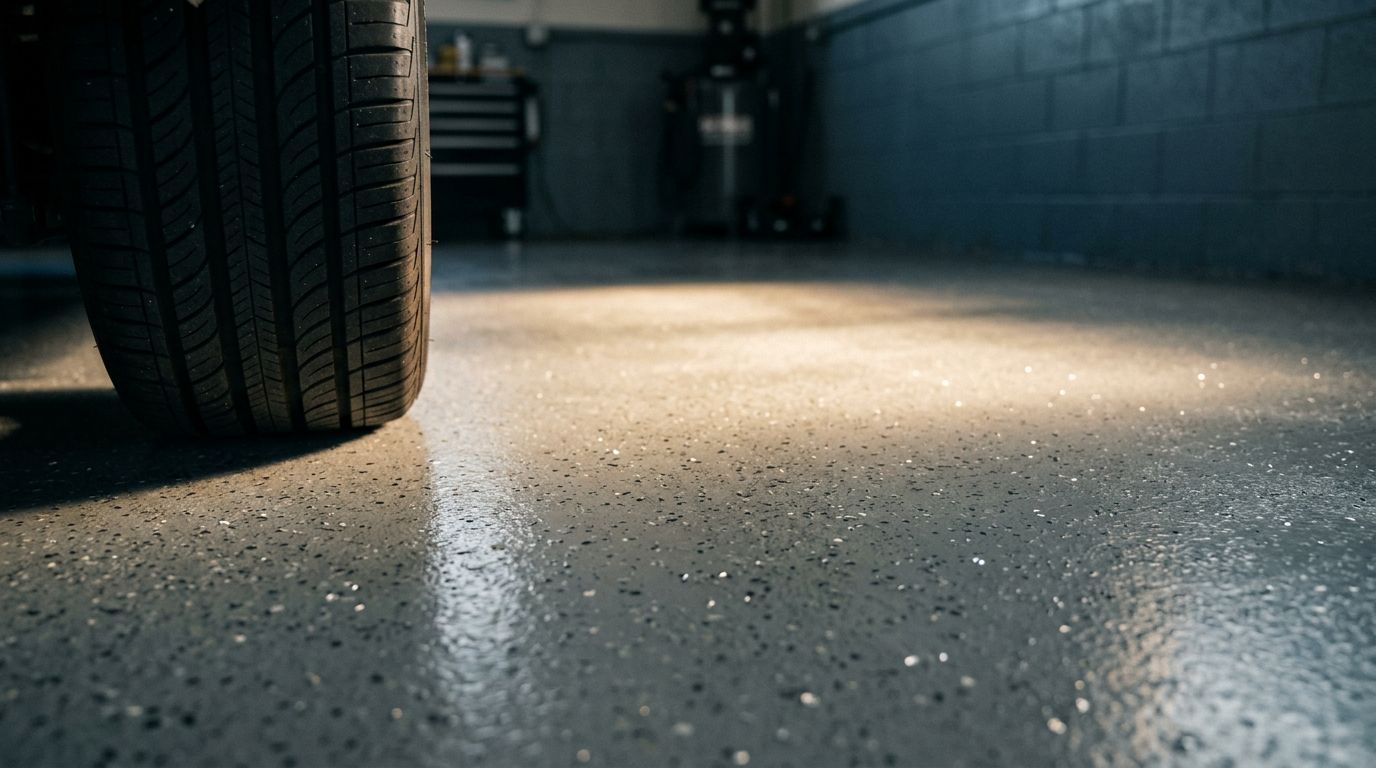
A garage floor can look clean and still turn slick fast. Rainwater, tire drips, and a thin film of oil can make a hard surface feel risky in seconds.
The right slip resistant floor finish is a balance, not a gimmick. More texture often adds traction, but it also gives dirt more places to cling. If you want a floor that feels safer and still cleans up well, start with how your garage actually gets used.
Start with the coating, then choose the traction layer
Many homeowners treat this as one choice, but it is really two. The floor coating is the main build layer, and the slip-resistant feature is often a separate additive or topcoat.
For example, a concrete epoxy coating or a polyaspartic coating forms the body of the system. The traction usually comes from flake broadcast, fine grit, aluminum oxide, silica, or a textured clear coat. That distinction matters because an epoxy coating for concrete can be durable and stain-resistant, yet still feel slick when wet if the surface is too smooth.
If you have been comparing epoxy floor coating basics with other finishes, keep the use case in mind. Concrete polishing and concrete staining can look great, but they do not give you the same build thickness or traction control as an epoxy coating for garage floor use. The same idea carries over to a basement concrete coating or a commercial concrete epoxy coating, even though those spaces face different traffic and moisture issues.
A quick side-by-side view helps:
| Finish style | Wet traction | Cleanability | Best for |
|---|---|---|---|
| Smooth epoxy or polyaspartic | Lower | Easiest | Dry, low-risk garages |
| Light-texture topcoat | Moderate | Easy | Most home garages |
| Heavy grit or full broadcast texture | Higher | Fair | Wet, sloped, work-heavy garages |
For most homes, the middle option wins. A light-texture finish improves footing without making every sweep and mop harder than it needs to be.
If you want a simple rundown of cure time and UV performance, this polyaspartic garage flooring guide is a useful reference.
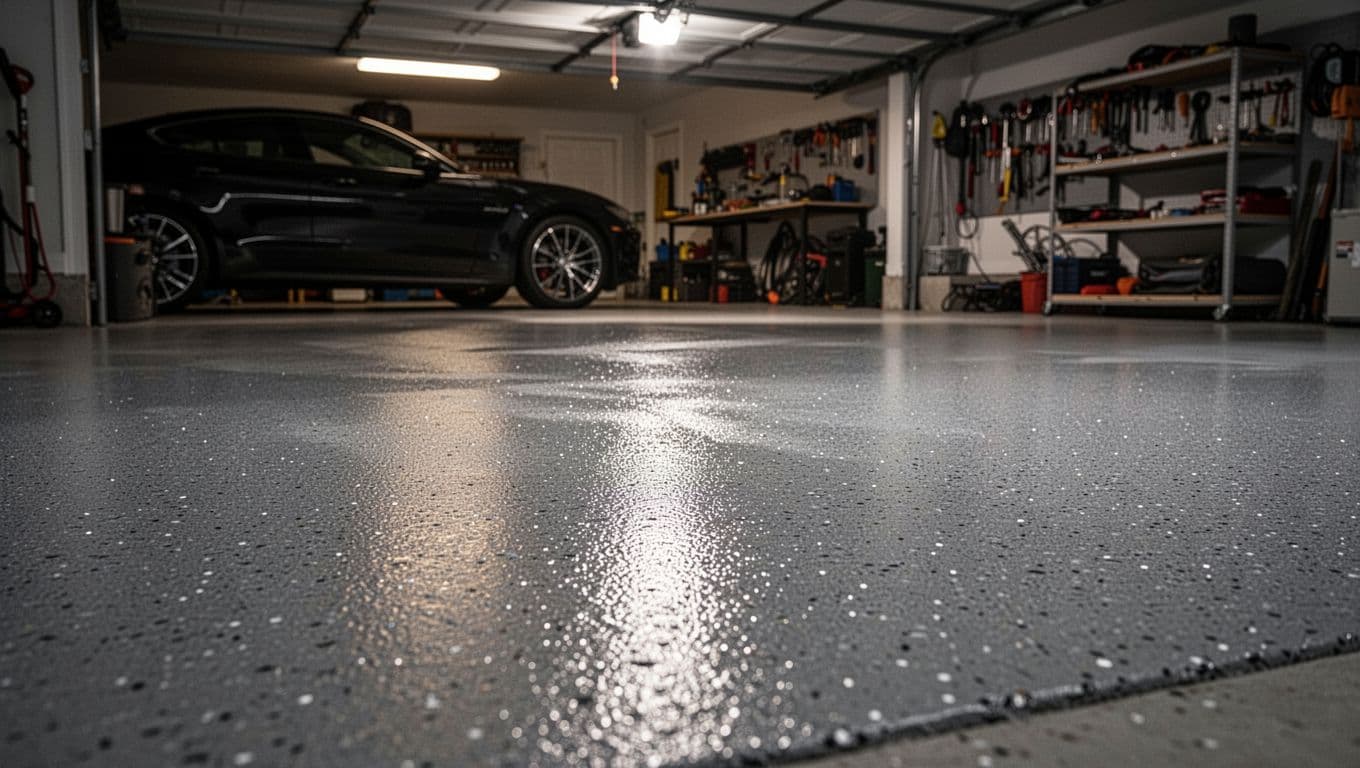
Match the texture level to your garage, not the showroom sample
A finish that works in a tidy storage garage may feel wrong in a busy workshop. That is why texture choice should follow conditions first.
A lighter-texture surface usually makes sense if your garage stays mostly dry, holds daily drivers, and doubles as storage, a gym, or a hobby space. It is easier to sweep, easier to mop, and less likely to trap fine dust. If you kneel on the floor, roll a stool, or slide bins around, a lighter profile also feels better in daily use.
Heavier texture earns its keep when water blows in under the door, the slab slopes, or you wash vehicles inside. It also helps in garages where oil drips, lawn equipment leaks, or muddy shoes are common. In those spaces, extra grip may be worth the added scrubbing.
More grit usually means more grip, but also more places for dirt to hold on.
That tradeoff is real. Rougher surfaces grab debris the same way tread on a tire grabs the road. The result is better traction, but also more trapped dust, leaf bits, and shop grime. If easy cleaning is high on your list, do not choose the roughest profile unless your garage truly needs it.
Also, be realistic about the phrase “non-slip.” No coating can promise perfect footing in every condition. Soap residue, standing oil, and smooth-soled shoes can still create hazards. A slip resistant floor finish lowers risk, it does not remove it.
If you want another practical overview, this non-slip garage coating article explains why traction has to match the way the floor is used.
Prep and upkeep matter as much as the finish itself
Even the best topcoat fails on a bad slab. Old sealer, soaked-in oil, dust, and moisture can all ruin bond. That is why good installers start with shot blasting vs grinding for concrete prep and, when needed, concrete moisture testing RH vs calcium chloride.
Call it practical concrete dealing: fix the slab first, then choose color and texture. If the old coating is peeling, adding grit on top will not solve the real problem. If moisture is pushing through the slab, even a well-made finish can blister later.
DIY can work on a clean, dry, sound garage floor. Still, professional installation is often worth it when the slab has cracks, spalling, old paint, hot-tire wear, or moisture concerns. It is also smart when you want a fast-curing system, because a polyaspartic coating gives you less working time than many epoxy products.
A good garage floor epoxy coating company should explain three things clearly: the base coat, the anti-slip additive, and how the final surface will feel when dry and damp. It should also give honest pros and cons instead of promising a floor that can never be slippery.
Once the floor is down, simple maintenance protects the texture. Sweep grit often, because it acts like sandpaper. Use a mild cleaner that does not leave a film. Wipe up oil early, since oily residue can cancel out the traction you paid for. If traffic lanes start to feel smoother over time, a refresh topcoat may restore grip before the whole system needs replacement.
A safe garage floor is not the roughest one on the chart. It is the one with enough texture for your real conditions and enough smoothness to stay clean.
If your garage stays mostly dry, go with a lighter profile. If water, slope, and oily work are part of daily life, step up the texture and accept a bit more cleanup. Balance is what makes a slip resistant floor finish work for years, not just on install day.