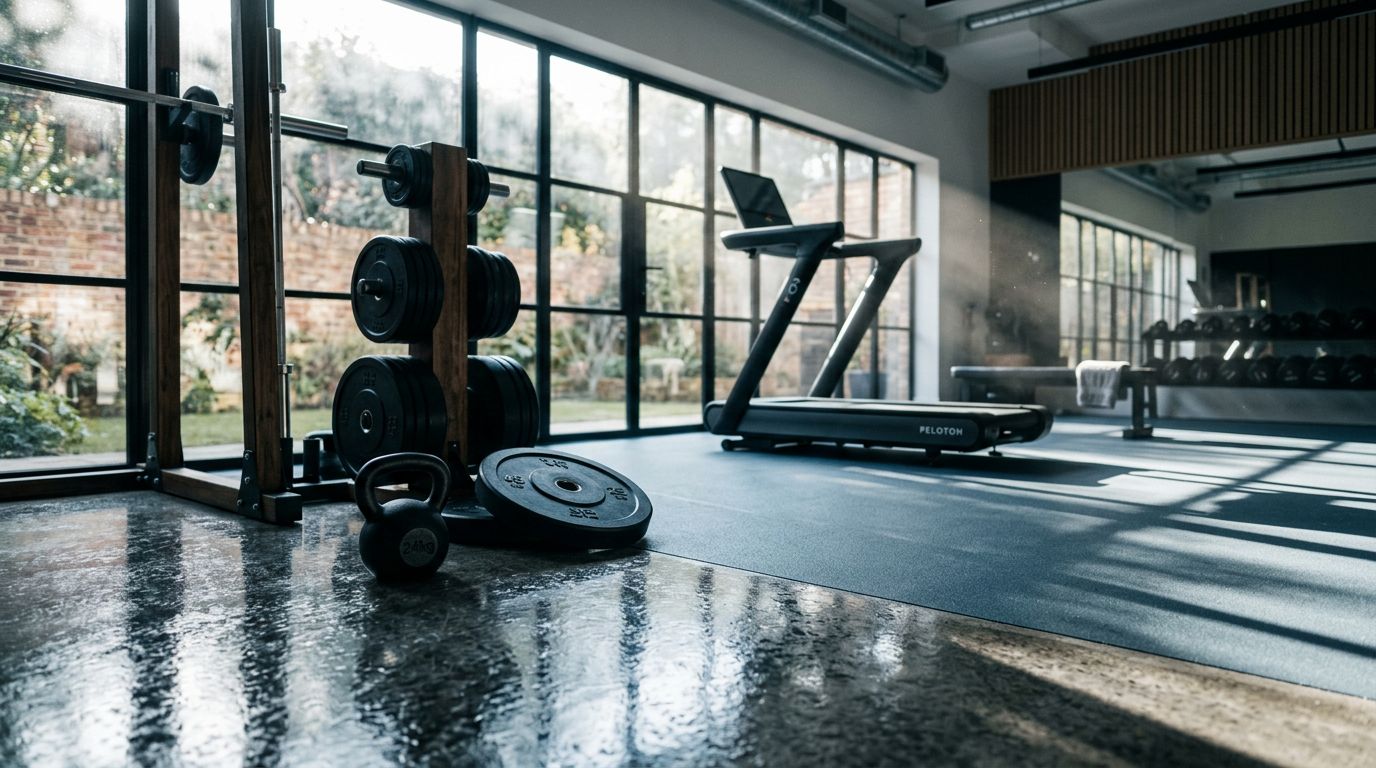
A home gym floor has a rough job. It has to handle iron, sweat, rubber scuffs, and sometimes a parked car or a damp basement wall.
If you want the best concrete floor finishes for that space, the right answer depends on how you train. Coatings often give the best protection, while polished or sealed concrete can work well for lighter use. The choice starts with impact, moisture, and how much cleanup you want after each workout.
What your gym floor needs to handle every day
A home gym puts different stress on concrete than a living room or workshop. Weight plates can chip a brittle surface. Treadmills can grind dirt into the finish. Sweat, sports drinks, and wet shoes can leave stains or create slick spots.
That is why the floor’s job is more than looks. You need abrasion resistance, easy cleaning, and enough grip to move safely. You also need to think about comfort, because every concrete finish is still concrete underfoot.
A coating can protect the slab from stains and dust. It cannot turn concrete into a shock-absorbing surface. If you deadlift, drop dumbbells, or use kettlebells often, you still need protective gym mats over the finish.
A finish protects the slab. Mats protect the slab from dropped iron, and your joints from the slab.
Moisture matters too. In a garage, rainwater drips off tires and shoes. In a basement, water vapor can move up through the slab. According to the EPA’s indoor moisture guidance, moisture control is a basic part of keeping interior surfaces in good shape. If the concrete stays damp, the wrong finish can peel, haze, or trap problems you do not see yet.
The best floor finish for a home gym is the one that fits your actual workouts. A rack, barbell, and bumper plates ask more from the surface than a bike, bench, and yoga mat.
Comparing the main concrete floor finishes
Most homeowners narrow the choice to coatings, polished concrete, stained concrete, or a simple sealer. This quick comparison shows where each one fits.
| Finish | Best fit | Dropped weight resistance | Sweat and moisture resistance | Cleaning and comfort |
|---|---|---|---|---|
| Epoxy coating | Garage and basement gyms with moderate to heavy use | Good surface protection, but sharp impact can chip it | Very good when the slab is prepped well | Easy to mop, still hard underfoot |
| Polyaspartic coating | Fast-turn projects, sunny garages, higher traffic | Good, similar limits on repeated hard drops | Very good, often better UV stability than epoxy | Easy to clean, can be textured for grip |
| Polished concrete | Light to moderate workouts on a sound slab | Strong against abrasion, no cushion for impacts | Fair to good, depends on densifier and guard | Low dust, easy sweep, can feel slick when wet |
| Stained and sealed concrete | Multipurpose rooms where appearance matters | Low to fair, mostly cosmetic protection | Fair, depends on the sealer | Easy upkeep, limited impact protection |
| Penetrating concrete sealer | Low-cost dust control and basic stain resistance | Low, almost no film protection | Fair, varies by product | Keeps a natural look, least change in feel |
The big split is simple. Film-forming coatings, such as a concrete epoxy coating or polyaspartic coating, protect the slab better from sweat, grime, and daily wear. Surface treatments like concrete polishing or concrete staining keep a cleaner, more natural look, but they do not give the same barrier against impact or spills.
If you are choosing between coatings and polishing, this comparison of epoxy vs polished concrete for gyms helps frame the tradeoffs in plain terms.
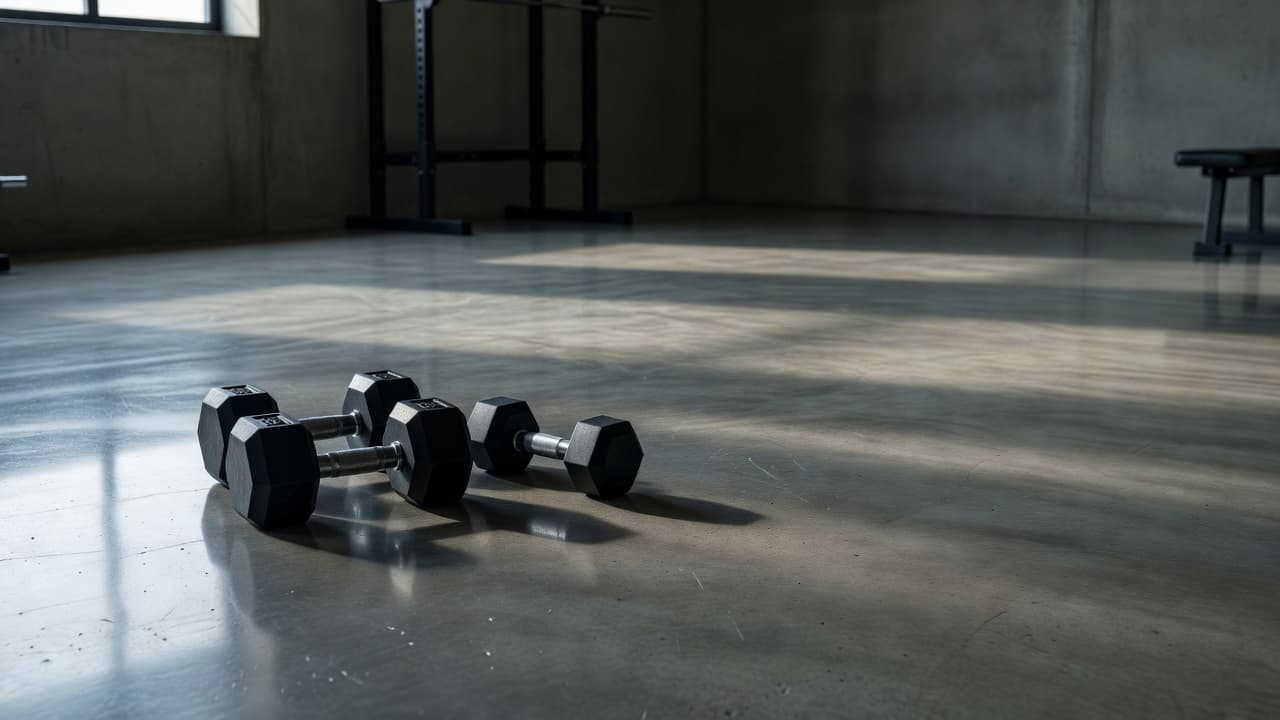
For most home gyms, the best concrete floor finish is either epoxy or polyaspartic with mats in lifting zones. Still, that is not a rule for every room. If you mainly do cardio, mobility work, and light dumbbells, polished or sealed concrete may be enough.
When epoxy and polyaspartic make the most sense
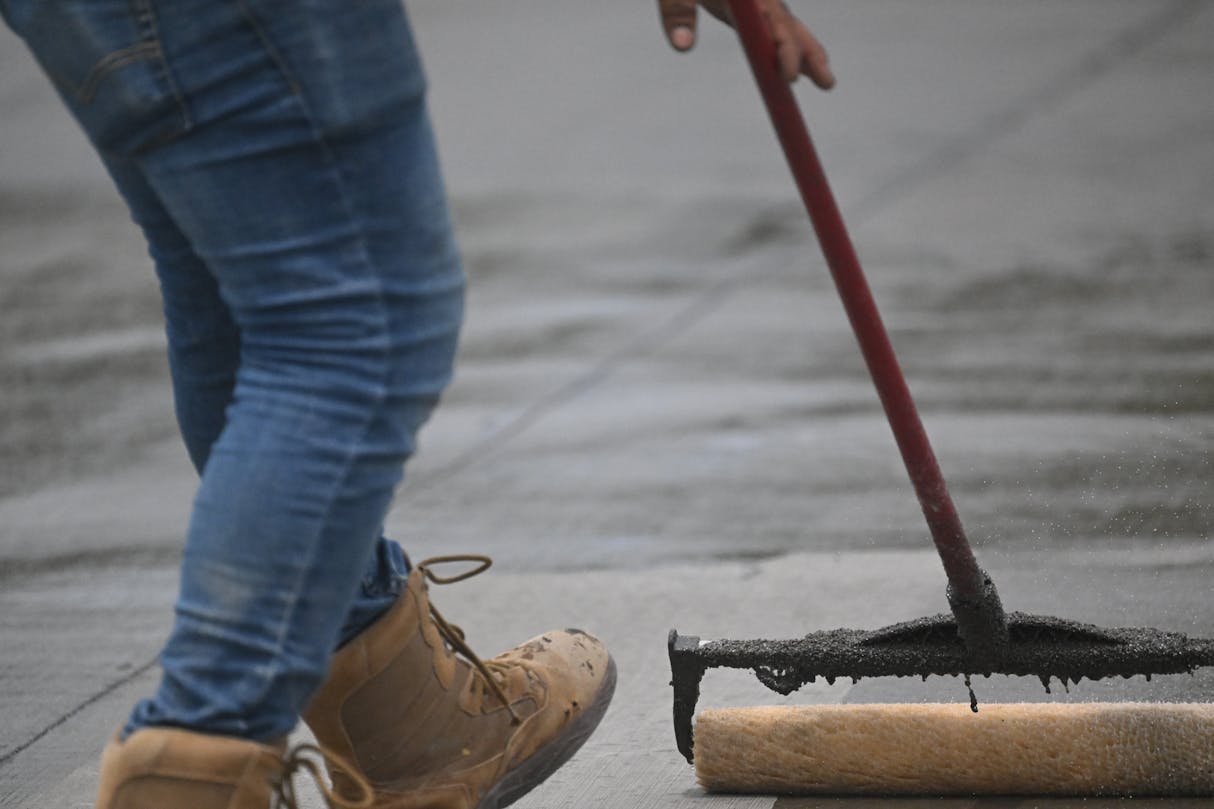
An epoxy coating for concrete is often the safest bet when you want real surface protection. It creates a thicker film than a simple sealer, so it resists sweat, dirt, rubber marks, and routine abrasion better than bare concrete.
That makes epoxy a strong choice for a garage gym or basement setup. An epoxy coating for garage floor spaces also helps if the room still stores tools, bikes, or seasonal gear. Cleanup is simple, and the finish can reduce concrete dust that would otherwise travel through the room.
Polyaspartic has a different appeal. It cures faster, usually handles UV light better, and works well as a topcoat in spaces with sun exposure. If your garage door stays open often, a polyaspartic coating may hold color and gloss better over time than straight epoxy.
Still, neither coating loves repeated hard impacts from bare steel. Bumper plates are easier on the surface. Cast iron is not. That is why even a floor sold for commercial concrete epoxy coating is not a license to drop weights anywhere you want.
A coating also needs the right texture. Too smooth, and sweat makes it slick. Too rough, and it traps dust and feels harsh during floor work. This guide to safe floor finishes for workout areas is useful if traction is high on your list.
If you hire a garage floor epoxy coating company, ask about three things first: moisture testing, crack repair, and diamond grinding. Those steps matter more than flashy flakes or a high-gloss sample board. For another grounded take, this piece on epoxy gym floor pros and cons makes the same point clearly.
Where polished, stained, and sealed concrete fit better
Not every home gym needs a thick coating. If your room is mostly for cardio, bodyweight work, and lighter weights, concrete polishing can be a smart option. It hardens the surface, cuts dust, and holds up well to foot traffic and equipment wheels.
Polished concrete also avoids one common coating problem. Because there is no thick film on top, there is less risk of chipping from a small dropped dumbbell. On the other hand, polished concrete is still unforgiving. It does not cushion movement, and it can get slick if sweat or water sits on the floor.
Concrete staining works best when looks matter as much as workouts. It adds color and keeps more of the slab’s natural character. With a sealer on top, stained concrete is easier to clean than raw concrete. Still, it is more cosmetic than protective.
A basic concrete sealer is the budget choice. It can reduce dust and slow minor staining, but it will not give you the barrier of a full epoxy coating for concrete system. For lifting zones, you will still want mats or rubber tiles.
If your goal is a clean, modern room with light equipment, polished or stained concrete can be enough. If the room will see heavy racks, loaded barbells, or repeated dragging of benches, coatings usually hold up better.
Moisture, prep, and the mistakes that shorten floor life
Basements and garages often decide the finish for you. A basement concrete coating has to deal with moisture first, or it may fail long before the workouts get hard.
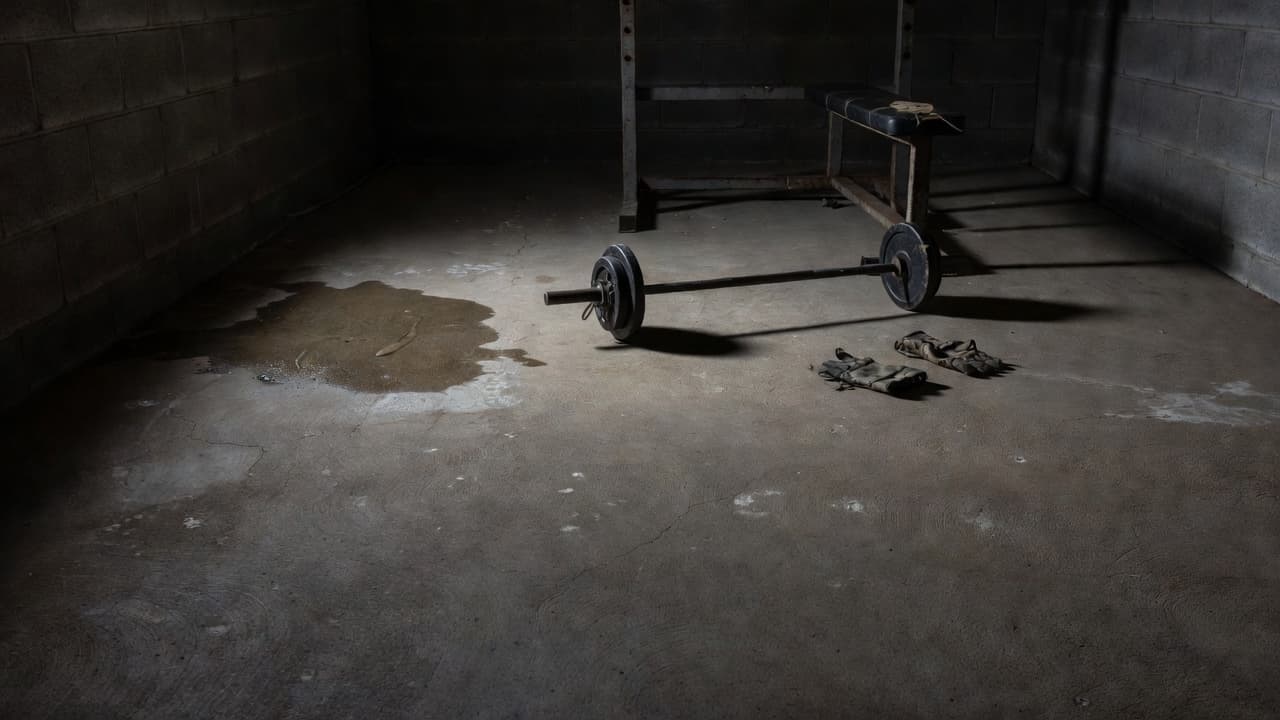
If the slab is below grade, start with moisture testing and crack review. A damp wall edge, white mineral residue, or old adhesive stains are warning signs. For readers setting up below ground, this page on moisture-resistant flooring for basement gyms covers the basement side of the decision well.
Many bad results come from simple mistakes:
- Coating over a weak or dirty slab.
- Choosing high gloss when you need more grip.
- Assuming any coating can replace lifting mats.
- Skipping cure time before moving equipment in.
The unglamorous part is the concrete dealing that comes first, fixing cracks, testing moisture, and grinding away weak surface paste. Without that prep, even a good product can fail.
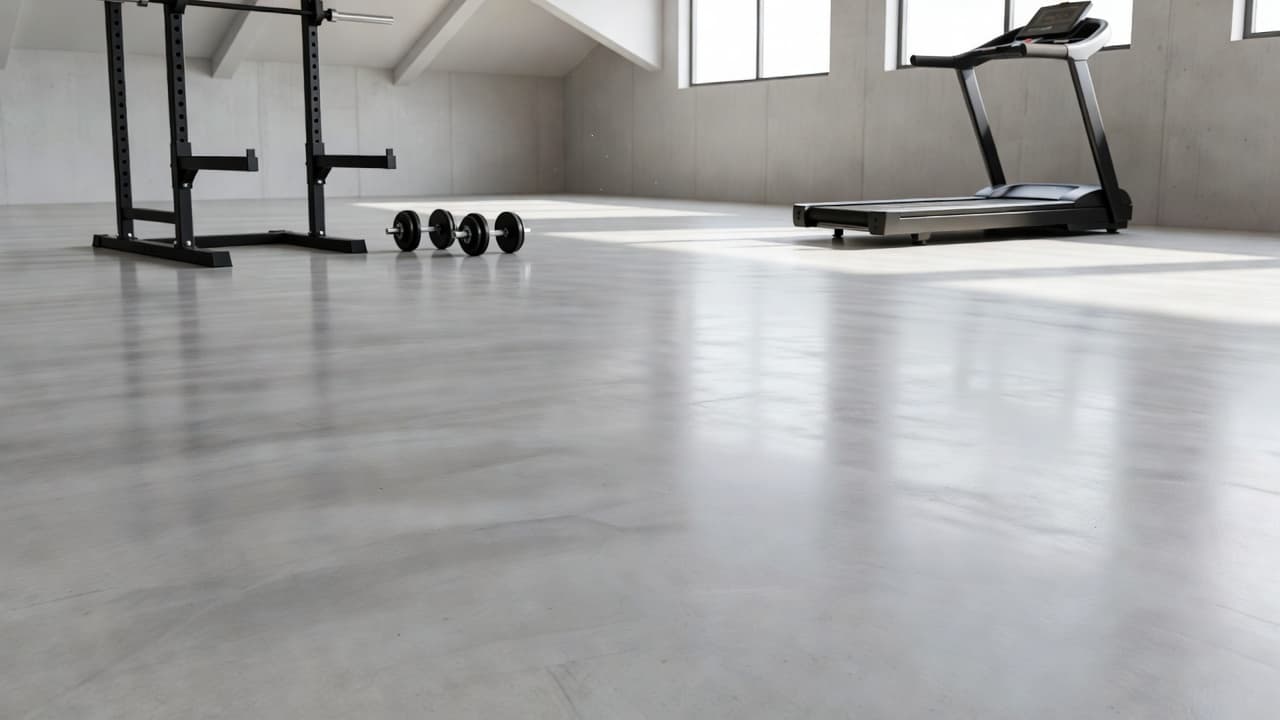
You should also match the finish to the training zone. Put dense rubber mats under racks, deadlift areas, rowing machines, and anything that vibrates. Leave coated or polished concrete exposed in walkways, stretching areas, or under storage. If you are also weighing full-floor rubber or foam, this garage gym flooring guide shows where overlays beat hard finishes.
Conclusion
The right home gym floor is rarely about the glossiest sample. It is about how well the finish handles impact, sweat, cleanup, and the room’s moisture level.
For many homeowners, epoxy or polyaspartic offers the best mix of protection and easy care. Polished, stained, or sealed concrete can still be the better fit when workouts are lighter and the slab is in good shape.
The smart move is to treat the finish as one layer of the system. Pair it with proper prep, the right texture, and mats where heavy lifting happens, and your floor will work a lot harder for a lot longer.