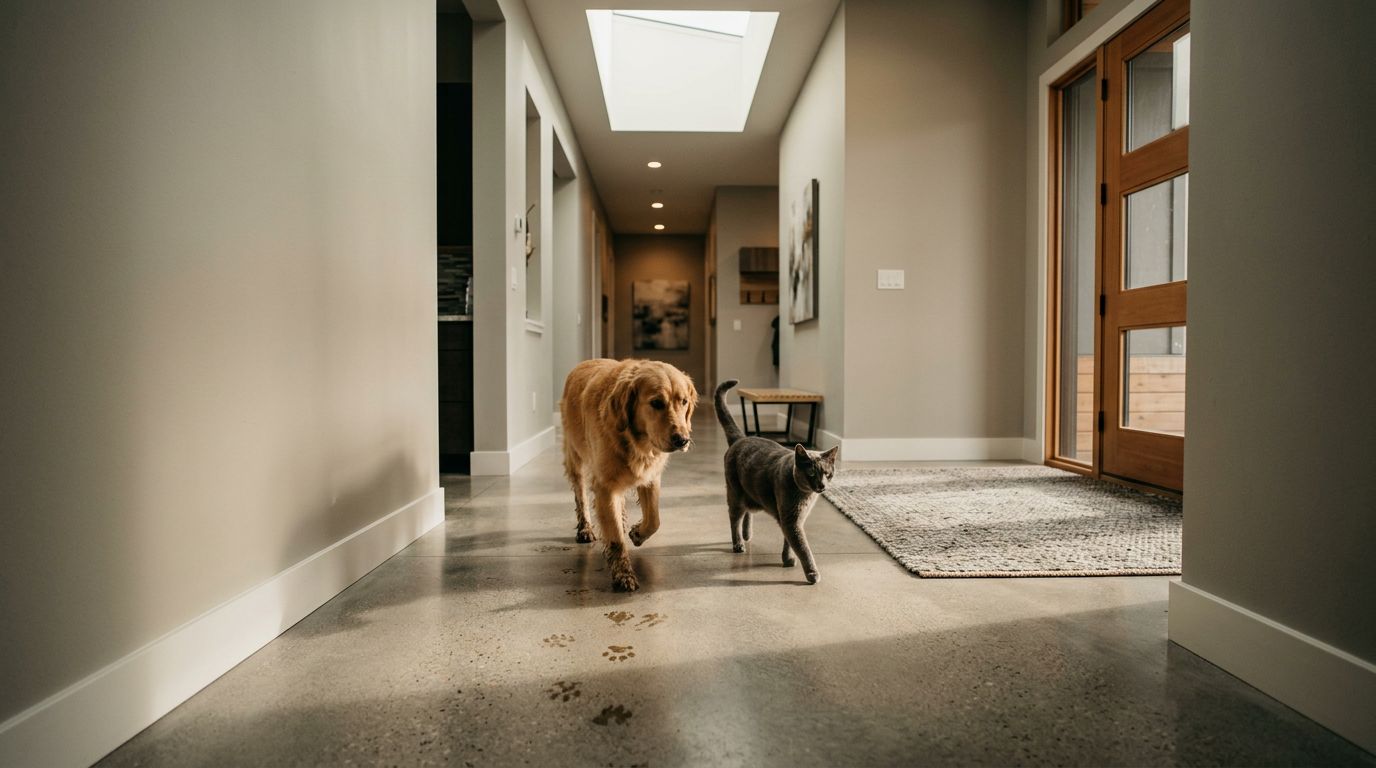
If your dog treats the hallway like a racetrack with its muddy paws, your floors take the hit. Mud, claws, water bowls, and the occasional accident can wear out soft surfaces fast.
Pet-friendly concrete floors can solve a lot of that trouble when they are sealed or coated the right way. They clean up fast, hold up well, and do not trap odors or pet dander like carpet. Still, concrete has trade-offs, so the best result depends on finish, traction, and comfort. This setup creates a more hypoallergenic environment for the household.
Key Takeaways
- Sealed concrete floors with epoxy coatings handle mud, claws, accidents, and odors better than carpet or soft surfaces, making cleanup fast and creating a hypoallergenic space.
- Choose matte or satin finishes with slip-resistant additives for better pet traction, especially near doors and water bowls, while polished or stained options suit living areas.
- Concrete can feel hard or cold for older pets, so add rugs, thick beds, and radiant heating; keep pets off until fully cured for safety.
- Simple maintenance involves sweeping grit, quick wipes with pH-neutral cleaners, and checking sealer integrity to keep the floor pet-friendly long-term.
Why sealed concrete works well with pets
Concrete starts with one big advantage: its durability. A quality epoxy coating for concrete floors creates a sealed surface that handles paws, bowls, and routine cleaning better than many other floors, including hardwood flooring.
A concrete epoxy coating also buys you time when accidents happen. Bare concrete is porous, so pet urine can soak in and leave odor behind. Sealed concrete keeps liquid on the surface longer, which makes cleanup easier with enzymatic cleaners on the concrete sealer and helps prevent pet stains and odors from settling into the slab.
Unsealed concrete and pet accidents are a bad mix because odor often starts below the surface.
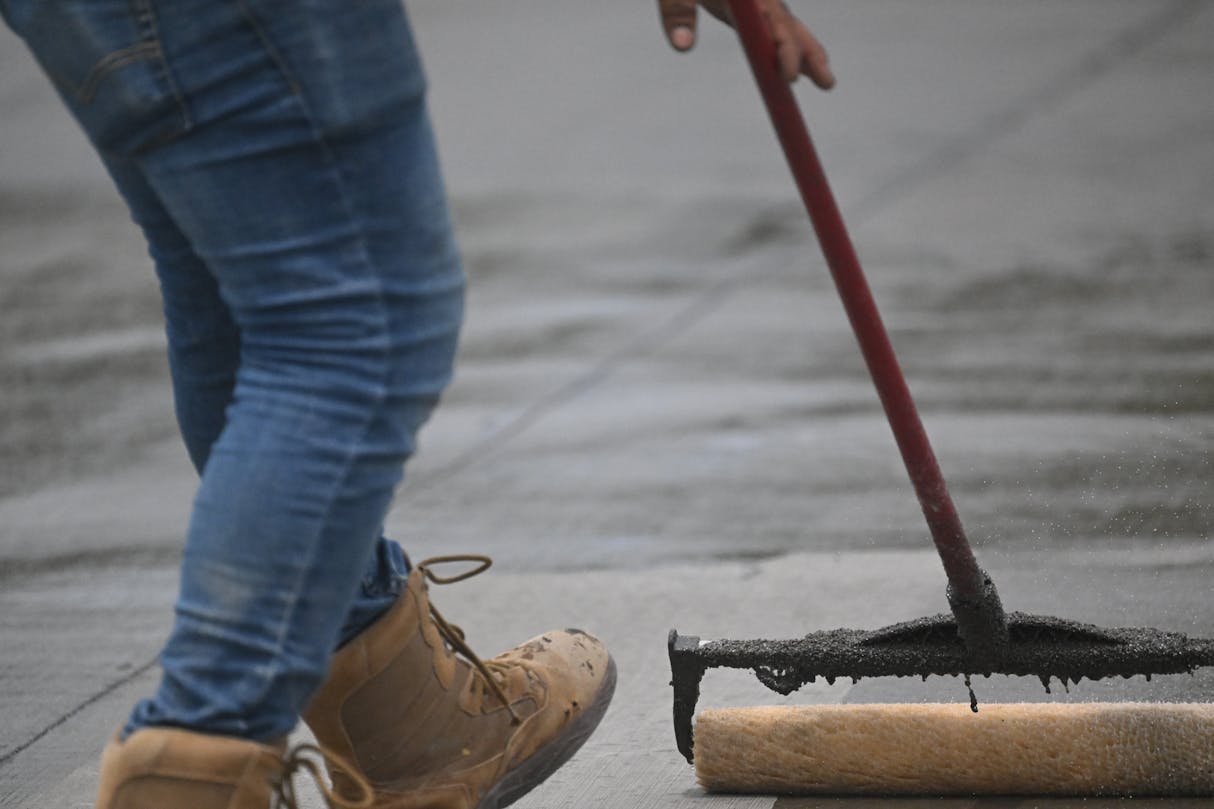
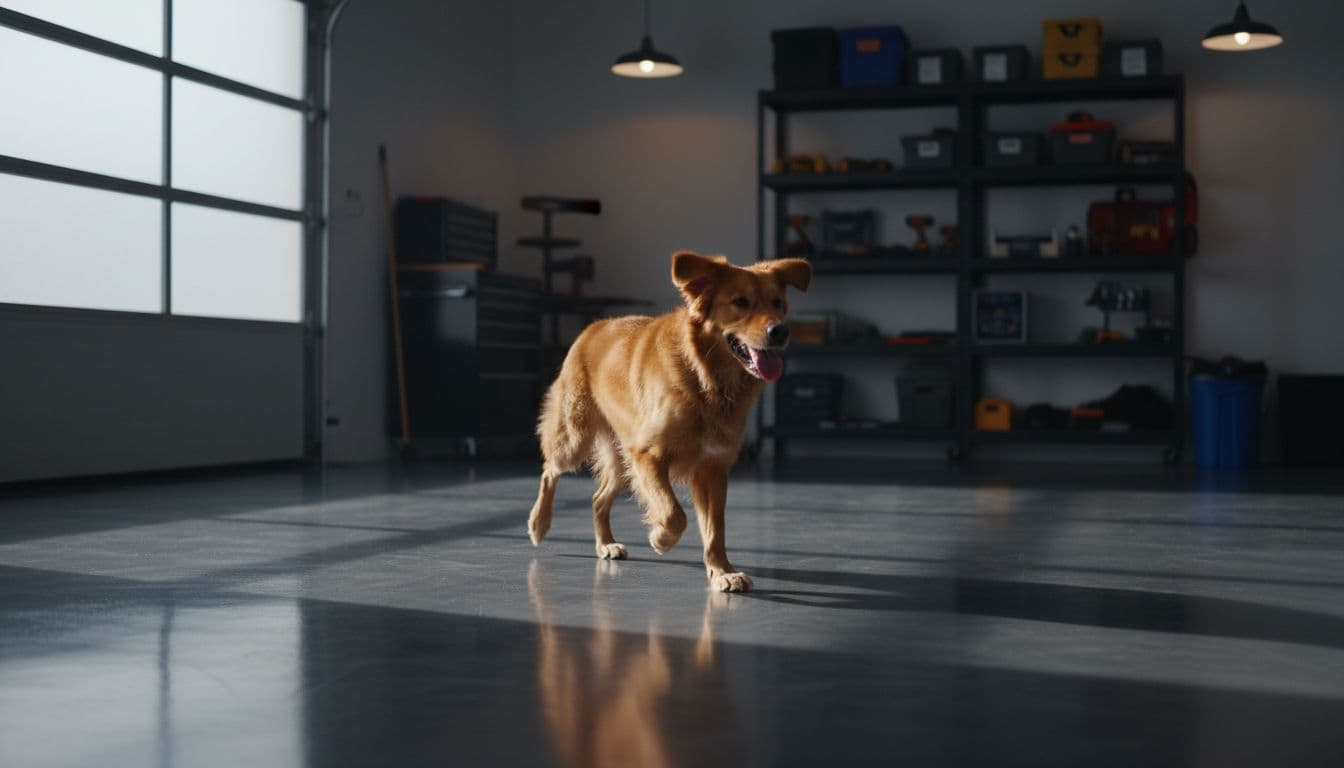
Many homeowners first notice these benefits with an epoxy coating for garage floor spaces. That same idea works in mudrooms, laundry rooms, and utility areas where pets come in wet and dirty. In high-use spaces, the same build used in commercial concrete epoxy coating can also make sense at home.
Dog nails usually won’t hurt the slab itself. Some glossy topcoats can still show wear over time, especially if grit sits on the floor. Even so, sealed concrete holds up better than softer surfaces that scratch or dent more easily because it is scratch resistant. One guide on scratch resistance and cleanability explains why these systems appeal to pet owners.
Where concrete floors can be harder on pets
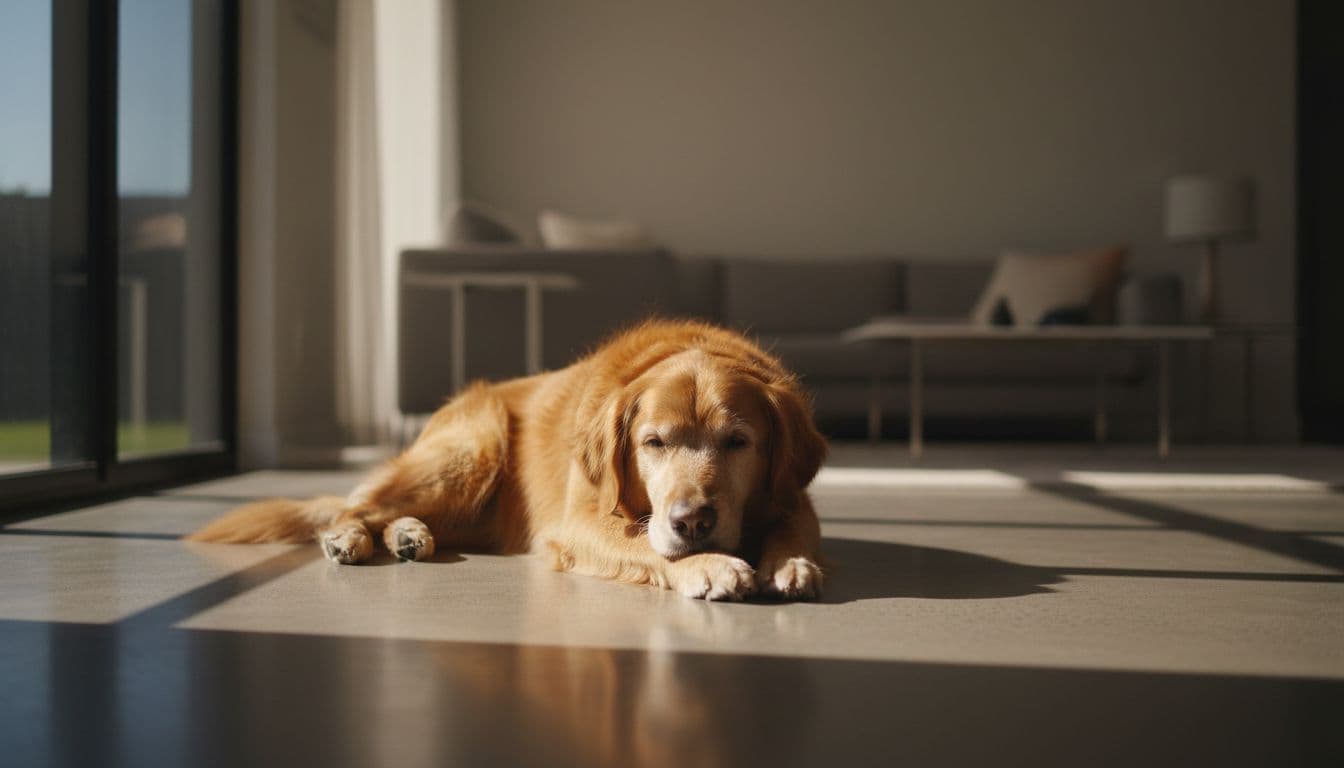
Concrete is durable, but it isn’t soft. Older dogs, large breeds, and pets with joint pain may struggle if the floor is hard, cold, or slick. Solutions like radiant floor heating can help with the cold issue. You can hear that problem before you see it, because nails clicking across the room often means the pet is working for traction.
Finish matters a lot here. Polished concrete floors can look clean and modern, but a higher sheen may feel slippery near water bowls or doors. If you like that look, Atlanta concrete polishing services can still work well when the sheen stays moderate for slip resistant results and rugs cover key paths.
Concrete staining warms up the slab with color, but it doesn’t replace a protective sealer. A polyaspartic coating can also shorten downtime, which sounds great when you need the room back fast. Many modern options like this are non-toxic and have low volatile organic compounds. Still, faster cure and more shine don’t always mean better footing for pets.
Fresh coatings are another short-term issue. Pets shouldn’t walk on epoxy or topcoats until the installer says the floor has fully cured. This homeowners guide to pet-safe epoxy gives a clear explanation of why cure time matters.
How to choose the right finish and keep it pet-friendly
The best floor for pets usually isn’t the glossiest one. It can deliver a modern aesthetic or a rugged industrial look while matching how your home works every day.
A few choices make a big difference, and sealed concrete offers versatility similar to tile flooring, luxury vinyl flooring, or hardwood flooring as a cost-effective choice over the long term:
- Pick a satin or matte finish when traction matters more than shine.
- Ask for a slip-resistant additive near doors, feeding areas, and wash zones.
- For living areas, consider concrete polishing or concrete staining if you want a more natural look.
- For messy zones, an epoxy coating for concrete or a basement concrete coating often gives easier cleanup.
Moisture also matters, especially below grade. If you’re coating a garage or basement, ask about garage floor moisture testing methods and ensure subfloor preparation includes a moisture barrier. Trapped vapor can break bond, cloud a finish, or shorten the life of the coating.
A good garage floor epoxy coating company should talk about prep, moisture, traction, and cure time, not only color flakes and gloss. Good concrete dealing, if you hear that phrase at all, still comes down to slab prep, crack repair, and honest advice about how pets use the space.
After the floor is installed, maintenance stays simple and the surface is easy to clean. Sweep grit often, wipe accidents fast, and clean the floor surface with a pH-neutral product that won’t wear down the sealer. If water stops beading or odor starts to linger, the topcoat may need attention. In homes with senior pets, add runners, washable rugs, and thick beds where they stand up and lie down most often.
Final thoughts
A pet-friendly concrete floor can be a smart choice for pet ownership because it handles mess, moisture, and wear better than many soft surfaces. That’s especially true in garages, basements, mudrooms, and other busy zones.
The floor still has to feel safe under paws. Choose the right sheen, keep the sealer in good shape, and give older pets soft places to rest. Then concrete feels less harsh and a lot more practical, with water resistance delivering long-term satisfaction.
FAQ
Are epoxy-coated concrete floors safe for pets?
Yes, once the coating fully cures. During installation, keep pets out of the area and follow the installer’s timeline for re-entry.
Will dog nails scratch sealed concrete?
Sealed concrete is scratch resistant, and the concrete itself is hard to damage. Nails can still dull or mark some topcoats, especially glossy finishes with grit on the surface.
What’s the best concrete finish for homes with pets?
For most homes, a sealed floor with moderate sheen and added traction works best. In wet or messy areas, a basement concrete coating or similar sealed system is easy to clean with low maintenance compared to bare concrete.