Seal it once and forget it rarely works on outdoor concrete surfaces in Georgia. Heat, humidity, red clay, heavy rain, and shade all wear on slabs like driveways and patios faster than many homeowners expect. To protect concrete from these harsh elements, regular sealing is essential.
If you’re choosing a concrete sealer georgia, the best pick depends on how your driveway or patio handles water and sun, not only how shiny it looks. Concrete sealing is essential for curb appeal in the local Atlanta market. A good sealer helps block stains, slows moisture damage, and reduces the damp conditions that feed mildew and algae. Start with the type of protection your surface needs.
Key Takeaways
- For Georgia driveways and plain patios, choose a breathable penetrating sealer that repels water while allowing moisture vapor to escape, lasting 3 to 5 years with low maintenance.
- Film-forming acrylic sealers suit decorative stamped or colored patios for added sheen and easier cleanup, but they last 2 to 3 years, can trap moisture, and may get slick—opt for slip-resistant additives.
- Proper prep is key: clean thoroughly, test absorption and moisture, and seal in dry weather after 24-48 hours post-wash to avoid failures from Georgia’s humidity and rain.
- Sealing isn’t always best; consider epoxy coatings for covered, stained, or high-use slabs, while concrete polishing or staining works for indoor or decorative needs.
- Match the sealer to your slab’s exposure—open areas need breathability over gloss to handle heat, UV, and red clay stains in Metro Atlanta.
The best sealer type for Georgia weather
Georgia concrete deals with long humid stretches, intense UV exposure that demands reliable UV protection, occasional freeze-thaw cycles, pollen, oil drips, and shaded corners that stay damp. Because concrete is porous, water moves in and out of the slab. That is why the big choice in hardscape sealing comes down to a breathable penetrating sealer or a film-forming decorative sealer.
For most open driveways, a penetrating sealer is the safer bet for driveway sealing. It soaks in, repels water, and still lets moisture vapor escape. That matters after summer rain, because trapped moisture can turn a surface hazy or shorten the life of a coating. Penetrating sealers also keep the natural look of broom-finished concrete.
Patios can go either way for patio sealing. If you have plain concrete and want low fuss, a penetrating sealer still works well. If you have stamped concrete or color and want a richer look, a film-forming acrylic can add sheen and make cleanup easier by creating a protective barrier. However, topical sealers need a dry slab, mild weather, and a surface that will not stay wet for long.
This quick comparison makes the choice easier:
| Sealer type | Best fit in Georgia | Main benefit | Main drawback |
|---|---|---|---|
| Penetrating | Open driveway sealing, plain patio sealing, shaded areas | Breathable, natural look, good water repellency | Little to no color enhancement |
| Film-forming acrylic | Decorative patio sealing, stamped or colored concrete, covered areas | Boosts color and adds a wet look | Can whiten, peel, or get slick if moisture is trapped |
For most homes, penetrating sealers on driveways offer strong durability and low maintenance, lasting about 3 to 5 years in Georgia. Film-forming patio sealers often last 2 to 3 years with regular maintenance, sometimes less in full sun or around grills and planters. If you want a deeper look at product categories, this 2026 concrete sealer guide is a helpful reference.
For an open-air driveway in Georgia, breathable protection usually lasts better than a glossy surface film.
Slip resistance matters too. A shiny patio may look great after sealing, but it can get slick when rain hits or organic growth starts building. Around pools, outdoor kitchens, and heavily shaded patios, ask for a matte finish or a slip-resistant additive if the product allows one.
How to test, prep, and time the job
Most sealer failures start before the roller touches the concrete. Dirt, leftover cleaner, trapped moisture, and bad timing ruin more jobs than the product itself.
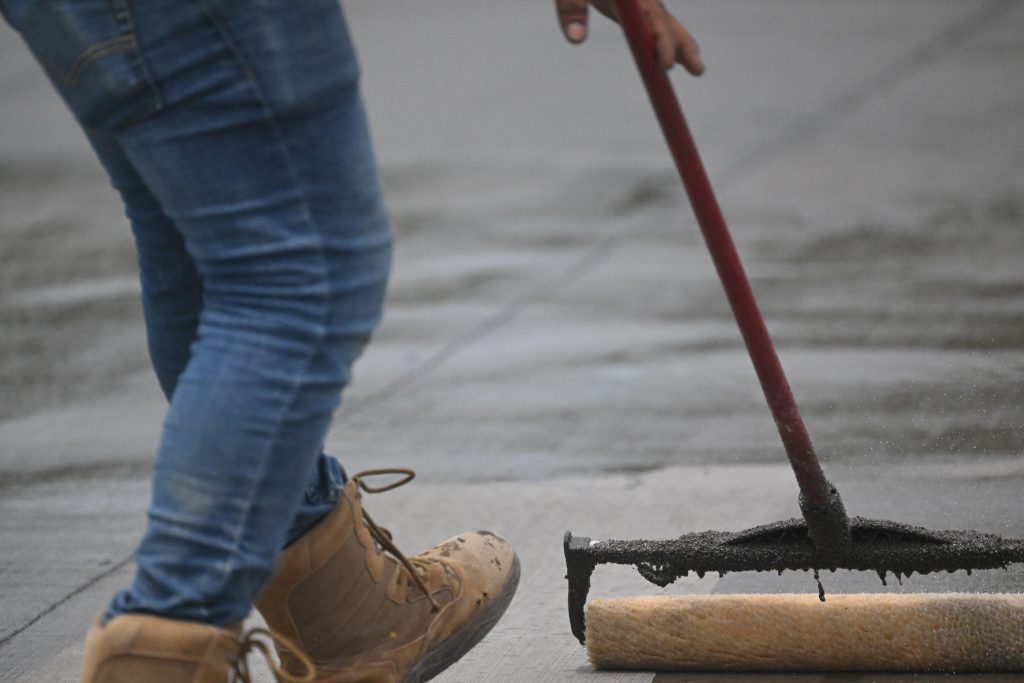
Photo by Eyes2Soul Eyes2Soul
Use this simple routine before you seal your residential driveway or patio:
- Clean the slab well. Pressure washing works, but keep the nozzle moving and avoid blasting out weak joints. If the patio has mildew or algae, use a concrete-safe cleaner first, then rinse well. Household soap can leave residue, so skip it. For residential surfaces in Metro Atlanta, a professional service can help ensure proper prep.
- Test absorption. Splash a little water on dry concrete. If it darkens and soaks in within a minute, the slab is open enough for a penetrating sealer. If the water beads, an old sealer may still be there, and a new coat may not bond evenly.
- Check for moisture. Tape a square of clear plastic to the concrete and leave it overnight. If you see condensation under the plastic, or the slab looks darker in the morning, excess moisture is present, so wait longer. For tougher moisture issues and coated slabs, this guide to moisture testing before coatings explains why hidden moisture causes failures.
- Watch the weather. In Georgia, wait at least 24 to 48 hours after washing, and longer if the area stays shaded or the air feels sticky. Pick a day with no rain in the forecast and follow the label for temperature limits. Late morning, after dew dries, often works better than scorching midday. This timing helps prevent water damage from sudden downpours.
Two thin coats usually work better than one heavy coat. That is extra true on patios, where puddling can leave a patchy finish. Also, do not seal when the slab is hot enough to flash-dry the product before it levels out. This driveway sealer advice for humid regions lines up with what Georgia homeowners see every summer: extra dry time matters.
When a sealer is not the right solution
Some homeowners start by asking for sealer, but what they really want is a different finish. If the slab is covered, badly stained, or used more like a work surface, a sealer may not do enough.
That is where a concrete epoxy coating or another epoxy coating for concrete enters the conversation. Those systems make sense indoors or under full cover, not on most open Georgia driveways. The same goes for an epoxy coating for garage floor projects, basement sealing jobs, masonry sealing, basement concrete coating, and commercial concrete epoxy coating systems that deliver superior stain resistance. A good garage floor epoxy coating company should tell you that exterior slabs face much more UV, rain, and moisture movement than interior floors.
A polyaspartic coating handles sunlight better than standard epoxy, but it still needs serious prep and the right setting. If you are comparing decorative options, concrete stain vs dye differences are worth a look, because concrete staining adds color while a sealer protects it. Indoors, concrete polishing is another low-maintenance route for people who want the look of real concrete without a peelable film, and a grind and seal process offers a strong alternative for creating durable sealed concrete floors. These Atlanta concrete polishing services show how that process differs.
You may even hear vague phrases like concrete dealing when talking with contractors. Strip away the jargon and ask a plain question: do you need water repellency, decorative color, or a full coating system? That one question usually clears up the choice fast.
Frequently Asked Questions
What’s the best sealer type for Atlanta GA driveways?
Penetrating sealers are the top choice for open driveways in Georgia. They soak in to repel water while staying breathable, preserving the natural look of broom-finished concrete and lasting 3 to 5 years despite humidity and rain. Avoid film-forming types here, as trapped moisture can cause hazing or peeling.
How do I prepare concrete for sealing in humid Georgia weather?
Start by pressure washing to remove dirt, mildew, and algae, using a concrete-safe cleaner if needed—avoid household soap residue. Test absorption with water (it should soak in quickly) and moisture with plastic sheeting overnight; wait if condensation forms. Seal 24-48 hours after cleaning on a dry, rain-free day in mild temps.
Penetrating vs. film-forming sealers—which for patios?
Plain patios do well with penetrating sealers for low-fuss water repellency and breathability in shaded, damp spots. Opt for film-forming acrylics on stamped or colored patios wanting sheen and easy cleanup, but ensure the slab dries fully to prevent whitening or slickness—add slip resistance near pools.
How long does concrete sealer last in Georgia?
Penetrating sealers hold up 3 to 5 years on driveways with good prep, thanks to breathability against heat, UV, and rain. Film-forming types last 2 to 3 years on patios, shorter in full sun or high-use areas like grills—reapply after weathering shows.
When is a sealer not enough for my concrete?
Skip sealers for badly stained, covered, or work-heavy slabs; use epoxy or polyaspartic coatings instead for superior protection indoors or under cover. For decorative flair, try concrete staining or polishing—ask pros to match the finish to Georgia’s outdoor demands.
Final thoughts
The best sealer for a Georgia driveway or patio matches the slab, the weather, and the way you use the space. Open driveways usually do best with a breathable penetrating sealer. Decorative patios can use a film-forming finish, but only when the slab is dry and slip resistance is part of the plan.
A little patience saves a lot of frustration. Test absorption, check moisture, watch the forecast, and choose breathable protection when your concrete needs to handle Georgia’s heat and rain without trapping water. Concrete sealing requires local expertise in Metro Atlanta, so for your residential or commercial project, contact us in Atlanta GA today for a free estimate.