
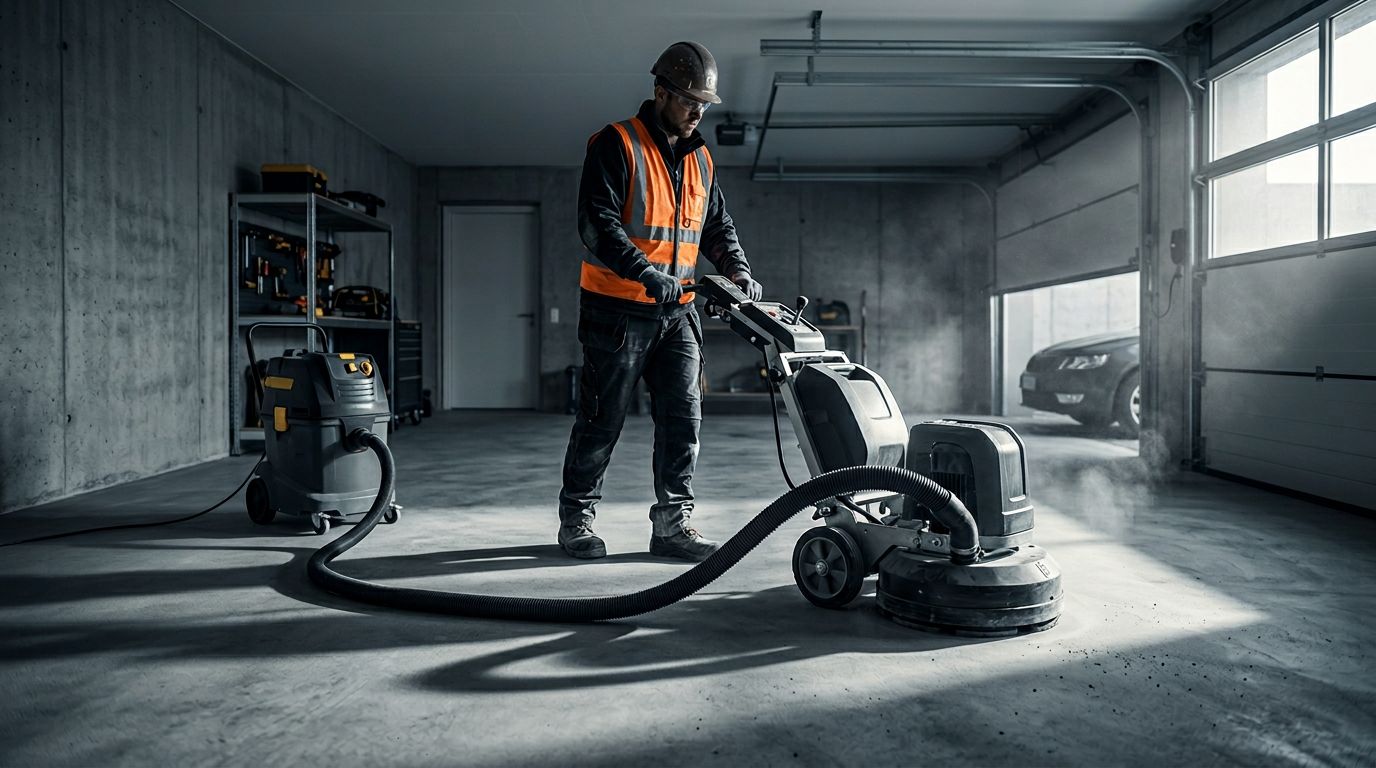
Indoor concrete grinding is noisy, controlled, and more methodical than many people expect. If you’re getting ready for a contractor visit, the biggest surprises usually aren’t the floor itself, they’re the setup, the sound, and the temporary loss of access.
The good news is that modern crews don’t walk in and create a dust storm. A well-run job to restore concrete floors uses containment, HEPA vacuums, concrete floor grinders for home projects, and clear work zones. Knowing what the day looks like makes the whole process easier.
Key Takeaways
- Indoor concrete grinding starts with a walkthrough and setup using walk-behind electric or propane concrete floor grinders, HEPA vacuums, hand-held edgers, and plastic containment to control dust and limit access.
- Expect steady mechanical noise from the grinder and vacuum, plus temporary restrictions in garages, basements, or commercial spaces—plan for pets, kids, or work-from-home disruptions.
- Dust control with shrouds, HEPA filters, and barriers keeps mess minimal but not zero; fine particles can still escape during edges or moves.
- Prep by clearing items, paths, and checking 220v power; post-grinding leaves a clean, matte slab ready for epoxy coatings, polishing, or staining.
- The process is organized disruption leading to better floor prep for long-lasting finishes like polished concrete or epoxy systems.
When the crew arrives, setup comes before grinding
Most indoor grinding jobs start with a walkthrough, the beginning of surface preparation using floor grinding equipment. The crew checks the slab, looks for cracks, coatings, glue, paint, or moisture signs, and materials to remove paint and adhesive for industrial-grade results. They also confirm the final goal. Prep for a concrete epoxy coating is different from prep for concrete polishing or concrete staining, so that first look matters.
Then the equipment comes in. For most homes, concrete floor grinders include a walk-behind model, such as an electric concrete grinder or propane concrete grinder, along with an attached vacuum system, hand-held concrete floor grinders for edges (often another electric concrete grinder), extension cords, and plastic sheeting. Large projects often require a planetary floor grinder that runs on single phase 220v power. If the project is a basement concrete coating, setup can take longer because access is tighter and materials often move through finished spaces.
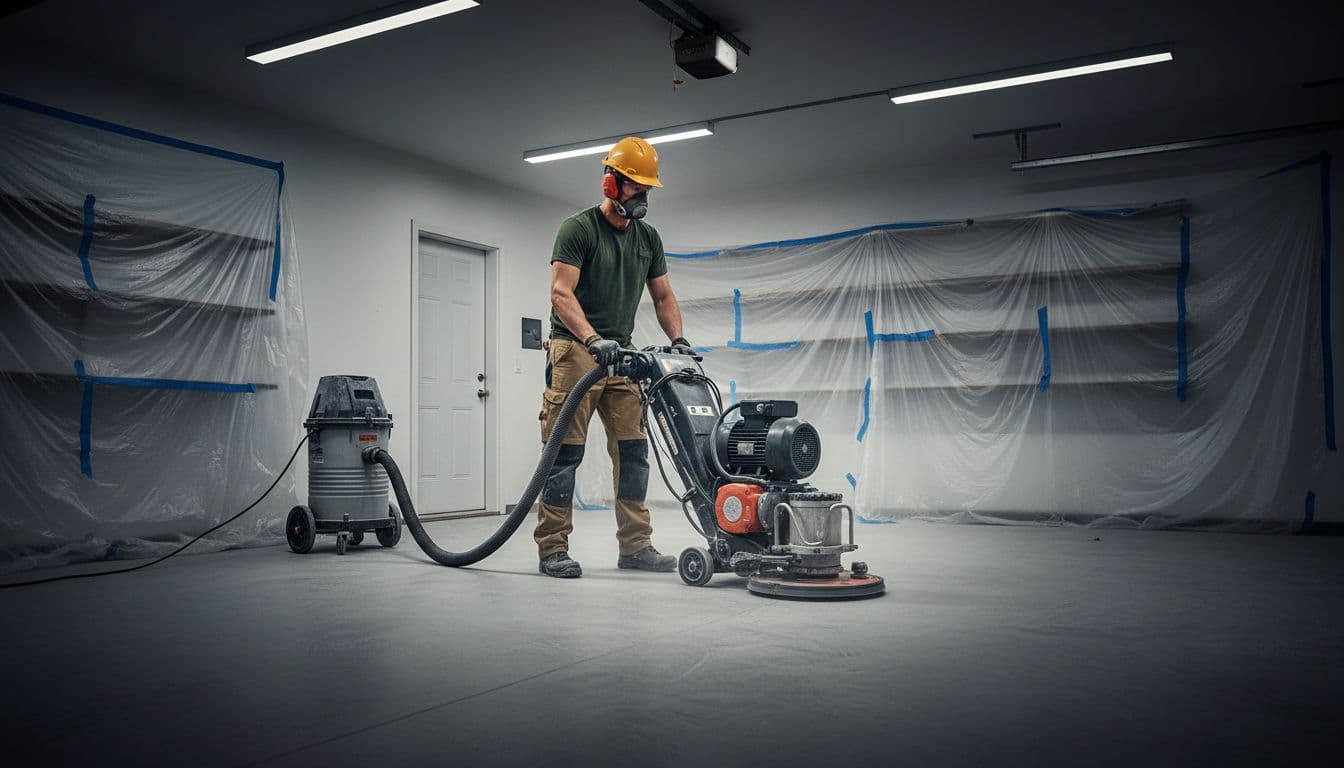
Expect the work area to be partly off-limits once the crew starts. In a garage, cars need to stay out. In a basement, the stairs and nearby rooms may have restricted access for part of the day. In a commercial space, sections may be closed while the team works in phases.
Noise is part of the job. The grinder has a steady mechanical sound, and the vacuum adds its own high-pitched pull. It usually isn’t as sharp as demolition noise, but you will hear it through walls. If you work from home, have pets, or manage occupied units, plan around that sound.
If you’re choosing between prep methods for an epoxy coating for garage floor projects, this guide on shot blasting vs grinding for epoxy prep gives helpful context.
Dust control is strong, but it isn’t magic
Modern indoor grinding with electric concrete grinders is built around dust reduction, thanks to concrete grinding machine technology that improves surface preparation safety. Concrete floor grinders often run with a dust extraction shroud that captures dust at the source, and that dust shroud connects to a HEPA vacuum. Electric concrete grinder models are preferred for indoor air quality during concrete floor grinder operations. HEPA filters are designed to trap fine particles, including much of the silica dust that matters during concrete floor grinders and floor prep work with concrete grinding machines.
Plastic containment is also common. Crews may seal doorways, hang floor-to-ceiling barriers, and cover nearby openings to keep dust from drifting into other rooms. In some cases, they also protect vents or ask that HVAC settings be adjusted during the work.
Good dust control cuts the mess sharply, but no contractor should promise zero dust during indoor grinding.
That matters because concrete grinding still creates fine particles. Even with strong collection, a small amount can escape during edge work, equipment moves, or cleanup. Honest contractors say that up front. They follow silica-dust precautions, wear the right safety gear, and control the work zone instead of making unrealistic promises.
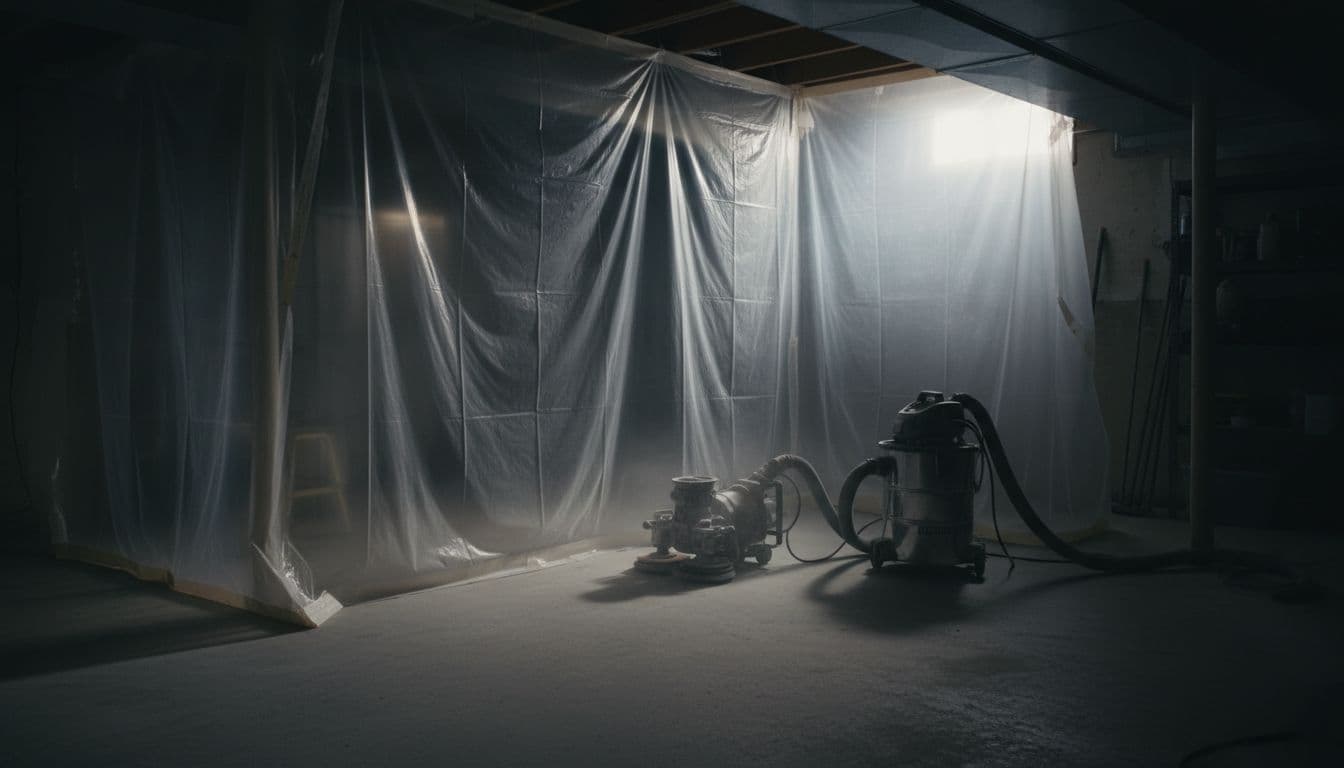
For homeowners, this means less mess than many older grinding jobs created. For property managers, it means tenant notices still matter, because hallways, doors, and shared areas can be part of the traffic path even when the grinding itself stays contained.
How to prepare, and what the floor looks like after
A little prep on your side saves time and prevents avoidable delays. If you’re hiring a garage floor epoxy coating company for an epoxy floor system or polished concrete, ask about access, power, cleanup, and how long the area will be unavailable. That same conversation helps with basement and commercial concrete epoxy coating work, epoxy floor systems, or polished concrete projects too.
Before the crew arrives, it helps to:
- Remove cars, storage racks, boxes, and loose items from the work area.
- Take fragile items off nearby walls or shelves because vibration can travel.
- Keep pets and kids away from the work zone.
- Clear a path from the entry door to the slab.
- Check for single phase 220v outlets to power the planetary floor grinder or concrete floor grinders, and ask whether nearby rooms, vents, or doorways need extra protection.
- Confirm where the crew can park, if single phase 220v power is available for electric concrete grinders or propane concrete grinders, and when the space can be used again.
- Verify access for floor grinding equipment like a concrete grinding machine with the right grinding width to keep the timeline on track.
For property managers, good concrete dealing means clear tenant notices, access windows, and elevator or loading rules before the job day starts, especially for masonry projects involving concrete floor grinders or planetary floor grinders.
If the floor will get an epoxy coating for concrete as part of an epoxy floor system, moisture matters too. A solid installer should talk about slab conditions before coatings go down. This article on moisture testing before epoxy coating explains why that step can affect long-term results.
After grinding, expect a clean slab, not a finished look
Freshly ground concrete usually looks flat, open, and a bit chalky or matte. That is normal. Grinding is surface prep, not the final beauty step, unless the project moves into finer stages for concrete polishing, polished concrete, or grinding and polishing processes leading to polished terrazzo.
Small scratch patterns from diamond cup wheels may be visible during coating removal or thinset removal, and edges can look slightly different where hand tools finish tight areas. That doesn’t mean the work is sloppy. It means the slab is now opened up so a concrete epoxy coating, a polyaspartic coating, or another finish can bond properly. The grinding width of the concrete grinding machine or planetary floor grinder influences how quickly coating removal and thinset removal wrap up, while an angle grinder kit with a high torque motor and low-vibration handle delivers professional-grade performance for concrete edging in those spots.
Cleanup usually includes vacuuming the floor, collecting debris, and removing containment once the area is ready. The slab should feel much cleaner than it did before, especially if the old surface was dusty, weak, or coated with failing material. Crews often use electric concrete grinders, propane concrete grinders, or a concrete surface sander with planetary gear driven features for industrial-grade results in grinding and polishing, even on masonry projects.
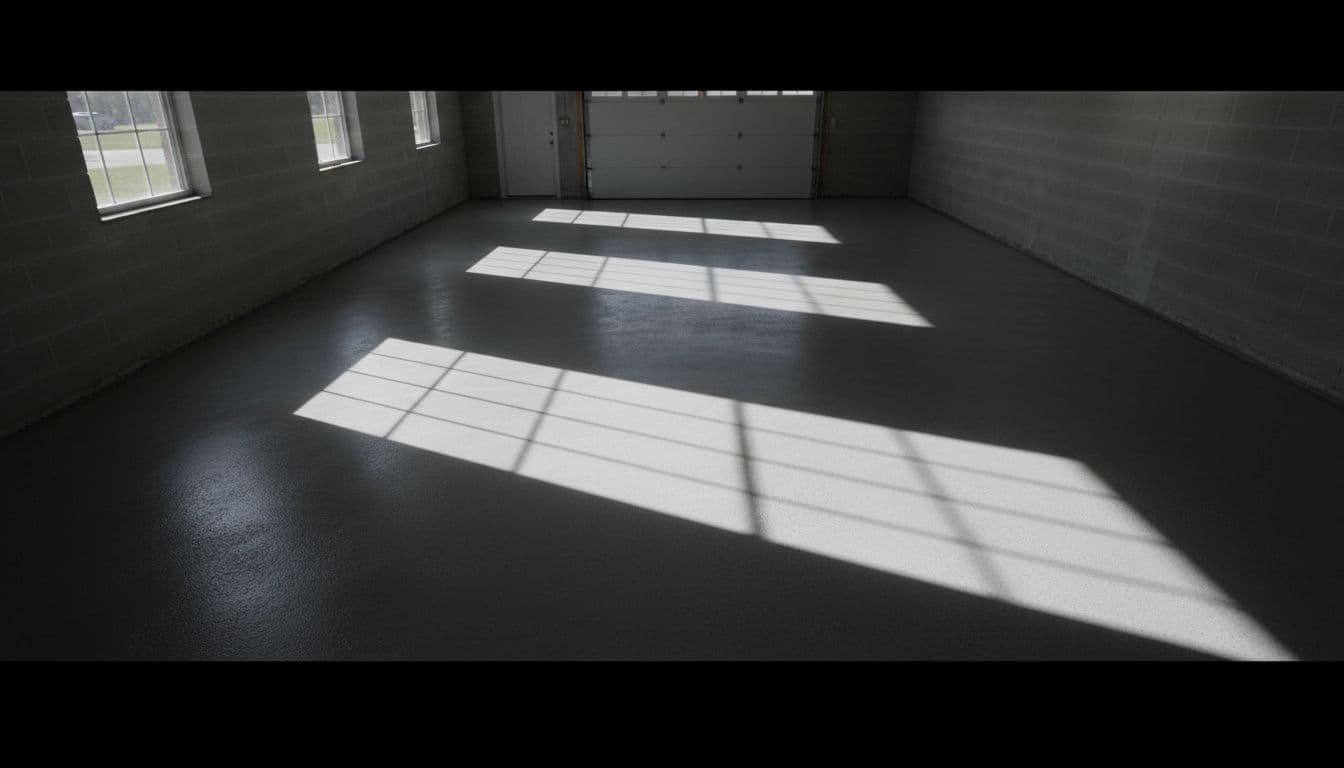
From there, the next step depends on your finish, like grinding and polishing for polished concrete. A simple epoxy coating for garage floor use may follow soon after. Some systems add a polyaspartic coating on top for faster return to service. If you want color without a film build, concrete stain vs dye comparison can help sort out decorative options, including those paired with floor grinding equipment for concrete edging.
Frequently Asked Questions
How noisy is indoor concrete grinding?
Grinding produces a steady mechanical hum from the concrete floor grinder, paired with a high-pitched vacuum sound. It’s not as sharp as demolition but carries through walls, so plan headphones or time away if sensitive. Modern electric models are quieter indoors than propane ones.
Will there be dust during the job?
HEPA vacuums and dust shrouds capture most particles at the source, with plastic barriers sealing areas. No system is perfect—small amounts can escape during edge work or cleanup. Crews follow silica precautions for safety.
What should I do to prepare my space?
Clear cars, boxes, fragile items, and paths to the slab; check for 220v outlets and crew parking. Keep pets and kids away, and protect nearby vents or rooms. Discuss access, timeline, and power needs upfront.
What does the floor look like after grinding?
It appears flat, matte, and slightly chalky with possible fine scratches from diamond wheels—normal for prep. Edges may differ from hand tools, but the slab is clean and open for bonding epoxy, polyaspartic, or polishing. Cleanup leaves it vacuumed and ready for the next finish.
How long does setup take before grinding starts?
Setup varies: quick in open garages, longer in tight basements due to equipment like planetary grinders moving through spaces. Expect a walkthrough first to assess cracks, coatings, and goals. It sets up contained zones before the grinder runs.
Final Thoughts
Indoor grinding is a prep step with real noise, careful containment, and temporary access limits. The choice between an electric concrete grinder and a propane concrete grinder depends on ventilation, but concrete floor grinders are necessary for quality results. When the crew handles setup well, the process feels organized instead of chaotic.
The main thing to expect is a short-term disruption that leads to a better floor. A concrete grinding machine, whether an electric concrete grinder or a propane concrete grinder, gives your next finish, whether that’s polished concrete, stain, or an epoxy system, a much better chance to last through high-quality grinding and polishing.