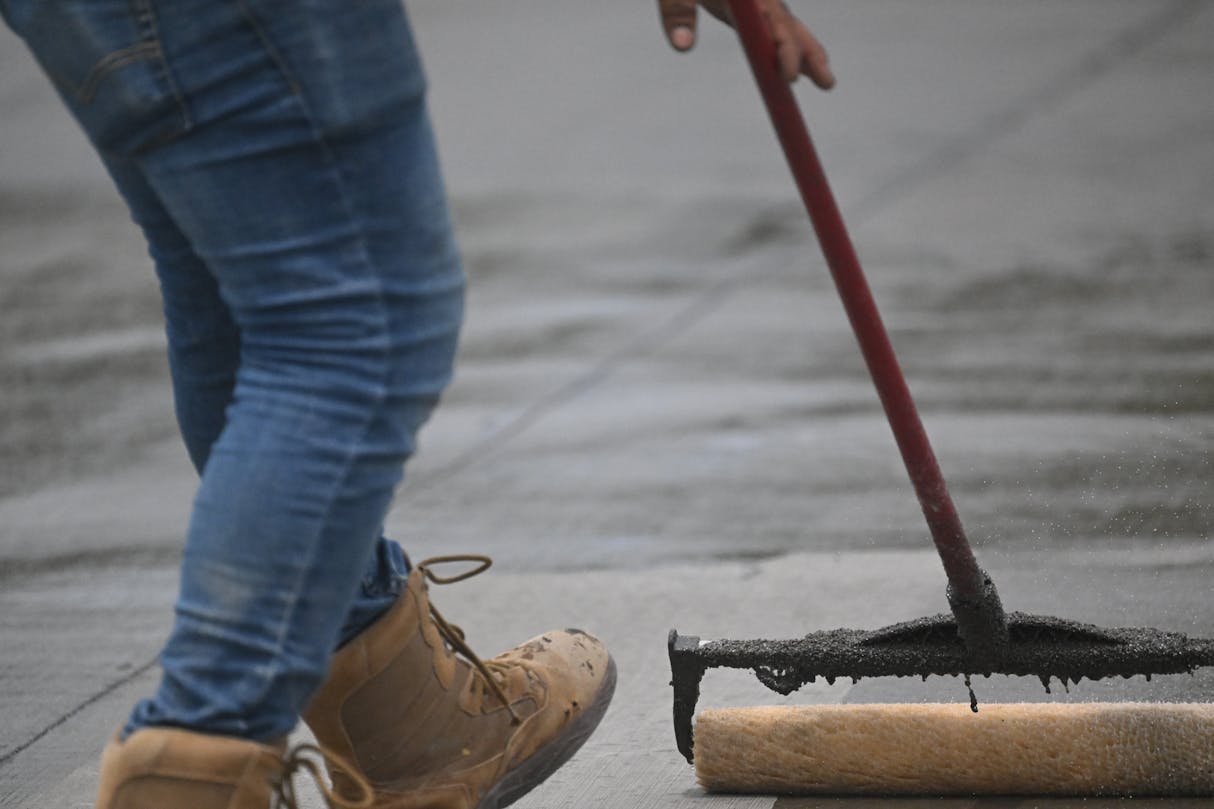
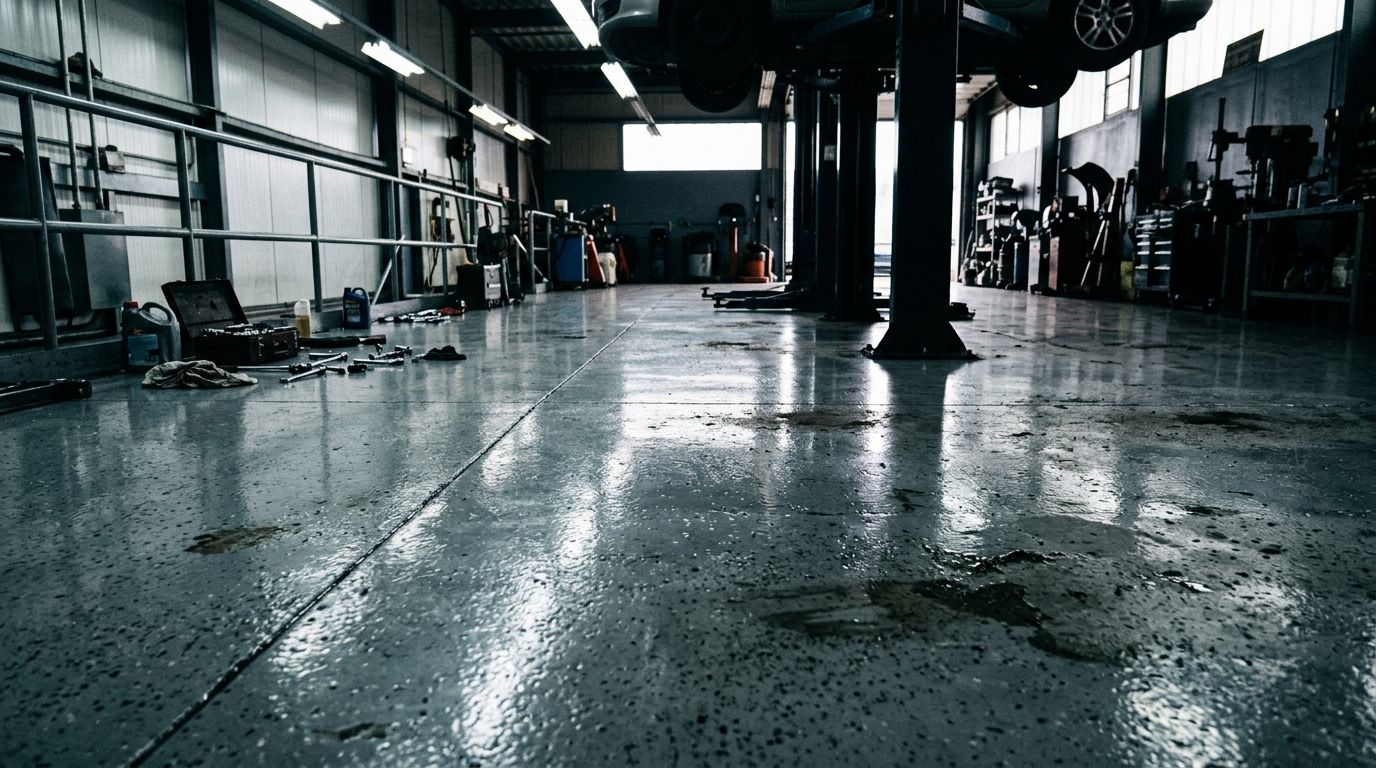
A repair shop floor takes more abuse in a week than most home garages see in years. If the finish can’t handle oil, brake cleaner, rolling jacks, and daily scrubbing, it becomes a maintenance problem fast.
For most shops, the best concrete floor finishes are coating systems, not bare or lightly sealed slabs. Still, the right choice depends on traffic, chemical exposure, downtime, and how well the slab is prepped before any product goes down.
What an auto repair shop floor is really up against
An auto repair floor doesn’t live an easy life. It carries heavy vehicle traffic, point loads from lifts and stands, dropped sockets and brake parts, and a steady stream of oil, coolant, ATF, and degreasers.
That matters because many finishes fail in two ways. Some stain and stay dirty. Others lose bond and start peeling, chipping, or blistering.
Chemical exposure separates good systems from weak ones. Motor oil is messy, but brake cleaner is often worse because it can soften or dull low-grade coatings. Frequent scrubbing adds another layer of stress, especially when staff use strong cleaners and stiff deck brushes.
Traction matters too. A glossy floor may look sharp, but it can turn slick when fluids hit the surface. In repair bays, slip-resistant additives often matter as much as the coating itself.
A shop floor should stay cleanable, grippy, and bonded to the slab, even after spills and hard use.
Surface prep decides a lot of this outcome. If the concrete has oil contamination, old sealers, weak top paste, or hidden moisture vapor, the finish may fail early no matter how good the product sounds on paper. The commercial concrete finish options for hard-use spaces discussion makes the same point, because harsh environments punish shortcuts.
This quick comparison helps frame the decision:
| Finish type | Chemical resistance | Impact and traffic | Downtime | Best fit |
|---|---|---|---|---|
| Epoxy system | Strong, with the right topcoat | Good, can chip under sharp impact | Moderate | Full-service bays |
| Polyaspartic system | Good to very good | Good, but thinner systems show wear sooner | Fast | Shops needing quick return |
| Polished concrete | Fair to moderate | Excellent for rolling traffic | Low to moderate | Showrooms, parts areas |
| Stain and sealer | Fair | Moderate | Low | Waiting rooms, light-use zones |
| Urethane cement | Excellent | Excellent | Moderate | Extreme chemical or heat exposure |
For most repair shops, the sweet spot is a coating system in service areas, then a different finish in customer-facing spaces if needed.
Epoxy and polyaspartic coatings usually lead the pack
A concrete epoxy coating is still the workhorse for busy repair shops. When installed over properly profiled concrete, an epoxy coating for concrete creates a dense film that resists fluid penetration and cleans up far better than plain sealed concrete.
If you already know the appeal of an epoxy coating for garage floor projects, the same sealed-surface benefit applies in commercial shops. The difference is build thickness, prep quality, and topcoat choice. A shop needs more than a light residential kit.
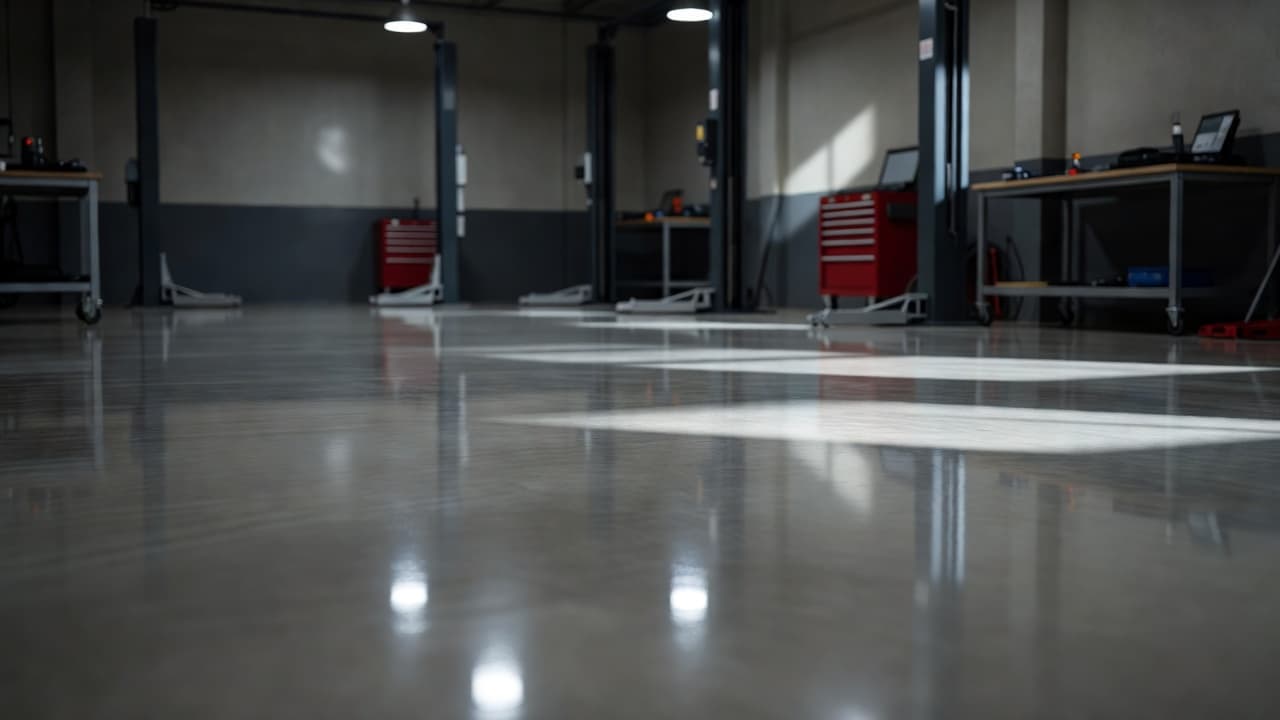
Epoxy’s biggest strengths are spill resistance, easier cleaning, and solid wear performance under rolling loads. It also hides patchwork better than polished concrete and accepts broadcast texture for traction. That’s why a commercial concrete epoxy coating is a common pick for service bays, alignment areas, and tool rooms.
There are trade-offs. Epoxy usually needs more cure time, so downtime is longer. It can chip from sharp impacts, especially on slab edges or weak repairs. Some topcoats also dull when harsh solvents sit too long.
A polyaspartic coating solves some of those issues. It cures fast, handles UV better, and can get a shop back in service sooner. For a business that can’t lose multiple days, that matters. Many installers use polyaspartic as a topcoat over epoxy so the floor gets epoxy’s build and polyaspartic’s faster cure and better color stability. This auto mechanic shop coating comparison lines up with what many owners see in the field.
Still, fast cure can be a downside during installation. Polyaspartic leaves less room for error, especially on rough or contaminated slabs. A garage floor epoxy coating company may advertise one-day turnarounds, but repair bays need slab testing, crack repair, and a shop-grade system, not a fast residential-style sale.
For the toughest conditions, urethane cement is worth a look. It holds up well to heat shock and aggressive chemicals, and automotive flooring system guidance often places it in the heavy-duty tier. It costs more and has a more industrial look, so many general repair shops still land on epoxy or a hybrid epoxy-polyaspartic build.
If you’re weighing coatings against polishing, this breakdown of choosing between epoxy and concrete polishing is a useful next read.
When polished, stained, or sealed concrete makes sense
Concrete polishing has a real place in automotive spaces, but usually not in the messiest bays. A polished slab doesn’t peel because it isn’t a film coating. That makes it attractive where rolling traffic is constant and coating failure would be a major headache.
Polished concrete works well in showrooms, parts counters, detail areas, and some light-service zones. It reflects light, controls dust when densified properly, and handles abrasion well. Tool drops won’t chip a coating layer because there isn’t one.
The downside is chemical resistance. Even a well-polished floor with a guard can stain if oil, brake fluid, or solvents sit too long. Frequent exposure to harsh cleaners also wears down the guard over time. In other words, polished concrete is strong, but it isn’t the same as a sealed film built for chemical abuse.
Concrete staining is even more limited in repair settings. Stain adds color and character, but it doesn’t do much by itself against fluid spills. In a waiting room or showroom, stain plus a good sealer can look great. In an active bay, it usually needs a protective topcoat, and at that point many owners are better off with a true coating system.
Simple penetrating sealers also have limits. They help with dust control and make cleanup easier, but they don’t create the same barrier as epoxy or polyaspartic. If brake cleaner and petroleum products are part of daily work, most sealers won’t offer enough protection.
Some owners compare shop floors with home products, including a basement concrete coating. That comparison only goes so far. A basement worries about moisture and foot traffic. A repair bay faces tire shear, steel wheels, jack stands, and chemical spills every day.
So when is a coating the better fit than polished or sealed concrete? In any area where you expect regular fluid spills, aggressive cleaning, or a strong need for stain resistance, a coating usually wins.
Common mistakes that lead to early floor failure
The first mistake is choosing by appearance alone. High gloss, color flakes, and low price can distract from the real issues, which are bond strength, chemical resistance, and texture under wet conditions.
Moisture testing is another big one. If vapor pressure is active in the slab, coatings can blister or lose bond. That risk gets worse in older shops and slabs without a vapor barrier.
Prep errors cause more failures than product labels. A floor needs grinding or shot blasting, oil remediation, crack repair, and edge work that matches the rest of the profile. Sloppy concrete dealing during prep, including weak patching and poor cleaning, shows up fast once traffic returns.
Skipping slip-resistant media is also a bad call. Smooth coatings clean easily, but repair bays need a balance between washability and traction. Most shop owners are happier with a light broadcast texture than a slick showroom gloss.
DIY kits and thin coatings also disappoint in working shops. They may look fine at first, then wear through on turn paths and under lifts. That’s why it helps to review best garage floor finish options with cost, cure time, and long-term wear in mind.
A practical way to narrow the choice is to match the finish to the area:
- Full-service bays usually do best with an epoxy build and a textured, chemical-resistant topcoat.
- Shops that need fast return to service often prefer a hybrid epoxy base with polyaspartic topcoat.
- Showrooms and parts counters are good candidates for polished concrete.
- Waiting rooms and low-mess zones can use stain and sealer if appearance matters most.
The best floor isn’t the one with the flashiest sample board. It’s the one that fits the slab, the workflow, and the cleanup routine your shop lives with every day.
Final thoughts
A repair shop floor can’t survive on looks alone. The best concrete floor finish for most working bays is a well-prepped coating system, usually epoxy, polyaspartic, or a mix of both.
Prep, moisture testing, and slip resistance matter as much as the finish itself. When those pieces are handled well, the floor stays easier to clean, safer to walk on, and tougher under real shop abuse.