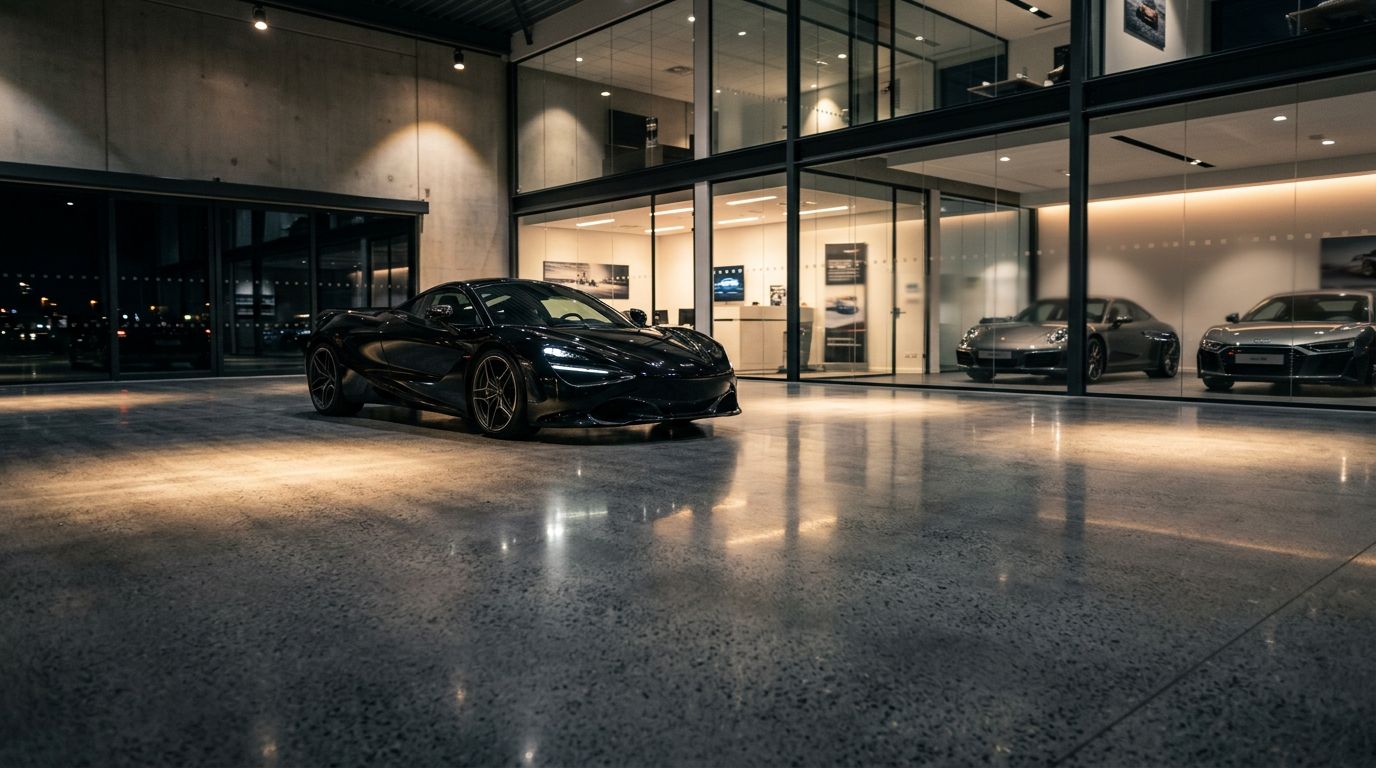
A showroom floor does more than hold inventory. It shapes first impressions, reflects light onto paint and chrome, and shows every scuff, drip, and tire mark.
That is why the best concrete floor finishes for car showrooms balance appearance with daily use. A surface can look great on opening day and still become a problem if it scratches fast, dulls under cleaning, or fights your brand image. The right choice starts with how the floor will perform under real showroom conditions.
What a showroom floor has to handle every day
Car showrooms face a different kind of wear than warehouses or home garages. Tire traffic is steady but not brutal. The bigger issue is visual wear, light scratches, dust, fluid drips, and constant cleaning. A floor that looks “good enough” in a back room often looks tired under bright sales lighting.
Brand presentation matters too. Dark floors can make white and silver cars pop, but they also show dust fast. Light gray floors hide dirt better, yet they can flatten the drama around premium vehicles. Meanwhile, gloss level changes the whole room. High gloss adds energy and reflection, while satin and matte finishes keep attention on the cars.
This quick comparison helps frame the tradeoffs:
| Finish | Best fit | Tire traffic | Fluid resistance | Visual effect | Main drawback |
|---|---|---|---|---|---|
| Polished concrete | Large showrooms, modern brands | Good | Fair to good with guard | Bright, reflective, clean | Shows etching and slab flaws |
| Epoxy coating | Uniform branded look | Very good | Very good | Smooth, controlled color | Longer cure, can yellow near glass |
| Polyaspartic coating | Fast-turn projects, sunny entries | Very good | Very good | High gloss, clear finish | Higher install sensitivity |
| Stained and sealed concrete | Warm, natural aesthetic | Good | Fair to good | Rich tone, less artificial | More upkeep on topcoat |
The best finish is rarely the one with the most shine. It is the one your staff can keep looking sharp week after week.
A showroom floor should support the vehicles on display, not compete with them.
Polished concrete when light reflection matters most
Concrete polishing is a strong choice for dealerships that want a clean, modern floor with lower long-term upkeep. Instead of building a thick film on top, polishing refines the slab itself. That means no coating layer to peel, and fewer worries about tire scuffs cutting through color.
A high-gloss polished floor can make overhead lighting work harder for you. Reflections add depth under darker vehicles, and metallic paint usually looks richer on a bright floor. That is one reason polished concrete is common in open, high-volume retail spaces. If you want a good overview of the differences between polish and sealed systems, this comparison of polished vs sealed concrete floors is useful.
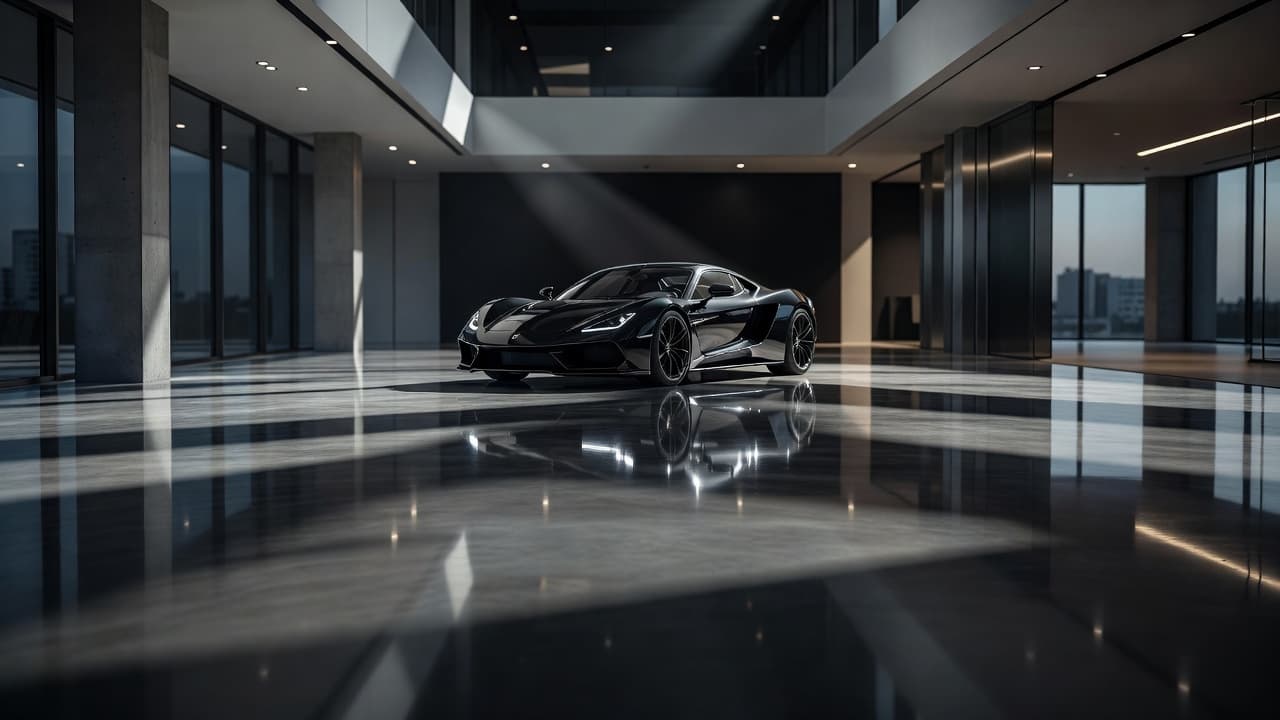
Still, polished concrete is not perfect. Slab condition drives the result. If the floor has patchwork, cracks, or uneven color, polishing may reveal those issues instead of hiding them. Aggregate exposure also matters. A cream finish looks more uniform and elegant, while heavier exposure adds texture and visual movement. That can look great in industrial-style showrooms, but it may distract from luxury vehicles.
Maintenance is steady but simple. Dust mopping and auto-scrubbing keep shine up, and periodic burnishing helps retain clarity. Oil drips should not sit for long, because some polished surfaces can stain or etch if the guard wears thin. For many dealerships, the lifecycle value is strong because the floor stays attractive without repeated full recoats. If you are comparing polish with coatings, view our flooring services to see common options side by side.
Epoxy and polyaspartic coatings when protection comes first
If the slab is patched, stained, or visually inconsistent, a concrete epoxy coating often makes more sense than polishing. A full-build system creates a uniform surface, which helps control color, gloss, and brand appearance across the whole showroom.
That design control is a big advantage. An epoxy coating for concrete can hide repaired areas, cover old discoloration, and deliver crisp light gray, charcoal, or custom brand-driven tones. It also handles fluid drips well, which helps near delivery bays, detailing zones, or display areas where vehicles rotate often.
Many buyers know the look from an epoxy coating for garage floor projects. The chemistry can be similar, but a dealership floor needs tighter finish quality, better substrate prep, and a larger installation plan. Products used for basement concrete coating or home garages may not be enough for a front-of-house commercial slab with constant cleaning and strong natural light.
A commercial concrete epoxy coating works best when you need strong chemical resistance and a highly controlled finish. The tradeoff is cure time. Epoxy usually needs more downtime, and some formulas can amber where sunlight hits near large glass walls. That issue matters in showrooms with bright southern exposure.
A polyaspartic coating solves some of those limits. It cures faster, often has better UV stability, and can return a floor to service sooner. That makes it attractive for remodels on tight schedules. Still, polyaspartic products are less forgiving during install. Small roller marks, edge work, and slab temperature shifts can show if the crew is not sharp. This overview of common garage coating chemistries gives a useful baseline, even though a showroom needs a higher spec than a home garage.
Contractor fit matters as much as product choice. A garage floor epoxy coating company may do fine residential work, but a dealership should ask whether that team handles moisture testing, large slab prep, dust control, and phased scheduling around sales operations. Those details separate a pretty sample board from a floor that lasts.
For appearance, gloss should match the brand. High-gloss coatings create strong reflections and a premium look. Satin systems are easier to maintain and hide fine scratches better. If slip resistance is a concern, installers can add a fine texture, but too much texture makes cleaning harder and can dull the upscale feel.
Stained and sealed concrete for a warmer brand feel
Concrete staining fits showrooms that want more character and less of a mirror effect. It keeps the concrete visible, adds color variation, and can feel warmer than a solid coating. That works well for boutique dealers, classic car spaces, and brands that want a less polished corporate look.
Color choice makes a big difference here. Earth tones, smoky grays, and muted browns can flatter vintage inventory and soften harsh lighting. By contrast, bold stain color can steal attention from the vehicles. Most dealerships are better off with subtle tone and a protective sealer or guard on top.
The downside is upkeep. Stain alone does not create a strong wear layer, so performance depends on the sealer above it. Film-forming sealers can scratch and show traffic patterns. Penetrating treatments look more natural, but they offer less protection from oil and other fluids. Because of that, stained and sealed concrete often works best in lighter-traffic display zones, sales lounges, or side galleries rather than the main turnover area.
Lifecycle value can still be good if the aesthetic is right and the maintenance plan is realistic. The floor will need periodic refresh work sooner than a well-built polish or coating system.
How to match the finish to your vehicles, lighting, and upkeep
The smart choice starts with the slab you already have. If the concrete is clean, flat, and consistent, polishing usually delivers the best long-term value. If the slab is patched or uneven in color, coatings give you more control.
A few simple rules help narrow the field:
- High-gloss polished concrete fits modern brands, large windows, and open layouts where clean reflection adds energy.
- Epoxy works well when you need uniform color, strong fluid resistance, and a smoother presentation across repaired slabs.
- Polyaspartic fits projects with short shutdown windows or front glass lines where UV stability matters.
- Stained and sealed floors suit showrooms that want warmth, variation, and a less formal retail feel.
Maintenance should break ties. If your team auto-scrubs often and wants a floor without periodic full recoats, polishing has an edge. If you want easier spot cleanup from oils and drips, coatings usually win. Satin finishes also make sense when swirl marks and dust drive your staff crazy.
Ask bidders for mockups under your actual lights. A floor can look one way in a warehouse and very different beside black paint, chrome trim, and bright LED strips. Also ask for a written scope that lists grinding, repair, moisture testing, and finish build. If a proposal uses vague wording such as “concrete dealing,” press for detail before you sign.
When the showroom includes service-lane crossover, heavy sun exposure, or old slab repairs, bring in a flooring specialist early. You can also learn more about our company if you want to compare the experience and systems behind different concrete floor projects.
Final thoughts
The right showroom floor is the one your staff can keep impressive without constant rescue work. Concrete floor finishes succeed when they match the slab, the lighting, the cars, and the way your team cleans every day.
Polished concrete usually leads on lifecycle value and light reflection. Epoxy and polyaspartic systems lead on coverage and protection. Stained concrete wins when natural character matters more than perfect uniformity.
If your floor needs to support both brand image and daily traffic, ask for samples, review the prep scope, and talk with a commercial concrete flooring specialist before the work starts.