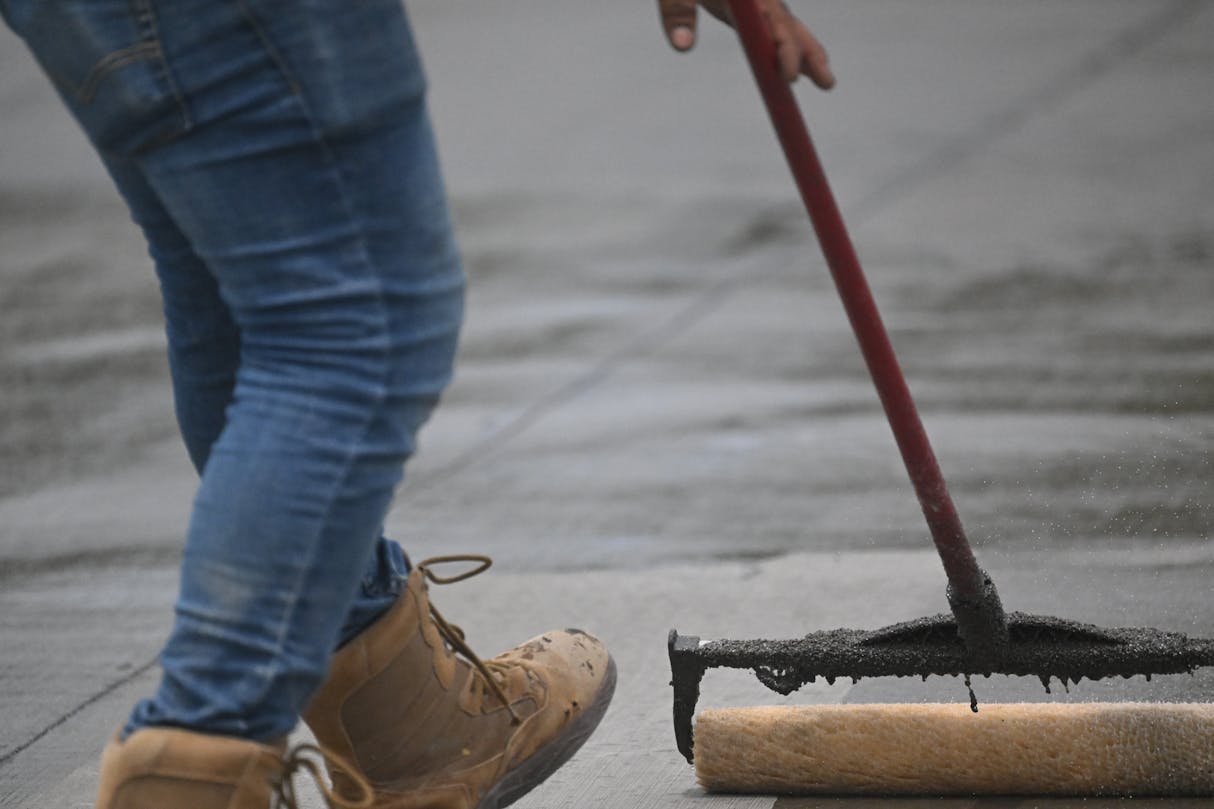
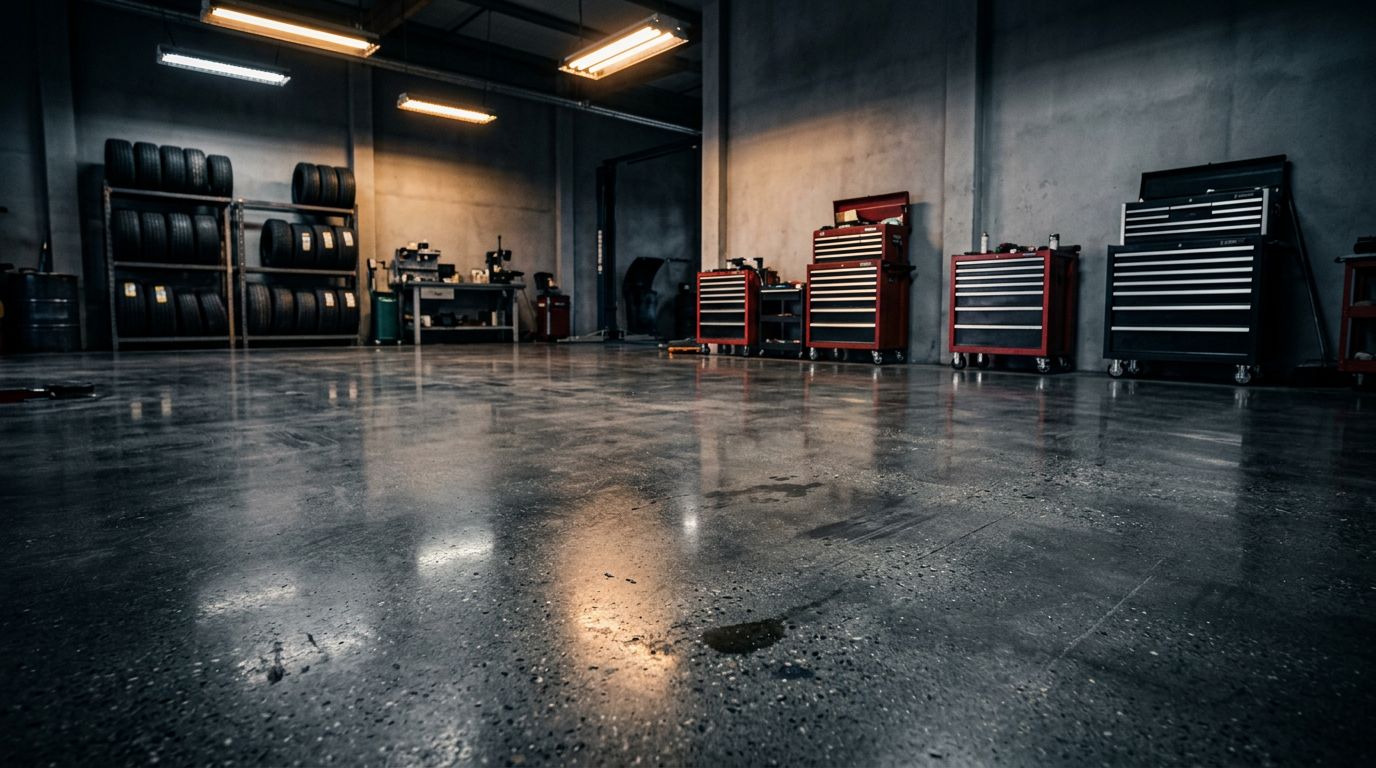
A workshop floor takes a beating. It sees dropped tools, oil drips, rolling cabinets, metal shavings, and sometimes a parked vehicle.
That is why the best concrete floor finishes for a home workshop are not always the prettiest ones. The right choice depends on how you work, how much downtime you can tolerate, and whether your slab is dry enough to hold a coating for years.
What your workshop asks of the floor
A hobby woodshop and a mechanics bay do not need the same surface. If you cut lumber all weekend, easy sweeping matters. If you repair engines, chemical resistance climbs to the top of the list. If you weld, hot slag can scar some coatings fast.
This quick table helps narrow the field.
| Finish type | Best fit | Approx. installed cost | Typical life | Main tradeoff |
|---|---|---|---|---|
| Epoxy system | General home workshops, garages, tool storage | $4 to $8 per sq. ft. | 5 to 10 years | Longer cure time, can amber in UV |
| Polyaspartic system | Busy garages, fast return to service | $6 to $12 per sq. ft. | 5 to 12 years | Higher cost, narrower install window |
| Polished concrete | Dry workshops, rolling tools, low-maintenance floors | $3 to $8 per sq. ft. | 10+ years with upkeep | Less protection from oil and acids |
| Stain and sealer | Light-use shops, natural look, budget upgrades | $2 to $5 per sq. ft. | 2 to 5 years before recoat | Limited film build and chemical resistance |
The short version is simple. If you want a sealed, easy-to-clean work surface, epoxy or polyaspartic usually wins. If you want a natural slab that will not peel, concrete polishing or concrete staining may fit better.
Safety and downtime matter as much as looks
Glossy floors look sharp, but gloss alone is not a feature. In a workshop, slip resistance matters more. Ask for traction media in the topcoat if the floor may see water, oil, or sawdust. The finish may lose a little shine, yet it will feel safer underfoot.
Odor and cure time also shape the decision. Many epoxy products are lower odor than people expect, especially 100 percent solids systems, but some primers and topcoats still smell strong. A polyaspartic coating often cures much faster, though install odors can be more intense during application.
If your shop is below grade, treat it like a basement first and a workshop second. A basement concrete coating has to deal with vapor drive more often than an above-grade garage slab.
Prep beats product. A premium coating over a damp slab fails faster than a modest system installed on clean, sound concrete.
Epoxy coating for concrete: the workhorse option
For many homeowners, a concrete epoxy coating is the most practical answer. It creates a sealed film that stands up well to oil, grease, road grime, and routine abrasion. Sweeping gets easier, and concrete dust drops off because the surface is locked down.
An epoxy coating for concrete works well when you want a true barrier between the slab and workshop mess. That is also why an epoxy coating for garage floor projects is still common in spaces that pull double duty for parking and repairs.
Costs usually land in the mid-range, but the details matter. A thin DIY kit and a professionally installed system are not the same thing. Better systems use mechanical grinding, repair joints and pits, and add a harder topcoat for scratch and stain resistance. Some homeowners even ask for a commercial concrete epoxy coating build because they run welders, air compressors, and rolling steel cabinets every day. That can make sense, but a full heavy-duty build is often more than a light-use hobby shop needs.
The tradeoffs are real. Epoxy often needs several days before heavy tools or vehicles should go back on the floor. It can also yellow near doors or windows unless the system includes a UV-stable topcoat. Decorative flake can hide dirt, but it also hides dropped screws and washers.
A good garage floor epoxy coating company should talk about moisture testing, not only color chips. If you want more detail on system types, this epoxy concrete coatings guide is worth a look.
Maintenance is easy. Sweep often, wipe up chemicals quickly, and use a mild cleaner instead of harsh degreasers. With proper prep, many epoxy floors hold up five to ten years before they need significant touch-up or a fresh topcoat.
Where a polyaspartic coating earns its price
A polyaspartic coating usually makes sense when downtime is the biggest problem. Many systems can return to foot traffic the same day and vehicle traffic much sooner than epoxy, though the exact schedule depends on the build and site conditions.
That speed is the main selling point, but it is not the only one. Polyaspartic topcoats usually resist UV better than standard epoxy, so they are less likely to amber at the garage door. They also tend to hold gloss well and clean up easily.
The downsides come first during installation. Polyaspartic products often have a short working time, so the crew has little room for mistakes. Odor can also be sharp while the product is going down. Because of that, installer skill matters even more than it does with slower-curing systems.
You will also pay more up front. For some homeowners, that added cost is easy to justify because the shop is back in service faster. For others, especially in a dry enclosed space with no sun exposure, epoxy delivers better value.
If you are comparing the two, this polyaspartic vs epoxy comparison adds helpful context. For a workshop that cannot sit idle for most of a week, polyaspartic often moves to the front of the line.
When polished or stained concrete makes more sense
Not every home workshop needs a film-build coating. In some spaces, concrete polishing or concrete staining is the smarter fit.
Polished concrete keeps the slab looking like concrete, only tighter, denser, and easier to clean. It handles rolling tool chests well, will not peel, and usually has a long service life. That matters in workshops where hot tires, weld spatter, or frequent dragging of metal parts could scar a softer coating.
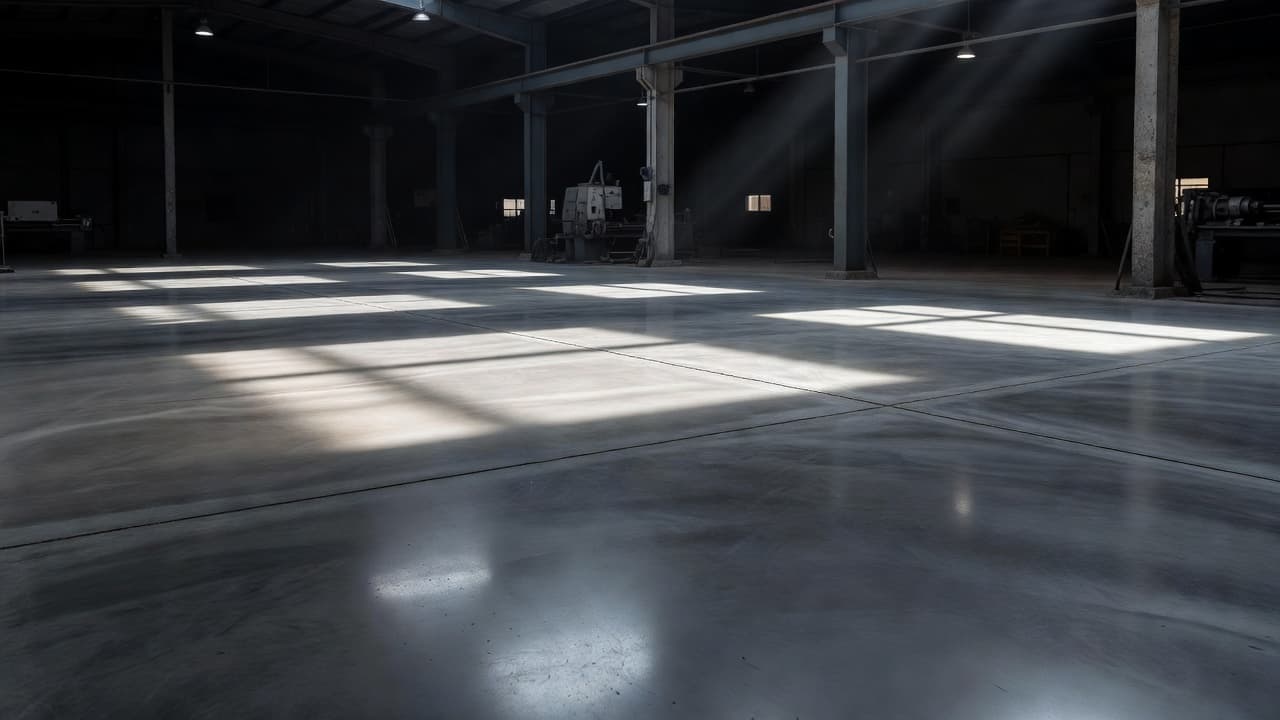
Still, polished concrete is not a magic shield. Oil, brake fluid, and acids can stain if they sit too long. Most polished floors use a densifier and a guard product, not a thick barrier coat. That means you trade some stain resistance for a surface that feels more natural and rarely flakes.
Concrete staining adds color without creating the painted look that many workshop owners dislike. It pairs well with a sealer, but that sealer becomes the wear layer. In a heavy-use shop, expect maintenance recoats sooner than you would with epoxy or polyaspartic.
This path works well if appearance matters, but you still want the slab to look like a slab. It also helps in some basement workshops where owners want a lower-profile finish. If you are stuck between a sealed coating and a bare-concrete look, choosing between epoxy and polished concrete floors can help clarify the tradeoffs.
Prep, moisture, and topcoats decide the outcome
The product label is only half the story. The slab decides the rest.
Diamond grinding usually beats acid etching because it opens the surface evenly and removes weak material. Crack repair matters too. A nice topcoat over failing concrete will still fail. The same goes for moisture. If the slab has vapor issues, the best-looking finish can blister or peel.
A coating estimate should spell out more than square-foot pricing. Ask for the prep method, moisture checks, crack or joint repair, primer, basecoat, topcoat, and cure schedule before heavy tool or vehicle use. If a proposal uses vague wording, even odd phrases like “concrete dealing,” push for a cleaner scope. You need plain language.
For broad side-by-side pricing and downtime notes, these garage floor coating options are a useful reference. Another outside view, what coating is best for a garage floor, is also helpful when you are comparing return-to-service times.
No finish is maintenance-free. Coated floors need gentle cleaning and quick spill removal. Polished floors need regular dust control and occasional re-guarding. Stained and sealed floors may need fresh sealer every few years. Good care stretches the life of any system, but surface prep still does most of the heavy lifting.
Conclusion
The right workshop floor is the one that matches your actual use, not the one with the glossiest brochure. If you want the most sealed and chemical-resistant surface, epoxy or polyaspartic usually leads. If you want a natural slab that will not peel, polishing or stain-and-seal can be the better call.
Most failures trace back to moisture, prep, or the wrong topcoat, not the idea of the finish itself. Choose the floor that fits your tools, your downtime, and your slab, and it will work a lot harder for you.