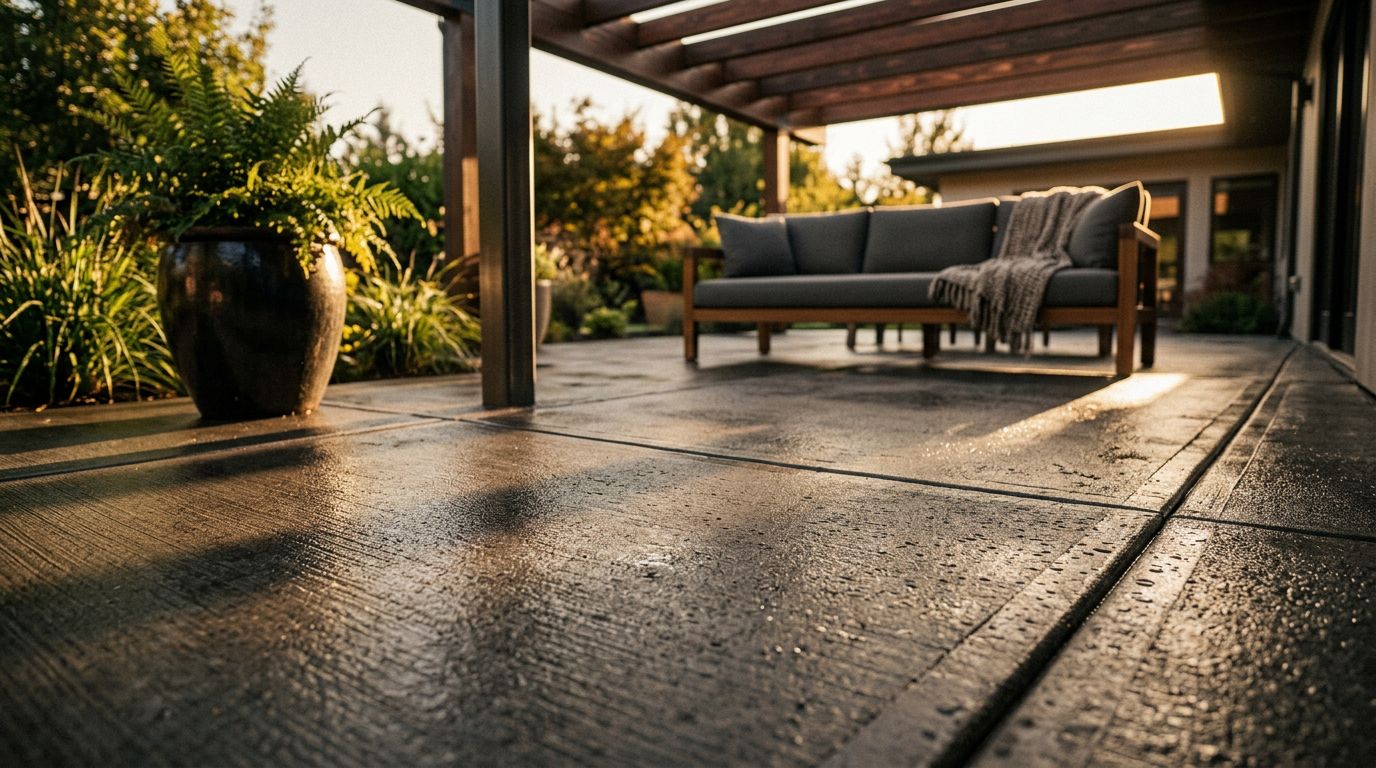
A roof helps, but it doesn’t turn your patio into an indoor room. Covered patios still deal with humidity, blown-in rain, pollen, leaf stains, and damp mornings that can make smooth concrete slick.
That matters because some finishes look great on a sample board and fail fast outside. The best concrete patio finishes balance looks, grip, moisture tolerance, and realistic upkeep.
Start with the patio’s exposure, then choose the finish.
A covered patio still acts like an outdoor slab
Many homeowners assume a covered slab can take the same finish as a den, basement, or garage. In real life, a patio lives in a tougher zone. Air stays damp longer, wind pushes water under the roofline, and mildew can grow where furniture traps moisture.
Temperature swings matter too. The slab warms up, cools off, and pulls in moisture differently than an indoor floor. If the concrete stays damp below the surface, a film-forming coating can lose bond and start to peel, usually near edges, control joints, or low spots.
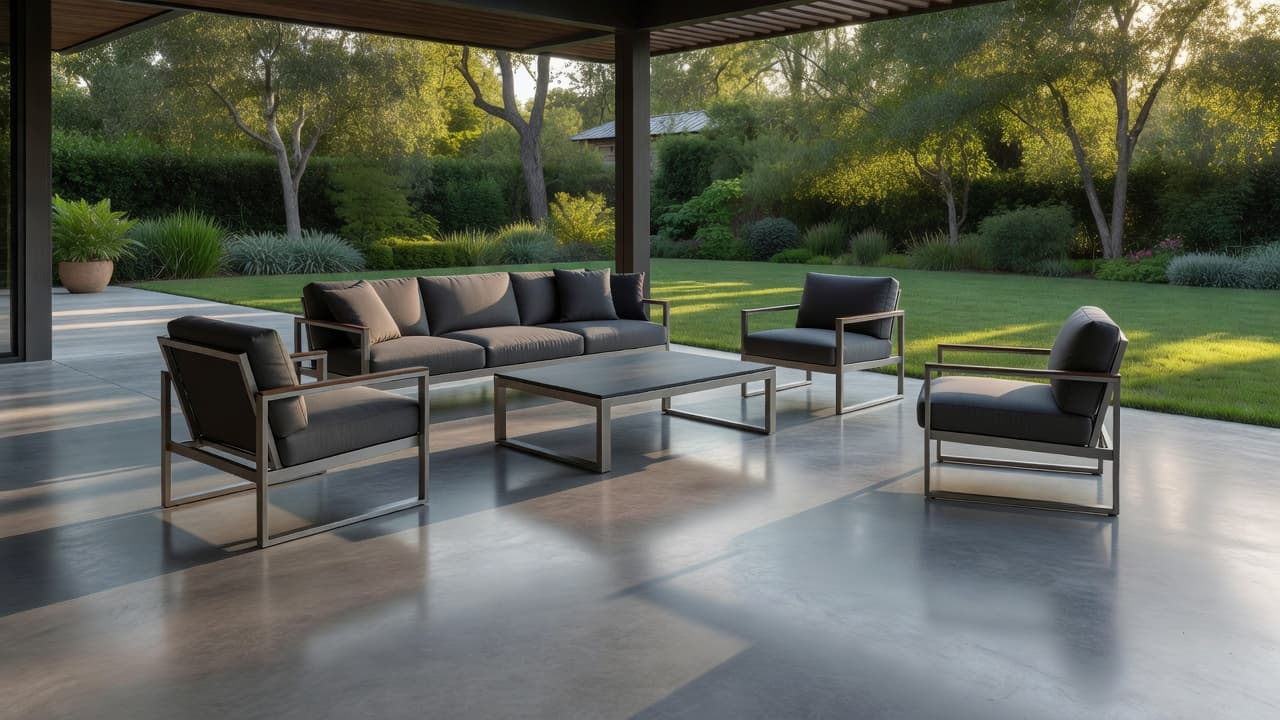
A covered patio also sees dirt that indoor slabs don’t. Grit from the yard scratches glossy finishes. Planters trap water. Grill grease stains the surface. Even if the patio rarely gets soaked, the outer few feet often do, and that edge drives many failures.
Low sheen usually works better here. If you’re weighing shine levels, comparing matte vs satin vs gloss finishes is useful because gloss tends to show water spots, dust, and scuffs faster outdoors. Satin or matte often looks cleaner between washings, and it usually feels less slippery when the air is damp.
A covered patio still needs outdoor-grade prep and traction, even when it never sees full sun.
Which concrete patio finishes hold up best
For most homes, the safest bets are concrete staining with a breathable sealer, or a textured overlay on a damaged slab. A few other systems can work, but only under the right conditions.
Here’s a quick side-by-side view:
| Finish | Best fit under cover | Main upside | Main downside | Typical upkeep |
|---|---|---|---|---|
| Penetrating stain plus sealer | Sound slab, natural look | Color won’t peel like paint, easy to refresh | Needs periodic resealing, color is subtle | Clean regularly, reseal about every 2 to 3 years |
| Textured overlay or microtopping | Worn, patched, or blotchy slab | Hides surface flaws, can add traction and style | Prep is demanding, bad installs can crack or delaminate | Reseal about every 2 to 3 years |
| Polyaspartic coating | Very protected patio with dry slab | Better UV stability than standard epoxy, easy cleanup | Still a film on top, can get slick, bond depends on prep | Inspect for wear and repair chips quickly |
| Honed or lightly polished concrete | Deeply covered patio with good drainage | No thick layer to peel, easy to sweep | Can be slick when wet, limited for exposed edges | Periodic cleaning, occasional guard or sealer refresh |
Penetrating stains are often the best all-around choice for covered concrete patio finishes. They soak into the slab instead of sitting on top like paint, so you don’t get the same peeling risk. Earth tones, charcoal, and warm gray work well because they hide dust, pollen, and light grime.
Textured overlays make sense when the slab already looks rough. If you have patchwork, spalling, or old paint scars, an overlay can reset the look and add slip resistance. This route costs more than a simple stain, but it can save a patio that would otherwise stay blotchy.
A polyaspartic coating can work in a highly protected space, especially when you want a cleaner, more decorative look than plain sealer offers. Still, it is not a cure-all. Moisture, weak prep, or a slick topcoat can turn a nice-looking floor into a problem.
For texture ideas such as broom, salt, and exposed aggregate, Solomon Colors’ patio finish overview is a helpful reference. Those finishes aren’t always decorative, but they show why grip matters on outdoor concrete.
When epoxy works, and when it doesn’t
Many people who have seen a concrete epoxy coating indoors ask for the same look outside. That’s understandable. An epoxy coating for garage floor often looks clean, bright, and tough. A system sold as basement concrete coating can also make a dull slab feel finished.
A covered patio is different.
An epoxy coating for concrete needs a slab that stays dry enough for good bond. Patios often fail that test. Humid air, wind-driven rain, damp edges, and moisture coming up through the slab can all stress the coating. Standard epoxy also has weaker UV resistance than many outdoor-rated topcoats, so ambering and chalking can show up over time.
A good garage floor epoxy coating company should say this plainly: what works in a garage doesn’t always belong on a patio. The same goes for a commercial concrete epoxy coating system. Warehouse-grade products can be durable, but they are still designed around controlled interiors more than backyard exposure.
That doesn’t mean epoxy is always wrong. On a deeply covered patio with strong drainage, low moisture, and a UV-stable topcoat, it can work. But the margin for error is smaller. If you’re sorting through the tradeoffs, differences between epoxy coatings and concrete polishing can help frame the decision. In short, patios punish coating mistakes faster than garages do.
Prep and maintenance decide whether the finish lasts
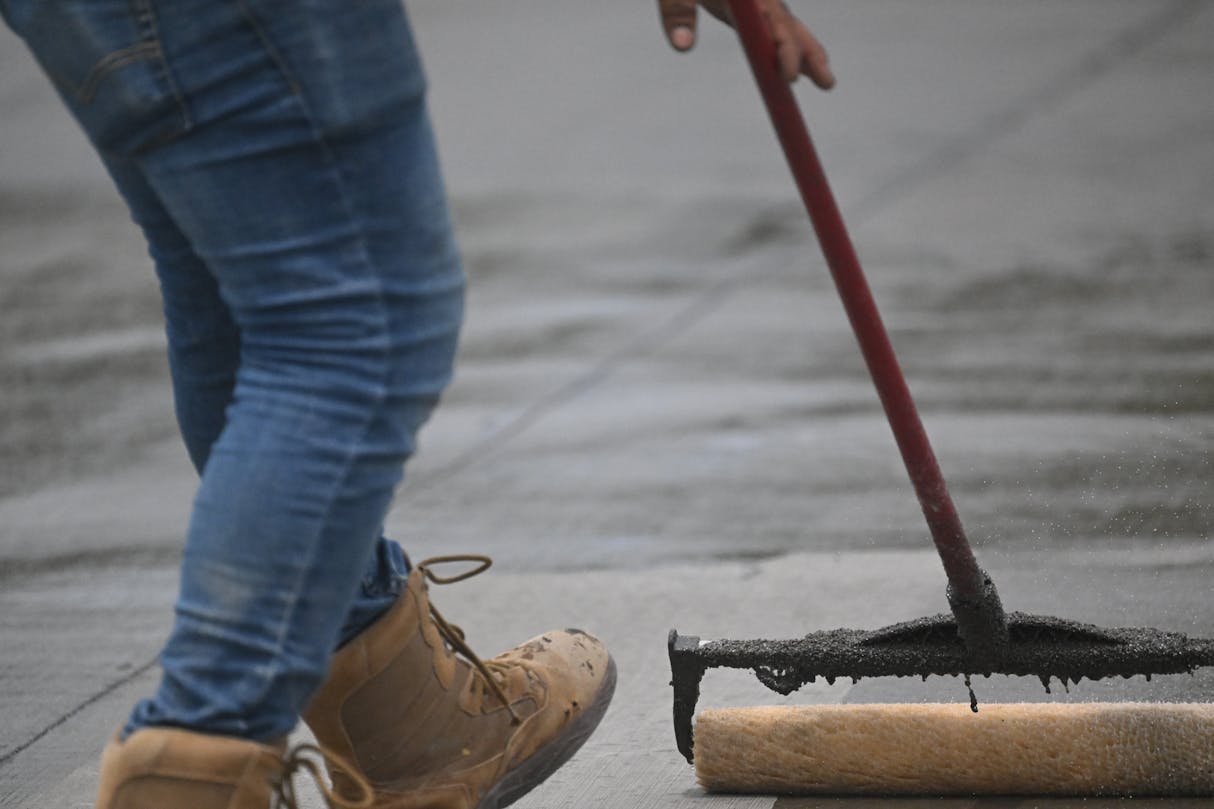
The prettiest finish in the store will fail on a dirty, damp, or weak slab. Most failures start with bad concrete dealing before the finish goes down, not with the color itself. That prep work includes deep cleaning, mildew treatment, crack repair, moisture checks, and mechanical profiling.
Grinding usually beats acid washing for coating prep because it opens the surface in a more reliable way. If mildew is present, the slab needs a true cleaning step, not a quick rinse. If water ponds after rain, fix drainage first. A new coating won’t solve a slope problem.
When the old patio is pitted or flaking, resurfacing may be smarter than trying to stain over damage. This thin-overlay patio resurfacing example shows how much repair and surface prep can go into a clean reset.
Maintenance stays simple when the finish fits the space. Sweep often, rinse off pollen and dirt, and clean mildew before it digs in. Many sealed patio surfaces need a fresh topcoat every 2 to 3 years, sometimes sooner at the outer edge where sun and rain hit hardest. Penetrating systems usually fail gracefully, while film coatings need faster attention if they chip or lift.
Pressure washing can help, but keep the pressure reasonable. Too much force can scar sealers, open weak spots, and shorten the life of the finish.
Choose a look that hides dirt and keeps footing steady
Color and sheen change how a patio lives day to day. Dark charcoal can look rich, but it shows dust and hard-water spots. Very light beige can hide dust, yet it may show leaf tannins and grill drips. Mid-tone grays, taupes, and natural stone colors are often the easiest to live with.
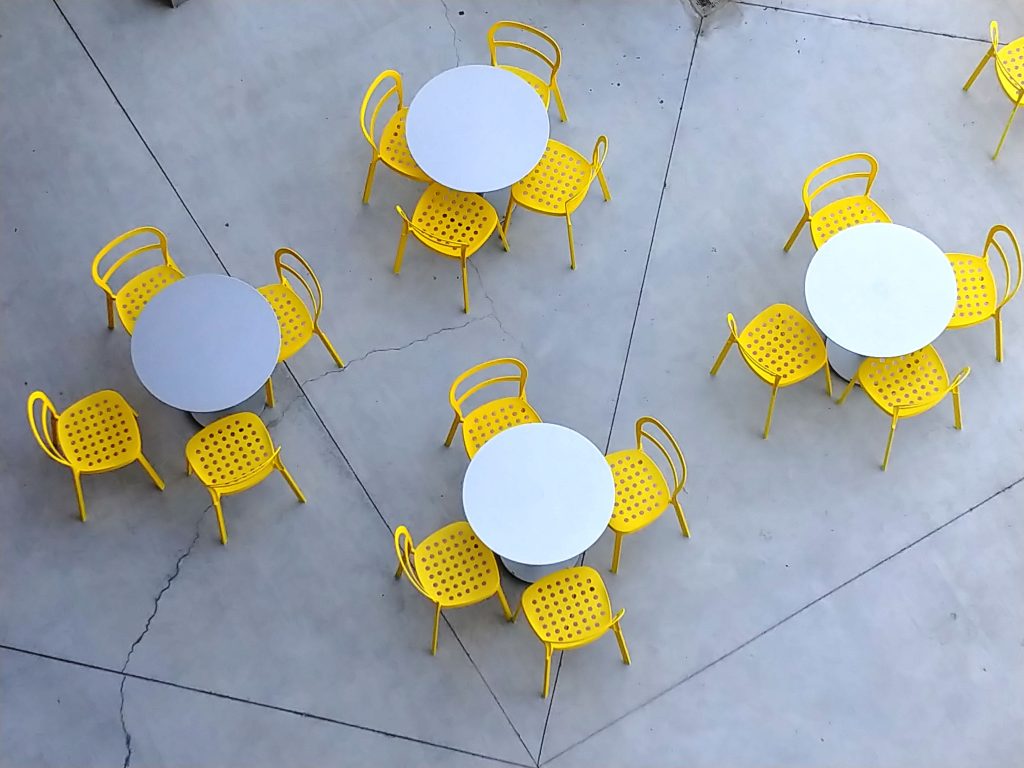
Photo by Alan Stoddard
Slip safety matters more than shine. A wet satin finish with light texture is usually a better patio choice than a mirror-like gloss. If you like a cleaner, tighter look, ask about traction additives or a micro-textured sealer rather than a glassy topcoat.
Concrete polishing can fit a covered patio, but only when the slab is deeply sheltered and drains well. A high-gloss polished surface near wind-driven rain is risky. In those cases, a honed finish or stain often makes more sense. If you’re curious about whether your slab is even a candidate, professional concrete polishing services in Atlanta can help you size up the condition of the concrete before you commit.
A finish is usually a good fit when:
- The slab drains well and doesn’t stay damp for long.
- The surface has enough texture for bare feet and wet shoes.
- The upkeep matches how much maintenance you want to do.
Final thoughts
The best covered patio floor isn’t the glossiest one. It’s the finish that handles moisture, stays safe when damp, and still looks good after a season of dirt, pollen, and rain.
For most homeowners, concrete patio finishes built around staining, texture, and breathable protection age better than indoor-style coatings. Match the finish to the patio’s exposure, and the floor will look better for longer.