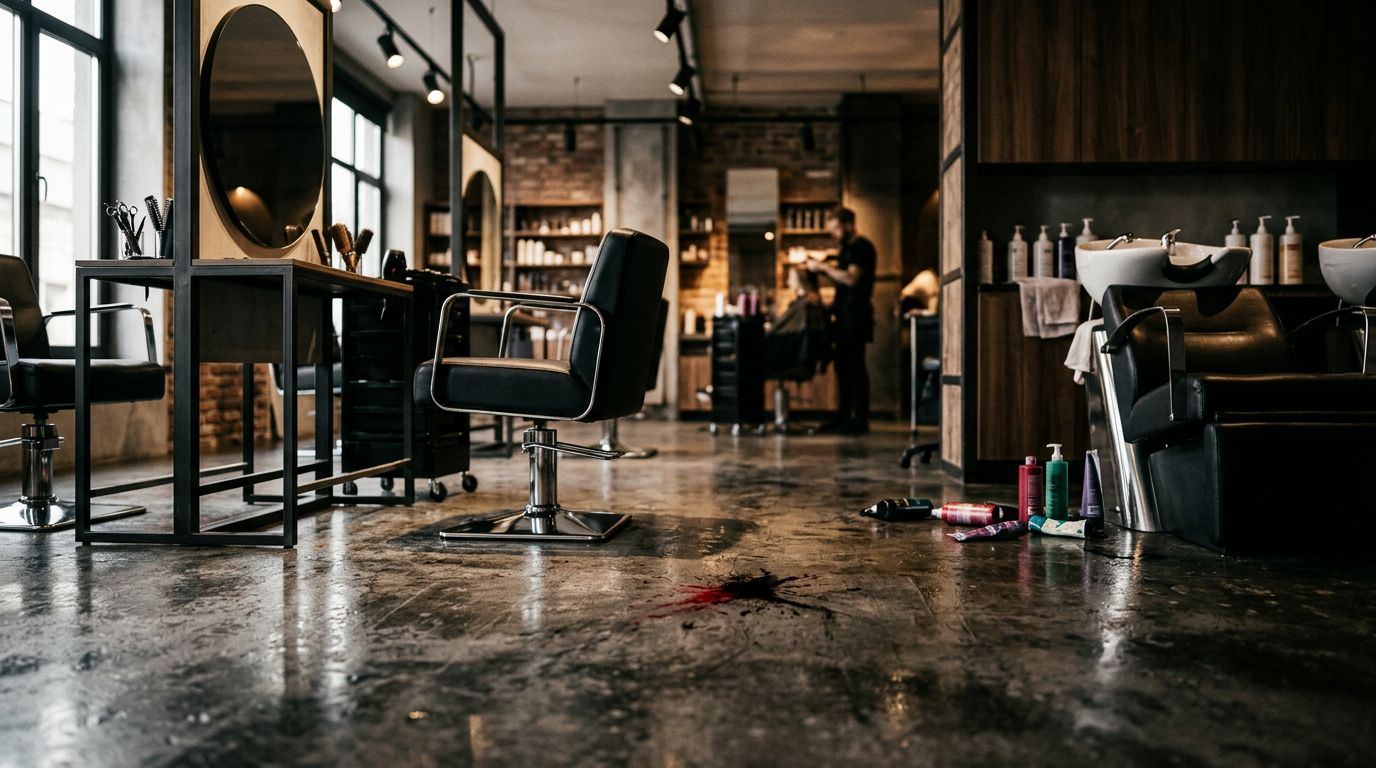
A salon floor takes a beating every day. Water, bleach, dye, dropped tools, rolling chairs, and constant foot traffic all land on the same surface.
If you’re planning a build-out or remodel, the right concrete floor finish can make cleanup faster and reduce slip risk. The wrong one can look worn long before the space is paid off. That choice starts with how each part of the salon actually gets used.
What salon owners need from a finished concrete floor
Salon flooring has to do more than look polished. It has to stand up to wet shoes, hair color spills, disinfectants, and chair traffic without turning into a maintenance project.
That matters because hair salons have mixed conditions in one small footprint. Reception stays mostly dry. Shampoo stations don’t. Color bars see more chemical spills than a typical retail floor. Break rooms and back storage areas may need a tougher build than the front of house.
General salon flooring guides from Keller International and Lincolnshire Flooring keep circling back to the same points: cleanability, water resistance, and durability. Concrete can check those boxes, but only when the finish matches the use.
For salon owners, the real decision usually comes down to balance. You want a floor that looks upscale. You also need stain resistance, anti-slip performance, and a finish that won’t break down under harsh cleaners.
A beautiful floor that gets slick near the shampoo bowls is a problem. So is a heavily textured floor at reception that traps dirt and looks dusty by noon.
The best concrete floor finishes for salons are usually zoned, or at least chosen with each zone in mind. That’s why the finish itself matters more than the color chip.
Which concrete finishes make the most sense in salons
Most salon projects come down to four realistic choices: polished concrete, epoxy, polyaspartic systems, and stain with sealer. Each one has a place, but they don’t perform the same way.
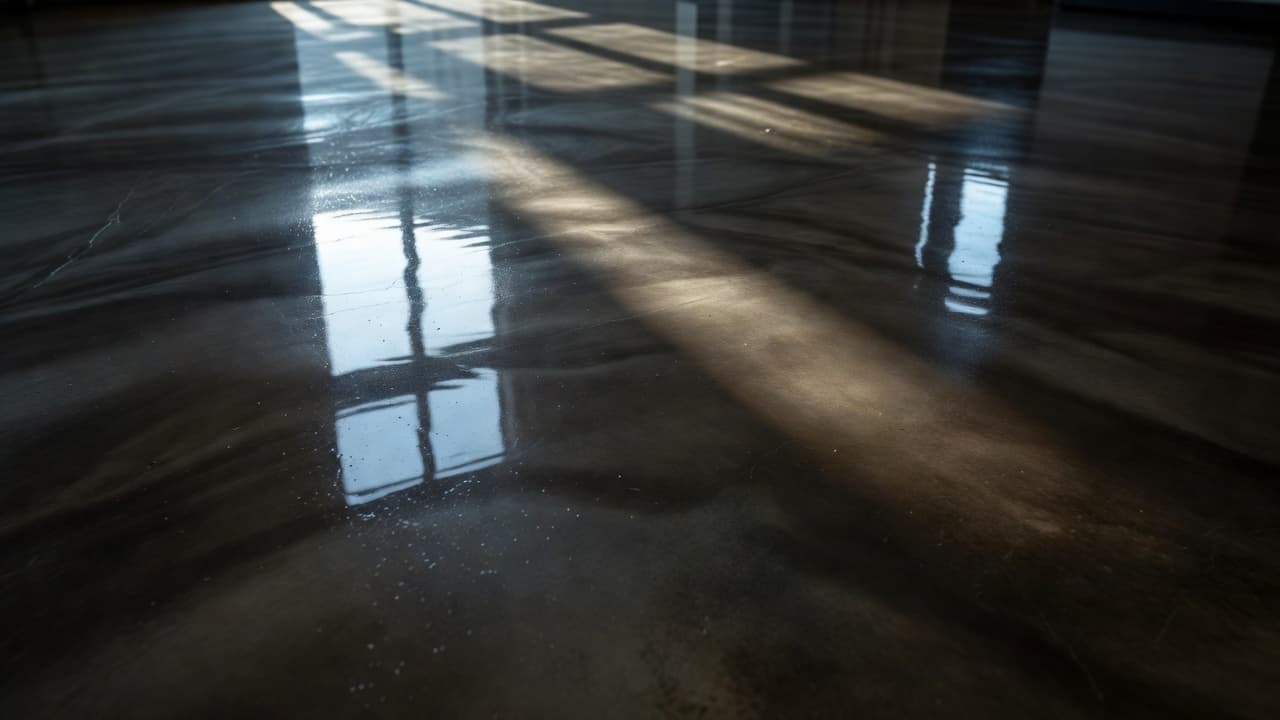
Concrete polishing works well when appearance and low routine maintenance lead the list. The finish is built into the slab, so there isn’t a film that can peel. It also brightens a room and pairs well with modern salon design. However, polished floors can show water, and high-gloss polishing may feel slick in wet areas. Hair dye can also stain if the floor isn’t protected with the right guard and cleaning plan.
A concrete epoxy coating is often the most practical choice for the main service floor. It creates a sealed surface over the slab, which helps with color spills, daily mopping, and chemical exposure. A commercial concrete epoxy coating also gives you options on sheen and texture, so you can keep the floor satin-smooth in dry spaces and add more grip where water lands.
That said, epoxy lives or dies by prep. The best epoxy coating for concrete won’t last if the slab has moisture issues, old adhesives, or weak surface paste. If you’re weighing systems, this comparison of epoxy coating vs polished concrete is a useful starting point.
A polyaspartic coating can be a smart fit when downtime is tight. It cures fast, holds gloss well, and tends to offer better UV stability than many epoxies. Owners like it for remodels where every closed day hurts revenue. Still, a slick topcoat in a wet salon is a bad idea, so texture matters.
Concrete staining is the most design-forward option of the group. It adds character and natural variation, and it doesn’t look like a painted slab. Yet color alone doesn’t protect the floor. Concrete staining still needs a good sealer, and it usually isn’t the first choice for shampoo stations or active color-processing lines.
For most salons, the winner is not one universal finish. It’s a system that matches style in dry areas and adds more protection in wet, chemical-heavy spaces.
The best finish often changes by salon zone
A salon doesn’t need one floor performance level everywhere. In fact, some of the best-looking projects use one finish family throughout the space, then adjust texture, sheen, or topcoat by room.
This quick comparison helps narrow the field:
| Salon zone | Best-fit finish | Why it works | Watch-outs |
|---|---|---|---|
| Reception | Polished concrete or satin epoxy | Clean look, brightens the space, easy daily cleaning | Full gloss can show scuffs and footprints |
| Styling floor | Satin epoxy or guarded polished concrete | Good balance of looks and cleanability | Rolling chairs can wear weak topcoats |
| Color-processing area | Epoxy with chemical-resistant topcoat | Better defense against dye, bleach, and developer | Needs fast spill cleanup |
| Shampoo stations | Textured epoxy or textured polyaspartic | Better grip and water resistance | Heavy texture needs more scrubbing |
| Back room or laundry | Higher-build epoxy system | Handles carts, storage, and cleaning chemicals | Looks matter less, performance matters more |
The biggest mistake is giving wet zones the same finish as the front desk. Reception can carry more shine because it’s dry most of the day. Shampoo stations can’t.
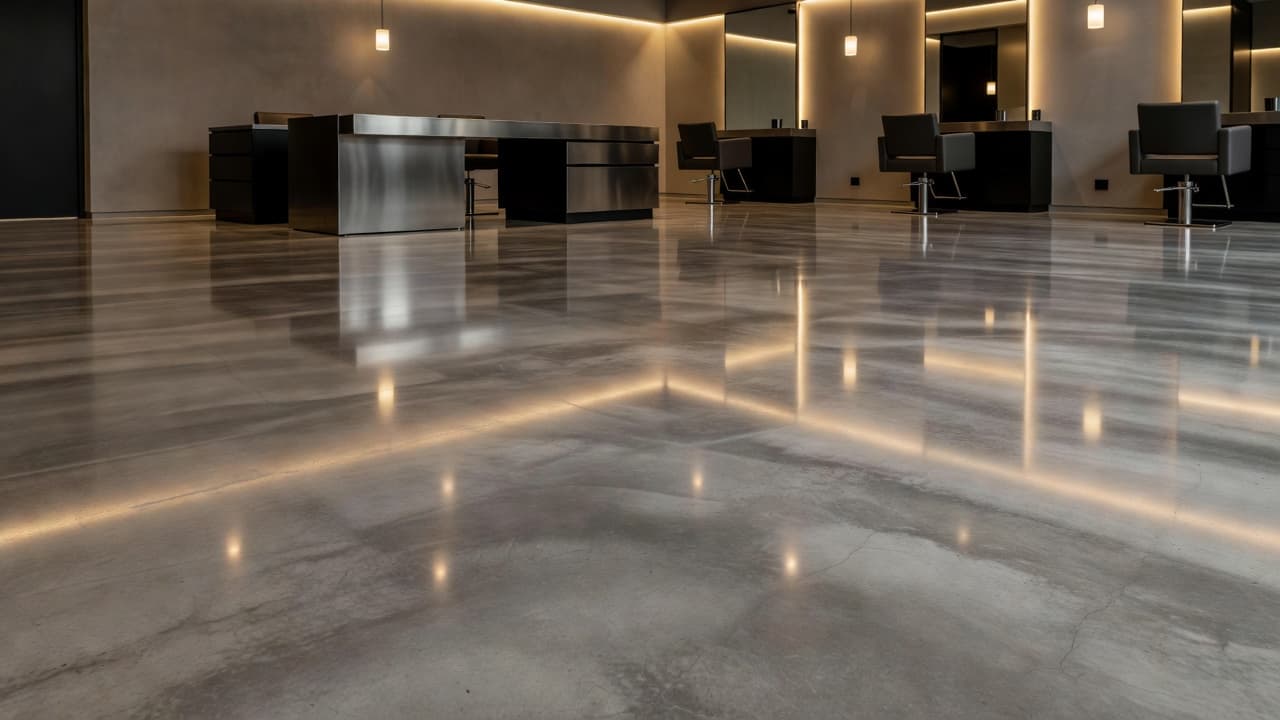
Reception is where polished concrete often shines, both literally and visually. It gives a clean, upscale look without grout lines, and it can make a smaller salon feel more open. A satin epoxy can do the same with better spill protection. If you’re trying to pick sheen, this guide to concrete finish levels explained is helpful because gloss, satin, and matte all clean and wear a little differently.
Color bars need more than good looks. They need a surface that won’t grab onto toner, dye, or bleach. Here, epoxy usually wins over polishing and stain. Quick cleanup matters, but so does chemical resistance after the spill sits for a few minutes during a busy service.
Save the highest shine for dry areas. Wet zones need texture before they need polish.
Shampoo stations are where safety should lead the conversation. A lightly textured epoxy or polyaspartic system gives you better footing while still allowing mop-and-go cleaning. You don’t want a harsh broadcast floor that catches every bit of hair, but you do want more grip than you would choose at the check-in counter.
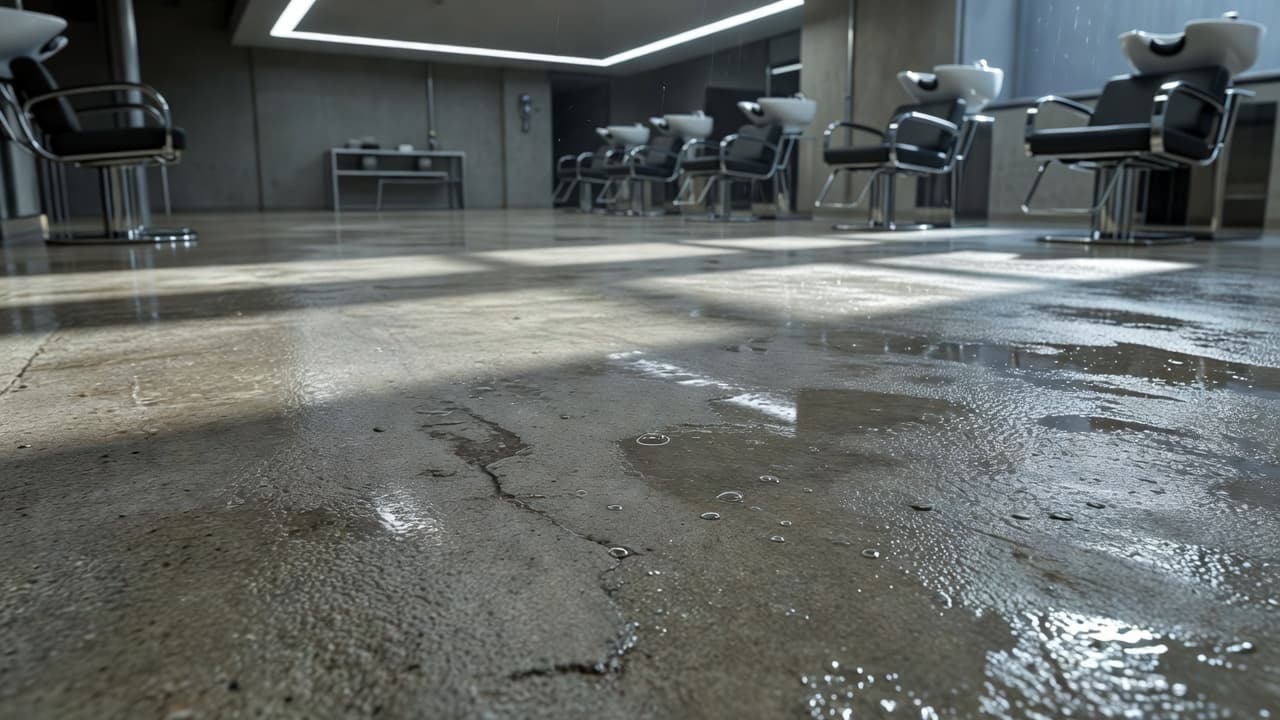
Back rooms deserve their own spec too. If your salon has product storage, laundry, or a receiving area, some of the same thinking behind heavy-duty concrete floor finishes applies. That space may need a tougher, simpler coating than the client-facing floor.
What to ask before you sign a flooring proposal
A finish can sound right on paper and still fail in real life. That’s why buying guidance matters as much as the finish name.
Start with surface prep. Ask how the slab will be tested, cleaned, and profiled. No finish survives bad concrete dealing with moisture vapor, contamination, or weak concrete at the surface. If the answer skips over grinding, moisture testing, or crack repair, keep looking.
Next, ask for a zone-based recommendation. A strong contractor should talk about dry areas, wet areas, and chemical-heavy areas as separate conditions. One product across the whole salon may work, but only if the build and texture are adjusted.
Also ask about maintenance before you buy. Polished concrete needs routine dust control and the right cleaner to hold its look. Epoxy and polyaspartic floors are easy to mop, but they may need a future topcoat renewal in the busiest lanes. More texture adds safety, yet it also holds more soil.
If a bidder mostly installs an epoxy coating for garage floor projects, press for salon examples. A basement concrete coating or home garage floor can look great, but salon service areas face different spills and cleaning habits. The same goes for a garage floor epoxy coating company that wants to move into commercial work. Ask for photos of shampoo stations, color bars, and retail interiors, not only residential jobs.
Finally, ask how the floor will feel after opening day. Will it show every hair clipping? Will it haze under disinfectants? Will rolling chairs mark the topcoat? Good answers beat generic promises every time.
Final thoughts
A salon floor has to work hard without looking hard-worn. That usually points to polished concrete in select dry spaces, and a well-built epoxy or polyaspartic system where water and chemicals hit daily.
The right choice isn’t the shiniest sample board. It’s the one that balances safety, cleanability, and stain resistance with the look you want clients to see when they walk in.