
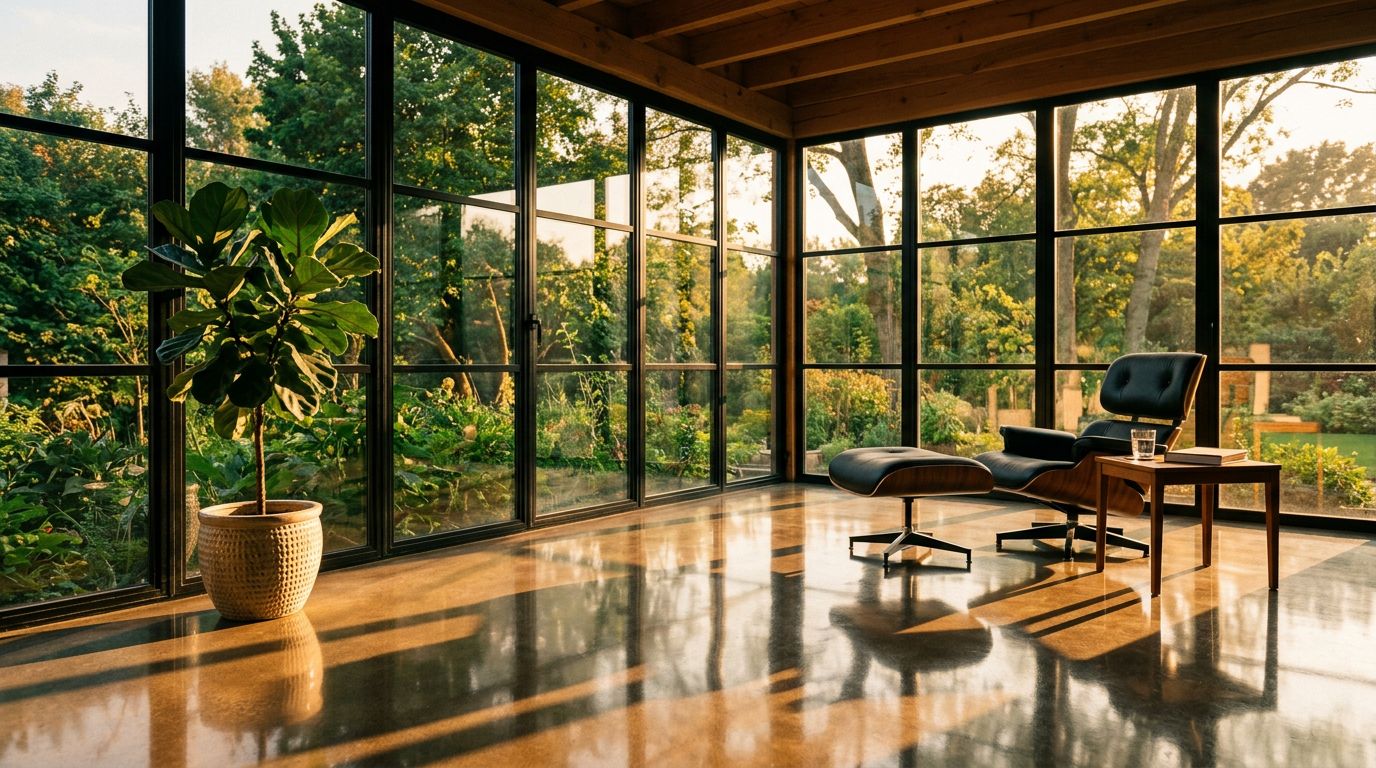
A sunroom can make almost any floor look better, until all that light starts showing every scratch, smudge, and glare streak. If you’re choosing among concrete floor finishes for a bright space, sunlight changes the pecking order fast.
The right finish has to look good at noon, hold up to foot traffic, and stay easy to clean. It also has to fit how you use the room, whether it’s a quiet reading spot, a four-season family room, or an enclosed patio that sees muddy shoes and wet paws.
What bright sunrooms demand from a floor finish
Sunrooms live between indoors and outdoors. They get more UV exposure, more temperature swing, and often more tracked-in grit than a typical living room. Because of that, some finishes that work well elsewhere can disappoint here.
An epoxy coating for garage floor projects often looks tough enough for anything, and in a garage that logic makes sense. But a sunroom isn’t a garage. A basement concrete coating can ignore direct sun, while a sunroom can’t. A commercial concrete epoxy coating may handle carts and spills, yet still amber near wide windows.
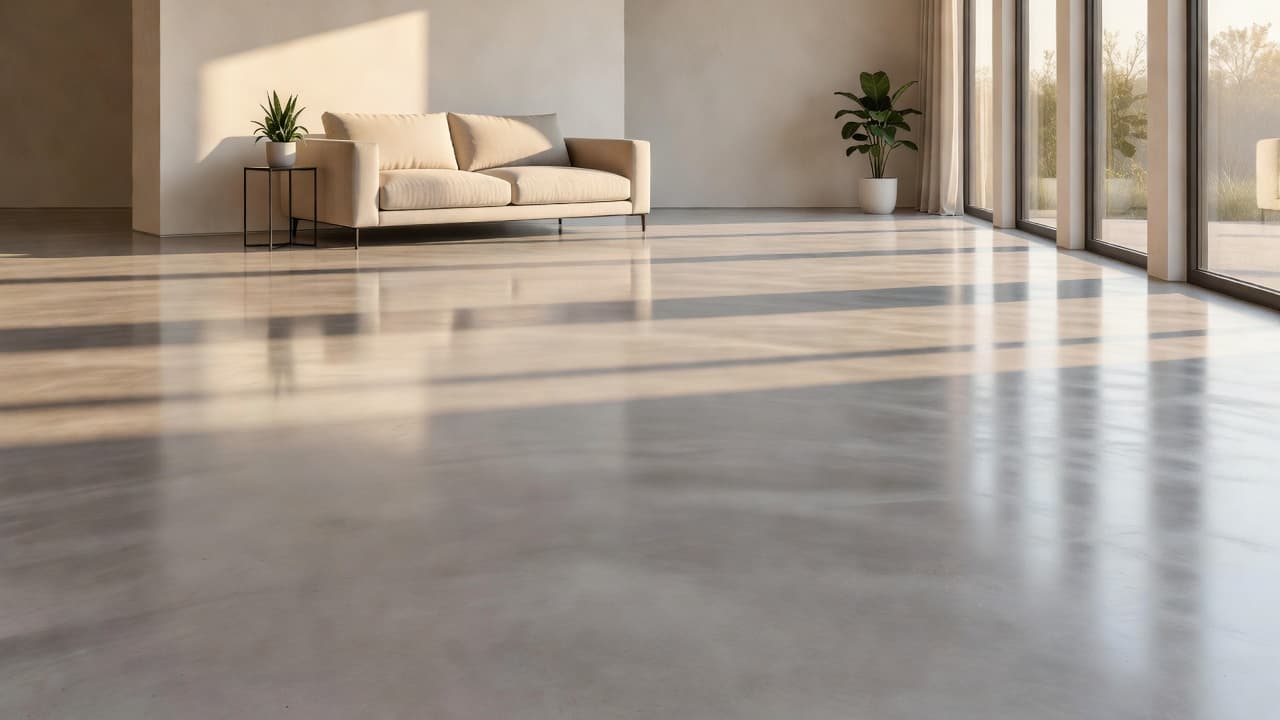
You also have to think about comfort. Concrete is hard underfoot, and it can feel cool in winter unless the room gets strong solar gain. On the other hand, it’s easy to pair with area rugs, and it handles pets, planters, and rolling furniture better than many soft floors.
A good sunroom finish should do four things well:
- It should resist UV damage and color change.
- It should clean up without a fussy routine.
- It should offer the right amount of grip, even when the floor is dusty or slightly damp.
- It should match the room’s style, because a glossy showroom look feels out of place in some homes.
If you’re comparing concrete to other surfaces, sunroom flooring ideas from Patio Enclosures show how often homeowners prioritize low maintenance and light resistance. Concrete fits that brief, but only when the finish is chosen with the room’s exposure in mind.
Stained concrete and polished concrete in sunny rooms
For many homeowners, concrete staining and concrete polishing are the strongest options for a sunroom. Both work with the slab rather than hiding it under a thick film, so they avoid some common coating failures.
Why stained concrete works so well
Stained concrete gives the floor color without turning it into a painted surface. That matters because stains don’t peel like paint. They soak into the slab or bond close to it, then a clear sealer protects the finish.
In a sunroom, stained concrete has two big strengths. First, it handles UV better than many film-build coatings. Second, the mottled look hides dust and light wear better than a solid-color floor. Earth tones, warm grays, and soft charcoal usually look natural in bright rooms.

The downside is that stain alone doesn’t solve slab damage. If the concrete has heavy cracks, patch marks, or old adhesive scars, those flaws may still show. Also, the final look depends on the slab’s condition, so it’s less predictable than paint or tile.
Where polished concrete stands out
Concrete polishing is often the best fit for a modern sunroom, especially a high-traffic family space. It creates a dense, refined surface by grinding and honing the slab, then treating it with a hardener. There is no thick top layer to peel.
That makes polished concrete appealing in bright spaces. It doesn’t yellow like some resin coatings, and it stays low maintenance. A dust mop and neutral cleaner usually handle day-to-day care. If you want a deeper side-by-side look, this guide on comparing epoxy vs polished concrete for sunrooms is useful.
Polishing does have tradeoffs. A high-gloss finish can produce glare, and a smoother floor can feel slick if water sits on the surface. In most sunrooms, a satin or lower-gloss polish is the safer choice. This guide to concrete floor sheens for bright spaces helps explain why matte and satin often look better under strong window light.
If your goal is a clean, simple floor that ages well, polished concrete is hard to beat. It also pairs nicely with the kind of low-maintenance interiors featured in this look at easy-care sunroom flooring.
Epoxy coatings, sealers, paint, and decorative overlays
A concrete epoxy coating can still work in a sunroom, but it needs more care in product choice. Standard epoxy is strong, easy to clean, and available in many colors. That’s why people shopping for an epoxy coating for concrete often start there.
The problem is UV. Many epoxy products amber over time in direct or repeated sun exposure. If you want epoxy in a sunroom, ask for a system with a UV-stable topcoat. A polyaspartic coating is often used for that top layer because it holds color better in sunlight and cures fast.
A garage floor epoxy coating company may offer the same flakes and gloss systems for sunrooms. That can work in an enclosed patio or casual four-season room, but only if the installer adjusts for glare and slip. Full-broadcast flake finishes hide dirt well, yet they can feel too busy for a living space. Solid-color epoxy looks cleaner, though high gloss can show every speck.
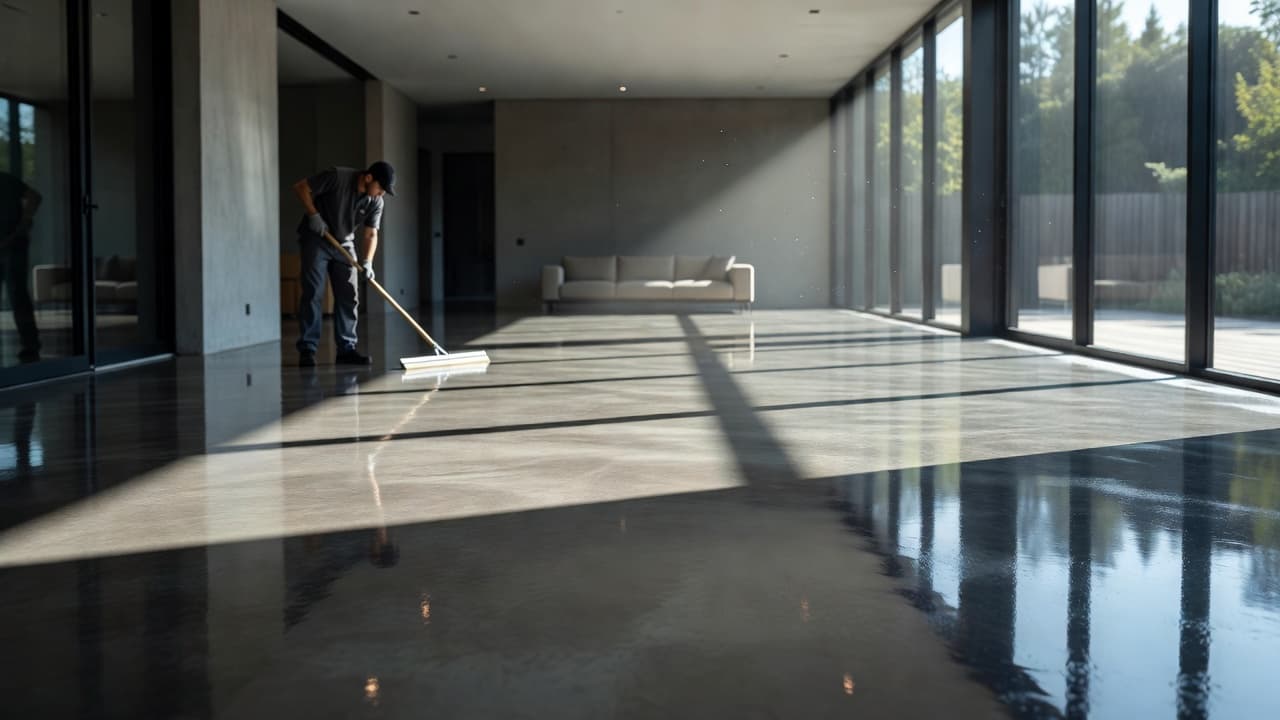
Clear sealed concrete is simpler. A penetrating sealer or low-build topical sealer protects against stains and dust while keeping a more natural look. This is often a smart budget choice for a slab that already looks decent. The catch is maintenance. Some sealers need reapplication sooner in sunny rooms, and glossy sealers can show wear paths.
Concrete paint is the weakest option for most sunrooms. It’s cheap at first, but it tends to scuff, chip, and wear at entry points. In a bright room, those failures show fast. Paint makes more sense for a short-term cosmetic update than a lasting floor.
Decorative overlays and microtoppings deserve a look when the slab itself is rough. These products create a new skim surface over damaged concrete, then you can stain, seal, or lightly polish that surface. They cost more, but they solve appearance problems that stain or polish alone can’t fix.
If you’re new to concrete dealing, the terms can sound messy. Focus on the basic question: are you improving the slab you have, or covering it with a film? In sunrooms, slab-improving finishes usually age better.
Cost, comfort, and the right fit for your space
Installed price depends on prep, crack repair, square footage, and local labor, but these ranges are a solid starting point.
| Finish | Typical installed cost | Best fit | Main drawback |
|---|---|---|---|
| Clear sealer | $2 to $5 per sq. ft. | Budget refresh, decent slab | Needs periodic renewal |
| Concrete stain + sealer | $4 to $8 per sq. ft. | Warm, natural look | Existing flaws may show |
| Polished concrete | $4 to $10 per sq. ft. | Modern, busy sunrooms | Can glare at high sheen |
| Epoxy with UV-stable topcoat | $5 to $12 per sq. ft. | Durable enclosed patios | Can still feel slick or glossy |
| Overlay or microtopping | $8 to $18 per sq. ft. | Worn or ugly slabs | Highest cost |
The pattern is clear. The more surface repair and design control you want, the more you should expect to spend.
In bright sunrooms, a satin finish usually ages more gracefully than full gloss.
For a four-season sunroom, polished concrete or stained-and-sealed concrete usually wins. Both handle sunlight well, clean easily, and feel appropriate in a living space. For an enclosed patio that gets wetter shoes and more dirt, epoxy with a traction additive or a textured sealer can make sense. For a high-traffic family room, polished concrete is often the most forgiving long-term.
Comfort matters too. If the slab feels hard or cool, use rugs near seating areas. That gives you warmth where you want it without turning the whole room into a maintenance project.
A simple way to choose is to match the finish to your top priority:
- Pick polished concrete if you want long wear, low upkeep, and a clean modern look.
- Choose stained concrete if you want color variation, a softer visual feel, and good performance in sunlight.
- Go with epoxy and a polyaspartic topcoat if durability matters most and you like a more finished, coated look.
- Use an overlay or microtopping if the slab is too damaged for stain or polish to look good.
- Stick with a basic sealer when budget leads and the concrete already has decent character.
Final thoughts
Sunrooms are hard on the wrong floor and easy on the right one. Strong sun, changing temperatures, and daily traffic favor finishes that stay stable, clean up fast, and don’t turn every sunbeam into glare.
For most homes, polished concrete or stained-and-sealed concrete gives the best balance of looks, durability, and maintenance. Epoxy can still be a good choice, but only when the system is built for UV exposure and slip control.
The floor that lasts longest is usually the one that fits the room’s light, not the one with the shiniest brochure.