Your floor can look dirty again an hour after you clean it. Usually, that isn’t only a cleaning issue. It’s a traffic issue, a surface issue, or both.
When you keep seeing dirt tracked across concrete floors, the fix starts at the door and ends with the finish under your feet. A few smart changes can cut the mess fast and make cleanup much easier.
Dirt coming in and dirt showing up are two different problems
Many homeowners lump these together, but they need different fixes.
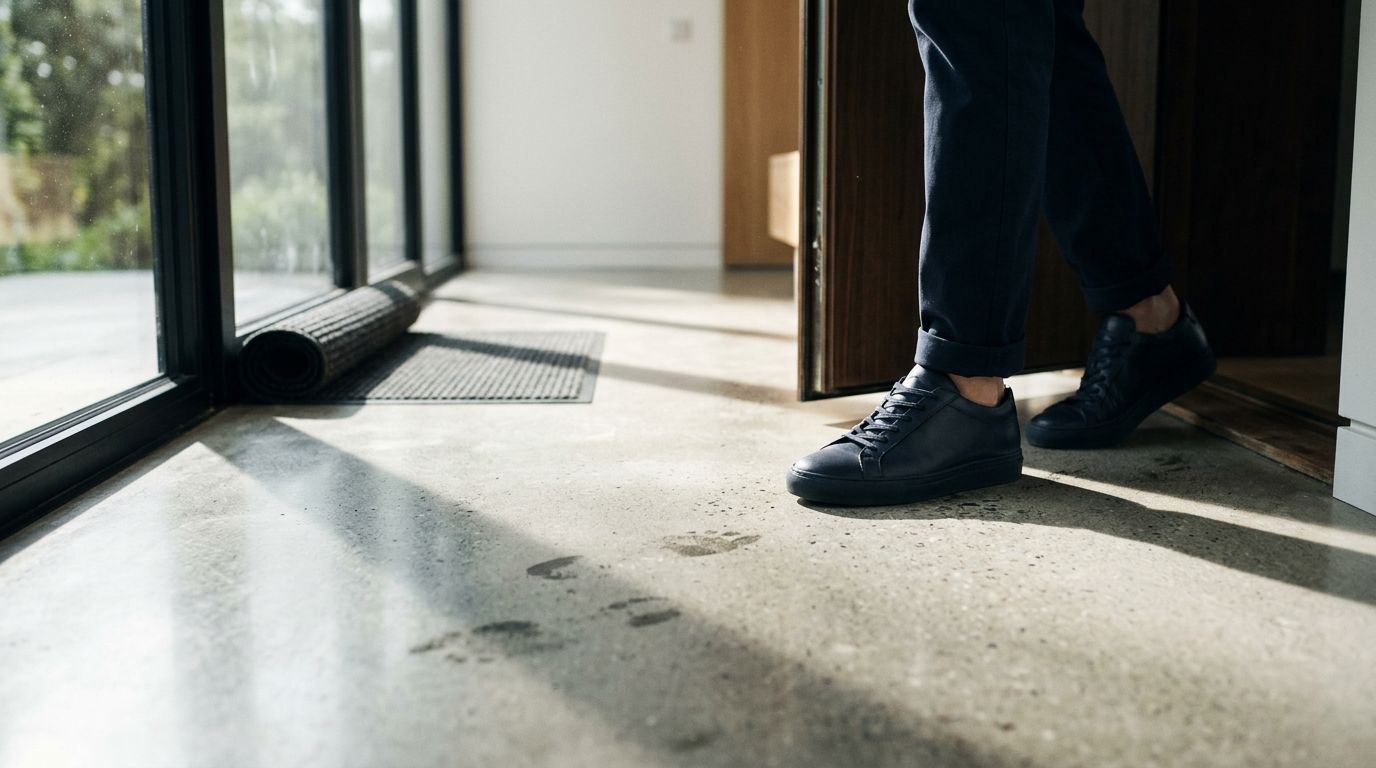
The first problem is tracked-in dirt. That means mud, grit, leaves, and dust are getting carried inside on shoes, paws, and tires. If this is the main issue, your best tools are outside mats, inside mats, shoe habits, and cleaner walkways.
The second problem is visible dirt. In that case, the floor may not be bringing in more dirt than other floors. It may simply show dirt faster. Bare concrete has tiny pores and texture that trap dust. Worn sealer can also hold onto grime and make footprints stand out.
Color and sheen matter too. A dark gray gloss floor can show pale dust quickly. A light, medium-tone satin finish often hides everyday dirt better. If you’re comparing finish options, understanding matte, satin, and gloss finishes can help you choose a surface that looks cleaner between mopping days.
This is why sweeping more often doesn’t always solve the whole problem. If the slab is unsealed, dusty, or rough, dirt sticks and spreads. In other words, one fix stops mess at the door, while the other makes the floor easier to keep clean once dirt gets inside.
Keep that split in mind as you work through the rest of the plan. It saves time, and it helps you spend money where it actually pays off.
Build a dirt-control zone at every entrance
Most floor mess starts in the same few places, the front door, the garage entry, the back door, and the patio door. So, focus there first.
A strong entry setup works best when it gives people two chances to drop dirt before they reach the concrete. One mat outside scrapes off grit. Another mat inside absorbs what is left.
Follow these steps at each busy doorway:
- Put a coarse scraper mat outside, and make it large enough for two full steps.
- Place an absorbent indoor mat right behind the door, with a non-slip backing.
- Add a shoe-removal spot with a bench, tray, or basket for daily shoes.
- Keep a towel near doors used by kids, pets, or anyone coming in from the yard.
- Clean the mats often, because a full mat stops catching dirt.
Mat size matters more than people think. Tiny mats look neat, but they don’t collect much. A wider mat forces contact, and that contact does the work.
Shoe habits matter just as much. A simple shoe station near the garage door often beats constant sweeping. If guests don’t remove shoes, at least give them a mat that lets them wipe both feet without balancing on one leg.
Then look outside. Dirt on concrete usually starts on the walkway, not the living room floor. Sweep porch slabs, front paths, and garage aprons often. Rinse off caked mud before it dries and breaks into dust. If mulch or bare soil sits next to the walk, edge it back so rain doesn’t wash it onto the path.
Low spots near doors also create trouble. Water sits there, shoes pick up mud, and the floor pays the price. A small drainage fix, a stepping stone path, or a gravel border can cut the mess more than another bottle of cleaner.
Clean concrete without spreading grit or leaving a film
Once dirt gets inside, your cleaning method matters. The wrong routine can smear grit around and make the floor look dull faster.
Start with dry dust removal. Use a microfiber dust mop, a soft-brush vacuum setting, or a dry pad. Do this before you add water. If you mop gritty concrete first, you turn loose dust into muddy paste, and that paste settles into pores and texture.
For busy homes, a quick dry pass several times a week works better than an occasional heavy scrub. This matters even more in garages, basements, and mudroom entries where fine grit builds up fast.
When it’s time to mop, use a damp microfiber mop and a pH-neutral cleaner made for sealed concrete. Keep the mop damp, not soaked. Change dirty water often, and rinse the mop head when it starts dragging soil across the floor.
Too much soap leaves a film, and that film grabs new dirt.
That sticky haze fools many homeowners. The floor feels cleaner at first, but it soils faster because residue holds dust. If you want a simple routine to follow, these tips for cleaning and caring for concrete are a good next step.
Skip harsh cleaners unless you have an oil spot or a real spill. Routine cleaning should feel light. A mild cleaner, clean water, and a microfiber pad usually do the job better than strong soap.
If your floor is bare, expect more work. If you already have an epoxy coating for concrete or another sealed finish, cleanup should be easier. The key is using the right cleaner, and not leaving product behind.
Seal, polish, or recoat when dirt keeps winning
If the floor looks dirty right after cleaning, the surface may be the problem. Worn concrete can shed dust, trap soil, and stain easily. In that case, a better finish can do more than another mop.
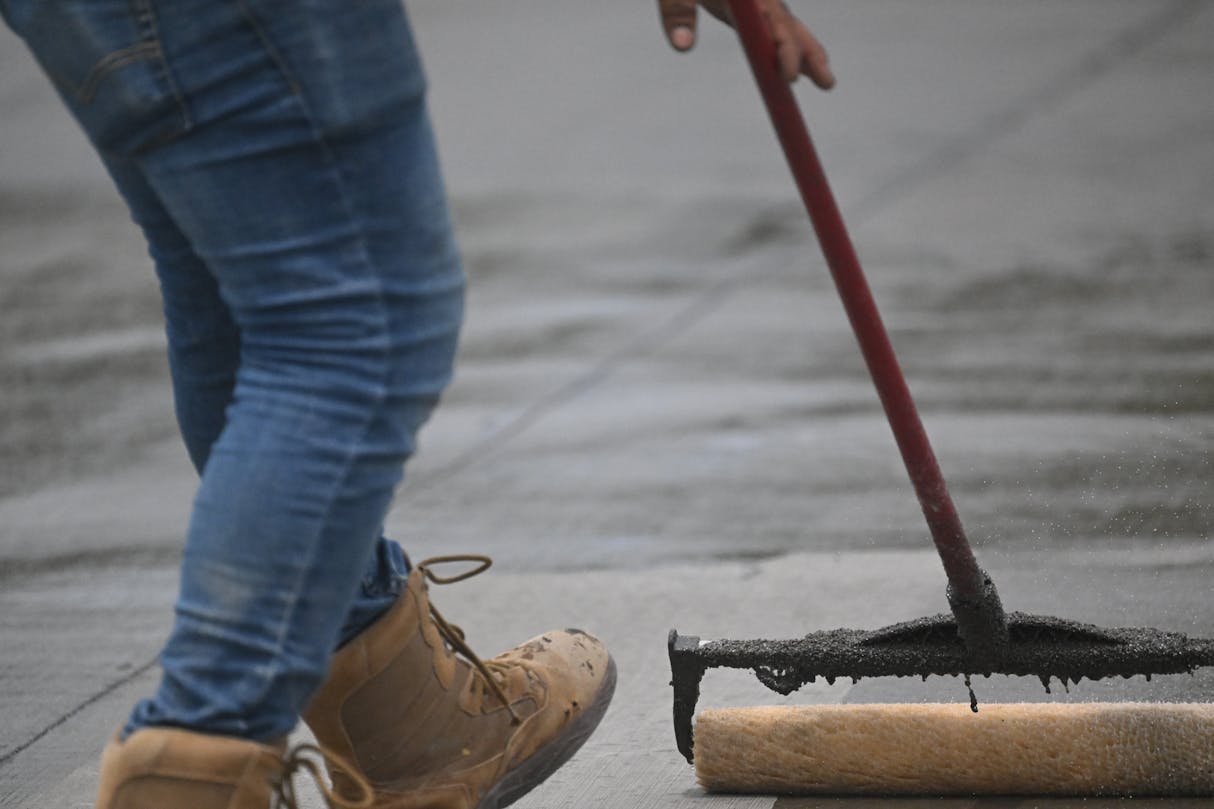
A professional can tell you whether the slab needs sealing, densifying, polishing, or a full coating. If you’ve seen the phrase “concrete dealing” online, most people mean concrete that keeps holding dirt because the surface is too porous or too worn.
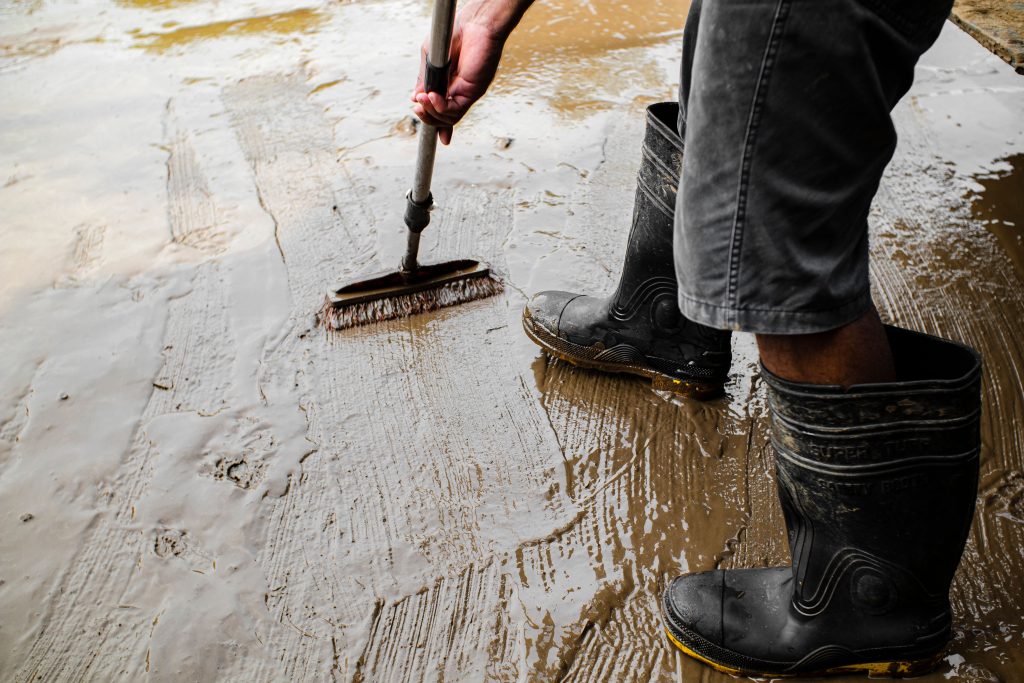
Photo by Nothing Ahead
Here is a simple way to compare common options:
| Finish option | Best use | How it helps with dirt | What to know |
|---|---|---|---|
| Bare concrete with a basic sealer | Utility rooms, light traffic | Reduces absorption and makes sweeping easier | Needs reapplication over time |
| Densifier plus concrete polishing | Interior living areas, shops | Harder surface, less dusting, easy dry cleanup | Sheen level affects how much dust shows |
| Concrete staining with sealer | Patios, basements, decorative interiors | Adds color that can hide soil better than plain gray | Color helps, but the sealer still needs care |
| Concrete epoxy coating or polyaspartic coating | Garages, workshops, high-traffic rooms | Smooth, sealed surface releases dirt fast and resists many stains | Prep work matters more than the label |
A concrete epoxy coating is a strong choice when you want stain resistance and easier sweeping. An epoxy coating for garage floor use can be especially helpful because road grit, tire dust, and leaf debris don’t settle into open pores as easily. For sun-exposed or fast-turnaround jobs, a polyaspartic coating may be a better fit.
The same idea works in other parts of the house. A basement concrete coating can make damp-season cleanup simpler. Concrete staining can help if you want color variation that hides dust better than plain gray. Concrete polishing works well when you want a clean, low-maintenance look without a film-building coating.
Commercial spaces use these systems for the same reason. A commercial concrete epoxy coating handles traffic well and cleans up fast, and homeowners want those same benefits in garages and utility rooms.
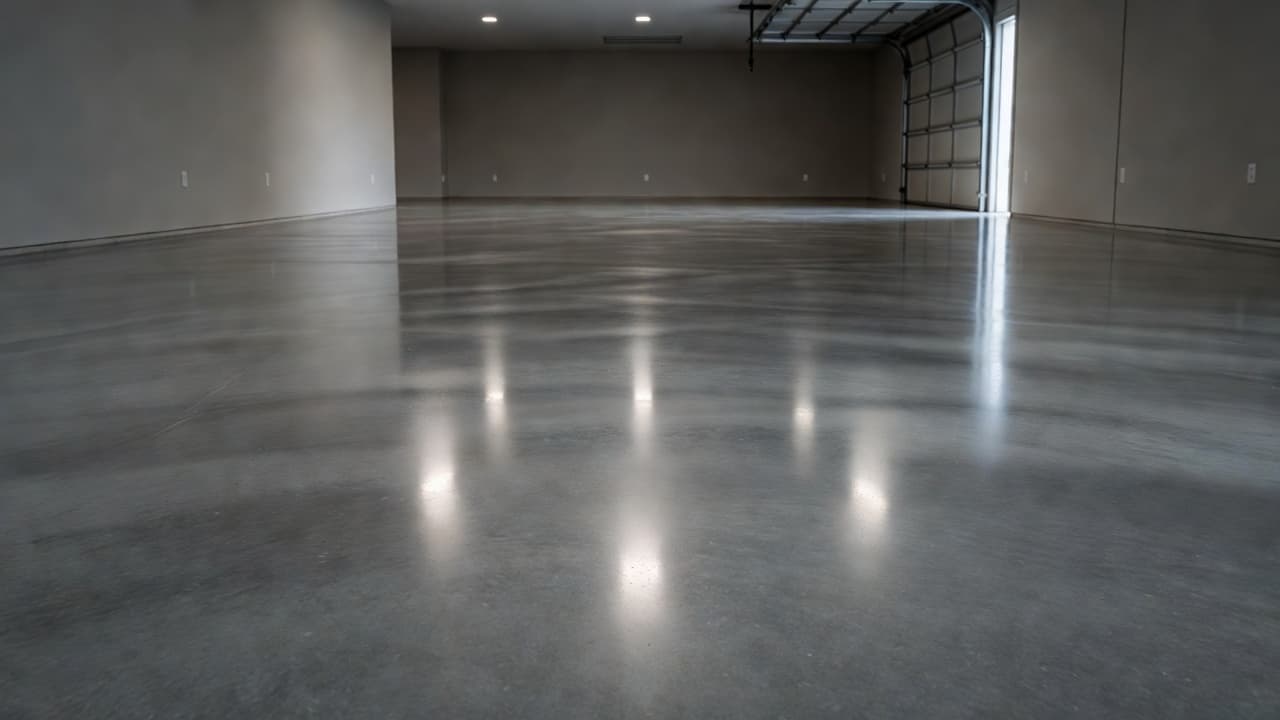
If your current floor dusts, stains, or feels rough after mopping, it may be time to look at durable concrete coating and sealing options. When you talk with a garage floor epoxy coating company, ask how they prep the slab, what cleaner the finish needs, and whether a satin or low-gloss look will hide daily dirt better. A good installer should also explain whether an epoxy coating for concrete, a densifier, or another finish fits your traffic and moisture conditions.
Final thoughts
The biggest win comes from stopping dirt before it lands. Good mats, cleaner walkways, and a shoe-removal spot usually make the fastest difference.
After that, make the floor easier to clean. Dry-remove grit first, mop with a residue-free cleaner, and refresh a worn surface before it becomes a dust magnet.
If your concrete floor still looks dirty right after cleaning, the slab probably needs polishing, sealing, or a new coating, not more scrubbing.