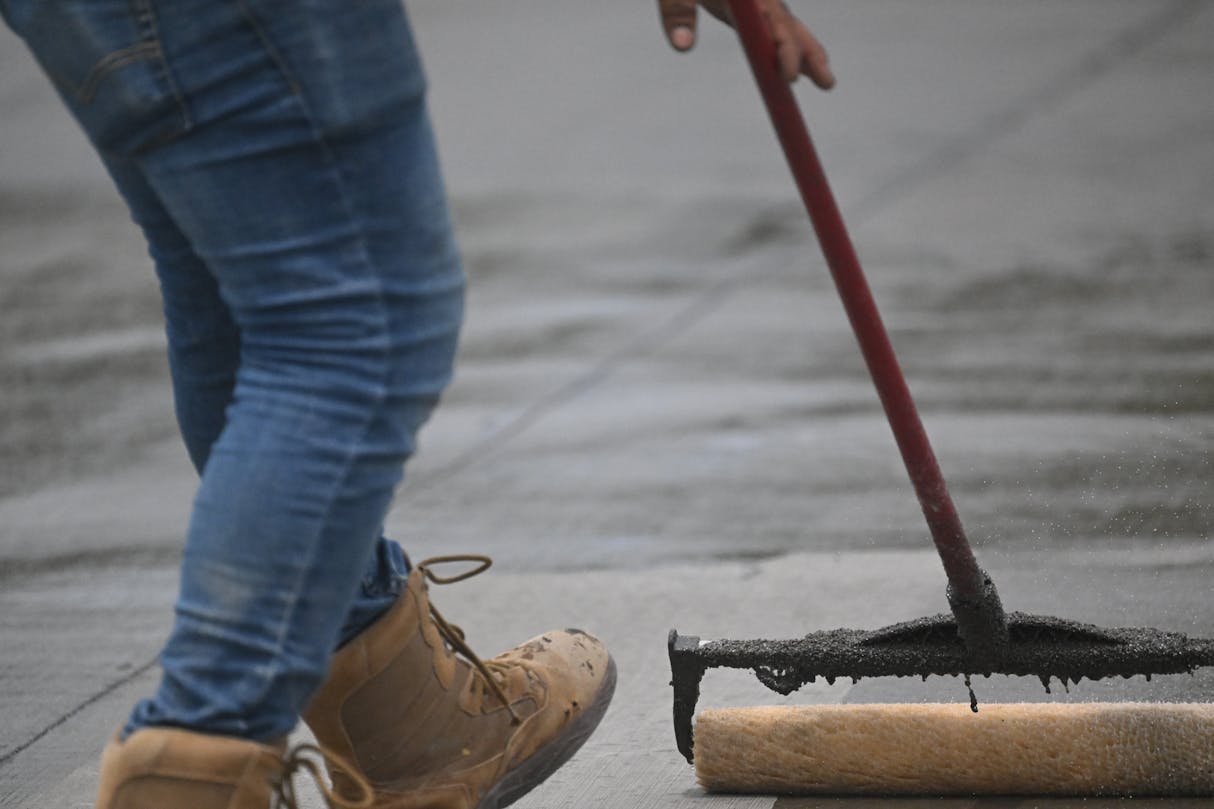
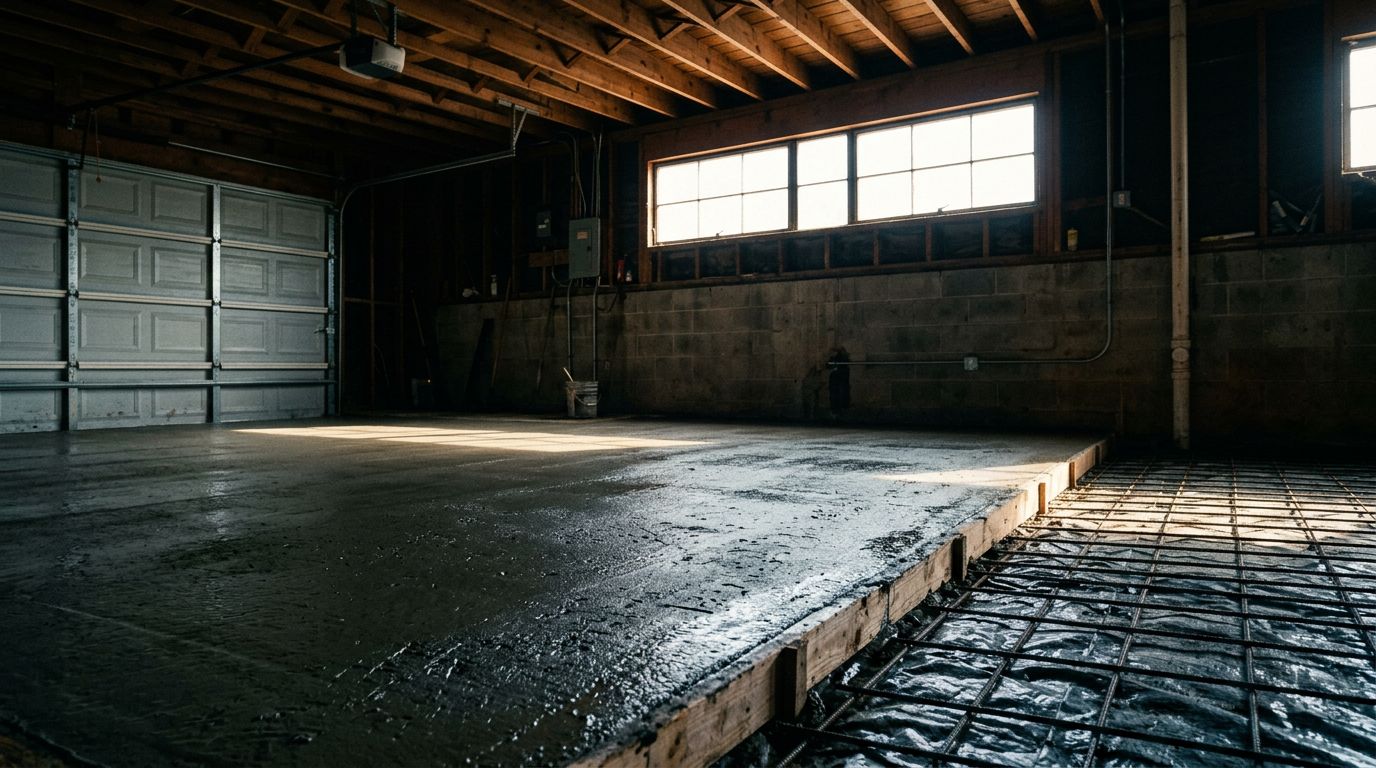
A concrete slab can fool you. In Atlanta, a floor may look dry by lunch and still hold enough moisture to cause coating or adhesive trouble later.
That matters if you’re planning a garage upgrade, a basement finish, or a commercial renovation. Concrete floor dry times in this climate depend on more than the calendar, so the slab has to be tested, not guessed.
Why Atlanta air slows down concrete drying
Atlanta’s climate works against fast floor drying for much of the year. Warm air can hold a lot of moisture, and when outdoor humidity stays high, water leaves the slab more slowly.
Fresh concrete loses water in two ways. Some moisture gets used during curing, and the rest has to move out of the slab over time. When the air already feels heavy, evaporation slows, especially in garages, basements, warehouses, and buildings without steady climate control.
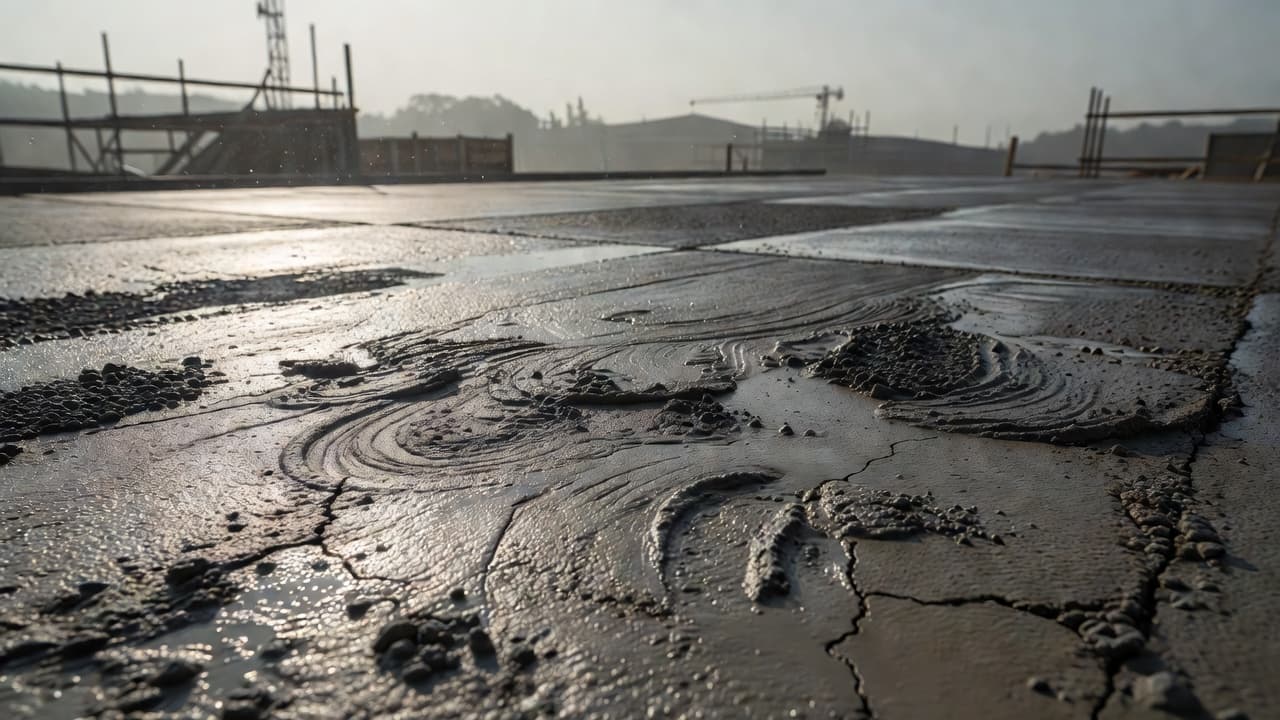
Humidity isn’t the only factor, either. Slab thickness, air movement, surface prep, recent rain, and the condition of the vapor barrier all matter. A ground-level slab in an older Atlanta home may keep pulling moisture upward. A commercial space with open dock doors can also take on outside humidity every day.
That is why two concrete floors poured on the same date can dry at very different speeds. One garage may be ready for coating after a reasonable wait and passing tests. Another may still read too wet because the slab sits in shade, the doors stay open, or the space has no dehumidification.
If a contractor promises the same timeline for every project, be careful. Atlanta weather rarely cooperates that neatly.
Surface dryness is not the same as internal moisture
This is where many floor failures begin. The top of the slab can lose its dark, damp look and feel hard underfoot, yet moisture deeper in the concrete may still be high.
Concrete dries from the surface, but the slab stores water below that top layer. Once you install a coating, adhesive, tile, vinyl plank, or another covering, moisture can move upward and collect where the floor system meets the concrete. That trapped vapor creates pressure.
A slab that looks dry can still fail a moisture test, and that hidden moisture is what causes many coating and adhesive problems.
Surface dryness tells you what your eyes and hands notice. Internal moisture tells you what the floor system will deal with after installation. That difference matters in every setting, from a home garage to a warehouse aisle.
Curing also adds confusion. Concrete can cure enough to walk on long before it is dry enough for a finish. People often hear the “28-day” rule and assume the slab is ready for anything after four weeks. In reality, that may only mark a basic curing point for some mixes and conditions. It does not guarantee the moisture level meets the limits for a coating or adhesive.
This is why humid Atlanta conditions stretch real-world drying timelines. The surface may look ready, yet the inside of the slab may still have more moisture than the floor system allows.
Why coatings, adhesives, and finishes fail when moisture is ignored
Moisture limits change with the system you choose. A concrete epoxy coating often needs a slab that is dry enough to meet the product’s stated limits. The same goes for an epoxy coating for concrete in showrooms, utility rooms, and work areas.
That is especially true with an epoxy coating for garage floor projects. Atlanta garages face humid outdoor air, hot slab temperatures, and occasional water tracking from cars. If the slab still pushes moisture upward, the finish can blister, haze, peel, or lose bond.
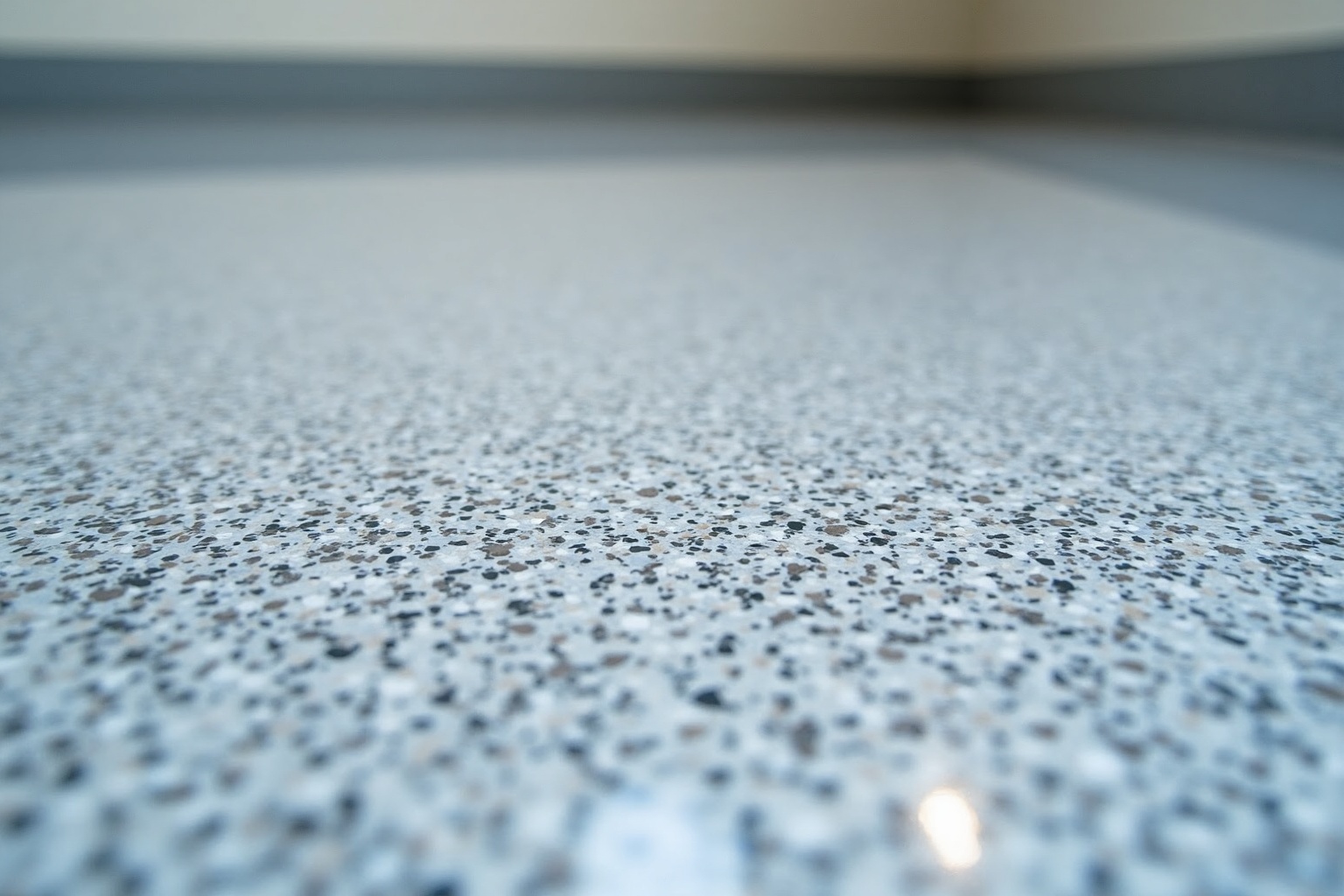
A polyaspartic coating cures faster than many epoxies, but fast cure does not solve a wet slab. If the moisture condition is outside the product’s limits, quick return-to-service won’t protect the floor from future failure.
The same issue shows up with adhesives and coverings. Vinyl, rubber, carpet tile, wood, and other systems often have strict moisture requirements. If the adhesive maker lists a maximum in-slab RH or moisture vapor emission rate, that number matters. So do the requirements from the maker of the primer, patch, or underlayment.
Moisture also affects finishes that are not film-heavy coatings. Concrete polishing may seem less risky because it doesn’t leave a thick layer on top, but moisture still changes how densifiers, guards, and stains behave. Concrete staining can also turn uneven on damp concrete, especially when moisture moves inconsistently through old slabs.
If you’re comparing residential and commercial concrete finishing, ask how each option handles slab moisture. That includes basement concrete coating systems and commercial concrete epoxy coating work, where downtime and repair costs can climb fast.
How pros test moisture before coating or covering a slab
A good installer does not rely on appearance alone. Moisture testing gives the numbers needed to match the slab with the flooring system.
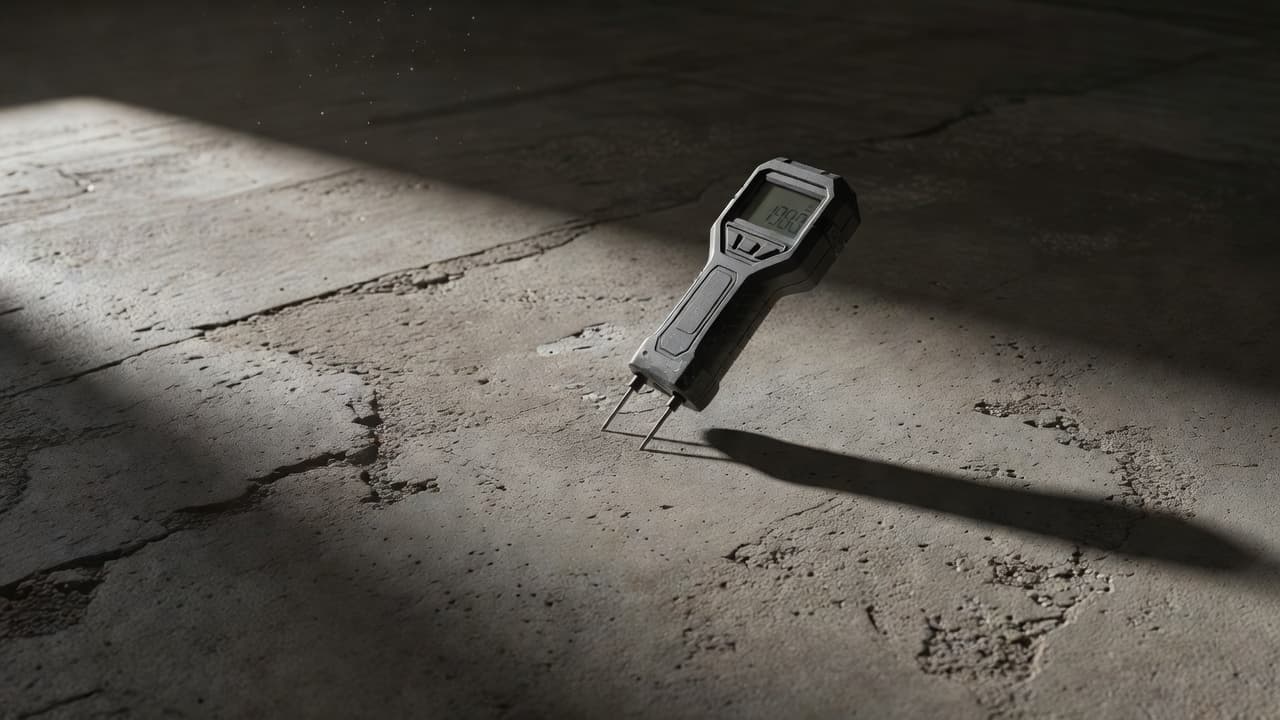
A handheld moisture meter can be useful as a screening tool. It helps flag wet areas fast, and it can guide where further testing should happen. Still, it does not replace the tests most manufacturers want for final approval.
Two common methods come up on Atlanta jobs:
| Method | What it measures | Where it helps most | Main limitation |
|---|---|---|---|
| Surface moisture meter | Relative moisture near the surface | Quick checks during prep and troubleshooting | It does not show true internal slab condition for acceptance |
| RH testing | Internal relative humidity inside the slab | Coatings, adhesives, and coverings that depend on in-slab moisture | It needs drilled test holes and time to stabilize |
| Calcium chloride testing | Moisture vapor emission rate at the slab surface | Products that accept ASTM F1869 results | It measures surface emission, and not every product allows it |
RH testing is often the stronger choice when a floor will be covered. It reads the moisture condition inside the slab, which better reflects what happens after installation. That matters in basements, retail remodels, and older warehouses where moisture can move upward for a long time.
Calcium chloride testing still appears on many projects, especially when the flooring manufacturer accepts it. The test measures moisture vapor emission at the surface over a set period. It can be useful, but it needs the right conditions and a clean test area.
The important part is simple: use the test the product requires. If the coating, adhesive, or covering calls for RH testing, do that. If it allows calcium chloride, follow the stated limit. If it requires both, both numbers need to pass.
Ambient conditions should also be checked. Air temperature, slab temperature, and indoor relative humidity affect both testing and installation. A slab tested in a cool, closed building can behave differently once the space opens up and Atlanta humidity moves back inside.
What realistic timelines look like in Atlanta projects
No honest contractor should give a universal dry-time promise. Concrete drying depends on the slab, the building, the weather, and the floor system going on top.
A new garage slab may need several weeks before many coatings are even considered, and testing may push that wait longer. A below-grade basement floor can stay damp well after the surface looks fine. Thick warehouse slabs often take longer because there is more moisture to leave the concrete. Renovation work also slows things down when a slab has been washed, ground, or exposed to rain during construction.
The old “28 days and you’re good” rule often falls apart in Atlanta summers. It can also fail during mild months if the building has poor air flow or no active humidity control. Floor coverings and coatings follow manufacturer limits, not wishful dates on a project calendar.
A few practical steps help keep the job moving:
- Keep the space enclosed and run HVAC or dehumidifiers when possible.
- Do not schedule coating right after pressure washing or wet cleaning the slab.
- Ask what test method will be used and what result the product allows.
- Request the actual moisture readings before work starts.
- If readings stay high, ask whether a moisture-mitigation system is approved for that slab and product.
This is where experience matters. A garage floor epoxy coating company should be able to explain its moisture testing, prep steps, and product limits in plain language. The same standard applies to basement floors, retail stores, and industrial spaces.
On older renovation jobs, good concrete dealing starts with moisture control. That means reading the slab, adjusting the schedule, and choosing products that fit the real jobsite conditions rather than forcing the slab to fit the calendar.
The slab sets the schedule
Atlanta humidity changes drying timelines because the air slows moisture leaving the concrete, even when the surface looks dry. That is why a floor can seem ready and still fail once a coating, adhesive, or covering traps moisture inside.
The best results come from testing the slab, matching the numbers to the product, and giving the floor time when it needs time. In humid conditions, dry enough is a measurement, not a guess.