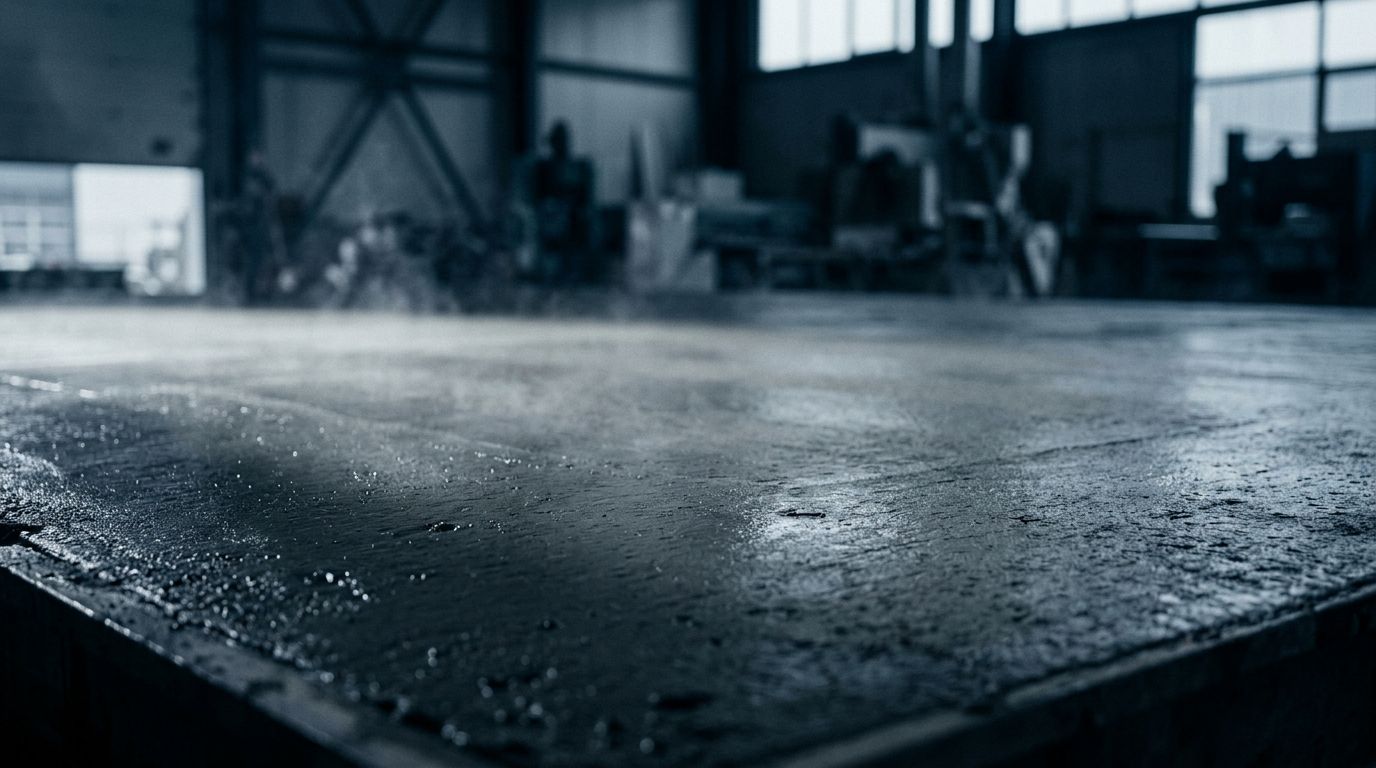
A new slab can fool you. It may look dry, feel hard, and still be too wet for a coating.
The short answer is usually no, you should not apply a new concrete slab coating right away. Most coating failures happen because the slab gets coated too soon, before it has cured enough or released enough moisture. The right timing depends on cure time, moisture levels, surface condition, and the exact product you plan to use.
How long should you wait before coating new concrete?
For most resin systems, 28 days is the common starting point, not a promise. Both Stonhard’s guidance on coating new concrete and Sherwin-Williams’ article on “green” concrete point to that baseline, while also noting that real jobsite conditions can push the wait longer.
Here is the quick version:
| Situation | Typical timing | Why it changes |
|---|---|---|
| Standard epoxy systems | 28 days or more | Moisture may still be too high |
| Humid sites or thicker slabs | 30 to 60+ days | Drying slows down |
| Specialty early-install products | Only if allowed by the manufacturer | Product limits vary |
A slab cures and dries at different speeds. Concrete gets hard first. Moisture leaves much slower. That gap causes trouble with an epoxy coating for concrete, especially in garages, basements, and ground-level commercial spaces.
A slab can look ready on top while still holding enough moisture below to make a coating blister or peel.
Weather, mix design, curing compounds, slab thickness, and whether there is a vapor barrier all matter. Because of that, a 28-day-old slab might still not be ready for a concrete epoxy coating or a polyaspartic coating system.
Don’t trust the calendar alone, test moisture
Time matters, but moisture matters more. Before any serious new concrete slab coating job, the slab should be tested.
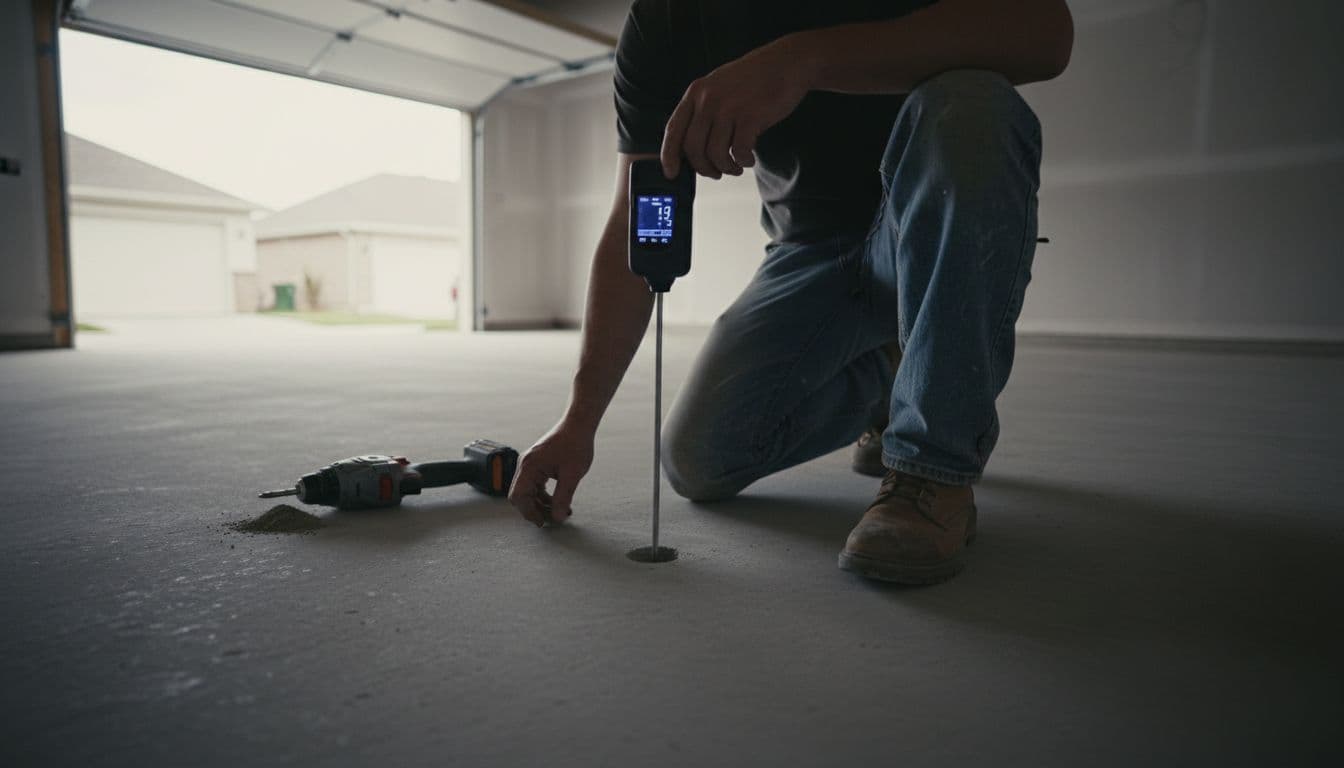
Two common methods are in-slab relative humidity testing and calcium chloride testing. The first checks moisture inside the slab. The second measures moisture vapor coming off the surface. This concrete coating cure time guide explains why temperature, humidity, and slab moisture all affect coating performance.
For a basement concrete coating, moisture testing is even more important. Moisture vapor can move up from below long after the surface feels dry. The same risk exists with garage slabs that sit directly on grade.
A simple plastic sheet test can hint at a problem, but it should not replace proper testing for a professional install. If moisture is too high, the coating may haze, bubble, pinhole, or release from the slab.
That matters whether you want an epoxy coating for garage floor use or a larger commercial concrete epoxy coating system. In both cases, the slab decides the schedule.
Surface prep is what makes the coating stick
Even a dry slab can fail if the surface is weak. New concrete often has laitance, curing residue, dust, or smooth areas that reduce bond strength.
Mechanical prep is usually the safe path. Grinding or shot blasting opens the surface so the coating can bite into clean, sound concrete. If you want to compare those methods, this guide on concrete prep for epoxy is worth a look.
Photo by Eyes2Soul Eyes2Soul
Acid etching sometimes shows up in DIY advice, but it often falls short for pro-grade systems. It does not remove everything, and it can leave uneven results. On a new slab, skipped prep is like painting over chalk. It may look fine at first, then lift later.
Good concrete dealing starts with reading the slab honestly. That means checking for curing compounds, soft surface paste, cracks, joint issues, and contamination before the first coat goes down.
Which coating makes sense on a new slab?
The best finish depends on how you use the space. A concrete epoxy coating is a strong choice for many garages, shops, and work areas because it resists stains, tire marks, and daily wear. An epoxy coating for garage floor use often includes a clear topcoat for better scratch and UV resistance.
Many installers pair epoxy with a polyaspartic coating as the top layer. That can reduce downtime and improve color stability, but it does not erase the slab’s moisture limits. If the base concrete is too wet, a faster topcoat will not save the job.
For high-traffic facilities, a commercial concrete epoxy coating may use thicker builds, primers, or moisture-mitigation layers. On the other hand, some owners choose Atlanta concrete polishing instead of a film-building coating, especially when they want a hard-wearing floor with less risk of peeling. Concrete staining can also work well when you want color but prefer a more natural slab appearance.
If you’re talking with a garage floor epoxy coating company, ask three things. How will they test moisture? How will they prep the slab? Which product label or technical data sheet are they following? Those answers tell you more than any color sample.
A fresh slab can become a great floor. It simply needs the right wait, the right test results, and the right prep.
That is the real answer to coating new concrete. Patience costs less than a failed floor.