A floor coating can look great on day one and still fail fast. When concrete coating failure shows up, it usually starts below the surface, long before the peeling becomes obvious.
That matters if you’re choosing a concrete epoxy coating for a home, shop, basement, or warehouse. The good news is that most failures are preventable when the slab, product, and install plan all match.
The slab problems that start most coating failures
1. Poor surface prep leaves nothing solid to bond to
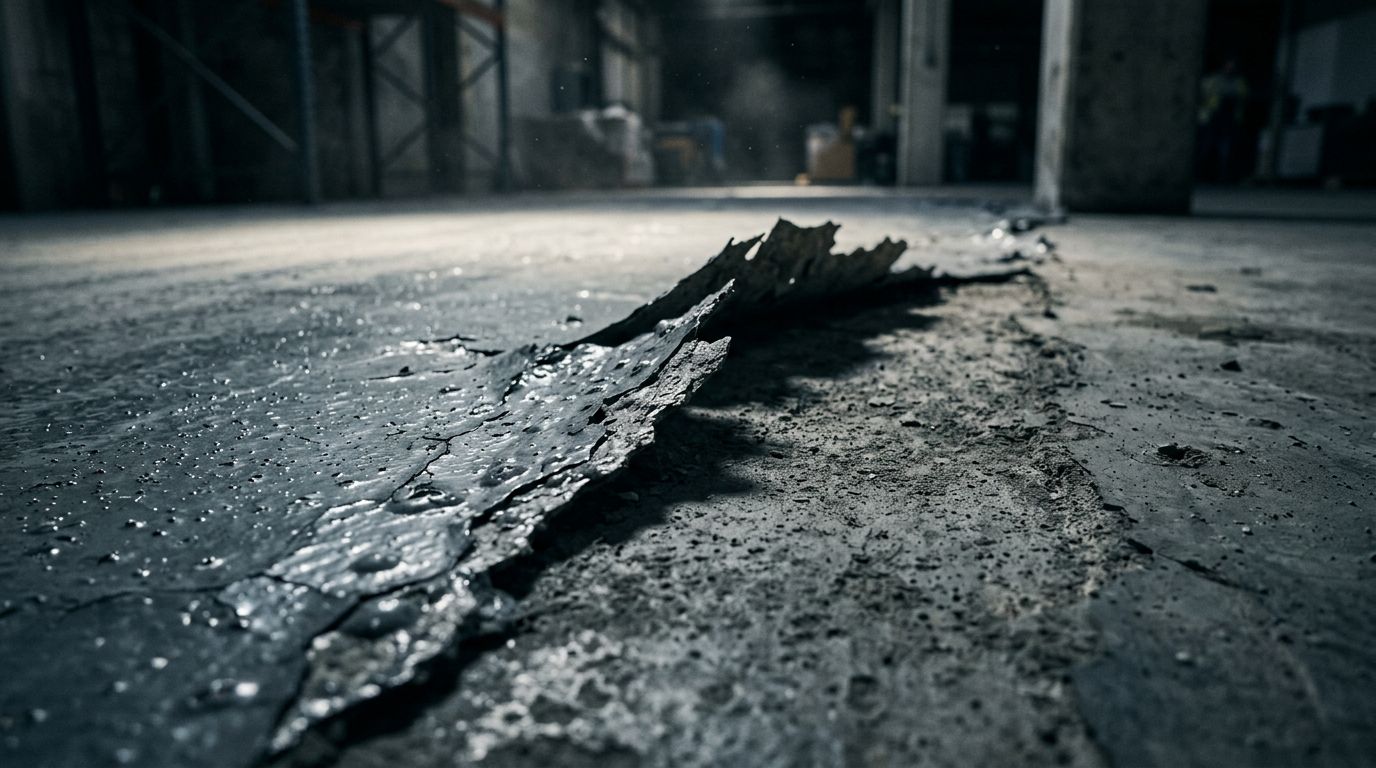
Most coating failures start with prep, not the coating itself. Dust, oil, old sealers, and smooth troweled concrete block adhesion. Then the finish peels, flakes, or releases in sheets.
A proper epoxy coating for concrete needs mechanical prep, usually grinding or shot blasting, not a quick acid wash. If you want a deeper look at what a lasting concrete epoxy coating should involve, focus on the prep steps first. Avoid this problem by insisting on concrete profiling, crack repair, and oil removal before any coating goes down.
2. Moisture in the slab gets trapped under the coating
Concrete holds water longer than most people think. Even a floor that feels dry can push vapor upward and create bubbling, blistering, or full delamination later. This is a leading cause of basement concrete coating failure.
That risk is highest in basements, ground-level slabs, and older buildings. Good installers check moisture before coating, and concrete moisture testing before coatings explains why surface dryness can fool you. Avoid this by testing first, then using a moisture-tolerant primer or mitigation system when the slab calls for it.
3. Weak, dusty, or damaged concrete fails under the coating
Sometimes the coating sticks, but the concrete under it gives way. That happens when the slab has laitance, surface dusting, spalling, or soft patches. In that case, the bond breaks inside the concrete itself.
Think of it like tape on chalk. The tape may grip, but the chalk still crumbles. Avoid this by repairing loose areas, removing weak paste, and making sure the substrate is sound before the finish coat starts.
A coating is only as strong as the concrete layer holding it.
Product and install choices that shorten floor life
4. The wrong coating system gets used for the real job
Not every floor needs the same build. An epoxy coating for garage floor use faces hot tires, road salt, and weekend spills. A commercial concrete epoxy coating may face pallet jacks, forklifts, or stronger cleaners. Use the wrong system, and premature wear shows up fast.
Epoxy is tough, but sunlight can yellow it. A polyaspartic coating often handles UV better and returns to service faster. Avoid this by matching the system to traffic, sunlight, chemicals, and downtime, not only to price.
5. Bad mix ratios and thin application create weak spots
Two-part coatings depend on the right resin-to-hardener ratio. If the mix is off, or if the installer spreads it too thin, the floor may stay soft, cure unevenly, or lose strength. Then flaking, tacky spots, and dull traffic lanes appear.
This shows up often with rushed jobs and bargain kits. For a useful breakdown of epoxy floor peeling causes, pay attention to how often thin build and poor mixing come up. Avoid this by measuring carefully, mixing for the full time, and applying the coating at the specified thickness.
6. Traffic hits the floor before it has fully cured
A coating may feel dry and still be far from ready. If cars, toolboxes, or forklifts hit it too soon, the surface can scar, wrinkle, or peel. Hot-tire pickup is the classic example, where warm tires pull the coating right off the slab.
That problem is common after a rushed garage install. A good garage floor epoxy coating company gives written cure times, not vague advice. If you want a plain-English look at hot tire pickup on epoxy floors, the pattern is always the same, weak bond plus early traffic. Avoid this by waiting the full cure window, especially before parking.
If the floor still feels tacky or smells strong, it’s not ready for tires.
Long-term issues that turn a good floor into a failed one
7. No topcoat protects the floor from UV, stains, and abrasion
A base coat does a lot of the bonding work, but the topcoat often takes the abuse. Without one, the floor may discolor near doors, scratch faster, and hold stains longer. That matters in garages, showrooms, and sunlit service bays.
A UV-stable clear coat, often urethane or polyaspartic coating, helps reduce yellowing and makes cleanup easier. Avoid this by asking what protects the wear layer, not only what color goes underneath.
8. Cleaning habits grind the finish down over time
Even a well-installed floor can wear out early if grit stays on the surface. Dirt acts like sandpaper under shoes and tires. Harsh degreasers and stiff brushes can also dull the finish and open the door to stains.
This is where the right floor type matters. In some spaces, Atlanta concrete polishing services or concrete staining may be a better fit because they don’t rely on a film that can peel. Avoid this problem by sweeping often, using mild cleaners, and picking a finish that matches how the space is used.
9. Cracks, joints, and slab movement were ignored
Concrete moves. Hairline cracks grow, joints open and close, and patched areas expand at different rates. If those details are skipped, the coating may mirror every flaw. Then you see telegraphing, edge flaking, or full splits along control joints.
This issue shows up in homes and on larger jobs where concrete dealing between trades is sloppy. Prep crews, repair crews, and coating crews all need the same plan. Avoid it by treating cracks and joints as part of the system, not as cosmetic touch-ups.
A failed floor rarely comes from one bad roll of product. More often, concrete coating failure happens when prep, moisture, product choice, and cure time don’t line up.
If you’re comparing options for a home garage, basement, or commercial slab, ask harder questions before the job starts. Ask how the slab will be tested, how it will be prepped, and when it will truly be ready for traffic. That one step can save years of peeling, bubbling, and callbacks.