Basements and first floors take more abuse than most people expect. Wet shoes, pet bowls, furniture legs, and the odd water scare all hit the same surface.
In a polished concrete vs LVP decision, durability depends less on looks and more on moisture, slab movement, and how the floor will age. Below grade, those details matter even more. Start there, and the better choice usually becomes clearer.
Basement conditions change the durability picture
Moisture vapor and minor flooding matter most
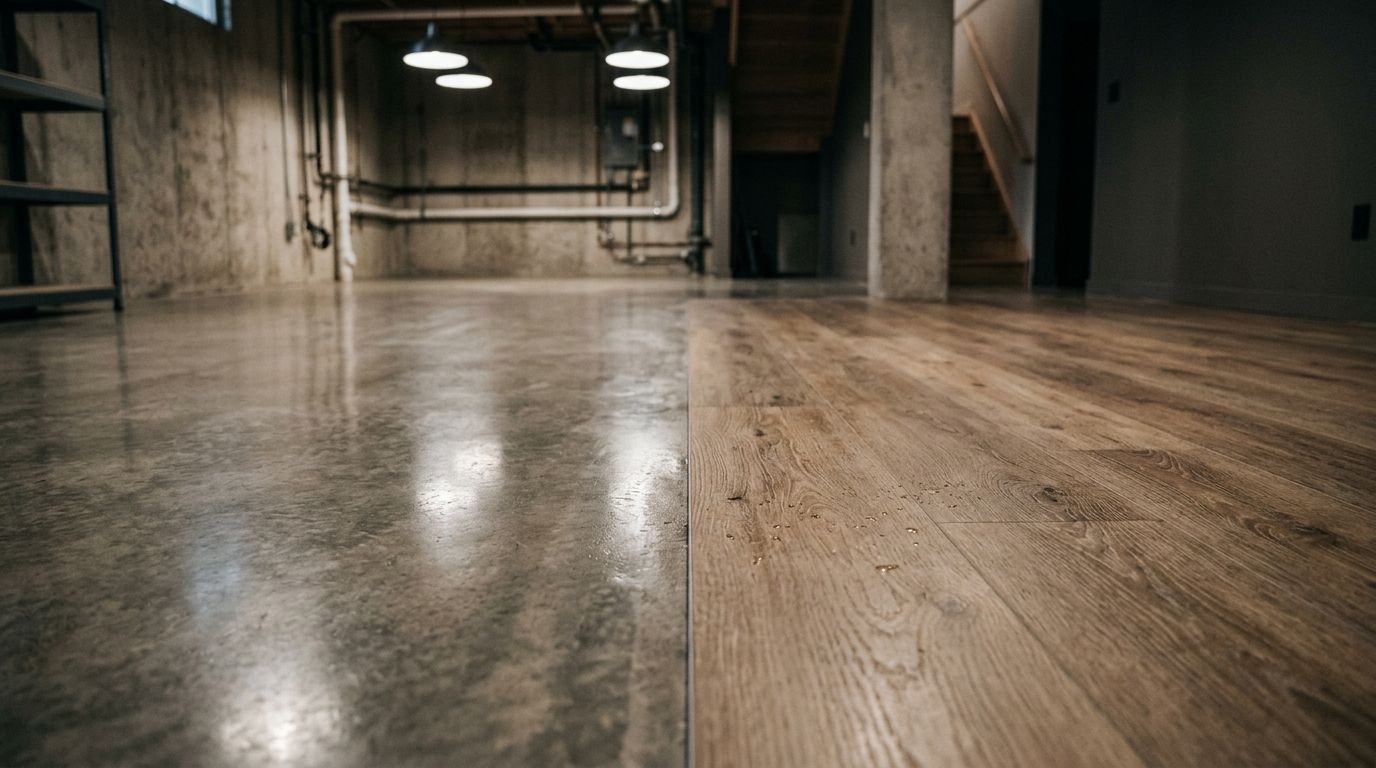
A basement floor lives closer to trouble. Moisture can move up through the slab, not only across it. That makes moisture vapor one of the biggest durability factors.
Polished concrete usually handles that better because it works with the slab instead of covering it with a floating layer. If the basement gets humid, damp, or briefly wet, the surface can usually dry without trapping moisture underneath. By contrast, LVP planks themselves are water-resistant, and many are sold as waterproof. Still, the full floor system can struggle if water gets below the planks or pad.
That hidden space is where problems start. A small leak, sump issue, or spilled water heater can leave LVP looking fine on top while moisture sits underneath. Then you may face odor, swollen trim, or plank removal. Many waterproof basement flooring guides put this risk at the center of the decision.
Below-grade floors often fail from moisture first, not foot traffic.
Cold slabs and small movement can change the outcome
Basement slabs also move a little over time. Hairline cracks, slight settling, and seasonal shifts are common. Polished concrete won’t hide that reality. If the slab cracks, the floor can show it because the slab is the floor. The upside is honesty. You see the issue and can repair it.
LVP can bridge over minor cosmetic flaws, which sounds helpful. However, slab movement can stress joints, telegraph uneven spots, and create bounce or clicking underfoot. In damp basements, that movement plus trapped moisture can shorten the life of the installation.
Temperature swings matter too. Basements stay cooler, so LVP may feel better on bare feet. Yet cooler slabs can also lead to more condensation risk. That doesn’t automatically rule out LVP, but it does raise the stakes on moisture testing, flatness, and underlayment choice. Some basement flooring comparisons point to LVP as a common choice, but usually only when the slab is dry and stable.
First floors are a different contest
Above-grade first floors don’t face the same pressure from the ground. Because of that, LVP often performs better here than it does in a basement. It handles daily traffic well, absorbs some sound, and feels warmer than concrete.
On a slab-on-grade first floor, polished concrete gets more attractive. It resists scratches from pet nails, rolling chairs, and sandy grit. Sunlight also doesn’t bother it much, while some LVP products can fade or change shape if heat builds near large windows. For examples of how homeowners weigh these trade-offs, this finished flooring comparison gives a useful real-world lens.
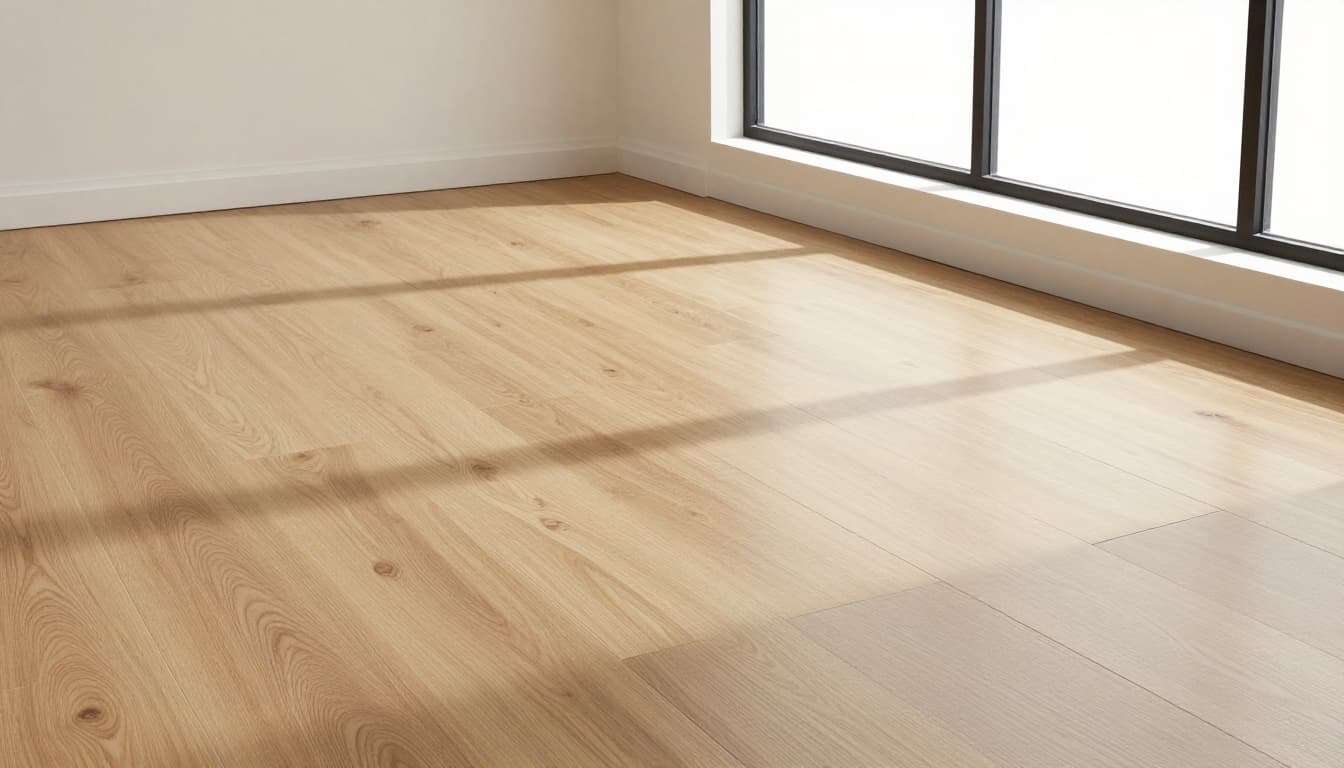
Still, subfloor type changes everything. If your first floor sits over wood framing, polished concrete usually isn’t the direct answer. You’d need a topping system or a new slab, which turns a flooring swap into a bigger build. In that case, LVP is often the more practical path.
For pure wear resistance on a concrete first floor, polished concrete often lasts longer. For comfort, softer acoustics, and easier style changes, LVP has a strong case.
Daily wear, maintenance, and repair are where the difference shows
Here is the quick durability snapshot:
| Factor | Polished concrete | LVP |
|---|---|---|
| Moisture vapor | Usually handles it better | Can trap moisture below |
| Minor flooding | Easier to clean and dry | May need removal to dry fully |
| Scratches and dents | Hard surface, high scratch resistance | Good wear layer, but can gouge or dent |
| Slab movement | Cracks may show | Joints can separate or click |
| Repairs | Crack repair is visible | Single planks may be replaced, if available |
| Maintenance | Dust mop, damp mop, re-guard as needed | Sweep, damp mop, protect seams |
The pattern is simple. Polished concrete usually wins when water, grit, or heavy wear are the main threats. LVP does well with normal family traffic, but it has more weak points at seams, edges, and underlayment.
Maintenance expectations are also different. Polished concrete needs routine dust mopping and a neutral cleaner. Depending on traffic, it may need a fresh guard or topical refresh over time. LVP is easy to clean day to day, but damage can be harder to hide. A torn plank, edge lift, or moisture problem can force partial disassembly.
Cost matters, too. In general, LVP often starts lower on installed price. Polished concrete can cost more up front if the slab needs grinding, patching, or filling. Still, pricing varies by region, subfloor condition, and installation method, so broad averages only go so far.
If you like concrete’s toughness but want a different finish, there are middle-ground options. Concrete polishing keeps the slab exposed and durable. Concrete staining adds color without paint-like peeling. A basement concrete coating or epoxy coating for concrete can create a more sealed surface. In garages, a concrete epoxy coating, epoxy coating for garage floor, or polyaspartic coating serves a different job because hot tires, chemicals, and impact loads are harsher. For heavier-use spaces, a commercial concrete epoxy coating may fit better than either living-space floor. That slab-first prep mindset, the kind a good garage floor epoxy coating company brings to a project, matters here too. A lot of what some crews casually call concrete dealing happens before the finish ever goes down, fixing dusting, cracks, and moisture issues first.
If your basement has even a modest history of dampness, polished concrete usually gives you fewer durability surprises. If your first floor is dry, above grade, and built for comfort, LVP can make solid sense.
Before you commit, test the slab for moisture and look closely at movement, cracks, and flatness. That’s where long-term durability is decided, not on the sample board.