
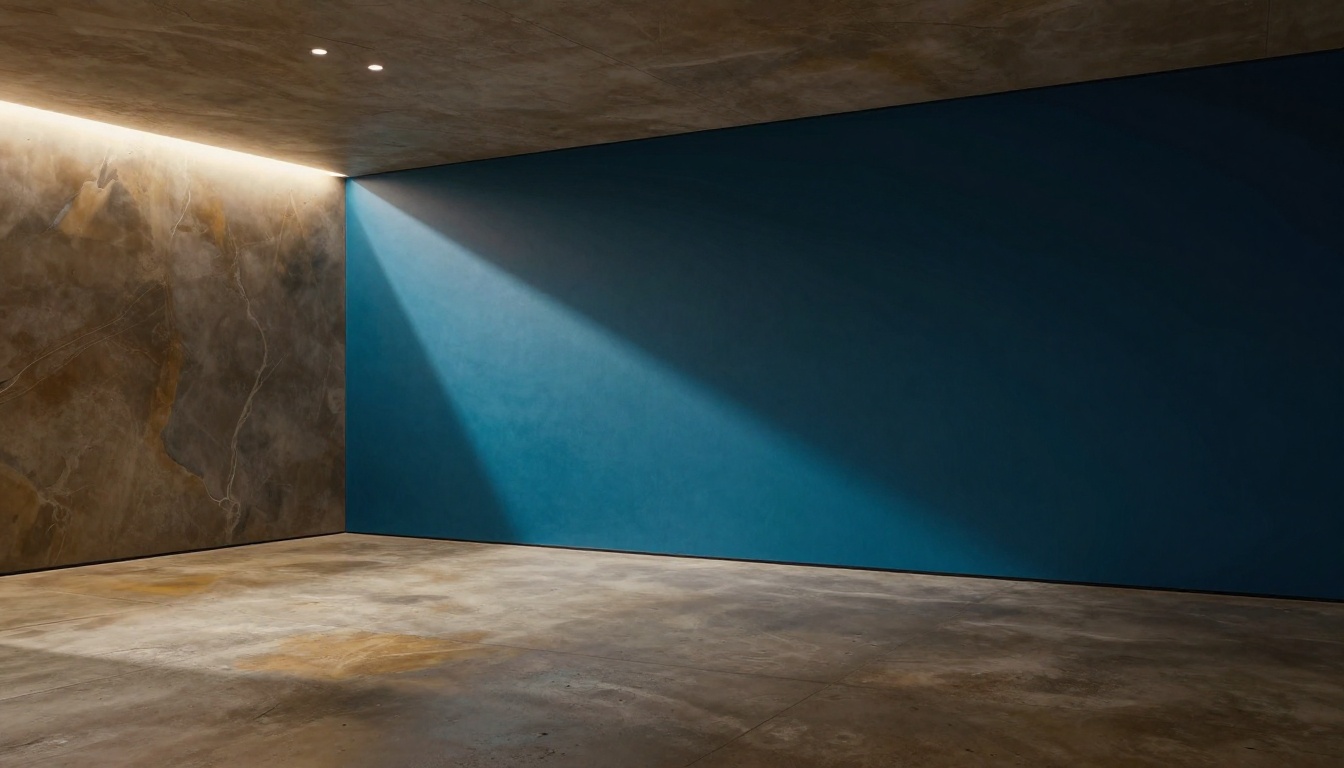
A concrete floor can feel earthy and relaxed, or sleek and graphic, from the same slab. That’s why concrete stain vs dye is mostly a design choice, not a strength contest.
Both add color, but they create different moods. If you want the floor to look natural, layered, and a little unpredictable, one option stands out. If you want cleaner color and stronger visual control, the other usually wins.
How concrete stain and concrete dye change the floor’s appearance
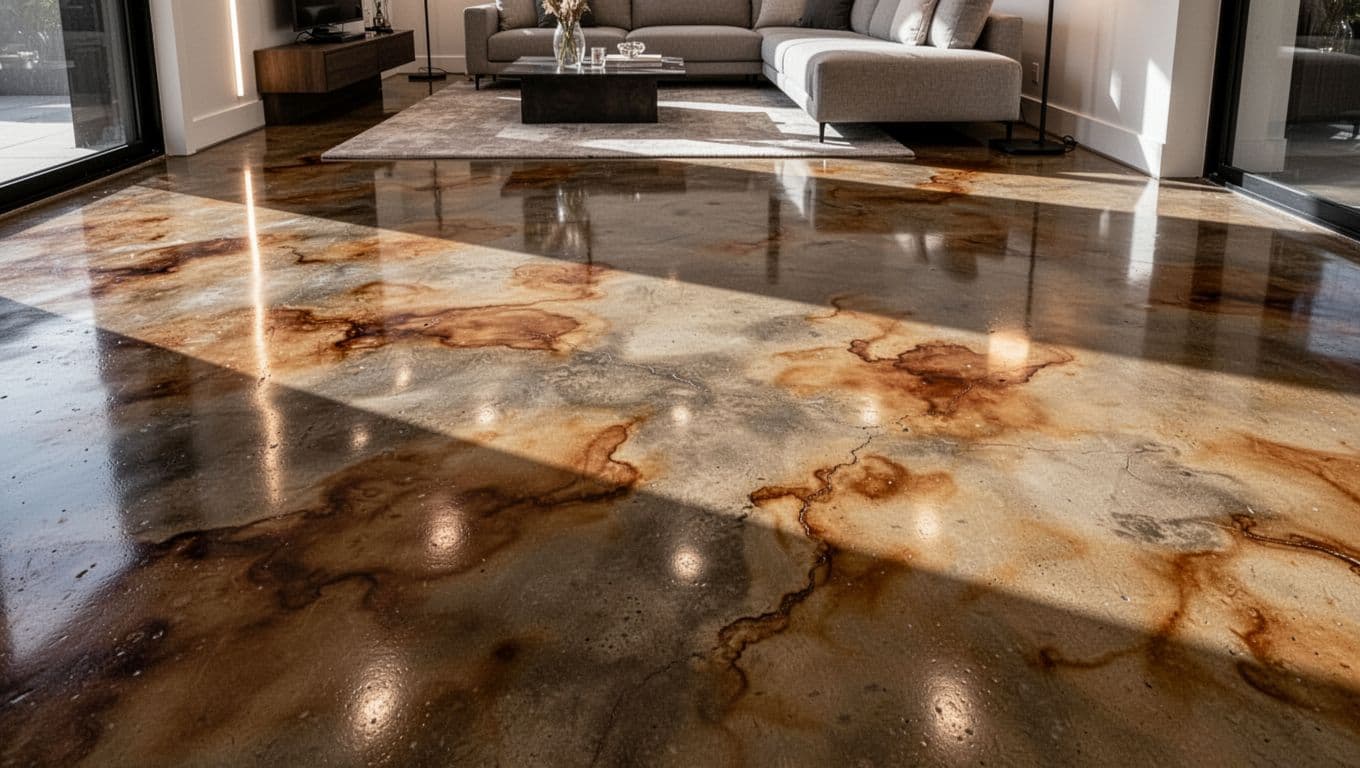
Concrete stain behaves like a mineral wash. Instead of sitting on top like paint, it reacts with or tints the slab and creates soft movement. The final look often feels marbled, smoky, or worn-in. That’s why concrete staining fits homes and shops that want warmth, depth, and a floor that doesn’t look factory-made.
A stain also works with the slab you already have. Small shifts in porosity, patches, and aggregate show through, which can be a plus or a headache. Because of that, sample chips never tell the full story. Two rooms can use the same stain color and still look different. A helpful guide to indoor best uses for stains and dyes makes the same point: stain usually reads more organic.
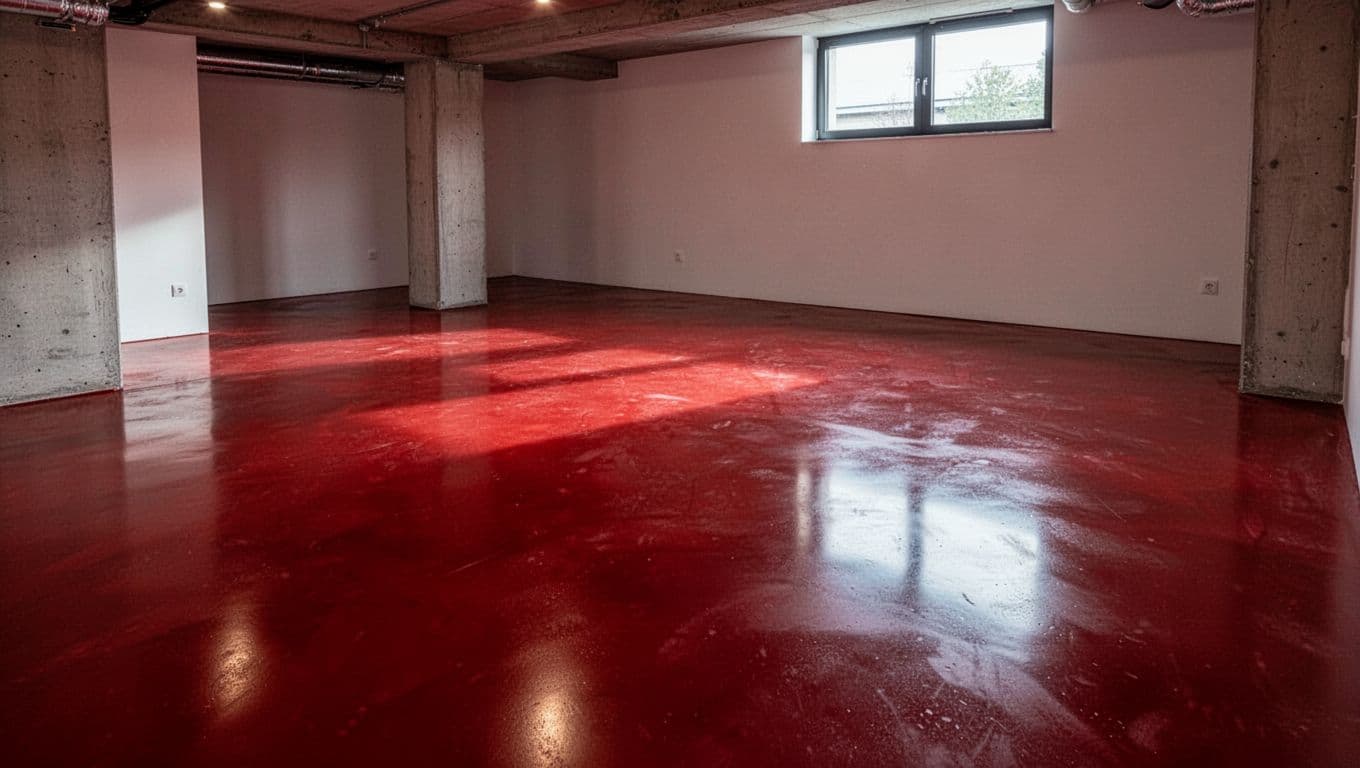
Concrete dye is more like ink in the surface. It produces richer, more even color, often with sharper tone and less natural mottling. As a result, dye is popular in modern interiors, showrooms, basements, and polished spaces where the color itself is part of the design.
Dye still lets the concrete show, but it gives you more control. That matters when you want matched rooms, deeper blacks, brighter reds, or a cleaner commercial feel. For interior floors, UV fade is usually a minor issue unless the room gets strong direct sun all day. This comparison of stains and dyes points to the same trade-off: more color precision, less old-world character.
This quick comparison keeps the look difference simple.
| Look factor | Concrete stain | Concrete dye |
|---|---|---|
| Color feel | Soft, earthy, layered | Bold, clean, more uniform |
| Variation | High, often mottled | Lower, more controlled |
| Best mood | Rustic, natural, industrial | Modern, graphic, polished |
| Main downside | Less color control | Can feel too even for rustic spaces |
The short version, stain shows more personality from the slab, while dye shows more personality from the color.
Where each finish works best inside the home or business
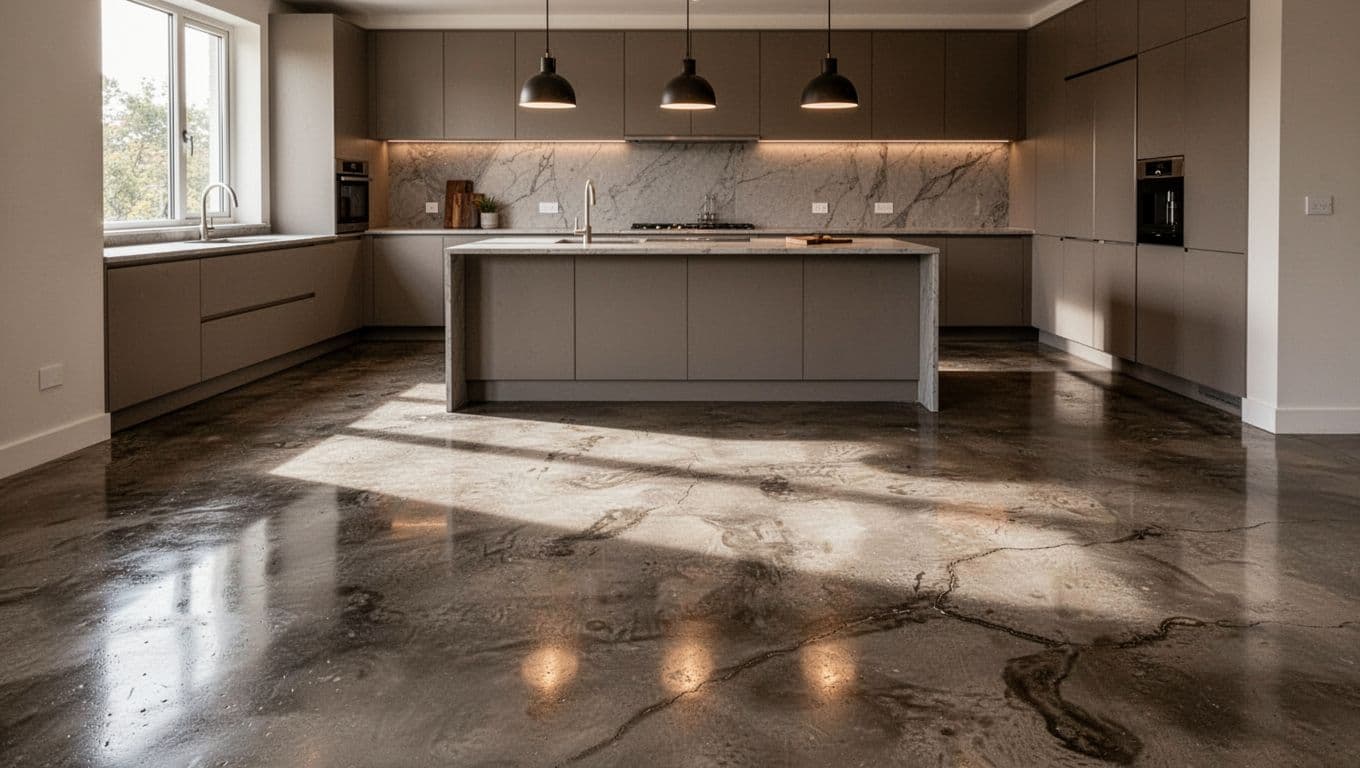
Stain works best when the room benefits from texture. Think open-plan homes, wine rooms, restaurants, boutiques, and kitchens where you want the floor to feel grounded. It also hides minor patching and everyday dust a bit better because the color already has movement.
Stain pairs well with saw cuts, borders, and soft matte sealers. Under warm light, it can feel almost like stone with age already built in. That’s a big reason designers use it in rustic homes, relaxed modern spaces, and hospitality settings.
Dye fits rooms where clarity matters more than texture. A dyed floor can look crisp in a modern basement office, design studio, showroom, or retail space. In a polished interior, it can feel almost like tinted stone. That’s why many people pair dye with Atlanta concrete polishing for a cleaner, brighter finish.
For a modern basement or gallery-like room, dye gives cleaner geometry. It also works well when cabinets, furniture, and wall color already do a lot of visual work, because the floor stays controlled instead of busy.
Pick stain for movement and age. Pick dye for cleaner lines and stronger color.
Basements need a little caution. Decorative color can look great below grade, but moisture issues can ruin the result. Before choosing either finish, especially for a lower level, it helps to start with concrete moisture testing. Good concrete dealing starts with the slab itself, not the sample board.
A quick look-based decision guide
Choose stain if you want the floor to look like concrete, only better. Choose dye if you want the floor to look more designed and less accidental.
- Stain fits farmhouse, rustic, Spanish, and soft industrial interiors.
- Dye fits modern basements, polished lofts, studios, and clean retail spaces.
- Stain works better when slab character is part of the charm.
- Dye works better when color needs to carry the room.
Some buyers also compare decorative color to full coating systems. That’s a different call. For living areas, stain or dye keeps the floor feeling like concrete. For work zones, a concrete epoxy coating or another epoxy coating for concrete may be the smarter choice. The same goes for an epoxy coating for garage floor projects, a storage-heavy basement concrete coating, or a hard-use commercial concrete epoxy coating system.
A good garage floor epoxy coating company should say that stain and dye are about appearance first. Coatings are about film build and protection. Many coated systems also use a polyaspartic coating on top for faster return to service and better wear. In other words, pick stain or dye for the look, not as a substitute for a shop-grade floor.
The floor already has a voice. Stain brings out its texture, while dye changes the tone.
Ask to see samples on your actual slab before you commit. That single step tells you more than any brochure, especially when light, patching, and concrete polishing level all affect the final color.