If you’re planning to coat your garage, the big question is simple: how long will it take before you can use the space again? The short answer is that the garage floor epoxy timeline is usually longer than the coating step itself.
Most people picture a few hours of rolling on product. In real life, surface prep and cure time take the most time. That matters whether you’re using a DIY kit or hiring a pro for a full concrete epoxy coating system.
The wet coating step may take only a few hours, but prep and cure decide the real schedule.
What the typical garage floor epoxy timeline looks like
A basic install can move fast, but not every floor qualifies for a quick turnaround. Clean, dry concrete with minor cracks is one thing. An old slab with oil stains, sealer, or moisture issues is another.
Here’s a simple look at the most common timelines:
| Scenario | Typical total time | Common fit |
|---|---|---|
| One-day system | 1 install day, then 24 to 48 hours before parking | Often a fast-curing system, such as a polyaspartic coating, on a well-prepped slab |
| Two-day epoxy job | 2 install days, then 48 to 72 hours before parking | A common epoxy coating for garage floor setup with base coat and topcoat |
| Multi-day project | 3 to 5 or more days | Floors with crack repair, moisture concerns, old coatings, or weather delays |
For many homeowners, the sweet spot is the two-day range. That’s common with a professional epoxy coating for concrete system because prep happens first, then the coats go down within the product’s recoat window.
One-day jobs do exist, but they usually rely on faster chemistry and a slab that’s already in good shape. Traditional epoxy alone often takes longer. So if someone says, “We’ll coat it today and park tomorrow,” ask what product they’re using and what cure time the manufacturer allows.
A realistic schedule saves frustration. It also helps you plan where cars, tools, and storage items will go while the floor cures.
Why prep takes longer than the coating step
Prep is the quiet part of the job, but it’s what decides if the floor lasts. Think of it like painting a wall with peeling drywall underneath. The color may look good for a week, yet the base is already failing.
Most garage floors need more than a quick sweep. Oil spots, old sealers, tire residue, and hard troweled concrete can all hurt bond. That’s why good installers grind the slab, vacuum thoroughly, and repair cracks before they open a bucket.
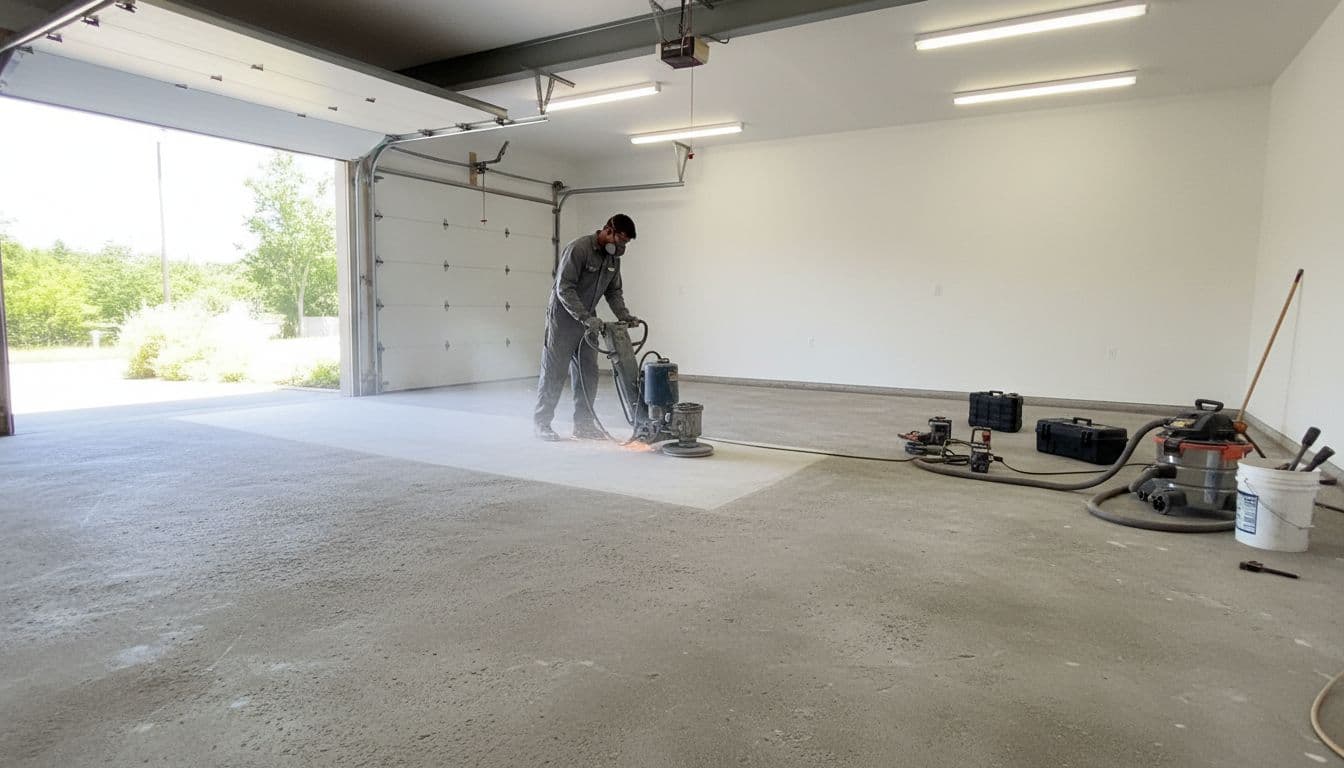
Typical prep tasks often include:
- Clearing the garage: 1 to 3 hours, sometimes longer if shelves and appliances need to move
- Cleaning and degreasing: 1 to 3 hours, depending on stains
- Grinding the surface: 2 to 5 hours for many two-car garages
- Crack and pit repair: a few hours, plus extra wait time if fillers need to harden
- Moisture checks: sometimes same day, sometimes longer if testing is needed
Moisture is a major wildcard, especially for older slabs or any space that could act like a basement concrete coating job. If the concrete holds too much moisture, the finish can blister or peel later. That’s why moisture testing for epoxy floors matters when the slab seems damp, has no vapor barrier, or has a history of sweating.
This is also where honest concrete dealing matters. A good installer doesn’t rush past prep just to hit a fast timeline.
What happens on coating day and during cure time
Once the slab is ready, the actual coating work often feels quick. That’s the part people see, and it’s why the project can seem shorter than it really is.
A typical sequence looks like this:
- Apply primer or base coat.
- Broadcast flakes, if you’re using them.
- Scrape and vacuum flakes after they set.
- Apply a clear topcoat, either the same day or the next day, based on product instructions.
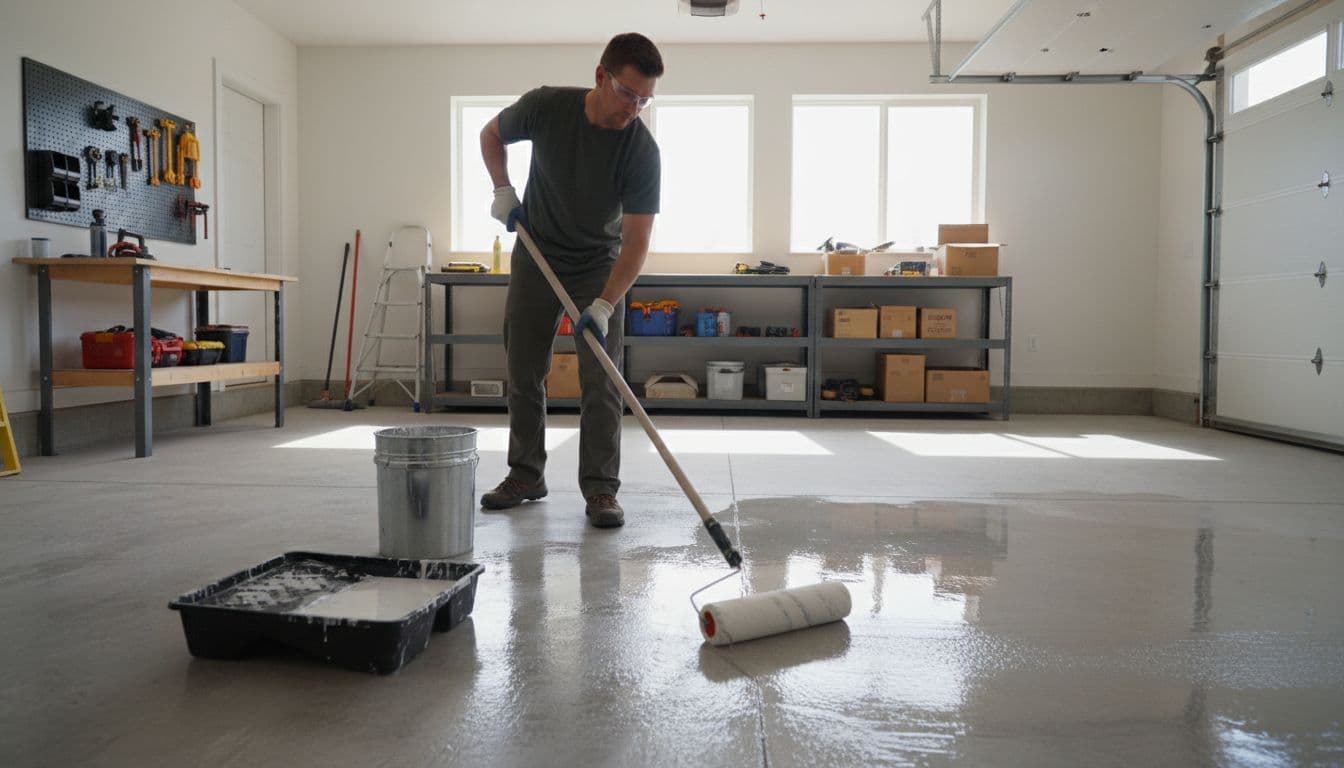
For a standard two-car garage, rolling out each coat may take only a few hours. Still, you can’t judge the job by roller time alone. Recoat windows matter, and cure time matters even more.
Many epoxy floors are ready for light foot traffic in about 12 to 24 hours. Parking a vehicle often takes 48 to 72 hours. Heavy items, jack stands, and hot tires may need more time. Some systems want a full five to seven days for a hard cure.
Temperature and humidity change everything. Cool weather slows curing. High humidity can slow it, too. On the other hand, fast-curing systems can shrink downtime, but you still need to follow the product sheet. Always check the manufacturer’s instructions for recoat and cure windows instead of guessing.
That advice applies to more than garages. A commercial concrete epoxy coating project may need stricter timing because forklifts and pallet jacks hit the floor much harder than a family car.
When the job takes longer, and when pros are worth it
Some floors fight back. Old paint, deep oil soak, spalling, moisture, and low temps can all stretch the timeline. DIY jobs also take longer because setup, grinding, mixing, and cleanup fall on one person.
A garage floor epoxy coating company can usually move faster because the crew, tools, and repair materials are already on site. Still, even pros can’t skip cure time.
If schedule matters most, ask about options beyond epoxy alone. A polyaspartic coating may cure faster. If you want a different finish, concrete polishing and concrete staining have their own timelines and don’t behave like a film-build coating. Some spaces also need a different approach than a garage, especially if the slab acts more like a basement or retail floor. That’s where experienced epoxy and polish specialists can help match the floor to the right system.
Conclusion
The real answer is simple: applying epoxy to a garage floor usually takes less time than prepping and curing it. Many jobs land in the two-day to multi-day range, even though the coating step itself may only take a few hours. Follow the product instructions, respect the cure window, and don’t rush a slab that isn’t ready. If your plan only counts roller time, your calendar is too short.