Fresh concrete can fool you. It may look dry in a day or two, but when to seal concrete depends more on curing than looks. In many cases, a standard sealer should wait until the slab is fully cured, often around 28 days. Some cure-and-seal products can go on much sooner, sometimes within hours to a few days, but only if the label says they are made for fresh concrete.
That difference matters because sealing too early can trap moisture. Then you get haze, bubbling, peeling, or a weak bond. For homeowners and DIY readers, the safest answer is simple: check the product instructions first, then let the slab, weather, and moisture level guide the timing.
Why the timeline changes with the product
Concrete doesn’t just dry, it cures. Water inside the slab feeds a chemical reaction that builds strength. The top can look ready while the middle still holds plenty of moisture, a bit like toast that’s brown outside but soft in the center.
Because of that, there isn’t one universal wait time. Many standard sealers go on after full cure, which is often about 28 days. Fresh-concrete cure-and-seal products are different. They are designed to be applied much earlier, but only after finishing is complete and bleed water is gone. A plain-language overview from Seal With Ease on waiting to seal new concrete matches what many contractors follow in the field.
This quick guide helps frame the usual ranges:
| Product type | Typical timing after pour | Why timing matters |
|---|---|---|
| Cure-and-seal made for fresh concrete | Same day to a few days | It helps curing, but only if the label allows green concrete |
| Standard concrete sealer | Often around 28 days | Most need a fully cured slab so moisture can escape first |
| Epoxy or polyaspartic system | Often around 28 days, sometimes longer until tests pass | These coatings can fail fast if moisture is trapped |
The big takeaway is that product type changes the calendar. If you’re planning a concrete epoxy coating, timing gets stricter. An epoxy coating for concrete, an epoxy coating for garage floor, or a polyaspartic coating usually belongs on a cured, prepped slab, not fresh concrete.
How to know your concrete is ready, not just dry on top
A calendar helps, but it shouldn’t work alone. Concrete can look pale and firm while still pushing moisture upward. That’s why pros treat “dry to the touch” as a weak signal, not a green light.
If you seal too early, you may trap water where it has nowhere to go.
For a fresh-concrete cure-and-seal, the installer usually waits until finishing is done and surface bleed water has disappeared. For most other sealers, look for the full cure window on the label, steady weather, and a slab without dark damp areas. If rain is coming, wait. If the slab feels cool and damp in spots, wait again.
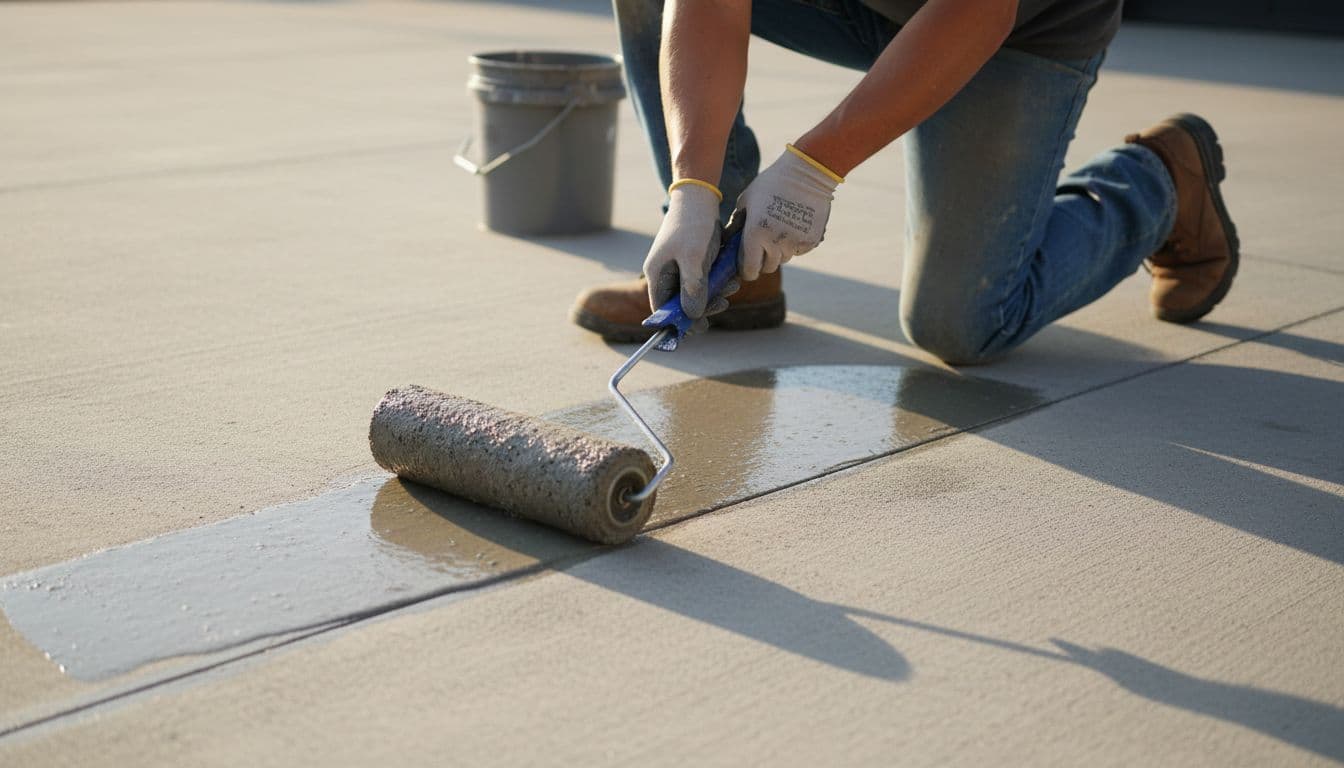
When the finish matters, moisture testing matters too. That is especially true for garages, basements, and indoor slabs. A good garage floor epoxy coating company won’t guess, because moisture can wreck a coating after it looks perfect on day one. If you want the contractor version of this step, concrete moisture testing explains why surface dryness and internal slab moisture are not the same thing.
Common mistakes, and when a coating makes more sense than a basic sealer
The biggest mistake is sealing because the slab “looks ready.” That shortcut causes a lot of failures. Another common mistake is using a product meant for cured concrete on fresh concrete, or vice versa. Labels matter here, because cure-and-seal and long-term sealers do different jobs.
A few other problems show up often:
- Skipping prep: Dust, laitance, and curing residue can block adhesion.
- Ignoring weather: Heat, cold, rain, and high humidity can change dry times.
- Choosing the wrong finish: A patio sealer and a shop-floor coating are not the same thing.
- Rushing indoor slabs: A basement concrete coating needs extra care because moisture can rise from below.
If you want stain resistance and a richer look, concrete staining usually comes after the slab cures and the surface is prepped. If you want a hard-wearing surface without a peelable film, concrete polishing may be a better fit than a sealer in some spaces. For retail, showrooms, or work areas, a commercial concrete epoxy coating often needs moisture checks, repairs, and a tighter install schedule than a driveway sealer.
You’ll also hear loose job-site language like concrete dealing, but the real issue is simpler: cure time, moisture, and prep decide whether the finish lasts. That is why a second opinion can save money. A practical guide on putting sealer on fresh concrete is helpful if you’re comparing early-applied products with standard sealers.
The safest answer is usually the slower one
If you’re unsure when to seal concrete, start with the product label, not the calendar in your head. Many sealers need a fully cured slab, often about 28 days, while some cure-and-seal products can go on much sooner if they are made for fresh concrete. Wait long enough, test when needed, and don’t trap moisture, because concrete rewards patience far more than guesswork.