Picking the right epoxy concrete coatings system isn’t about chasing the shiniest finish. It’s about matching the coating to your slab, your traffic, and your moisture risk.
A good epoxy coating for concrete can seal pores, stop dust, and make cleanup simple. A mismatched system can yellow near sunlight, feel slick when wet, or peel if moisture pushes up from below.
Below is a plain-English breakdown of the most common types, what they cost, where they work best, and what can go wrong.
What actually changes between epoxy coating types
Most people hear “epoxy” and assume it’s one product. In reality, systems vary by solids content, viscosity (how well it wets into concrete), and total build thickness.
Here are the specs that matter most when you’re comparing options:
- Film thickness (mils): Many epoxy base coats land around 8 to 20 mils per coat. Broadcast systems (flake or quartz) can build much thicker, often 30 to 60 plus mils after topcoat. Epoxy mortar can be 125 to 250 mils.
- Coverage: A thin coat might cover roughly 160 to 200 sq ft per gallon. Thicker 100 percent solids builds often cover closer to 100 to 160 sq ft per gallon.
- Cure windows: Traditional epoxy often allows foot traffic in 12 to 24 hours and vehicles in 48 to 72 hours. Temperature and humidity can stretch those times.
- UV stability: Most epoxies amber or yellow with sun exposure. That’s normal chemistry, not “bad product.” It matters most near garage doors, bay doors, and storefront glass.
If you want a deeper explanation of how systems are built (primer, base, broadcast, topcoat), see this guide on concrete epoxy coating. For a broader overview of popular categories, this rundown of types of epoxy flooring is a helpful starting point.
The most common types of epoxy coatings for concrete (pros, cons, best uses)
Water-based epoxy (thin-build, lower odor)
Pros: Easier application, lower odor, simpler cleanup.
Cons: Thinner film, shorter lifespan in hot tire traffic, less chemical resistance than heavy-build systems.
Ideal applications: Light-duty rooms, storage areas, some conditioned basements.
Limitations: Moisture vapor can still cause blistering; UV yellowing still happens.
Cost tier: $
Solvent-based epoxy (better penetration, stronger smell)
Pros: Good wetting into concrete, often builds a tougher film than water-based.
Cons: Strong odor, more ventilation needs, tighter VOC compliance concerns.
Ideal applications: Some commercial concrete epoxy coating builds and busy residential garages.
Limitations: UV yellowing remains a risk, and solvents can be a problem in occupied buildings.
Cost tier: $$
100 percent solids epoxy (thick-build, “pro-style” base coat)
Pros: Dense, durable film with strong bond when prep is right, great for impact and abrasion.
Cons: Less forgiving to apply (short pot life), can show roller marks if rushed.
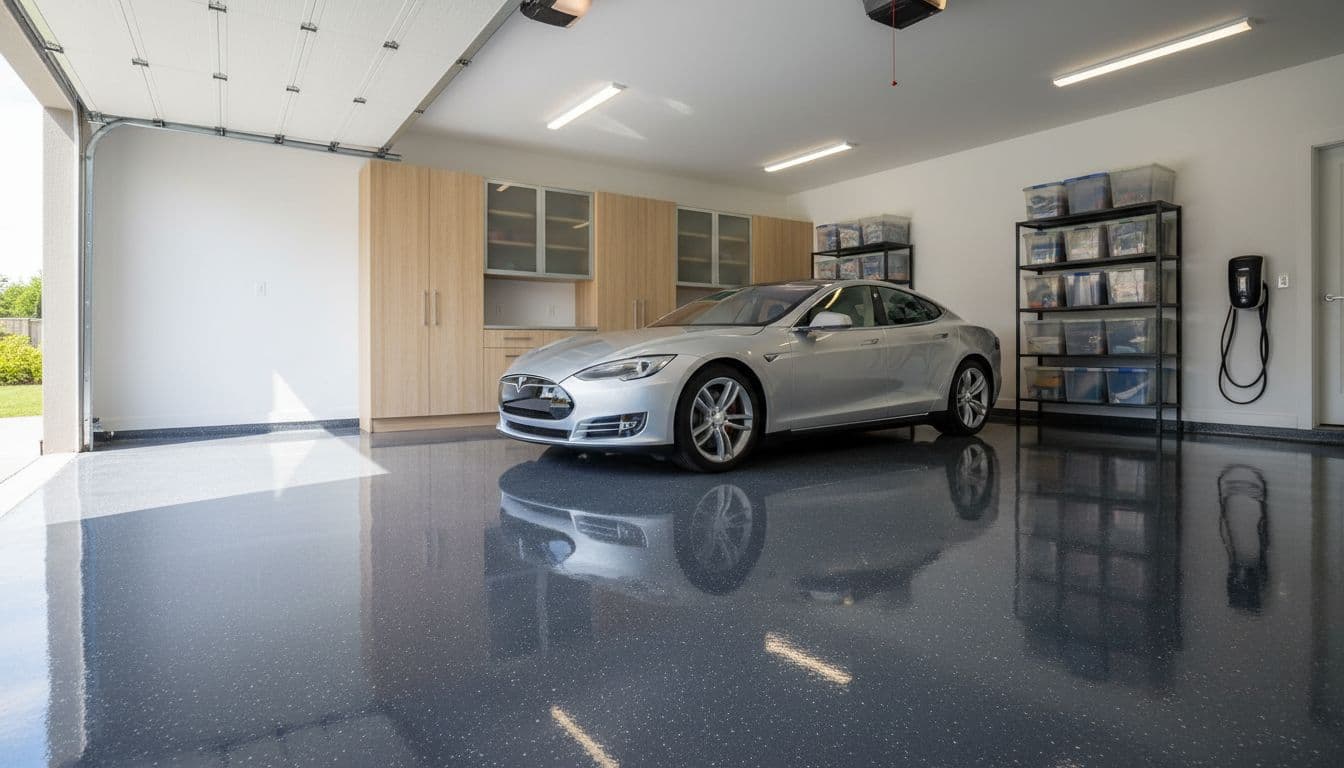
Ideal applications: A long-lasting epoxy coating for garage floor, workshops, showrooms, and many industrial spaces.
Limitations: Sunlight can amber it; many owners add a UV-stable topcoat to reduce yellowing.
Cost tier: $$
Novolac epoxy (high chemical resistance)
Pros: Handles harsher chemicals and spills better than standard epoxy.
Cons: Usually higher cost and more demanding install conditions.
Ideal applications: Auto service bays, manufacturing, labs, and areas with frequent chemical exposure.
Limitations: Not a fix for moisture problems; you still need testing and the right primer.
Cost tier: $$$
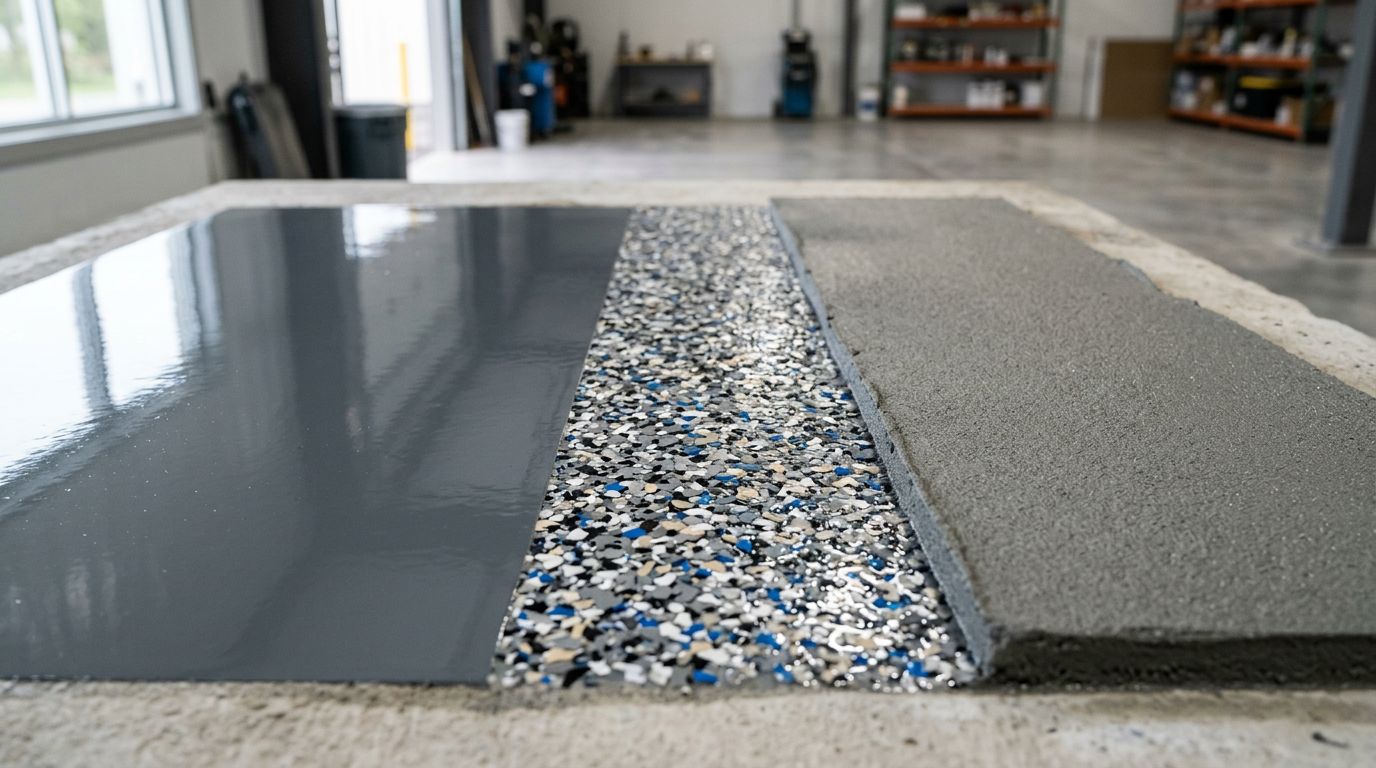
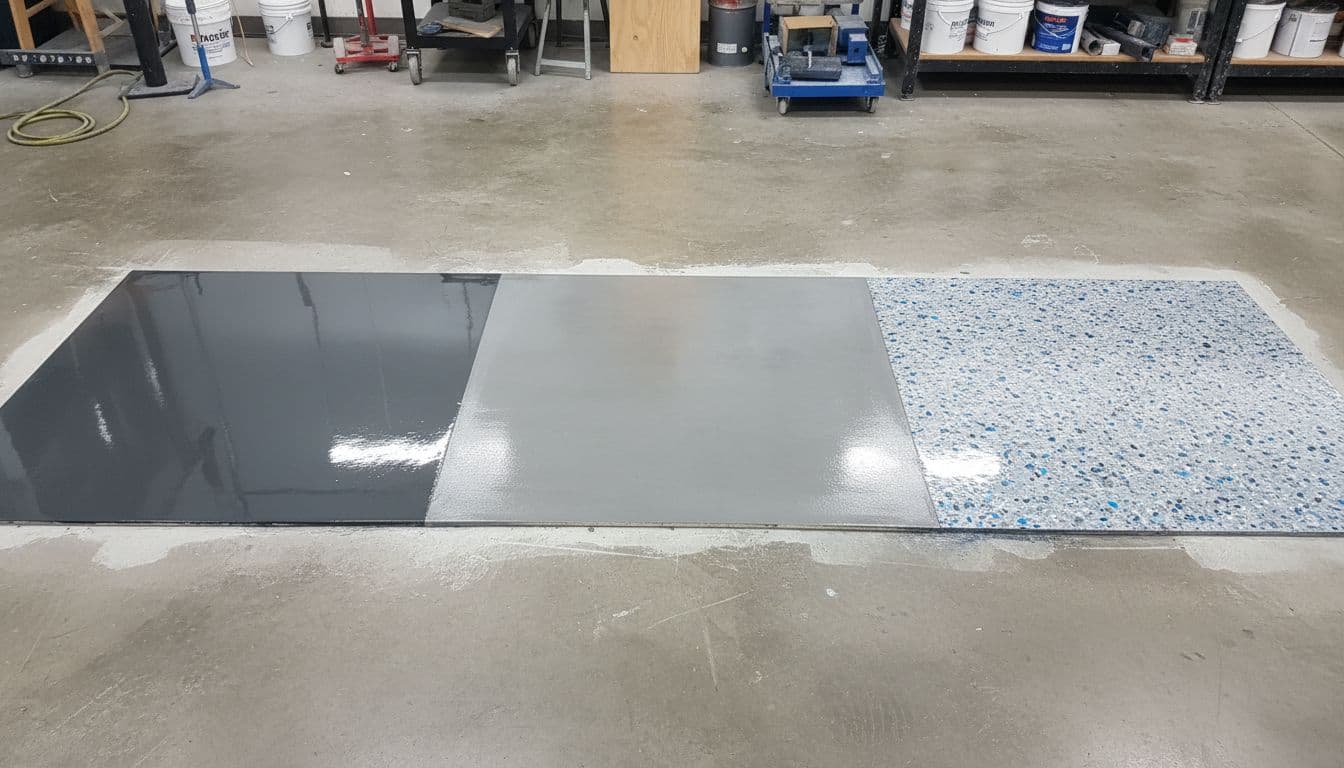
Broadcast flake or quartz epoxy systems (texture plus thickness)
Pros: Better slip resistance, hides small slab flaws, easy to maintain, strong wear layer with a good topcoat.
Cons: More labor and material, texture can hold dirt if you pick an aggressive profile.
Ideal applications: Garages, locker rooms, retail back-of-house, basement concrete coating upgrades where traction matters.
Limitations: Epoxy alone still yellows, so many systems use a urethane or polyaspartic coating as the clear wear coat.
Cost tier: $$ to $$$
To compare epoxy and polyaspartic behavior in plain terms, this article on polyaspartic vs epoxy differences explains why cure speed and UV stability change real-world results.
Here’s a quick side-by-side to make the tradeoffs easier to see:
| Coating type | Typical cure to walk | UV stability | Chemical resistance | Abrasion resistance | DIY-friendly | Typical uses |
|---|---|---|---|---|---|---|
| Water-based epoxy | 12 to 24 hrs | Low | Moderate | Moderate | Higher | Light-duty rooms |
| Solvent-based epoxy | 12 to 24 hrs | Low | Moderate to high | High | Medium | Garages, shops |
| 100% solids epoxy | 12 to 24 hrs | Low | High | High | Lower | Garages, warehouses |
| Novolac epoxy | 12 to 24 hrs | Low | Very high | High | Lower | Chemical exposure areas |
| Flake or quartz epoxy system | 12 to 24 hrs | Depends on topcoat | High | High | Lower | Traction-focused floors |
| Polyaspartic topcoat (over epoxy) | 2 to 4 hrs | High | High | Very high | Lower | Fast return to service |
Surface prep, moisture checks, and safety (the part that decides if it peels)
Epoxy failures usually trace back to prep, not the coating. Think of epoxy like tape, it sticks great, but only on a clean surface.
A simple, compliant prep sequence looks like this:
- Moisture testing: Use in-situ RH probes or calcium chloride tests based on your spec. Moisture drives bubbling and delamination, especially in basements. This breakdown of concrete moisture testing methods explains why results aren’t interchangeable.
- Degreasing and contaminant removal: Oil in a garage can soak deep. Surface-only cleaning often fails later.
- Mechanical profiling: Diamond grinding or shot blasting opens the pores and creates a bondable profile. Acid etching is inconsistent and often under-preps dense concrete.
- Crack and joint repair: Fill cracks with the right repair material, then grind flush. Expect moving cracks to re-telegraph over time.
- Patching and spall repair: Repair weak concrete before coating. Epoxy will “freeze” defects in place.
- Priming: Primers improve bond and help reduce pinholes from outgassing. Moisture-mitigating primers may be needed for high RH slabs.
- Base coat and optional broadcast: Flake and quartz broadcasts add texture for slip resistance in wet areas.
- Topcoat: For better scratch resistance and UV stability, many pros finish with urethane or polyaspartic.
If a contractor doesn’t talk about moisture and profiling, you’re not buying a system. You’re buying a gamble.
Safety notes: Plan strong ventilation, especially with solvent-based products. Wear a respirator rated for organic vapors when required, plus gloves and eye protection. Grinding and shot blasting can create silica dust, so use proper dust extraction and follow OSHA guidance. Good concrete dealing also means coordinating downtime, because recoat windows matter, wait too long and coats may not bond without sanding.
If epoxy isn’t the best fit for your space, don’t force it. In some facilities, concrete polishing gives a tough, low-maintenance floor with no peel risk (learn more about Atlanta concrete polishing services). For decorative color with a more natural look, concrete staining can be a better match, especially when you want variation instead of a solid paint-like finish.
Conclusion
The “best” epoxy depends on sunlight, moisture, and how the floor gets abused. Water-based epoxy can work for light duty, while 100 percent solids and broadcast systems fit most garages and many commercial floors. For fast turnaround and better UV performance, pairing epoxy with a polyaspartic coating topcoat often makes sense.
When you’re ready, a reputable garage floor epoxy coating company should measure moisture, prep the slab mechanically, and recommend a system that fits your space, not just your budget. The right epoxy coating for garage floor should feel like a clean, sealed work surface for years.