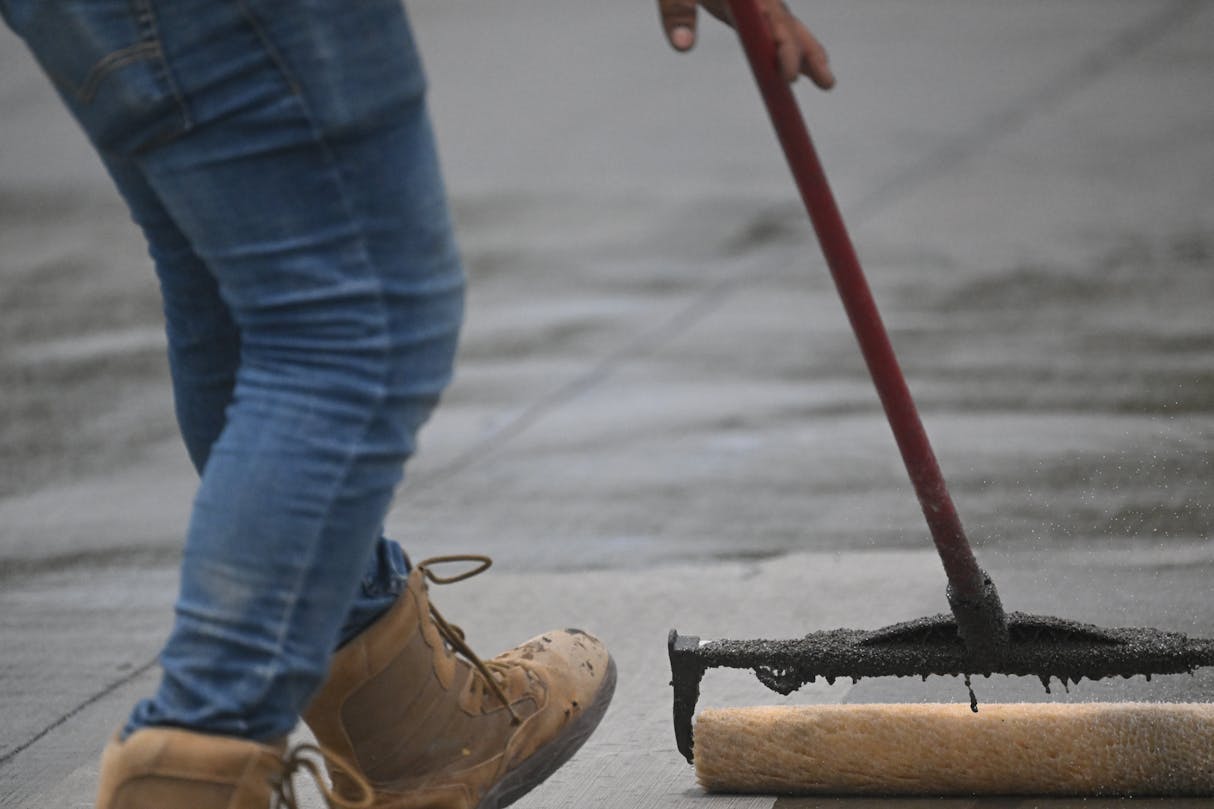
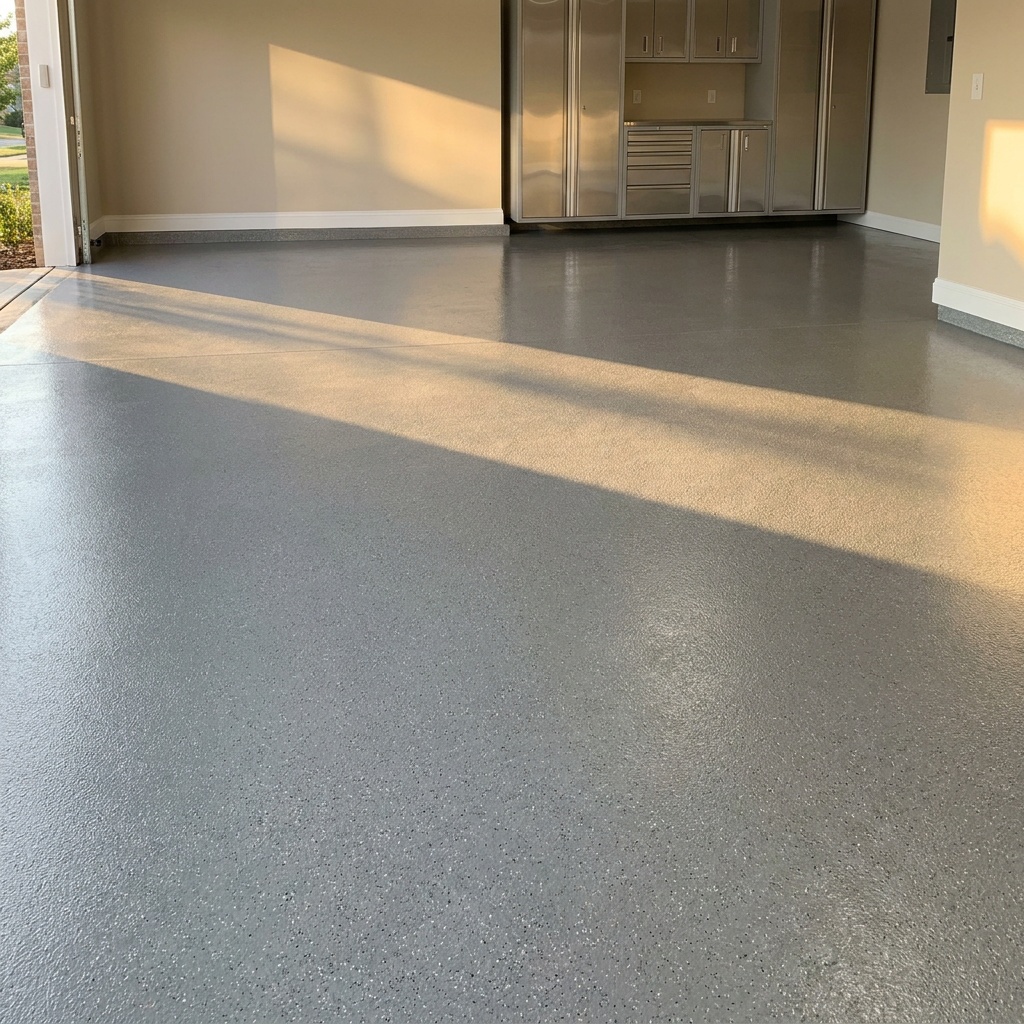
Polyaspartic coatings cure faster than epoxy because of what’s happening at the molecular level, not because of better marketing. Epoxy relies on a slower amine-based reaction that can take 24 to 72 hours before the floor can handle light foot traffic. Polyaspartic resin uses a faster-reacting aspartic-ester chemistry that can be tack-free in 1 to 2 hours and walkable the same day. That speed changes how a garage project fits into your week, not just how glossy the floor looks when it’s done.
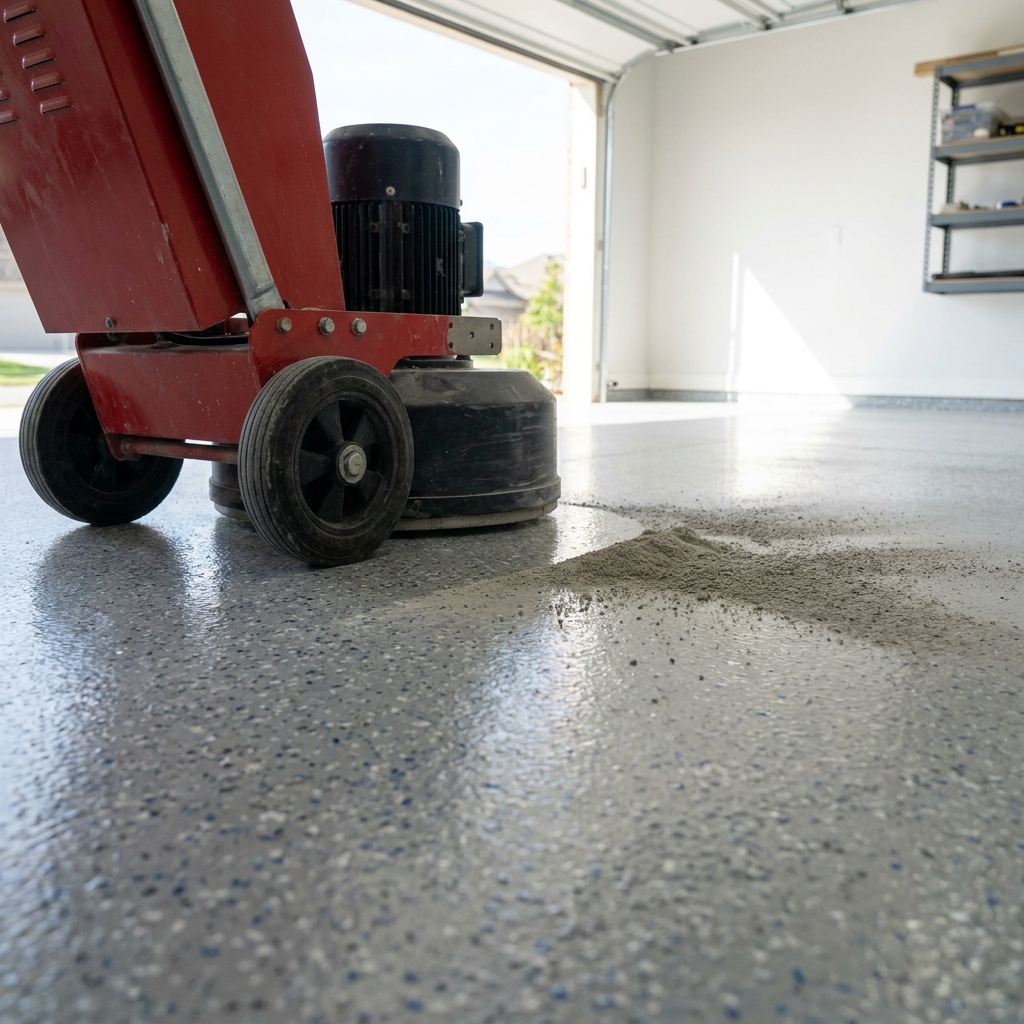
None of that cure speed matters if the slab underneath isn’t ground first. Every project here starts with diamond grinding, not acid etching, run through a sequence of metal-bond diamond tools that opens up the concrete’s surface. We’re aiming for a surface profile in the CSP 2 to 3 range, a texture rough enough for a coating to mechanically key into. Skip that step and it doesn’t matter which coating you chose. It will peel. We see this constantly on garages where a previous installer rolled epoxy, or even polyaspartic, over bare, closed concrete that was never opened up.
Grinding also exposes problems a coating would otherwise bury. Hairline cracks, old oil stains, and spalled or pitted spots all show up once the top layer of cement cream is removed. Those get filled with a compatible repair material before either an epoxy coating or a polyaspartic coating ever touches the slab. Rushing this stage to save a day is the single biggest cause of the peeling calls we get.
The chemistry behind the speed difference
Epoxy is a two-part system: a resin and a slow amine hardener. The amine cure reaction is deliberate by design. It gives installers a long working window, which is useful for large commercial pours, but it also means the floor stays soft and vulnerable for days. Full chemical cure for standard epoxy usually runs 3 to 7 days, even though the surface may feel dry much sooner.
Polyaspartic coatings use an aliphatic polyurea base with an aspartic ester hardener. That reaction moves fast. Recoat windows can be as short as 1 to 4 hours between layers, compared to 12 to 24 hours for most epoxy systems. A typical polyaspartic installation puts down a base coat, broadcasts flake if that’s part of the design, and applies a clear topcoat all within a single day. Full cure to handle vehicle weight typically lands around 24 to 72 hours, still faster than epoxy’s foot-traffic window alone.
A side-by-side look
| Property | Epoxy | Polyaspartic |
|---|---|---|
| Tack-free time | 8 to 24 hours | 1 to 2 hours |
| Recoat window | 12 to 24 hours | 1 to 4 hours |
| Light foot traffic | 24 to 72 hours | Same day to 24 hours |
| Vehicle-ready cure | 5 to 7 days | 24 to 72 hours |
| Application temperature range | Roughly 50°F to 90°F | Roughly 35°F to 95°F |
| UV stability | Can amber over time | Generally more color-stable |
Those ranges aren’t marketing numbers. They come from how each resin reacts with humidity and temperature on site, and actual cure speed shifts with the weather on installation day either way.
Why the speed gap matters more in Georgia than people expect
Epoxy’s amine cure reaction is sensitive to humidity. Atlanta metro summers push relative humidity well above 60 percent for weeks at a time, from Alpharetta to Woodstock. High humidity can slow epoxy’s cure further and sometimes causes a hazy surface called amine blush. Polyaspartic chemistry tolerates a wider humidity and temperature band, which is part of why installers often prefer it for coastal and humid-climate garages.
Temperature swings matter too. A garage slab in Cumming or Marietta can sit in the 50s overnight in spring and climb past 85°F by afternoon. Epoxy applied too close to either extreme can cure unevenly or take noticeably longer to harden. Polyaspartic’s broader working range gives more flexibility on exactly those shoulder-season days when scheduling an install is otherwise a guessing game.
What faster cure actually changes for your project
Cure speed isn’t just a chemistry footnote. It changes logistics.
- Fewer days with a car parked in the driveway or on the street.
- Less risk of dust, pollen, or pets tracking debris onto a still-curing surface.
- Same-day or next-day return to normal garage use in many cases.
- Lower odds of an overnight temperature drop interrupting the cure cycle.
For a two-car garage, that can mean the difference between losing a weekend and losing most of a week. It also lowers the chance something goes wrong mid-cure. A sudden cold snap or a surprise rainstorm blowing humidity into an open garage door matters less when the window to react is measured in hours instead of days.
What doesn’t change between the two systems
Faster cure doesn’t mean faster prep. Grinding takes the same amount of time no matter which topcoat goes on afterward. Crack repair, moisture testing, and profile grinding happen before the resin type is even decided in most cases. A homeowner choosing between epoxy and polyaspartic is choosing a topcoat chemistry, not a shortcut around surface prep.
Coat count stays similar too. Most garage systems use a base coat plus one or two topcoats, sometimes with a broadcast flake layer in between. What changes is how long you wait between each step, not how many steps there are.
Cost follows a similar logic. What drives the price on any job is how much grinding and repair the slab needs, the square footage involved, which coating system you choose, and whether there’s existing damage like spalling or oil saturation to deal with first. The only way to know what that looks like for a specific garage is a walkthrough and an itemized estimate, which you can request through the contact page.
When epoxy still makes sense
Polyaspartic isn’t automatically the right call for every project. Epoxy remains a solid, proven option for garages where the install window isn’t tight and where the floor won’t see heavy use right away. It’s also often paired with decorative work like concrete staining underneath a clear topcoat, where the slower cure gives more time to work the color. For bare slabs that are structurally sound but need a polished look instead of a coated one, polished concrete is a separate path worth comparing before committing to either resin system.
The honest answer is that cure speed is one factor among several. Durability, slip resistance, UV stability, and how the garage actually gets used day to day all factor into the right call. A floor that cures fast but gets the wrong wear layer for a workshop with rolling tool chests isn’t a win just because it dried quickly.
A quick way to think through the decision
Start with how the garage is used. A daily-driver two-car garage with a tight turnaround need leans toward polyaspartic. A garage that doubles as a workshop, with more flexible timing and a focus on long-term wear layer thickness, can go either direction. From there, check the slab condition. Heavy cracking, old coating that needs stripping, or visible moisture issues push the timeline out regardless of which resin gets chosen in the end. Finally, factor in the season. A summer install in high humidity favors polyaspartic’s wider tolerance; a mild fall week narrows the practical gap between the two.
Frequently asked questions
Can polyaspartic coatings be walked on the same day they’re applied?
In most cases, yes. Light foot traffic is often fine within a few hours, though full cure for vehicle weight still takes roughly 24 to 72 hours depending on temperature and humidity that day.
Does faster cure mean polyaspartic is more durable than epoxy?
Not automatically. Cure speed is a chemistry trait, not a wear-layer thickness trait. Durability depends more on how many coats go down, the thickness of each layer, and how well the slab was ground beforehand.
Will humidity in Georgia summers affect my cure time either way?
It can. Epoxy is more sensitive to high humidity and can take longer to cure or develop surface haze. Polyaspartic tolerates a wider humidity range, which is one reason it’s a common choice for summer installs in this area.
If you’re weighing epoxy against polyaspartic for a specific garage, the fastest way to get a real answer is a walkthrough. Request a free, itemized estimate through the contact page and we’ll tell you what the slab actually needs before recommending either system.