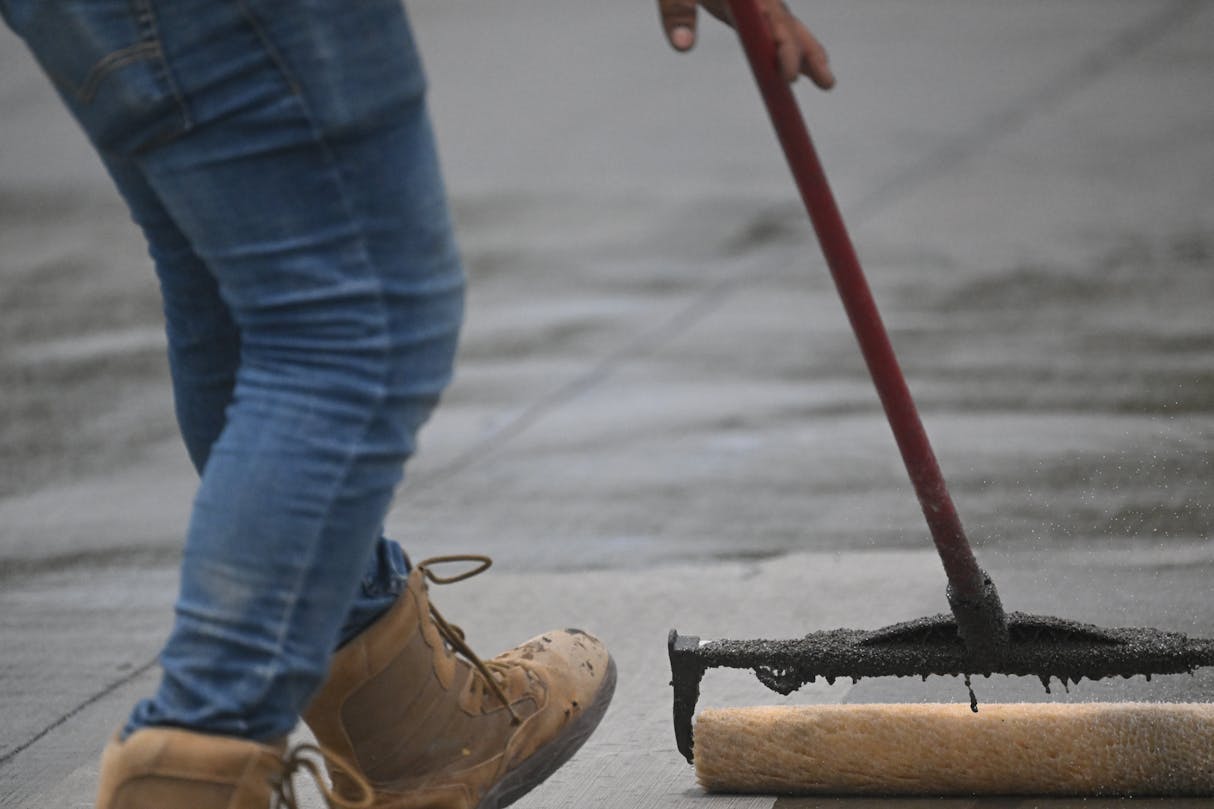
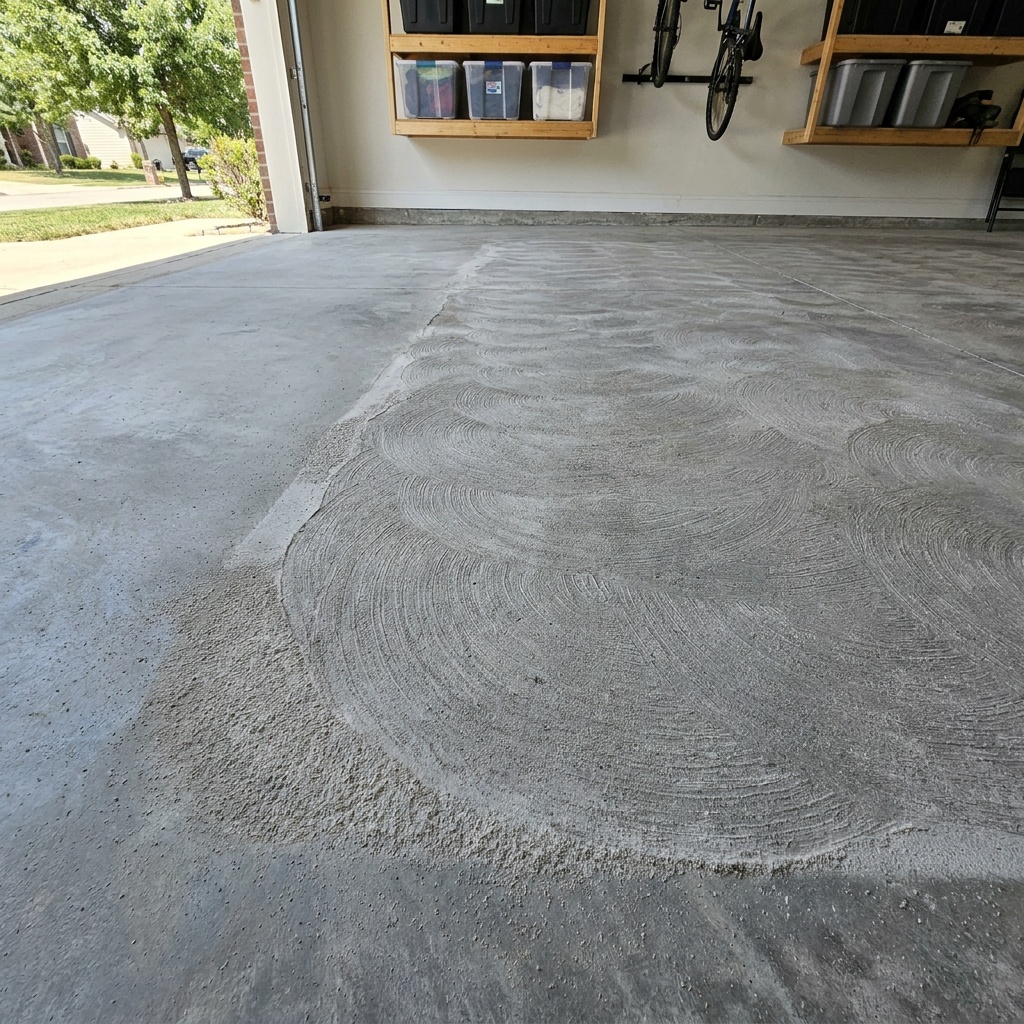
Diamond grinding is a mechanical process that uses diamond-segmented tooling to strip away the top layer of a concrete slab and open its pores. It removes laitance, old coatings, and surface contamination down to sound, exposed aggregate. That rough, porous texture is what gives epoxy or polyaspartic coatings something to actually grab onto. Skip it, and the coating is just sitting on top of the slab waiting to lift.
This is the step homeowners around Alpharetta, Milton, and Johns Creek ask about most, usually after seeing a neighbor’s floor peel. For good reason. Most coating failures trace back to one thing: a slab that was never properly profiled before anything got rolled on.
Why Grinding Comes Before Anything Else
A new concrete slab looks smooth. It is not smooth in the way a coating needs it to be. Fresh concrete has a dense, closed surface skin called laitance, formed as cement and fine particles rise to the top during the pour and finishing process. That skin is weak and slick. Coatings cannot bond to it.
Older slabs have a different problem. Years of hot tires, sealers, parking mats, and tracked-in road salt leave behind a surface that is contaminated, burnished, or both. Acid etching used to be the go-to fix for this. It still shows up in DIY kits sold at hardware stores. But acid etching only lightly dissolves the surface chemically. It does not remove deep stains, old paint, or uneven wear. Diamond grinding does, mechanically and consistently.
What Diamond Grinding Actually Does to the Slab
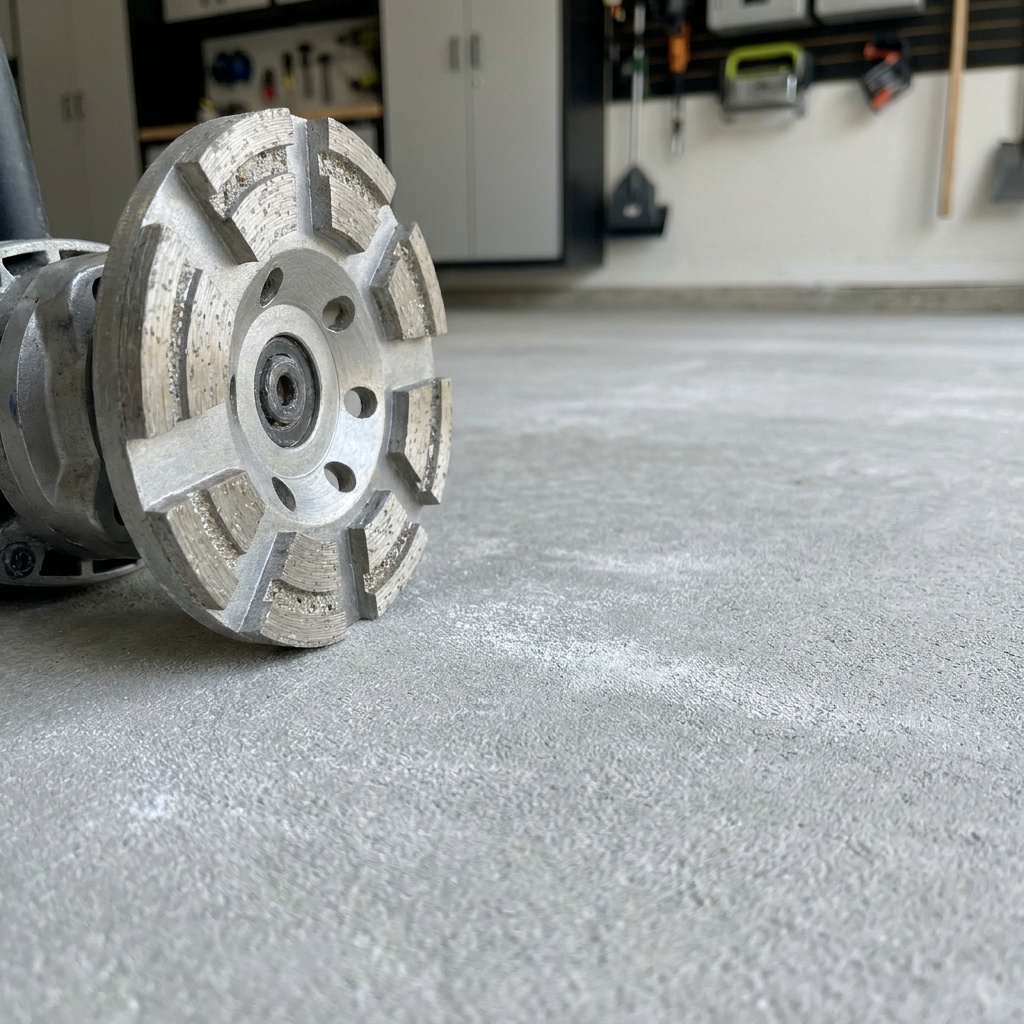
A walk-behind grinder fitted with metal-bonded diamond segments passes over the slab in overlapping rows. The machine is connected to a HEPA-rated vacuum, so dust stays contained instead of coating every shelf in the garage. The result is a uniform, slightly textured surface technicians refer to as a concrete surface profile, or CSP.
Most garage coating jobs target a CSP in the 2 to 4 range, out of a 1-to-9 scale used in the industry. That is enough tooth for epoxy and polyaspartic systems to mechanically key into the slab without leaving the surface so rough it telegraphs through the finish coat.
The Grit Sequence
Grinding is not a single pass. A typical sequence moves through progressively finer diamond grits, often starting around 16 to 30 grit to strip material and remove old coatings, then stepping up through 40 to 80 grit to refine the profile and knock down any grinder marks. Each pass removes less material and leaves a cleaner, more even surface than the one before it.
Check This First, Then This: The Prep Sequence We Follow
Grinding is one step in a sequence, not a standalone fix. Order matters here.
- Check moisture first. A slab with elevated vapor emission can push coatings off from underneath, even a well-ground one. This matters most on slab-on-grade garages built over Georgia’s red clay, where drainage around the foundation affects how much moisture sits under the slab.
- Then check for cracks and spalling. Grinding will not fix a structural crack or a spalled corner. Those get mapped and routed before grinding so repair material bonds into clean concrete, not loose debris.
- Then grind. Full-surface grinding to the target CSP, with edge work along walls and around drains where the walk-behind machine cannot reach.
- Then patch and level. Low spots, pitting, and repaired cracks get filled with a cementitious patch compatible with the coating system going down over it.
- Then test again. A quick recheck of dust, debris, and surface dryness before any primer or base coat touches the slab.
Skipping a step out of order is where most prep failures start. Patching before grinding, for example, often means the patch gets ground right back out.
What Grinding Reveals (and Why That’s a Good Thing)
Grinding does not just clean the slab. It exposes what is actually going on underneath whatever has been covering it. Old paint, mastic from a removed carpet or tile install, oil staining, efflorescence, and hairline cracking all become visible once the surface layer is gone. That is a good outcome, not a bad surprise. Coating over a problem never fixes it. It just hides it for a while, and garages are hard on hidden problems.
Temperature and humidity also factor in once grinding is done. Most coating systems want slab and ambient temperatures between roughly 50 and 90 degrees Fahrenheit, with relative humidity under about 85 percent at the time of application. Metro Atlanta’s summer humidity is one reason coating schedules sometimes shift by a day or two. It is not a workaround. It is a condition the chemistry actually cares about.
What Drives the Cost of Prep
Grinding time, and therefore prep cost, depends on a few specific factors: how much square footage is involved, how many grit passes the existing surface needs, whether old coatings or mastic have to be stripped first, and how much crack or spall repair the slab requires before coating can start. A two-car garage with a bare, undamaged slab preps differently than one with years of peeling epoxy and a cracked corner near the overhead door.
Because every slab carries a different combination of these factors, we do not quote prep or coating costs without seeing the floor. A free, itemized estimate is the only accurate way to know what a specific garage needs.
Choosing a Coating After Prep Is Done
Once a slab is ground to profile, clean, and dry, the coating decision opens up. Epoxy coating systems remain a common, durable choice for daily garage use. Polyaspartic coating cures faster and resists UV yellowing better, which matters for garages with south-facing doors that see direct sun for most of the day. Some homeowners skip color coatings altogether and go with polished concrete or a concrete staining finish for a more minimal look. All of these depend on the same groundwork. None of them hold up without it.
The floor you end up with is really a reflection of what happened to the slab before any product touched it. Grinding is not a cosmetic step tucked into a sales pitch. It is the part of the job that determines whether the coating lasts.
If a garage floor in Suwanee, Cumming, Roswell, Woodstock, or Marietta is due for a coating, start with a look at the slab itself, not the color chart. Request a free, itemized estimate through our contact page and we will walk through what the grinding and prep will actually involve for that specific floor.