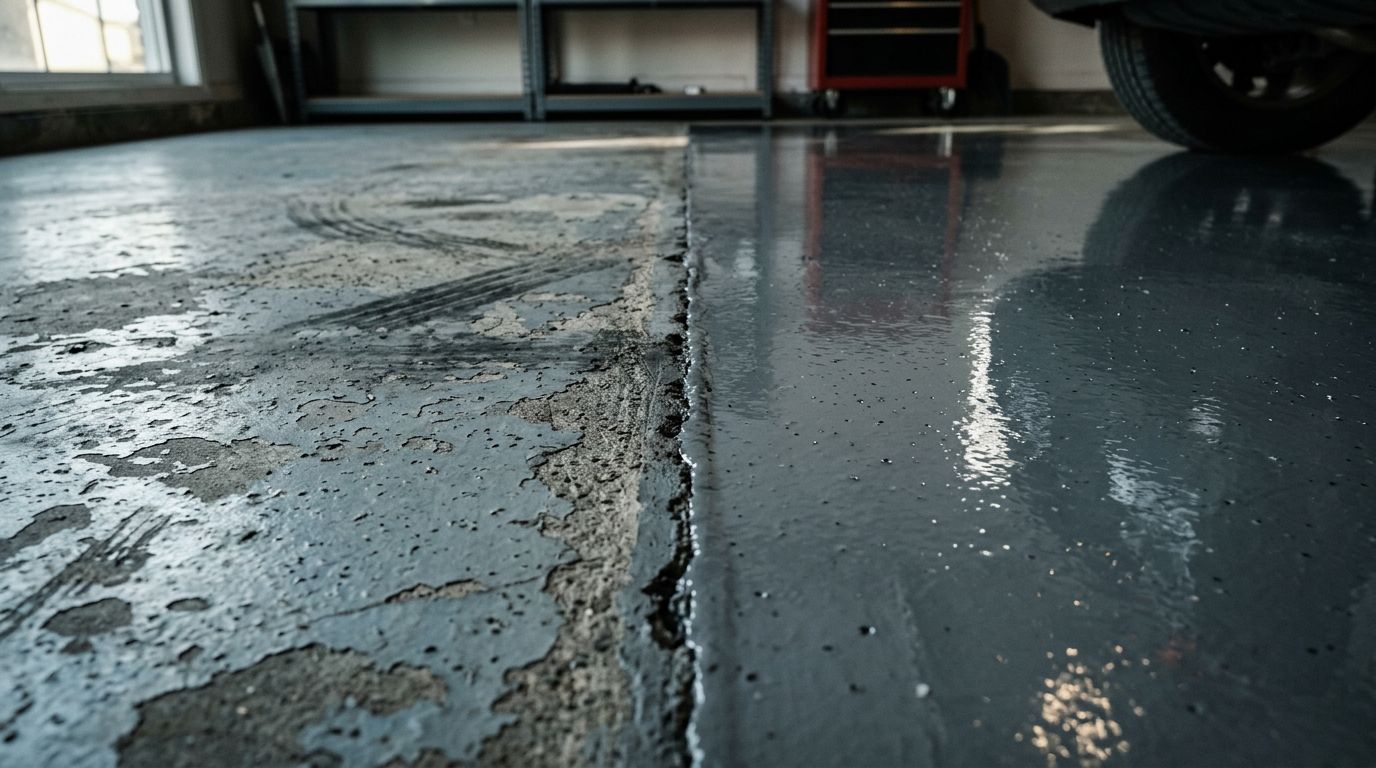
Your floor rarely fails all at once. Most concrete floor recoating jobs start with small warnings, such as dull patches, peeling at the edges, or tire marks that never seem to come clean.
That matters if you own a home garage, manage a basement, or oversee a busy commercial space. Catching those signs early can save you from bigger prep work, safety problems, and a shorter coating life.
The key is knowing when normal wear turns into coating failure.
A worn finish doesn’t always mean bad concrete
A floor coating and the concrete under it are not the same thing. In many cases, the slab is still sound while the finish on top is wearing out.
That distinction matters because the right fix depends on the floor type. A concrete epoxy coating or other film-building system sits on the surface and can peel, blister, or wear through. By contrast, concrete polishing and concrete staining behave differently because they are part of the slab or penetrate it, rather than forming a thick surface layer.
If you have an epoxy coating for concrete, the main question is bond. Is it still attached firmly, or is it lifting in spots? If the coating has lost gloss but remains tightly bonded, you may not need a full recoat yet. If it is releasing from the slab, the clock is already running.
A polyaspartic coating can show many of the same warning signs. It may cure faster than epoxy, but it still depends on clean prep and a stable slab. Once moisture, dirt, or slab movement get involved, both systems can fail.
This is why floor owners should look past color alone. A floor can still look decent from the doorway and be close to failure underfoot.
The clearest signs the coating is failing
The most obvious clue is peeling or chipping. If flakes come up when you sweep, drag a box, or turn a tire, the bond is breaking down. That often starts at the edges, around cracks, or in high-traffic lanes.
Another common sign is worn-through traffic patterns. You may see bare concrete where tires sit, where carts roll, or where people enter from outside. In garages, hot tires and road salts often speed this up. In commercial buildings, the first weak spots usually show near doors, workstations, and loading areas.
Cloudy patches, bubbling, and dark stains also matter. A coating can turn milky from trapped moisture. Bubbles and blisters often mean vapor pressure or poor adhesion. When oil, cleaner, or water soaks in instead of wiping off, the protective layer is no longer doing its job.
This quick reference helps separate normal wear from a floor that likely needs attention:
| What you see | What it often means | What to do next |
|---|---|---|
| Peeling, flaking, or curling edges | Coating is losing bond | Plan for repair or recoating |
| Bare gray paths through the finish | Surface has worn through | Check if damage is isolated or widespread |
| Blisters or bubbles | Moisture or prep issues | Get the slab evaluated before recoating |
| Stains that won’t clean off | Protection is gone | Recoat may be needed to restore resistance |
| Cracks telegraphing through the coating | Slab movement or weak prep | Inspect the concrete before any new coating |
One isolated chip does not always call for a full recoat. Several of these signs at once usually do.
Safety issues that call for attention
Some floor problems are easy to dismiss because they look cosmetic. They are not.
A failing coating can turn slick when wet, especially in garages, basements, and service areas. If your shoes slide more than they used to, pay attention. Loss of texture often shows up before major peeling begins. That matters for homeowners carrying groceries, staff moving carts, and tenants walking in during rain.
Dusting is another warning. When the coating stops sealing the slab, the concrete can start shedding a fine powder. You may notice it on shoes, storage bins, or lower shelves. A good coating should lock that down. If dust keeps coming back, the floor is telling you the surface is open again.
If the floor feels slippery or leaves powder behind, treat it as a safety issue, not a cosmetic flaw.
Moisture signs also deserve a close look. A damp smell, dark perimeter patches, or white residue can point to vapor coming through the slab. That’s a major concern for a basement concrete coating, because trapped moisture can push a new finish loose from below.
For property owners, good concrete dealing starts with routine cleaning and early inspection. Simple upkeep helps you spot problems before they spread, and these concrete floor care and cleaning guide habits can help extend coating life. In warehouses and service bays, a worn commercial concrete epoxy coating can also raise slip risk and housekeeping costs at the same time.
Repair or recoat? How to judge the damage
Small damage does not always mean the whole floor is done. If one area chipped after a dropped tool or a hard impact, and the rest of the floor is still bonded, a local repair may be enough.
The decision changes when the same problem shows up in many areas. A full concrete floor recoating makes more sense when you see broad wear paths, widespread peeling, or several patched areas that keep failing. At that point, the old finish is no longer giving you a stable base.
Garage floors are a good example. An epoxy coating for garage floor use often fails first where hot tires sit, where salt dries out, and where the sun hits near the door. If those weak spots are spreading, patching one corner won’t buy much time.
Surface shape matters too. If water gathers in dips, the coating in those spots usually wears faster. Before you recoat, address the slab profile. This guide on preparing low spots for epoxy coating explains why puddling areas need correction first.
The same rule applies to larger slab issues. If the floor has settlement, high edges, or uneven sections, recoating over them only hides the problem for a while. It’s smarter to review how to level uneven concrete floors before any new system goes down.
A recoat also won’t fix contamination. Oil-soaked areas, old sealers, and weak patches of leftover material all reduce bond. Prep decides whether a new coating lasts or peels early.
When a professional evaluation comes first
Some conditions call for more than a walk-through inspection. Active cracks, moisture vapor, recurring bubbles, and soft concrete all deserve a professional look before recoating.
That is especially true if you don’t know what is already on the floor. A pro can tell whether you’re dealing with epoxy, urethane, acrylic, or another finish, and whether a new epoxy coating for concrete is even the right next step.
A good garage floor epoxy coating company should not jump straight to color samples. It should ask about moisture, check how firmly the old finish is bonded, and explain the prep needed for long-term adhesion. The same standard applies in retail spaces, warehouses, and mixed-use buildings.
Professional evaluation matters even more for older basements and busy workspaces. A commercial concrete epoxy coating sees heavy traffic, rolling loads, and frequent cleaning. Those floors often need moisture testing, crack review, and a close look at surface profile before any recoat begins.
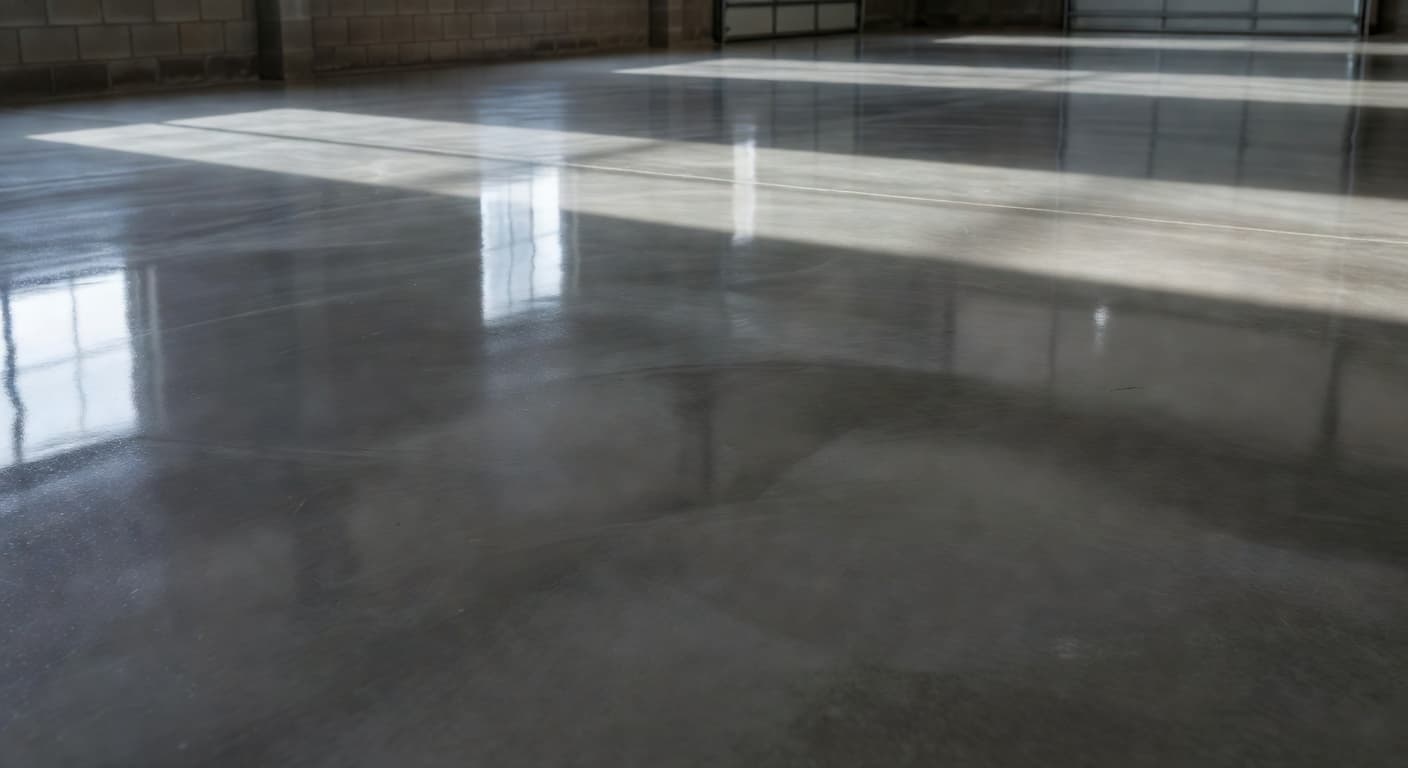
When the diagnosis is right, the result is easy to spot. A fresh recoat should restore an even finish, improve cleanability, reduce dust, and bring back traction suited to the space.
Conclusion
Most floor failures start small. A little peeling, a slick patch, or concrete dust on your shoes can be the first sign that the coating has stopped protecting the slab.
The best time for concrete floor recoating is before those warning signs turn into larger prep, repair, and safety problems. When the coating is failing, an honest inspection always beats covering it up and hoping for the best.