A shiny floor can come from two very different methods. If you’re weighing concrete burnishing vs polishing, the process matters as much as the look.
Burnishing can freshen a treated slab. Full polishing reshapes the surface with grinding and densifying. For homeowners, facility managers, and commercial owners, that difference affects cost, downtime, and upkeep for years. Start with the process, because the process tells you what the floor can realistically become.
What burnishing and full polishing actually mean
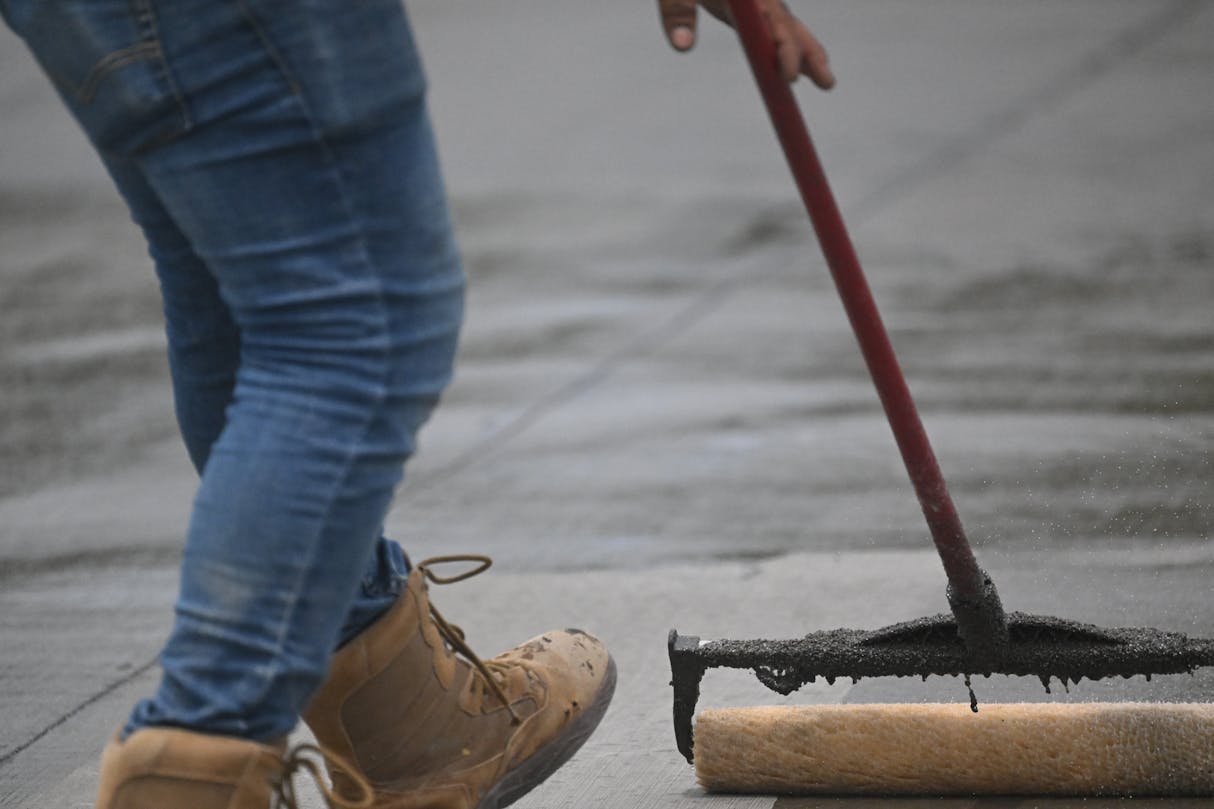
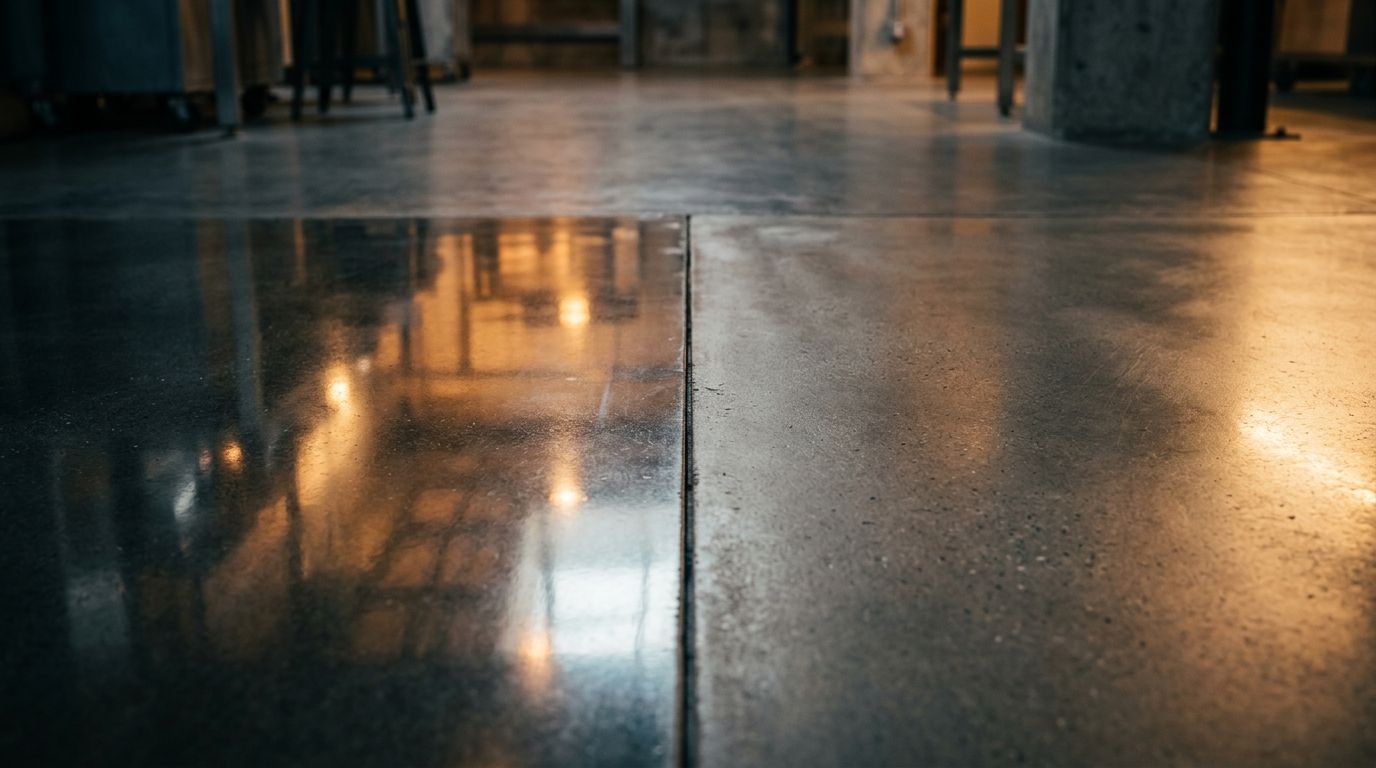
Burnishing is usually a maintenance or refinement step, not a full rebuild of the floor surface. A contractor runs a high-speed machine with a fine pad over concrete that is already smooth, densified, sealed, or guarded. That friction can raise the sheen and improve clarity, but it does not remove much material. If the slab is rough, patched, or stained, burnishing won’t erase those problems.
Full concrete polishing is more involved. It uses multiple grinding passes with diamond tools, often followed by a densifier and finer polishing steps. Each pass refines the slab itself. In other words, polishing changes the concrete more than burnishing does. It can flatten minor highs, expose some aggregate, and create a more consistent finish when the slab allows it.
This is the side-by-side difference that matters most:
| Feature | Burnishing | Full polishing |
|---|---|---|
| Main purpose | Refresh sheen on an already treated floor | Permanently refine the concrete surface |
| Material removed | Very little | Noticeable surface removal through grinding |
| Best starting point | Smooth, dense, well-maintained slab | Bare concrete with enough thickness and decent condition |
| Typical look | Soft luster to moderate shine | Satin to high-gloss, depending on grit and system |
| Common role | Ongoing maintenance | Major finish upgrade |
The short version is simple. Burnishing helps a good floor look better. Full polishing gives a basic slab a different finish category.
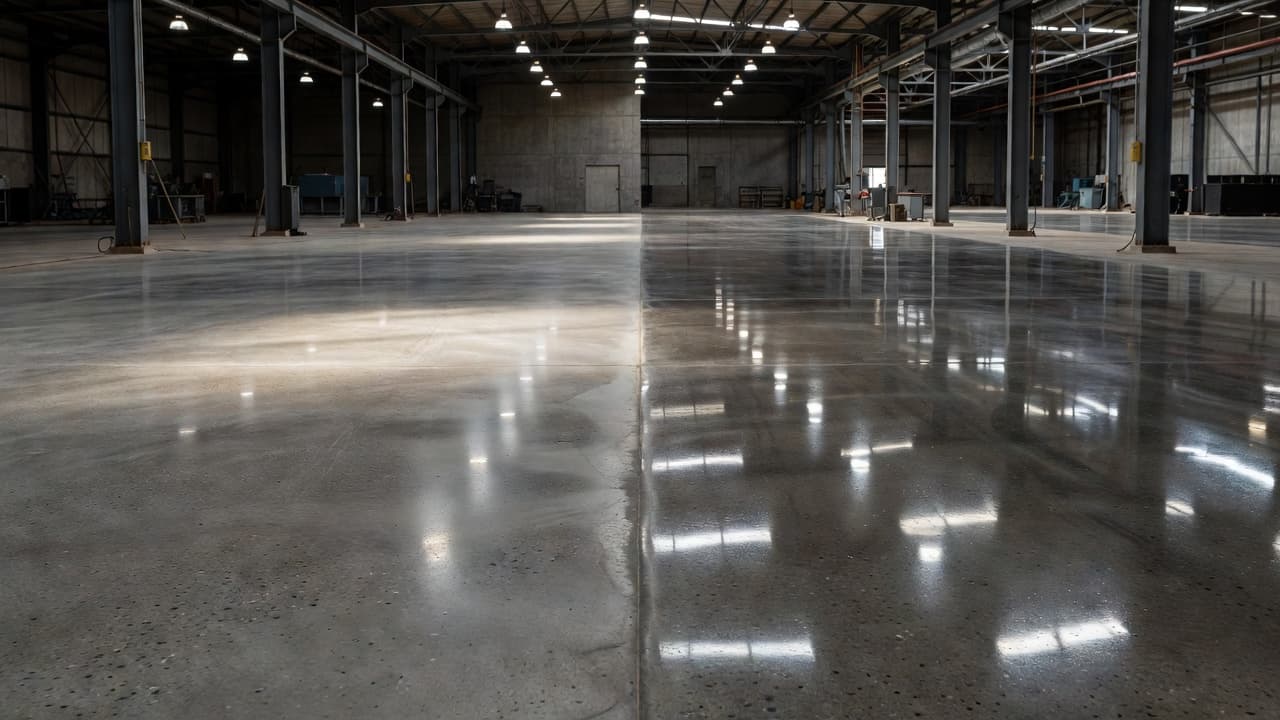
That difference is why burnishing often costs less, but also delivers less change. As Concrete Network’s guide to burnished concrete floors points out, burnishing can be a budget-friendly path when the slab is already in good shape.
How the finished floor will actually look and wear
Results depend on three things, first, slab condition, second, traffic level, and third, what has already been done to the floor. Those factors matter more than brochure photos.
A burnished floor usually has a cleaner, brighter look than it had before. Still, the shine is limited by the starting surface. Deep scratches, patch lines, trowel marks, and old adhesive shadows can still show. If the concrete was treated well to begin with, burnishing can bring it back to life. If it wasn’t, the finish can stall at “slightly better.”
A fully polished floor can reach a much sharper reflection. It also tends to hold up better in high-traffic indoor settings because the finish is built into the slab, not sitting on top of it. That doesn’t mean every polished floor looks like a mirror. Lower-grit systems produce a softer satin look, and many owners prefer that because it hides dust better.
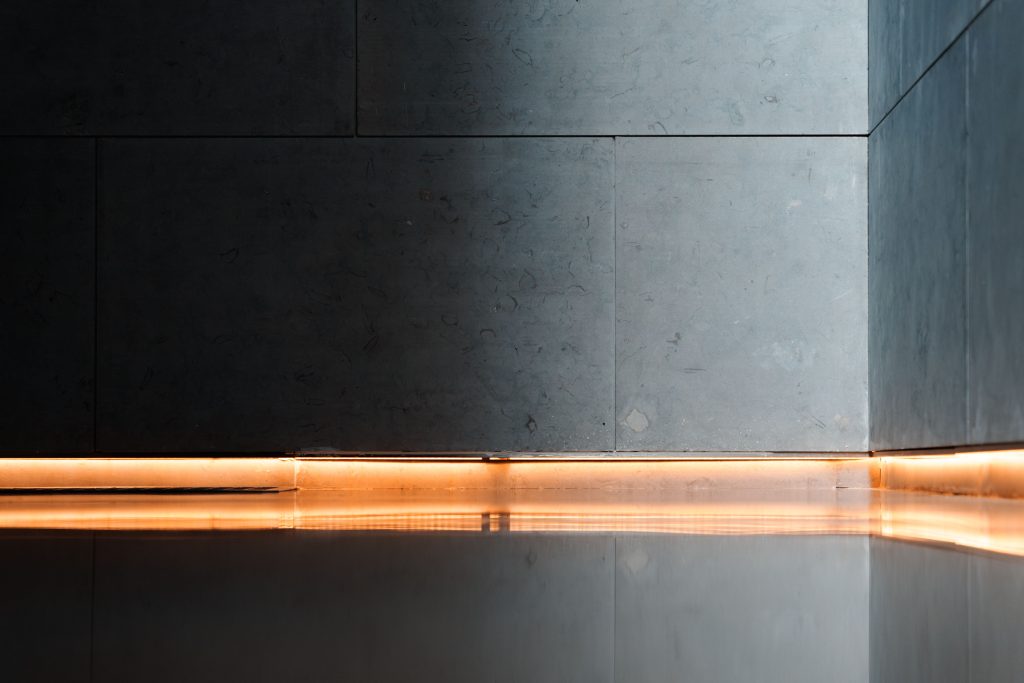
Photo by Declan Sun
Maintenance also differs. Burnished floors often need repeat visits to keep their appearance, especially in retail aisles, school halls, or busy lobbies. Polished concrete still needs dust mopping and proper cleaners, but it usually asks for less frequent cosmetic revival. Some polished systems also use a guard, so maintenance plans can overlap.
Slip performance needs plain talk. More shine does not automatically mean a floor is unsafe, and less shine does not automatically mean better grip. Dry polished concrete can perform well. However, water, oil, cleaner residue, and traffic soil can change traction fast. That’s why floor use matters as much as finish type.
When burnishing makes sense, and when it doesn’t
Burnishing is a smart choice when the floor already has a solid foundation. That could be an existing polished slab, a densified warehouse aisle, or a stained and guarded floor that has lost some pop. It works well when downtime is tight and you want a visual lift without a heavy grinding project.
For facility managers, this often means burnishing fits into a maintenance cycle. A school corridor, grocery back-of-house path, or office common area might not need full concrete polishing again. It may only need periodic refinement to keep the surface presentable and easier to clean.
Burnishing works best when the floor is already good and you want it to look better, not when the floor is bad and you want it to look new.
There are clear limits, though. Burnishing is usually the wrong move for rough slabs, wide spalls, soft concrete, failing patchwork, or surfaces with thick contamination. It also won’t fix moisture issues, and it won’t give you the same long-term change as grinding and densifying.
If you’ve run into odd search terms like concrete dealing, strip the jargon away. The real question is how much surface change you need. If the answer is “a lot,” burnishing probably isn’t enough.
Decorative floors add one more wrinkle. With concrete staining, burnishing can improve the look of a protected surface, but it still won’t hide color variation or repair marks underneath. That can be charming in a loft. In a showroom, it can look uneven.
When full polishing is worth it, and when coatings beat both
Full polishing makes sense when you want the slab itself to become the finish. That’s a strong fit for retail stores, offices, restaurants, some warehouses, and public buildings. If the concrete is sound, polishing can deliver a clean, durable surface with no peelable film. For many owners, that’s the main appeal. The floor is the floor.
Yet full polishing isn’t the answer for every room. A slab with heavy moisture vapor, deep oil contamination, major curling, or ugly patch history may still disappoint after grinding. Also, polishing does not add the same chemical barrier as a coating. If you need protection from salts, hot tires, battery acid, or frequent spills, a coating system may fit better.
That’s where a concrete epoxy coating often enters the conversation. An epoxy coating for concrete builds a film over the slab, so it can add color, stain resistance, and more forgiveness over repaired areas. For garages, an epoxy coating for garage floor use is often more practical than polishing because it handles automotive exposure better. In commercial settings, a commercial concrete epoxy coating can make more sense for kitchens, service bays, labs, and work areas that need a sealed surface.
Many owners also compare epoxy to polished concrete head-to-head. This concrete epoxy vs polished concrete comparison lays out the failure points and tradeoffs in plain language.
Topcoats matter, too. A polyaspartic coating can speed return-to-service and improve UV stability in the right system. A basement concrete coating may also be the smarter finish in lower-level spaces where comfort, stain resistance, and a more decorative look matter more than exposed concrete character. If you’re reviewing systems, this guide to best epoxy coating types for concrete is useful background.
A reliable garage floor epoxy coating company should test moisture, prep the slab mechanically, and tell you when burnishing or polishing is the wrong tool. That same honesty matters in polished concrete bids. Cheap polishing prices often skip steps, and burnishing alone gets sold as “polishing” more often than it should.
Conclusion
The real split between burnishing and full polishing is simple. Burnishing refines an already treated floor, while polishing changes the slab in a much bigger way.
If your concrete is sound and you want a long-term upgrade, polishing may justify the spend. If the floor already looks decent and only needs a boost, burnishing can be a smart maintenance move. And when you need a sealed, chemical-resistant surface, coatings often beat both. The right finish starts with an honest read of the slab, not the gloss level on a sample board.