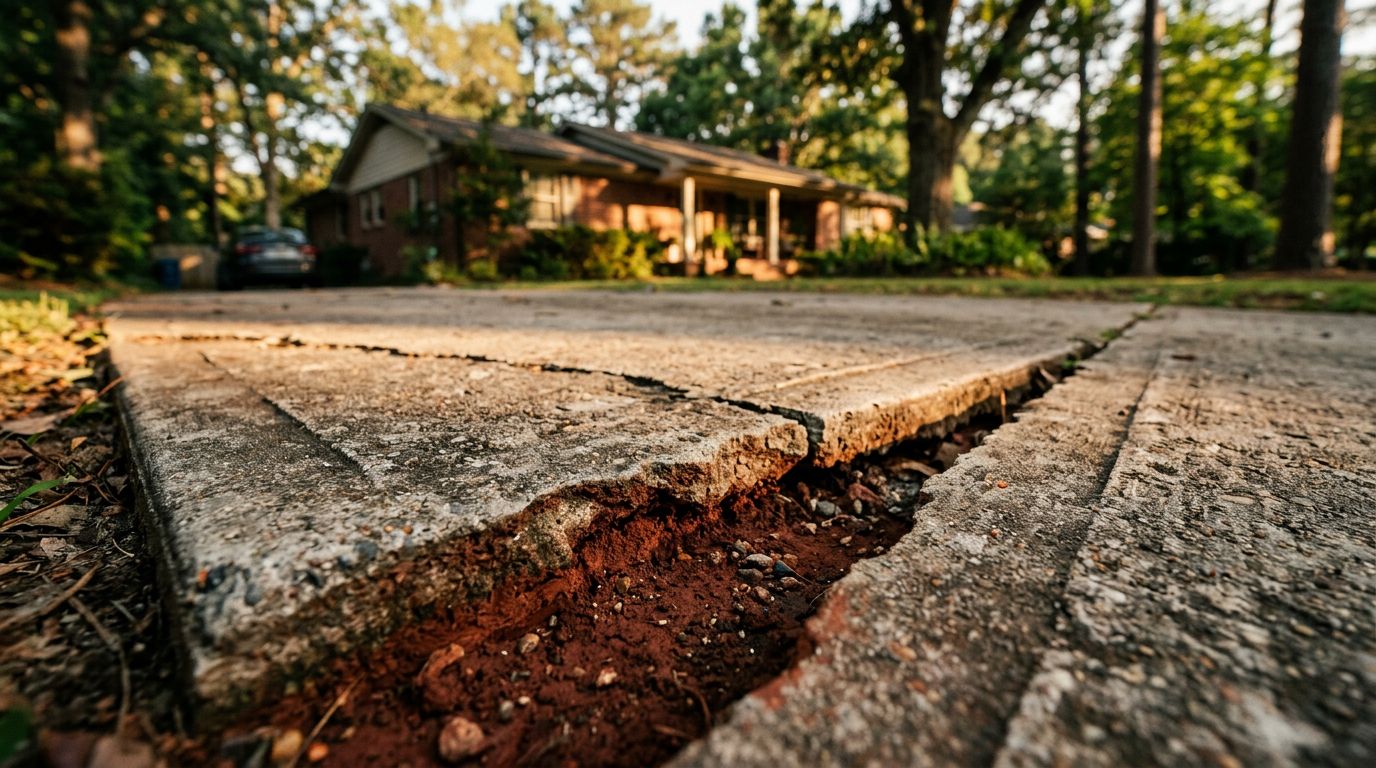
Why does a driveway look fine in spring, then look rough by late summer? Around Atlanta, the answer often sits under the slab. Atlanta red clay swells when it gets wet and shrinks when it dries, so concrete rarely rests on perfectly steady ground.
If you own a home or manage property in North Georgia, that movement can show up as cracks, joint gaps, and uneven sections. The useful part is knowing what’s normal, what needs repair, and what may point to a larger foundation issue.
Why Atlanta red clay keeps stressing concrete
Concrete handles weight well, but it doesn’t like bending. When the soil under one part of a slab expands, shrinks, or washes out, the slab loses even support. Then it starts acting like a bridge over a soft spot, and cracks follow.
That’s why local weather matters so much. Spring rain can soak the clay. Hot summer weeks can dry it fast. Poor drainage, short downspouts, clogged gutters, and heavy watering near one side of a slab make the swing even worse. The expansive clay common around Atlanta is famous for that push-pull cycle.
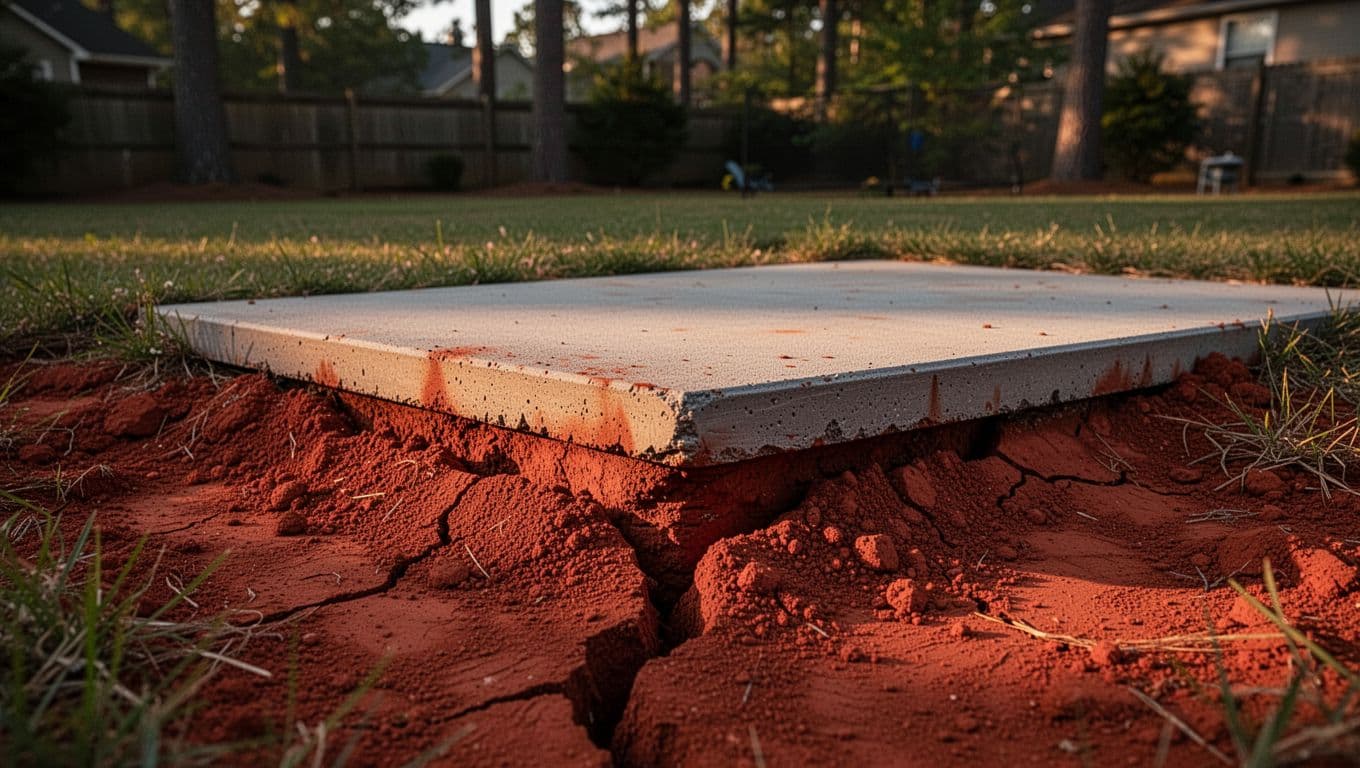
Driveways, sidewalks, patios, garage slabs, and pool decks all feel it, but not in the same way. A thin sidewalk panel may lift at one edge. A wide driveway may crack where soil support changes. A garage slab may move near the door opening, where water and sunlight create stronger moisture swings.
Concrete usually doesn’t fail because the mix was bad. It fails because support under the slab stops being uniform.
Normal cracks vs settlement vs bigger warning signs
Not every crack means trouble. Fresh concrete often forms hairline shrinkage cracks as it cures. These are thin, usually random, and often stay the same width for years. If both sides of the crack sit at the same height, that’s a better sign.
Joints are different. Control joints and expansion joints exist because concrete moves. A joint may open and close a bit with the seasons, and joint sealant may split or wear out. That’s common. What isn’t normal is one side of the joint sitting higher than the other, crumbling edges, or a gap that keeps widening.
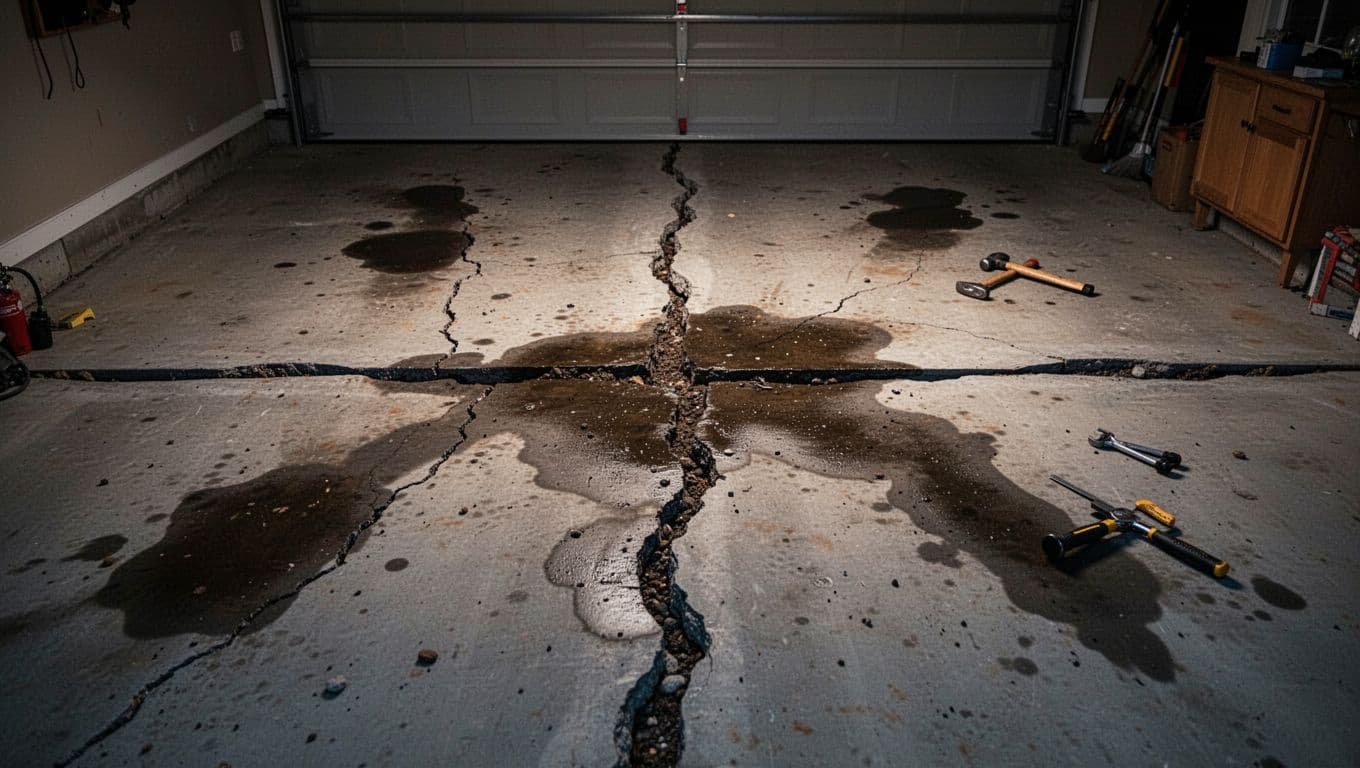
Settlement looks different from shrinkage. When soil compacts, erodes, or softens under one area, part of the slab can drop. You may see a wider crack, standing water, or a lip that catches a shoe or tire. That’s common on older driveways, walkways near downspouts, and patios built over fill soil.
Larger foundation-related problems usually show up in more than one place. Watch for stair-step brick cracks, doors that suddenly stick, windows that bind, floor slope inside the home, or repeated cracking where walls meet ceilings. If slab cracks line up with those signs, don’t guess. Have a structural or concrete specialist inspect the site.
How movement shows up around your property
Outdoor slabs often tell the story first. A driveway may settle at the apron, then hold water after every storm. Sidewalk panels can tilt and create a trip edge. Patios may crack near corners where runoff keeps the soil wet. Around pools, splash-out and deck drainage can keep clay damp for long stretches, then summer heat pulls that moisture back out.
Garage floors deserve extra attention because they often get coated later. An epoxy coating for garage floor use can look great, but it won’t stop movement underneath. If joints are active or cracks are still changing, the finish can mirror that movement. The same idea applies to an epoxy coating for concrete in workshops, storage areas, and entry spaces.
Basements add another layer. A basement concrete coating only makes sense after moisture is checked and outside drainage is corrected. In other words, coatings protect the surface, but they don’t fix hydrostatic pressure or shifting support. If old cracks seem to widen in one season and calm down in another, that pattern often lines up with seasonal soil movement.
What helps, what doesn’t, and when to bring in a specialist
Start with water. Good grading, longer downspout extensions, clean gutters, and sensible irrigation often reduce slab stress more than people expect. Joint sealing matters too, because open joints let water reach slab edges and soften the soil below.
If one panel has dropped but the slab is still sound, leveling may help. Contractors may raise settled concrete with foam injection or other slab-lifting methods. Crack repair can help appearance and limit water entry, but repair only lasts when the cause is under control.
That’s also why a good garage floor epoxy coating company should ask about moisture, cracking, and drainage before talking flakes or gloss. For stable slabs, concrete epoxy coating can protect against oil, dust, and tire wear. Near sunny garage doors, a polyaspartic coating may make sense because it handles UV exposure better. In retail or warehouse settings, commercial concrete epoxy coating and concrete polishing solve different problems, while concrete staining fits decorative spaces that need color without a thick film. The key is simple: you’re often coating concrete dealing with years of red-clay movement, not a slab in perfect lab conditions. If you’re comparing finish options after repairs, these garage epoxy coating services give a good overview of what works where.
Atlanta soil will keep moving. The goal isn’t to stop every shift. It’s to control water, maintain joints, and tell the difference between cosmetic cracks and lost support.
When the slab is stable, finishes last longer and look better. On atlanta red clay, the smartest concrete repair often starts below the surface, not on top of it.