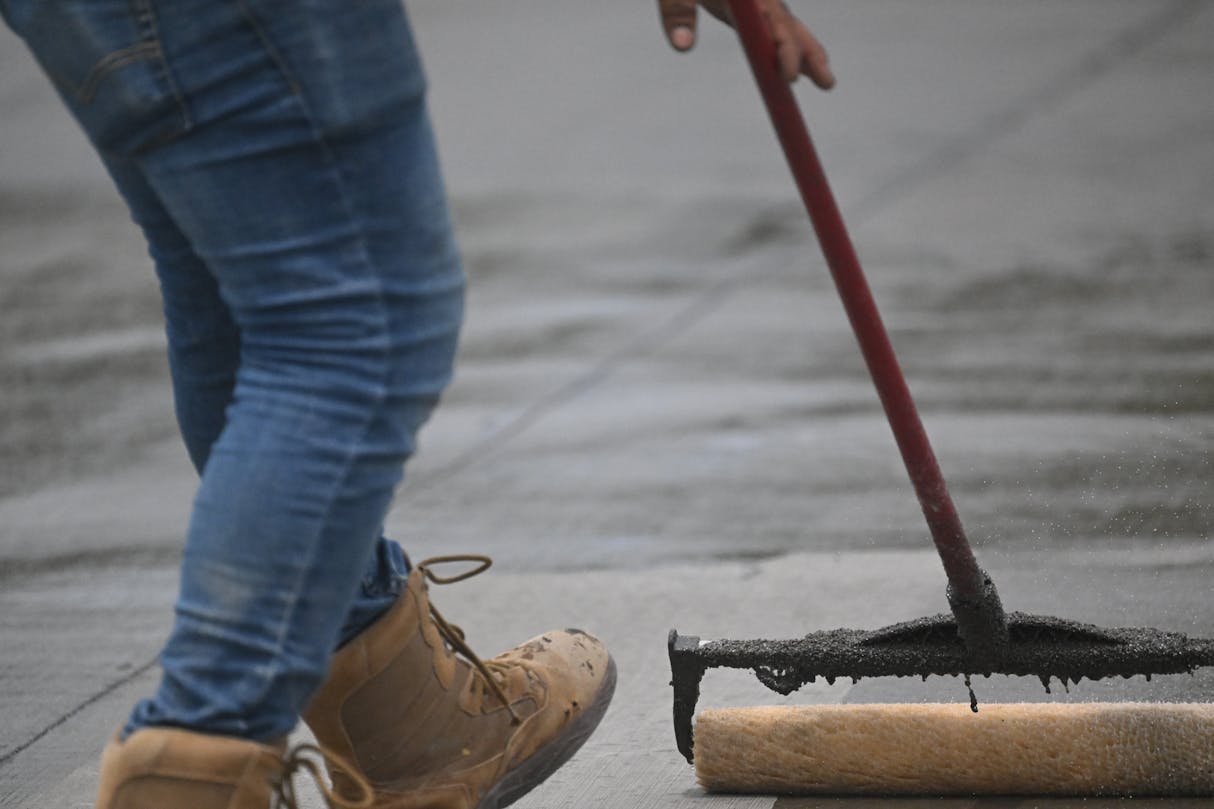
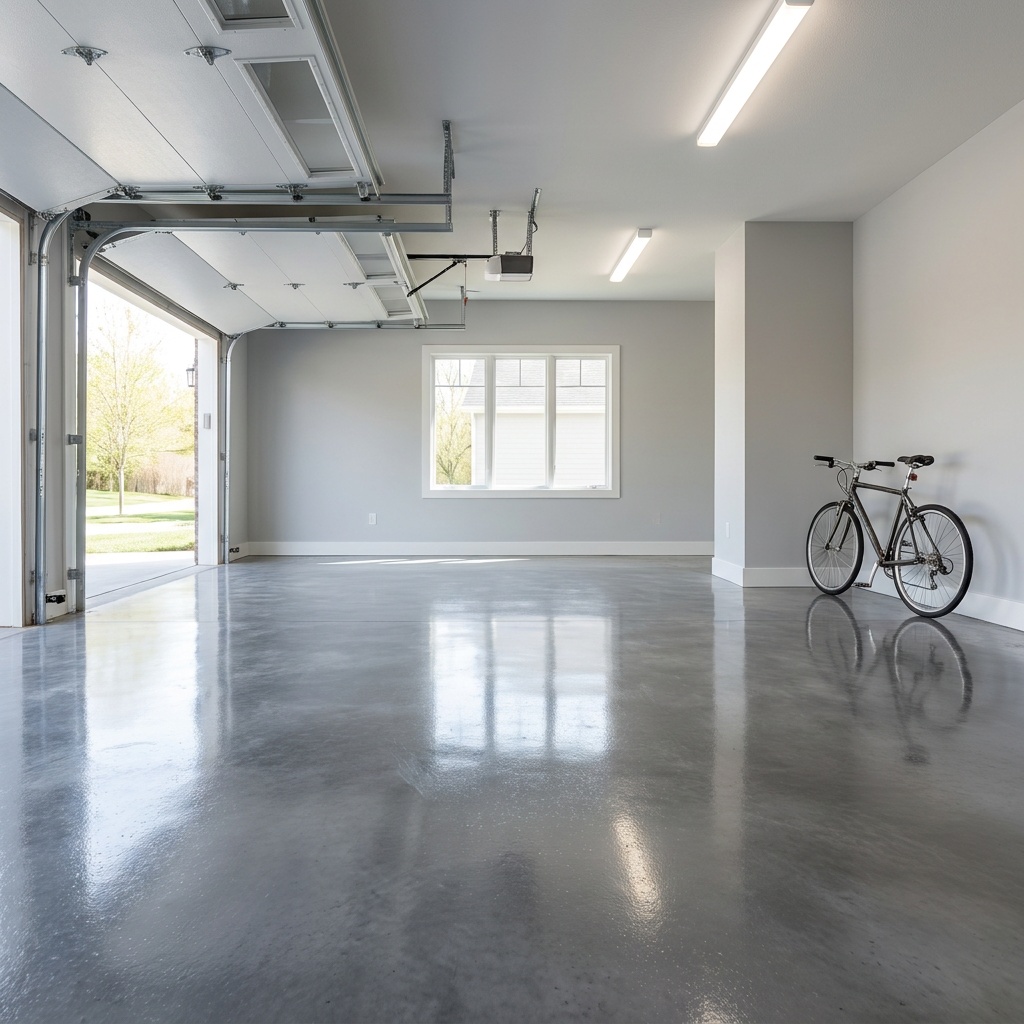
Polished concrete is not a coating. It is the slab itself, ground with progressively finer diamond abrasives and hardened with a chemical densifier until the surface reaches a smooth, reflective finish. For a garage, it can be a strong choice if the slab is in decent shape and the floor sees mostly foot and tire traffic rather than heavy chemical spills. It is not the right call for every slab, and that decision comes down to what the concrete looks like once the grinding starts.
What Actually Happens to the Slab Before It Ever Looks Polished
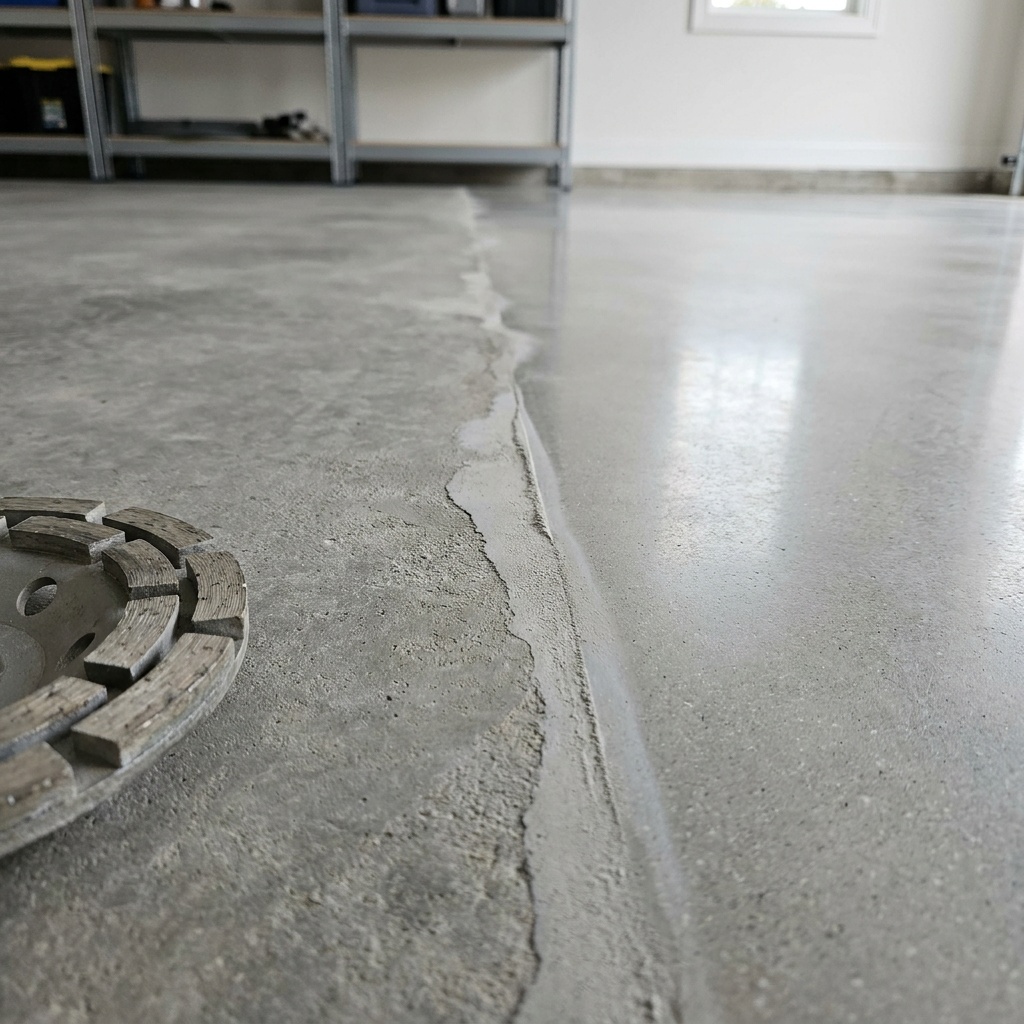
Every polished concrete job starts the same way: grinding, not spraying. A crew runs metal-bond diamond tooling across the surface first, usually starting around 16 to 30 grit, to strip contamination and open the pores of the concrete. This step is called establishing the surface profile, and it is the same underlying idea whether the final finish is polished concrete or an epoxy coating. Skip it, and nothing bonds or looks right later.
From there the sequence moves through progressively finer resin-bond diamonds. A typical run goes 60, then 120, then up through 400, 800, and sometimes 1,500 to 3,000 grit for a high-gloss look. Somewhere in the middle of that sequence, usually after the 120 to 200 grit pass, a lithium-silicate densifier gets applied to the open concrete. It reacts chemically with the calcium in the slab and hardens the surface from within. That densifier typically needs 24 to 48 hours to cure before grinding resumes.
New concrete matters here too. A slab poured within the last 28 days has not finished its early cure, and grinding it too soon can tear up the surface instead of refining it. On older garage slabs, we are also checking moisture. A calcium chloride test reading under 3 pounds per 1,000 square feet per 24 hours, or a relative humidity probe reading under 75 percent, tells us the slab is dry enough to proceed without trapping vapor beneath a dense finish.
Why a Garage Is a Different Animal Than a Showroom Floor
Most polished concrete photos online show retail floors or lobby space. A garage lives a rougher life. Tires track in road grit and winter deicing salt. Oil drips sit for weeks before anyone notices. Jack stands and dropped tools chip edges that a showroom floor never sees.
Polished concrete handles some of that well and struggles with the rest. Because there is no surface film, there is nothing to peel. That is the main selling point. Hot tire pickup, the bubbling and lifting that plagues thin coatings when a warm tire sits on the surface, simply is not a mechanism that applies to polished concrete, since there is no film layer to lift.
But polished concrete is also more porous than a two-part coating system. Oil and salt can still stain it, especially at lower polish levels. A guard or sealer helps, but it needs reapplication over time, unlike a poured epoxy or polyaspartic coating that forms a continuous barrier across the whole slab.
Is Polished Concrete Right for Your Garage? Check These, in Order
We walk this same sequence on every estimate call. It saves everyone time.
1. Check the slab’s condition first.
Cracks, spalling, or patchwork repairs from a prior slab pour will show through a polish job. Grinding does not fix structural cracks. It can actually make hairline cracks more visible once the surrounding concrete goes glossy. If the slab has significant pitting or old delamination, a coating system that bridges minor texture, like epoxy or polyaspartic, is usually the more forgiving path.
2. Then check moisture.
Slabs poured directly on grade, common in a lot of the older ranch and split-level homes around Woodstock and Marietta, sometimes carry more vapor than a slab on a raised foundation. High moisture readings do not rule out polished concrete outright, but they change the densifier and sealer approach.
3. Then check how the garage actually gets used.
A garage that stores cars and holiday bins tolerates polished concrete fine. A garage that doubles as a home workshop, with regular oil changes, battery acid exposure, or dropped tools, puts more daily abuse on the surface than a polish job is built to shrug off without periodic resealing.
4. Then check climate control.
Unconditioned garages swing in temperature more than a finished living space. Polished concrete tolerates that swing better than a thick build-up coating, since it is not a separate material bonded on top that can expand and contract at a different rate than the slab beneath it.
5. Finally, check what you actually want it to look like.
Polished concrete reads as a gray, stone-like material, sometimes with light aggregate flecks exposed by the grind. If you want color, pattern, or a metallic look, concrete staining or a pigmented coating gets you there in a way straight polishing cannot.
Polished Concrete vs. Coating Systems, Side by Side
| Factor | Polished Concrete | Epoxy / Polyaspartic Coating |
|---|---|---|
| What it is | The slab itself, ground and densified | A separate material bonded to the slab surface |
| Typical film/wear layer | None added; it is the concrete | Roughly 10 to 20+ mils depending on system |
| Peeling risk | None; nothing to delaminate | Possible if grinding/prep is skipped |
| Hides minor cracks or pitting | No, tends to highlight them | Yes, can fill and bridge minor texture |
| Color/pattern options | Limited to natural concrete tone plus dye | Wide range of colors, flake, and metallic looks |
| Chemical/salt resistance | Good with regular sealer maintenance | Strong, continuous barrier |
| Best fit | Sound slab, storage/light-use garage | Damaged slab, heavy-use shop, or color goals |
For a lot of Alpharetta and Johns Creek garages with newer, well-poured slabs, either path works. The deciding factor usually comes down to how the space is used day to day, not which finish looks better in a photo.
What Actually Drives the Cost of Either Option
Two identical-looking garage floors can price out very differently once a crew gets a grinder on them. The variables that matter most are how many grinding passes the slab needs to reach a sound profile, whether cracks or old coating residue need to be removed first, total square footage, and which finish level or coating system gets specified. A slab that already has failed paint or mastic on it takes longer to prep than bare concrete, and that shows up in the scope of work before it shows up in the finish.
None of that is something we quote over the phone with any honesty. The only way to give a real number is to see the slab, check moisture, and look at what the grinder actually uncovers. That is what a free, itemized estimate is for.
Where This Leaves Most Garage Owners
Polished concrete is a legitimate option for a garage, not a compromise. It just asks more of the underlying slab than a coating does, since there is no film to smooth over rough spots. If the concrete is sound, dry, and used the way most residential garages get used, it holds up well and never has to worry about peeling. If the slab has damage or the garage doubles as a workshop, a coating system built for abuse is usually the more practical call. Either way, the answer starts with grinding and an honest look at the concrete, not with a color chart.
Compare both directions in more detail on the polished concrete page or browse the full range of finishes on the homepage before deciding.
Want a straight answer for your own slab? Request a free, itemized estimate through our contact page and we’ll tell you what the grinder finds before we tell you what it costs.