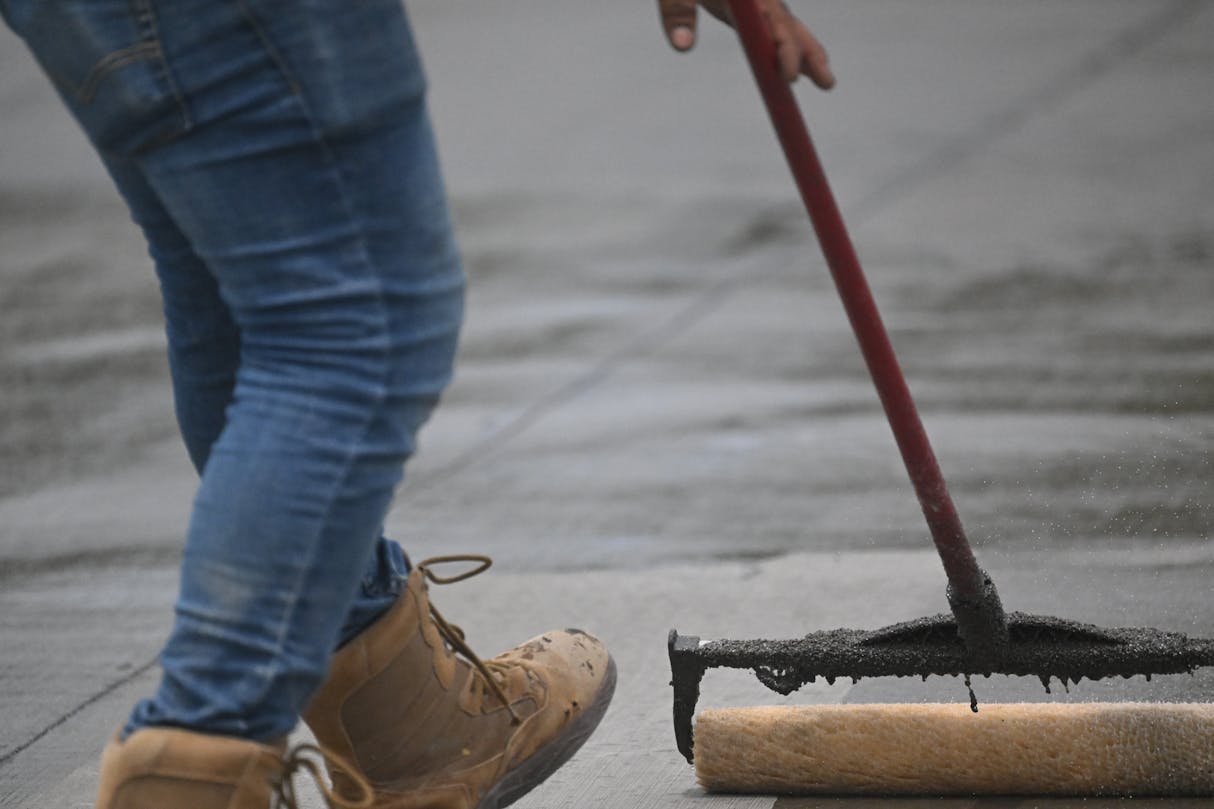
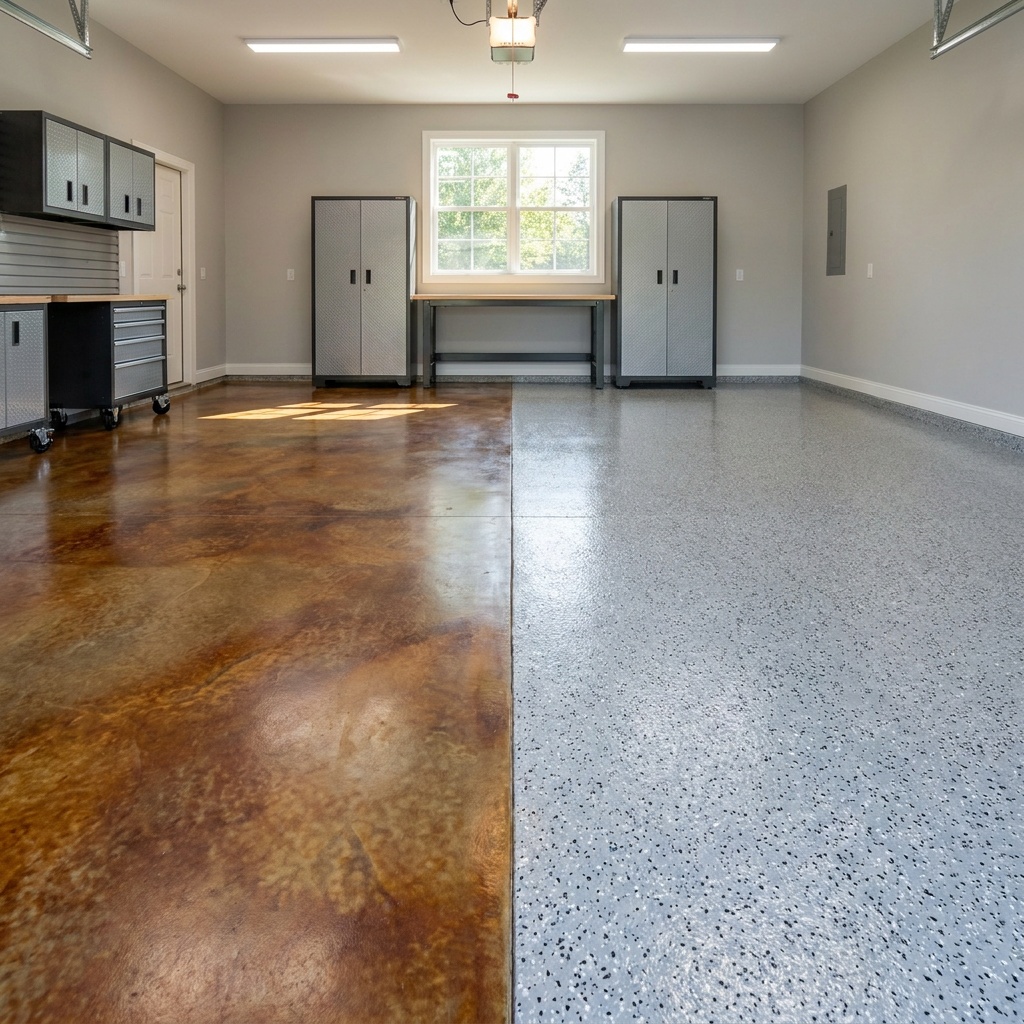
Staining changes the color of the concrete itself. Coating adds a separate material on top of the slab. Stain soaks into the pores and becomes part of the surface, so there’s nothing to peel. A coating is a film — epoxy, polyaspartic, or a polished topical sealer — bonded to the slab, and its performance depends entirely on how that bond was prepared.
Why the Prep Work Matters More Than the Finish You Pick
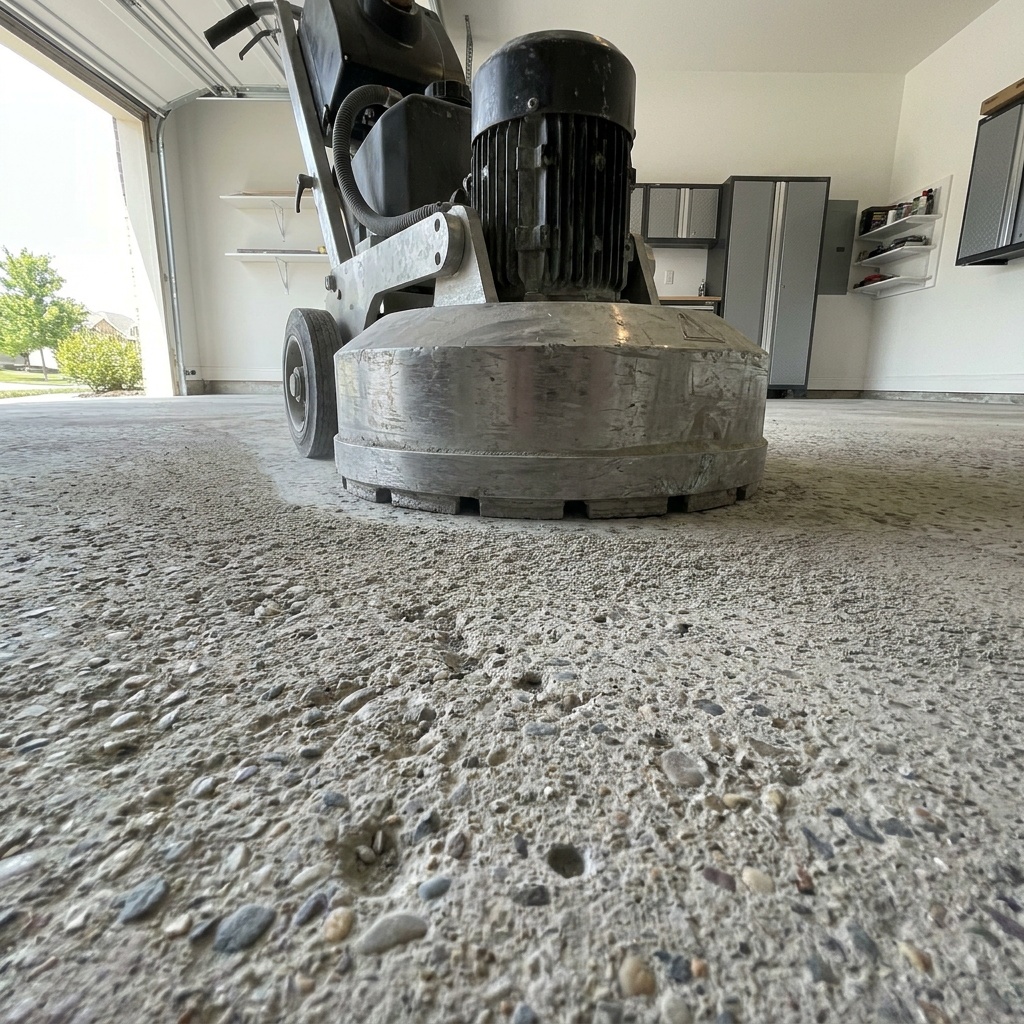
Every coating job starts the same way on our end: diamond grinding. We run the slab through a sequence — typically 40-grit metal bond, then 80-grit, sometimes finer — to open the concrete’s surface profile and strip whatever is already on it. Old sealer, laitance, and oil residue won’t let a new coating bond. Skip this step and even a premium epoxy system will lift within a year or two. That’s the failure we get called about most, not a color complaint.
Staining needs less aggressive prep, but it still needs clean, open pores. Dirt, sealer, or curing compound block absorption just as surely as they block coating adhesion. We’ll often grind a light profile before staining too, especially on slabs that have been sealed before.
What Staining Actually Does
Acid stain reacts chemically with the lime in cured concrete, producing mottled, translucent color that varies slab to slab. Water-based stain, sometimes called dye, sits closer to a true color and reads more uniform. Neither builds a layer. Neither hides pits, cracks, or old repairs — they tend to highlight them instead. Concrete staining works best on slabs with a sound, visually interesting surface, since it becomes part of the floor rather than sitting over it.
What Coating Actually Does
Epoxy, polyaspartic, and polished-concrete topical systems build an actual wear layer, usually somewhere between 10 and 20 mils depending on the system and the number of coats. That layer can carry color flake, metallic pigment, or a solid tint under a clear topcoat. Because it’s a built film, it can bridge small surface imperfections that staining would only expose. It also gives you control over slip resistance and gloss level that stain alone cannot offer. Epoxy coating and polyaspartic coating are the two systems we install most for garages, and polished concrete is the topical option for a lower-sheen, more industrial look.
Staining vs Coating at a Glance
| Factor | Concrete Staining | Epoxy / Polyaspartic Coating |
|---|---|---|
| What it is | Color that soaks into the slab | A film bonded to the surface |
| Wear layer thickness | None added | Roughly 10-20+ mils, system dependent |
| Typical coats | 1-2 stain passes plus sealer | 2-3 coats, often a basecoat and topcoat |
| Cure before foot traffic | Same day to about 24 hours | 24 hours for polyaspartic, up to 72 for epoxy |
| Hides cracks or pitting | No, it highlights them | Yes, within reason |
| Slip or gloss control | Limited to sealer sheen | Full control via additives and topcoat |
| Best fit | Sound, attractive existing slab | Garages, damaged or uneven slabs |
Which One Fits Your Slab
If your slab is in good shape — no major cracking, no oil soaked deep into the pores — stain can be the simpler option. It’s not cheaper by default; it just uses a different labor and material mix. A heavily pitted garage floor, a slab with hairline cracking from the ground movement common in this area’s red clay, or a floor with old paint or mastic on it usually needs coating instead. Coating lets us grind away the damage and rebuild a flat, durable surface on top of it.
We also check slab moisture and ambient conditions before either system goes down. Relative humidity above roughly 85 percent, or slab temperatures outside a 50-90°F range, can interfere with cure. We schedule around both.
Maintenance and Longevity
Both systems need basic upkeep. Stained concrete typically gets resealed every few years, depending on traffic and exposure. A garage coating holds up longer between recoats, but only if the slab was ground and installed correctly the first time. Either way, the floor’s real lifespan traces back to that first grinding pass more than to whichever topcoat brand ends up on the label.
Homeowners in Alpharetta, Milton, Johns Creek, and Suwanee often ask us which option costs less. The honest answer depends on square footage, how much grinding the existing slab needs, and which coating system you choose. Rather than guess, we price it after seeing the floor. You can see more on how we approach both options on the homepage.
The right answer depends on what’s actually happening under the surface, not just the look you want. We can tell you which direction makes sense after a short walk of the slab. Request a free, itemized estimate and we’ll lay out the prep, the system, and a realistic timeline for your floor.