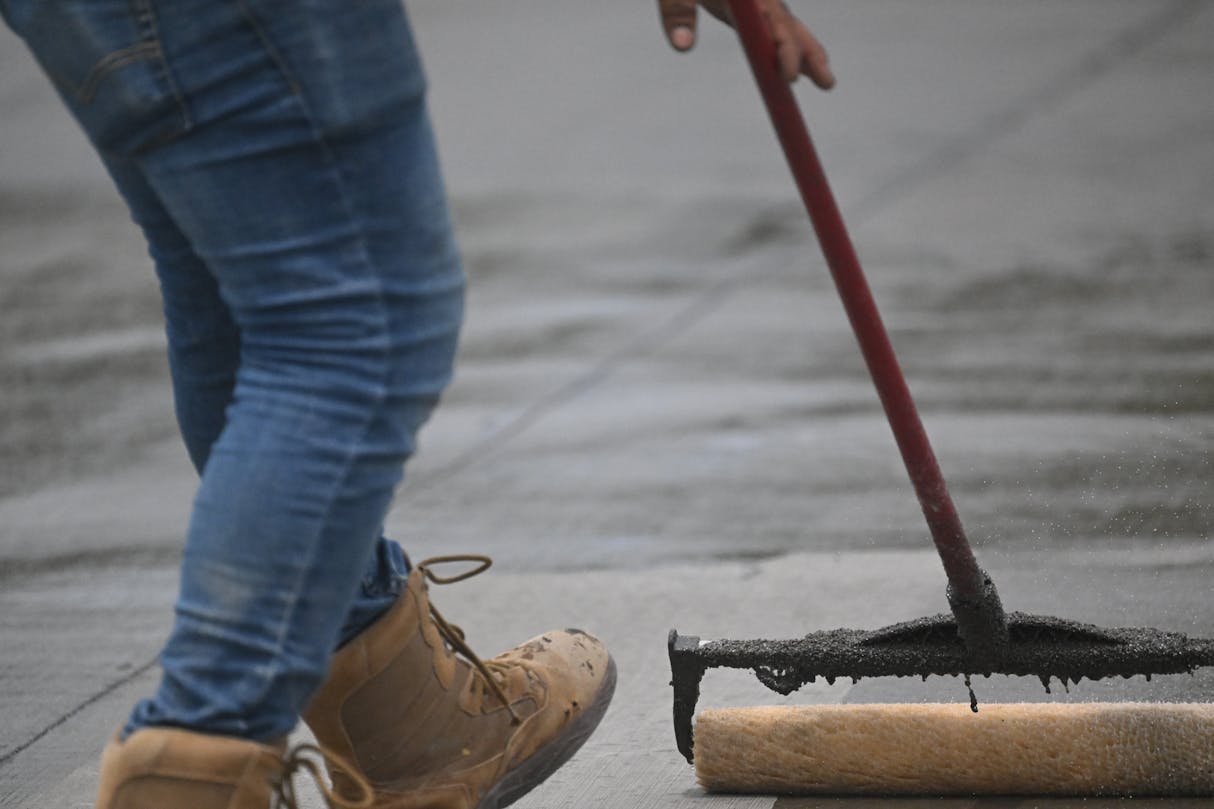
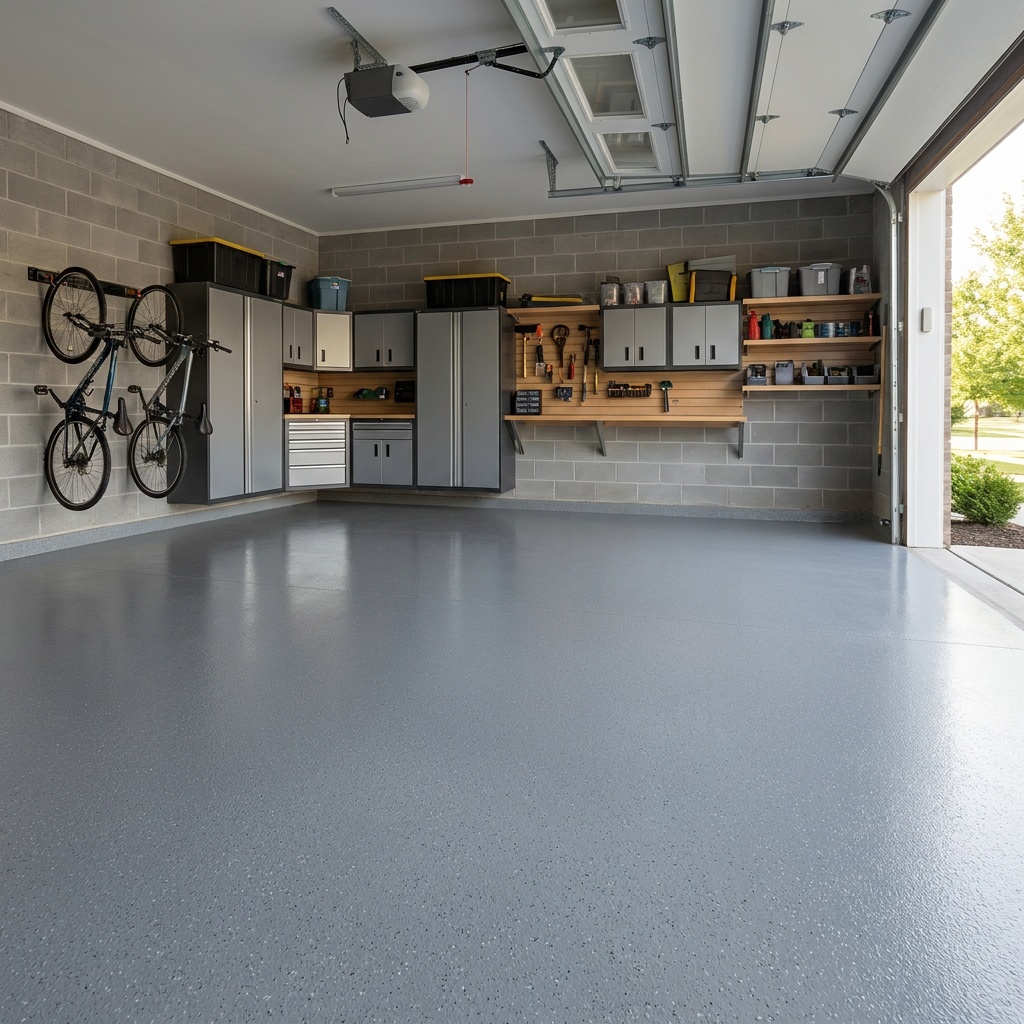
Grinding is the standard for a garage floor that needs to hold a coating long-term, and acid etching is not an equal substitute. Etching can open the surface of clean, undamaged concrete slightly, but it does not remove sealers, laitance, oil residue, or the weak top layer that most driveways and garage slabs have after years of tire traffic and moisture exposure. Mechanical grinding creates a consistent, mechanically abraded surface profile that gives coatings something real to grip. On most Atlanta-area garage floors, grinding is not optional if the goal is a coating that stays down.
Why Prep Decides Whether a Coating Lasts
Every coating failure story that involves peeling, bubbling, or lifting traces back to the same root cause: the coating never actually bonded to the slab. Coatings do not stick to concrete the way paint sticks to drywall. They need a textured, open-pored surface to mechanically key into. Without that texture, a coating is just sitting on top of the slab, held on by little more than surface tension.
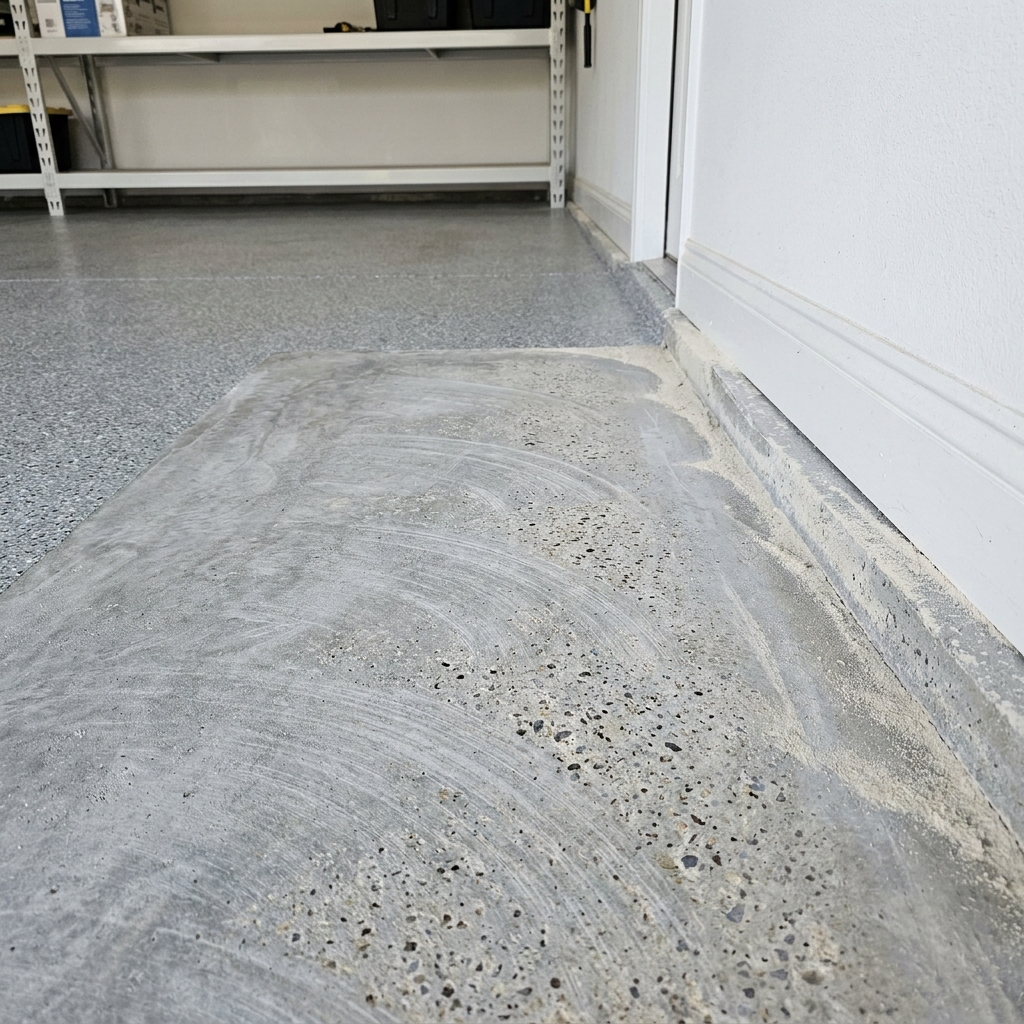
Grinding uses diamond-segmented tooling to remove the top layer of concrete, along with any existing sealer, paint, mastic, or contamination baked into the surface. This process levels minor high spots, exposes fresh concrete, and leaves a uniform profile across the entire garage. It also reveals problems that etching can never show, like hairline cracks, spalled patches, or areas where a previous coating has already started separating from the slab.
What Acid Etching Actually Does
Acid etching uses a diluted acid solution to chemically react with the surface of the concrete, creating a mild roughening effect. On a brand-new, never-sealed slab with no contamination, a proper etch can sometimes produce an acceptable surface. In practice, though, most residential garages fall outside that narrow window. Old sealers resist the acid entirely. Oil and grease stains block the reaction in patches, leaving some areas etched and others essentially untouched. The result is an inconsistent surface profile that a coating bonds to unevenly, which is exactly the setup for peeling in isolated spots a year or two down the road.
Etching also depends heavily on application technique, dwell time, and thorough rinsing. Too little acid and the surface stays too smooth. Too much, or poor rinsing, and residue is left behind that interferes with adhesion. Grinding removes that variability because it is a mechanical process, not a chemical reaction that depends on the condition of whatever happens to already be on the slab.
When Grinding Is Non-Negotiable
- The garage floor has ever been painted, sealed, or coated before, even partially
- There are visible oil stains, tire marks, or efflorescence on the surface
- The slab shows minor low spots, pitting, or surface flaking
- A previous coating has already peeled or bubbled anywhere on the floor
- The homeowner wants a polished concrete or decorative concrete staining finish rather than a coating
In the Atlanta metro, red clay soils and seasonal moisture swings add another variable. Slabs in Alpharetta, Milton, Johns Creek, and Woodstock often see more ground movement and moisture intrusion than concrete in drier climates, which makes a clean mechanical bond even more important. Grinding gives an installer the chance to inspect the slab up close and address cracks or moisture issues before they get sealed under a coating system.
The Rare Case Where Etching Might Be Enough
There are limited situations, such as a very new slab that has never been sealed, shows no staining, and is being prepared for a lighter-duty coating, where etching alone might be considered. Even then, most contractors who stand behind their work still recommend at least a light mechanical pass to guarantee a consistent profile, because etching alone cannot confirm what condition the entire slab is in beneath the surface.
How Prep Affects the Coating System You Choose
The prep method also matters depending on which coating is going down. An epoxy coating system is more forgiving of minor profile inconsistencies than some other systems, but it still performs best over a properly ground surface. A polyaspartic coating, often chosen for its faster cure time and better UV stability in a bright garage, bonds most reliably when the surface has been ground rather than etched. If the goal is polished concrete or a decorative concrete staining finish instead of a topcoat, grinding is part of the actual finishing process, not just prep, since it is what exposes the aggregate and creates the look.
Cost is often the reason homeowners ask about skipping grinding in the first place. Grinding does add labor and equipment time compared to an etch, and the amount of work needed varies depending on square footage, how much existing coating or contamination has to be removed, and whether the slab has damage that needs repair before coating. Rather than guess at what a particular garage needs, the more reliable approach is a walkthrough where the surface condition is actually assessed. Requesting a free, itemized estimate through the contact page is the fastest way to find out what prep a specific slab requires and how that translates into the overall scope of the job.
For homeowners comparing options across the wider service area, from Suwanee to Marietta to Cumming, the same principle holds regardless of neighborhood or slab age: the coating is only as good as what it is bonded to. Reviewing the full range of finish options on the homepage is a useful starting point before narrowing down a specific system.
FAQ
Can acid etching replace grinding on an old garage floor?
Generally no. Old garage floors almost always have sealer residue, oil staining, or previous coatings that acid cannot penetrate evenly, which leads to inconsistent adhesion and early peeling in patches.
Does grinding damage the concrete slab?
No. Grinding removes only the thin top layer of concrete along with contaminants sitting on it. It is a controlled process that experienced operators calibrate to the slab’s condition rather than removing more material than needed.
How do I know if my garage floor was etched instead of ground before a previous coating?
Signs include coating that has peeled in sheets rather than chipped, peeling concentrated in high-traffic or oil-stained areas, or a coating that never fully bonded and can be scraped up with a putty knife in spots.
If a garage floor coating has failed before, or the slab has never been coated and needs an honest look at what prep it requires, reach out through the contact page for a free, itemized estimate.