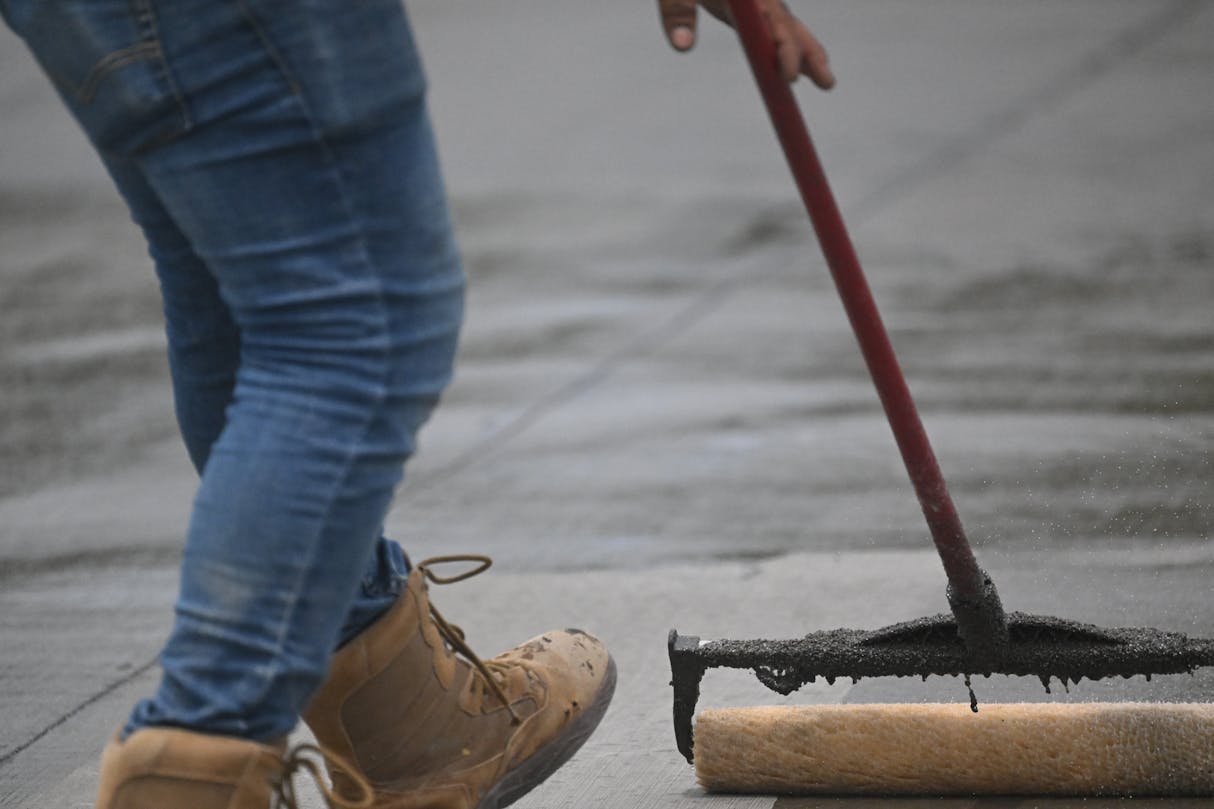
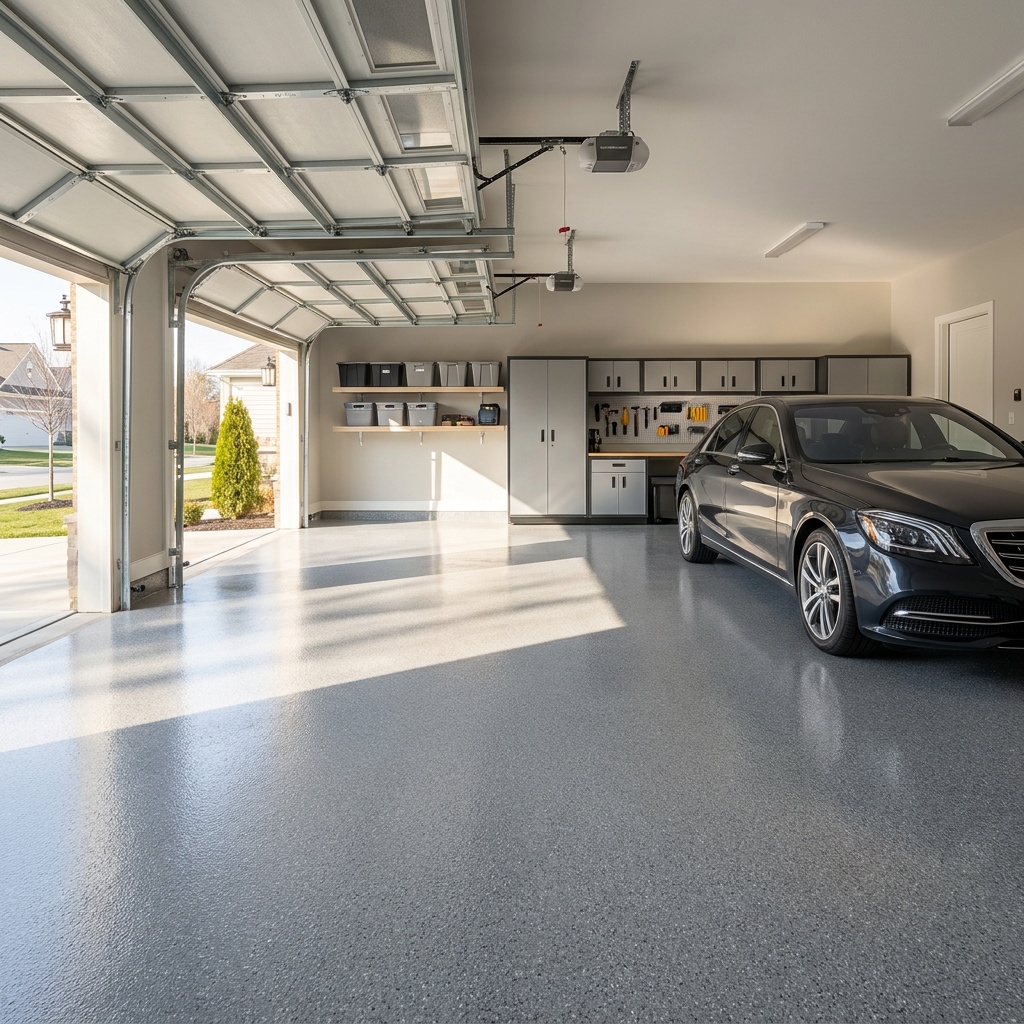
Peeling epoxy almost never comes down to a bad batch of coating. It comes down to what happened (or didn’t happen) to the slab before the coating ever went on. The most common causes are skipped or shallow grinding, moisture trapped beneath the concrete, and coating applied directly over old paint, sealer, or mastic. Fix the surface prep and the peeling problem generally does not come back.
If your garage floor in Alpharetta, Milton, Johns Creek, or anywhere else in the Atlanta metro is showing flaking edges, bubbling patches, or coating that lifts in sheets, the slab was probably not properly profiled before installation. Here is what is actually going on underneath that failed finish, and what stops it from happening again.
What Actually Causes Epoxy to Peel
Skipped or Inadequate Grinding
Epoxy and polyaspartic coatings do not glue themselves to concrete the way paint sticks to drywall. They need a mechanically opened surface, called a concrete surface profile, so the coating can key into the pores of the slab. A quick acid wash or a light sanding does not create that profile. Diamond grinding does. When a contractor skips grinding to save time, or only grinds a light pass over a smooth, troweled slab, the coating sits on top of the concrete instead of bonding into it. It looks fine for a few weeks or months, then a hot tire, a dropped tool, or simple foot traffic starts peeling it up in sheets.
Moisture Trapped Beneath the Slab
Georgia’s clay-heavy soil holds water, and garage slabs poured without a proper vapor barrier can wick moisture up from below. That moisture has nowhere to go once a coating seals the surface, so it builds pressure underneath the epoxy and pushes it loose from below. This shows up as bubbling, cloudy patches, or peeling that starts in the middle of the floor rather than at the edges.
Coating Over Old Paint, Sealer, or Mastic
If a previous owner painted the garage floor, or if there is old tile mastic or a degraded sealer still on the slab, a new coating applied over that layer is only as strong as the layer underneath it. Once that old material lets go, the new epoxy goes with it. This is one of the most common reasons a floor peels within the first year of a coating job done without proper removal of what was already there.
Rushed Cure Times
Epoxy and polyaspartic systems both need specific temperature and humidity conditions to cure fully, and rushing the process (recoating too soon, opening the garage before cure, or applying in cold, damp weather) weakens the bond between coats and between the coating and the slab.
How Proper Prep Prevents Peeling
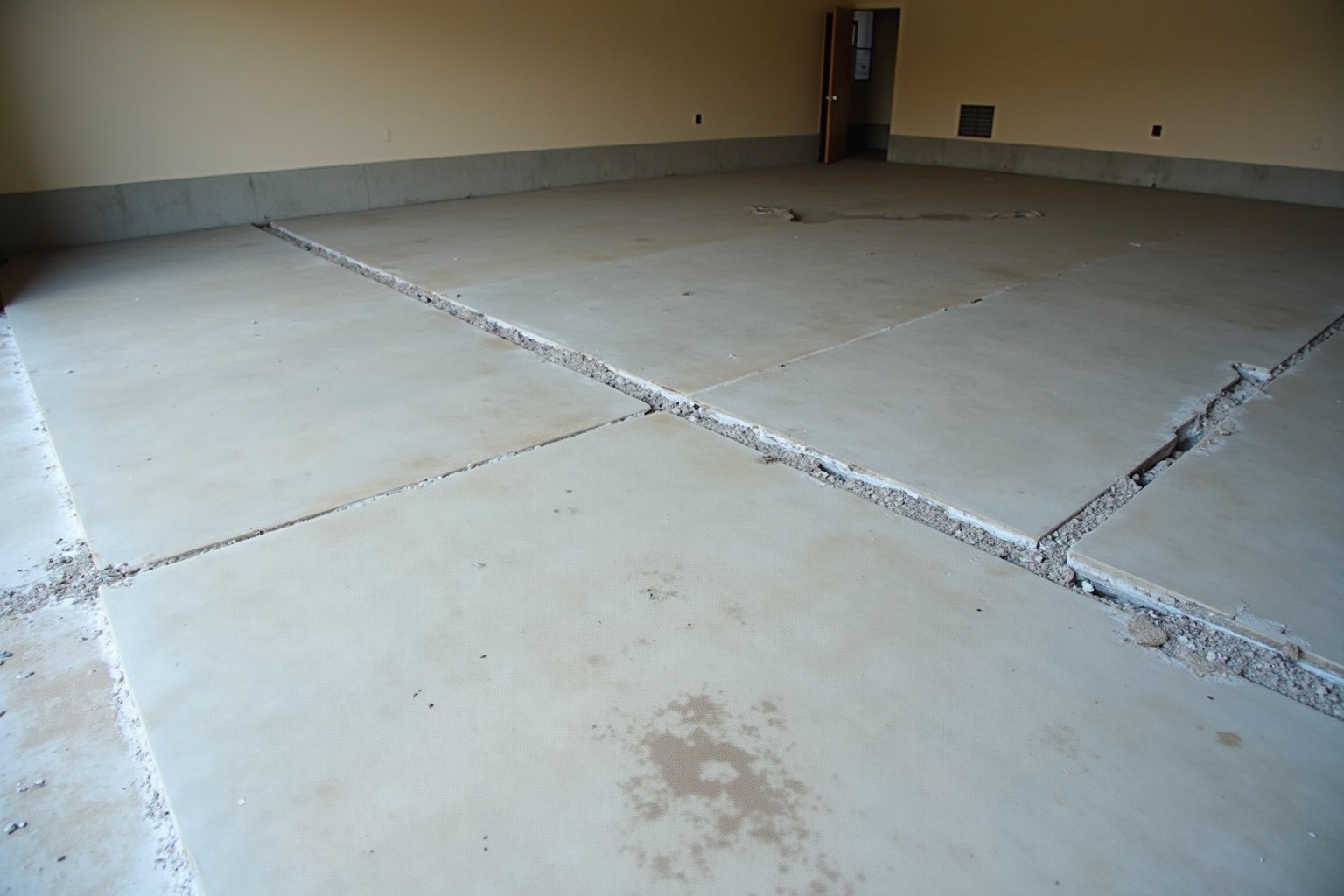
The fix for all of the causes above is the same: full mechanical grinding down to bare, profiled concrete, combined with an honest look at what is happening beneath the slab. A proper job includes:
- Diamond grinding the entire floor to open the surface profile, not just the visible traffic areas
- Removing any existing paint, sealer, or mastic completely rather than coating over it
- Checking for and repairing cracks, low spots, or spalling before any coating touches the slab
- Allowing correct cure time between the moisture barrier, base coat, and topcoat
This is why a walkthrough and moisture check matter more than the brand name on the coating can. A slab with underlying moisture or damage needs to be addressed before any coating system, no matter how good, will hold.
Choosing the Right Coating System
Once the slab is properly prepped, the coating system you choose affects how the floor performs over time. Epoxy coating remains a solid, durable option for garage floors and holds up well when the prep work is done right. Polyaspartic coating cures faster and tends to resist UV yellowing and hot tire pickup better in Georgia’s summer heat. For homeowners who want a lower-maintenance, more industrial look, polished concrete skips the film-forming coating altogether. If color and pattern matter more than a glossy build-up, concrete staining is worth a look as well.
What drives the price of any of these jobs is not the coating itself. It is the amount of grinding needed, the square footage of the garage, whether cracks or spalling need repair first, and which coating system you land on. The only way to get an accurate number is a walkthrough, which is why we recommend requesting a free, itemized estimate rather than guessing based on a general price you saw online.
What to Do If Your Floor Is Already Peeling
Peeling epoxy does not get better on its own, and coating over it only traps the problem under a new layer. The existing coating needs to be fully removed, usually by grinding it off along with a layer of the concrete surface, so the new system bonds to clean, sound material. If the peeling was caused by moisture, that needs to be addressed before any new coating goes down, or the same failure will happen again.
Homeowners across Suwanee, Cumming, Roswell, Woodstock, and Marietta run into this most often in garages built in the last fifteen to twenty years, where builder-grade coatings were applied quickly with minimal prep. A proper regrind and reapplication resets the floor to a bondable surface and generally lasts far longer than the original job.
FAQ
Can I just sand and recoat a peeling epoxy floor myself?
Hand sanding rarely removes enough material to reach sound concrete or fully strip old coating. Diamond grinding equipment is what creates the surface profile a new coating needs, which is why DIY recoats on peeling floors tend to fail again within a short time.
Is peeling always caused by bad prep, or can the coating itself be defective?
Coating defects happen but are uncommon. In the vast majority of peeling cases, the coating itself is fine and the failure traces back to grinding, moisture, or an old layer of paint or mastic underneath.
How do I know if my slab has a moisture problem before recoating?
A simple moisture check during a walkthrough can flag whether vapor is coming up through the slab. This is a routine part of assessing a garage before any coating system goes down, especially on older Atlanta-area homes without a vapor barrier.
If your garage floor is peeling, bubbling, or just showing its age, request a free estimate and we will walk through what the slab actually needs before recommending a coating system.