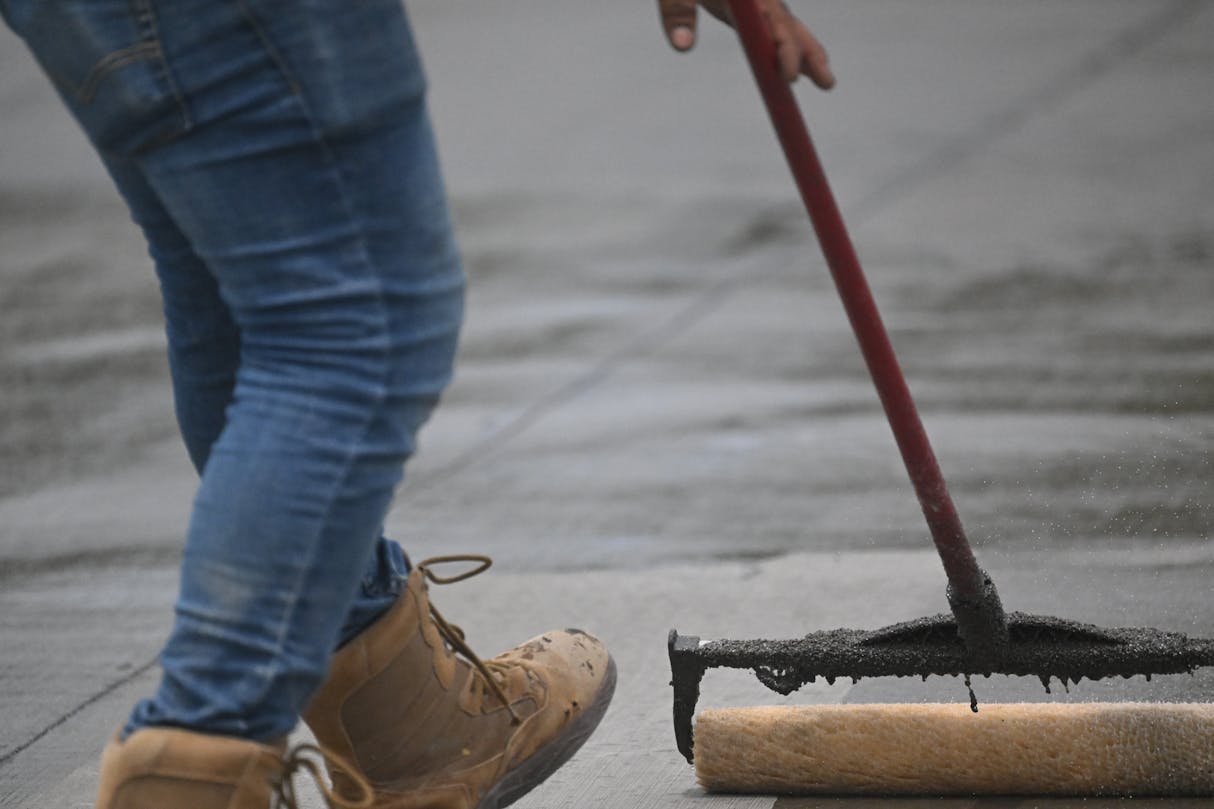

A school floor can look clean at 8 a.m. and beat up by lunch. Spills, carts, tiny shoes, sanitizer, and constant cleanup put real pressure on every surface.
That is why concrete floor finishes for schools and daycares need more than good looks. They need traction, easy cleaning, and the kind of durability that holds up to daily use without creating extra work for staff.
The right choice depends on the slab, moisture levels, traffic, and how the building gets cleaned. Some finishes handle shine and open space better, while others are built for spills and heavier abuse.
What schools and daycares need from a floor
Schools and child care spaces share a few hard demands. The floor has to be safe under wet shoes, easy to disinfect, and tough enough for rolling carts, dropped supplies, and constant foot traffic.
Daycares add another layer of pressure. Floors need to stay cleaner, dry fast, and avoid sharp textures that can be hard on little knees and hands. Noise matters too, because hard surfaces can echo and make a room feel louder than it should.
That is where careful planning pays off. Good concrete dealing starts with the slab itself, because cracks, joints, moisture, and patch quality all affect the final result. A strong finish cannot hide weak prep for long.
For a broader look at how slip resistance and noise shape classroom flooring choices, this guide to busy classrooms and school facilities is a useful reference. For childcare spaces, daycare flooring guidance shows why traction and impact matter in play areas.
In short, the floor needs to support the building’s daily rhythm. If cleanup is fast and the surface stays safe, staff notice the difference right away.
A quick comparison of finish options
The finish type usually comes down to how much protection, color, and maintenance control you want. This table gives a fast side-by-side view.
| Finish | Best use | Pros | Tradeoffs | Maintenance |
|---|---|---|---|---|
| Polished concrete | Hallways, classrooms, libraries, multipurpose rooms | Low dust, bright look, easy to clean, long wear life | Needs a sound slab, can echo, less grip when wet unless treated | Dry mop, damp clean, periodic repolish |
| Concrete epoxy coating | Cafeterias, art rooms, nurse stations, service corridors | Strong stain resistance, many colors, easy sanitation, can add texture | Prep sensitive, moisture can cause failure, may scratch or chip | Neutral cleaners, routine inspections |
| Epoxy plus polyaspartic coating | Entry zones, high-traffic corridors, areas with sunlight | Faster return to service, better UV stability, improved abrasion resistance | Higher cost, still needs good prep | Similar to epoxy, with careful topcoat care |
| Concrete staining | Administrative spaces, accent areas, low-traffic rooms | Natural variation, decorative color, won’t peel like paint | Limited protection by itself, depends on slab condition | Sealer upkeep, gentle cleaners |
The main takeaway is simple. Polished concrete gives the easiest upkeep. Epoxy gives the strongest surface protection. Stain works best when appearance matters more than heavy wear.
If the choice comes down to polished or coated, deciding between epoxy coatings and polishing usually starts with slab condition and cleaning demands.
Polished concrete works well in open, busy areas
Polished concrete is a strong fit for halls, classrooms, libraries, and large common rooms. It densifies the slab, cuts down dust, and creates a clean look that reflects light well.
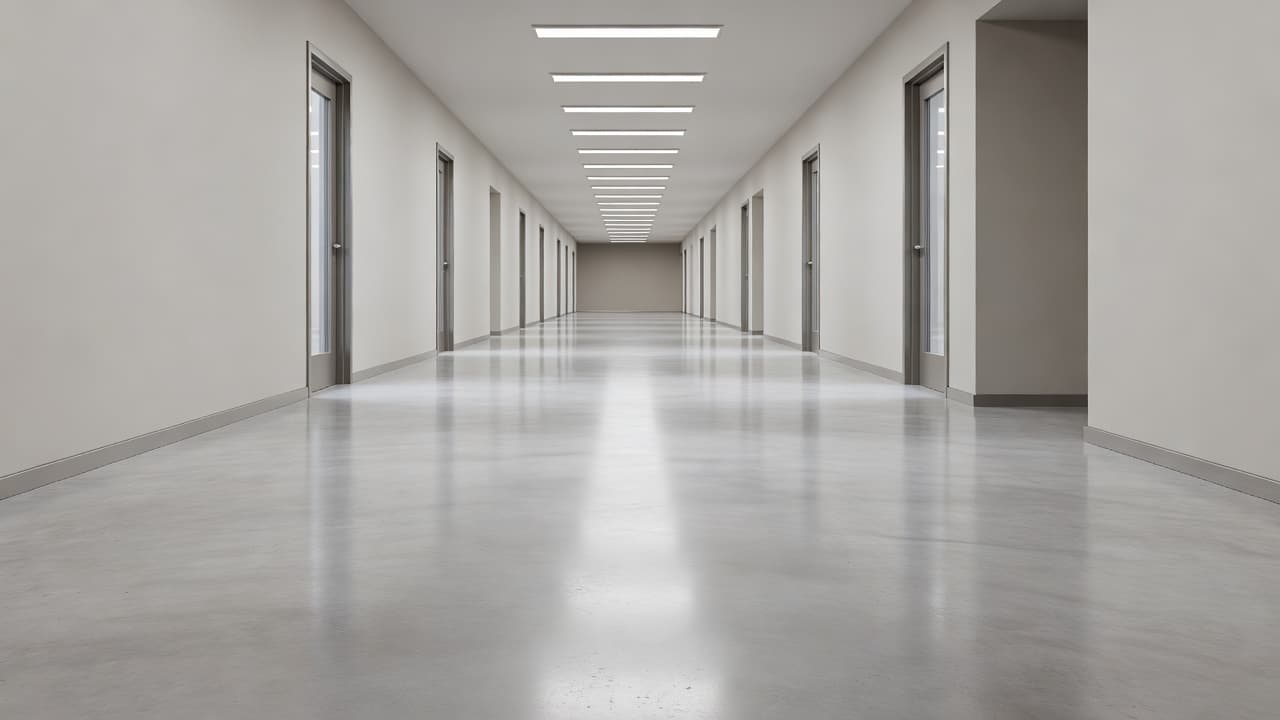
When the slab is in good shape, concrete polishing gives schools a low-maintenance finish that holds up well under foot traffic. It also pairs well with modern layouts where natural light and open sightlines matter.
The tradeoff is comfort and sound. Polished floors can feel hard, and they may echo more than softer surfaces. In a daycare, that can matter in nap areas, story corners, or rooms with lots of activity.
Polished concrete also depends on what is already in the slab. Deep patching, old coatings, and moisture problems can change the final look and the long-term result. That is why a floor that looks simple on paper still needs real prep work.
For a closer side-by-side look, see commercial epoxy and polished concrete comparisons. The right answer often comes down to how much spill resistance and color control the room needs.
Epoxy systems handle spills, carts, and cleanup
A concrete epoxy coating adds a protective film on top of the slab. That film can help block stains, make cleanup easier, and create a more finished look in busy rooms.
This is a strong match for cafeterias, art rooms, nurse stations, utility areas, and other spaces that see frequent spills. A commercial concrete epoxy coating can also handle more demanding use where carts, chairs, and daily sanitation all happen in the same room.
An epoxy coating for concrete can be built with slip-resistant grit, which matters in entrances and wash areas. The system can also be colored, striped, or paired with a decorative finish if the space needs a cleaner visual break.
Moisture tests matter before any coating goes down. A clean slab can still fail if vapor pressure is high.
That caution matters in schools, and it matters in homes too. The same moisture conversation comes up with a basement concrete coating, because trapped vapor can break the bond there as well.
The use case is different from an epoxy coating for garage floor project. A garage floor epoxy coating company often thinks first about hot tires, oil, and vehicle abuse. School work adds other demands, like lower odor, better traction, and cleaning protocols that fit child care spaces.
A polyaspartic coating can be a smart top layer when the project needs faster return to service or better UV stability near windows and glass doors. It is often used with epoxy systems because the two layers solve different problems.
The same chemistry is common in residential work, but the priorities change. Hot wheels and tool storage are one thing. Snack spills, disinfectants, and breakfast rushes are another.
Stain and hybrid finishes fit lower-traffic spaces
Concrete staining is a good choice when you want color without a thick coating. The stain penetrates the slab, so it gives a more natural look than paint-like finishes.
It works well in administrative areas, lobbies, and other lower-traffic spaces where design matters as much as durability. Stain also pairs well with polishing, which can produce a richer finish without building a heavy film on top of the floor.
Still, stain is not a stand-alone shield. It does not stop every mark, and it needs a sealer to perform well in a school setting. That makes it better for places with lighter wear or for rooms where a decorative look matters more than chemical resistance.
A hybrid approach often makes the most sense. You might polish the main hall, use epoxy in the cafeteria or art room, and keep stain for the front office. That way, each zone gets the finish that fits its use.
The same thinking applies if you are comparing concrete to other flooring types in a daycare. The floor in a playroom has a different job than the floor in a reception area. One finish rarely solves every room.
A simple checklist for choosing the right finish
Before you pick a finish, run through a short checklist. It keeps the decision tied to the slab, the building use, and the maintenance plan.
- Check the slab condition first. Cracks, spalls, old coatings, and patch work can limit your options.
- Test for moisture vapor. This matters for epoxy systems and any sealed finish.
- Match traction to the room. Younger kids and wet entry areas need more grip.
- Think about cleaning chemicals. Sanitizers, food spills, and scrub routines all affect the finish.
- Decide how much shine you want. Bright floors help light spread, but they can also show dust and scratches.
- Confirm local code and ADA needs. Safety and access rules should guide the final spec.
- Plan around the school calendar. Cure time and shutdown time can matter as much as the finish itself.
If a floor passes those checks, the choice gets easier. The room tells you what it needs, and the slab tells you what it can support.
Conclusion
The best finish is the one that fits the slab, the traffic, and the cleaning plan. In many schools and daycares, polished concrete handles open areas well, epoxy protects spill-prone rooms, and stain works best where design leads the way.
A floor does not need to do everything at once. It just needs to stay safe, clean, and reliable through a long school year.
When those three things line up, the floor stops being a problem and starts doing its job.