Nothing makes a new floor look older faster than an amber cast. If you’re worried about epoxy floor yellowing, the hard truth is simple: some epoxy systems naturally amber over time, especially in sunlit spaces.
Still, you can slow that change a lot. The biggest factors are product choice, topcoat selection, proper cure, and how much UV light hits the floor day after day. Start with the chemistry, because that’s where the problem begins.
Why epoxy floors turn yellow in the first place
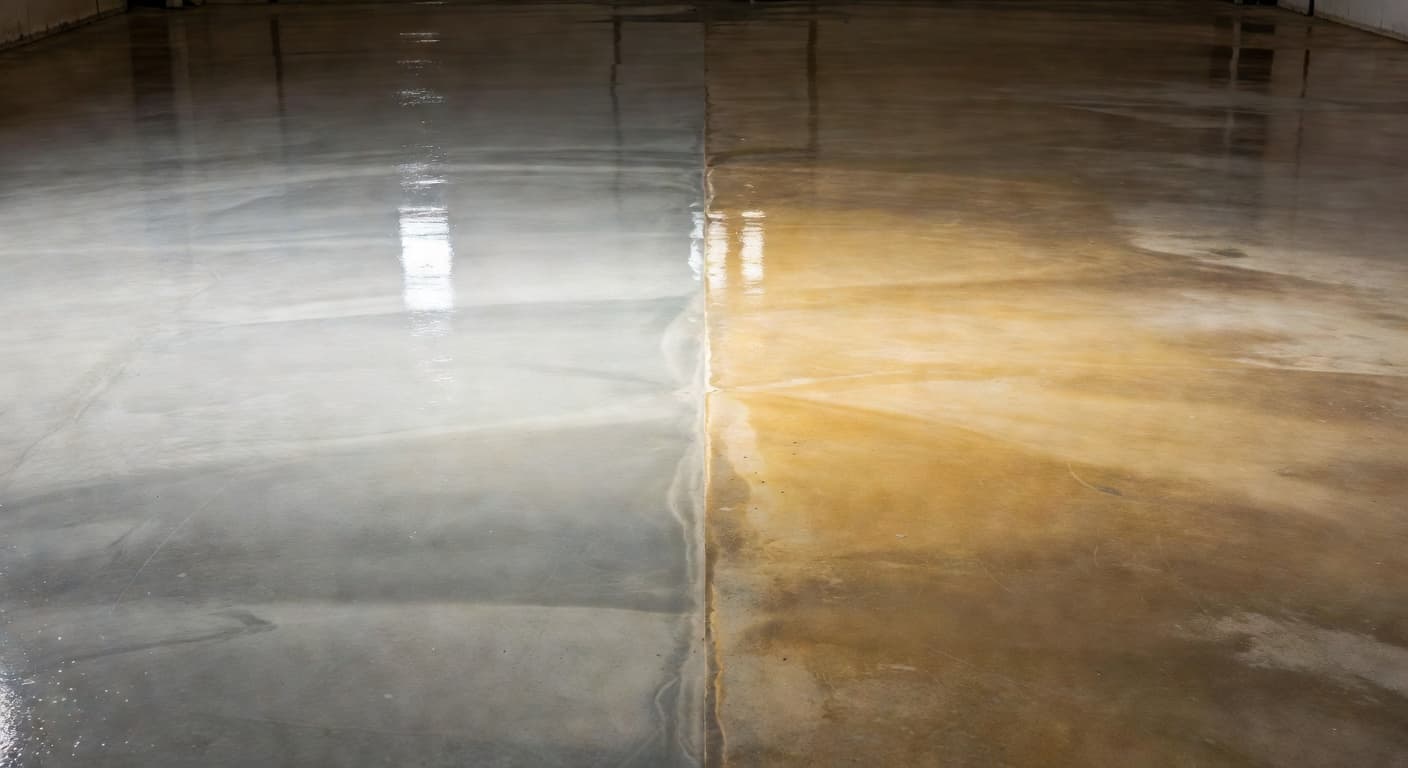
Most epoxy isn’t harmed by a little color change. In many cases, the floor is still hard, bonded, and doing its job. The yellow tone comes from UV exposure, heat, and normal oxidation, and clear or light coatings show it first.
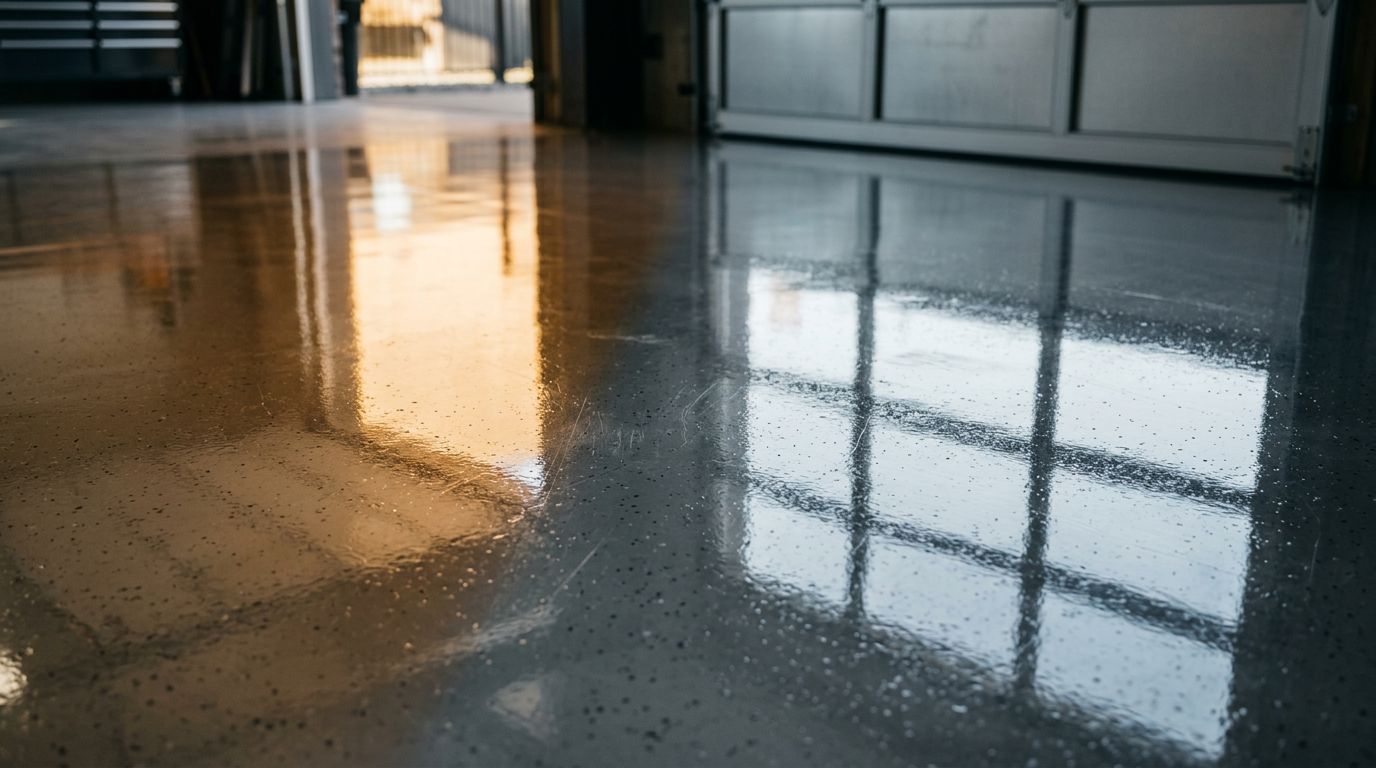
Aromatic epoxy resins are the usual culprit. They’re common because they build a strong, durable base, but they don’t like sunlight. That’s why a floor can look fine under shelves and amber near garage door windows or a south-facing entry.
A practical overview of why epoxy floors turn yellow shows the same pattern, especially on lighter finishes.
The same issue can show up on a basement concrete coating with patio doors, or on a commercial concrete epoxy coating behind glass storefronts. Even a well-installed concrete epoxy coating can shift color if the top layer has poor UV resistance.
Pigments and decorative flakes can hide yellowing better than plain white or clear systems. They don’t stop it, though. They only make it less obvious.
People often confuse yellowing with coating failure. Those are not the same thing. Discoloration is a visual issue, while peeling, bubbling, soft spots, or lost bond point to a bigger problem.
That difference matters because the fix changes. A cosmetic issue may call for a new UV-stable topcoat. A failing floor may need grinding and a full recoat.
Choose the right coating system before installation
If you’re comparing epoxy coating for concrete floors, don’t stop at color chips. Ask what resin is in the base coat and what topcoat protects it.
For many interior floors, installers use epoxy as the build coat because it bonds well and resists wear. Then they add an aliphatic polyurethane or a polyaspartic coating as the top layer. Those topcoats hold color better in sunlight, so they are often the smartest move in garages, shops, and bright entry spaces.
When you ask for an epoxy coating for garage floor use, tell the installer where the sun lands. Garage door windows, glass side doors, and open-bay exposure all matter. A reliable garage floor epoxy coating company should ask about those details before they price the job.
Any epoxy coating for concrete should also match the floor’s color and use. Clear coats over light gray, beige, white, or metallic finishes show ambering sooner. Medium tones, full-broadcast flakes, and quartz systems tend to hide it better.
If the space gets heavy UV all day, a different finish may fit better. In some rooms, concrete polishing or concrete staining can make more sense because there is no thick clear film at the surface to amber. That doesn’t make those finishes better for every job, but it can make them better for bright rooms.
A floor can be durable and still yellow. Durability and color stability are related, but they aren’t the same thing.
Ask about the full system, not one product name. You want prep method, primer, body coat, topcoat, recoat window, and maintenance guidance. Before work starts, confirm the crew will follow manufacturer mix ratios, temperature limits, and full cure times. Off-ratio mixing or rushed return to service can leave the finish softer, duller, or more prone to later problems.
A little plain language beats vague concrete dealing talk every time.
What to do after the floor cures
Sun control and gentle cleaning matter more than most people expect. Once the coating has fully cured, daily habits can slow the yellowing you see over the next few years.
Keep direct UV down when you can. Window film, blinds, closed garage doors, and mats near bright openings all help. They won’t make the floor yellow-proof, but they reduce the UV dose that drives color change.
Cleaning also matters. Use a non-abrasive, pH-safe cleaner, a soft microfiber mop, or a foam pad. Avoid gritty powders, stiff scrub brushes, and strong solvents unless the manufacturer approves them. Those can scratch or haze the topcoat, which makes ambering stand out more.
Also lift gritty dirt early. Sand acts like sandpaper under shoes and tires.
If cars, tool chests, or storage racks go back too soon, the cure can get interrupted. So follow the maker’s schedule for foot traffic, parking, rugs, and heavy loads. Good installers should leave those rules in writing.
For a garage or shop floor, quick cleanup helps too. Oil, fertilizer, tire residue, and road salts won’t usually cause yellowing by themselves. Still, they can stain the surface and make color change look worse than it is.
How to tell cosmetic yellowing from real coating trouble
A yellow tint by itself doesn’t mean the floor failed. If the surface is hard, smooth, and firmly bonded, the issue is usually appearance.
Real trouble shows up differently. Watch for peeling at tire paths, lifting at joints, chalky wear, soft tacky areas, fisheyes, or bubbles. Those signs point to moisture vapor, weak prep, contamination, or a bad mix ratio.
If the floor only changed color, a pro may be able to sand it lightly and add a UV-stable topcoat. In some cases, especially with clear seal layers, that refresh can improve the look a lot. But when the amber tone sits deep in the epoxy body coat, no cleaner will turn it back to water-clear.
A plain-English guide on repairing a yellowed epoxy floor makes the same point. Some floors can be recoated, while others need removal and a new system.
This is where honest advice matters. A basement concrete coating with minor yellowing may still have years of service left. By contrast, an epoxy coating for garage floor areas that peels under hot tires needs more than a cosmetic fix.
If the room gets strong sun every day, ask whether epoxy is still the best fit. Some owners are happiest with a UV-stable topcoat over epoxy. Others move to polished or stained concrete in bright areas and save epoxy for lower-light spaces.
Conclusion
The best way to manage epoxy floor yellowing is to plan for it before the first coat goes down. Some systems will amber over time, so the smartest move is choosing the right base coat, the right topcoat, and realistic expectations for the space.
After that, simple habits do the rest. Lower the sun exposure, clean gently, and treat discoloration as a different issue from bond failure. Topcoat choice won’t stop every color shift, but it can keep a floor looking cleaner and newer for much longer.
FAQ About Yellowing Epoxy Floors
Can yellowing be reversed?
Sometimes, but only at the surface. If the yellowing is mostly in the topcoat, a contractor may sand and recoat with a UV-stable layer. If the epoxy body coat itself has ambered, the usual fix is replacement or a new pigmented system over proper prep. A flake-heavy recoat can also hide old amber tones better than a clear finish.
Do all epoxy floors yellow?
No, but many epoxy systems can amber to some degree. Aromatic epoxies are the most prone, while pigmented systems, flakes, and UV-resistant topcoats hide or slow the change. Some newer systems hold color better for longer, although no coating stays completely unchanged forever.
Which coatings work best in sun-exposed areas?
For indoor areas with sun, epoxy with an aliphatic polyurethane or polyaspartic coating topcoat is often a better choice than epoxy alone. In very bright spaces, concrete polishing or concrete staining may hold appearance better because they don’t rely on a thick clear film. For exterior slabs, most pros skip epoxy and choose coatings made for full weather exposure.