When you coat over dusty concrete, the product usually adheres to the loose dust rather than the actual slab. This process leads to weak adhesion, peeling edges, bubbles, and early wear, whether you use concrete floor paint, an epoxy coating, or a professional sealer.
Many floors look perfect on the first day, but they often begin failing once tires, foot traffic, moisture, or chemical cleaners affect the surface. Whether you are working on a garage floor or a basement floor, the slab must be clean, sound, and dry. Before you apply a concrete epoxy coating or a polyaspartic coating, you must address any underlying concrete dusting to ensure the surface is prepared for a long-lasting bond.
Key Takeaways
- Dust Prevents Adhesion: Coating over dusty concrete causes the product to bond to loose particles rather than the slab, leading to inevitable peeling, bubbling, and failure.
- Differentiate Surface Dust from Active Dusting: Light construction dust can be cleaned away, but active dusting—caused by poor curing, moisture, or soft concrete—indicates a weak surface that requires densification or mechanical repair.
- Surface Prep is Non-Negotiable: Mechanical prep like diamond grinding is the most effective way to remove weak surface layers and expose solid concrete, far outperforming simple sweeping.
- Verify Before You Coat: Perform a hand-wipe test to check for residue and ensure the concrete is sound, clean, and dry before applying any epoxy, paint, or sealer.
What goes wrong when a coating hits dust
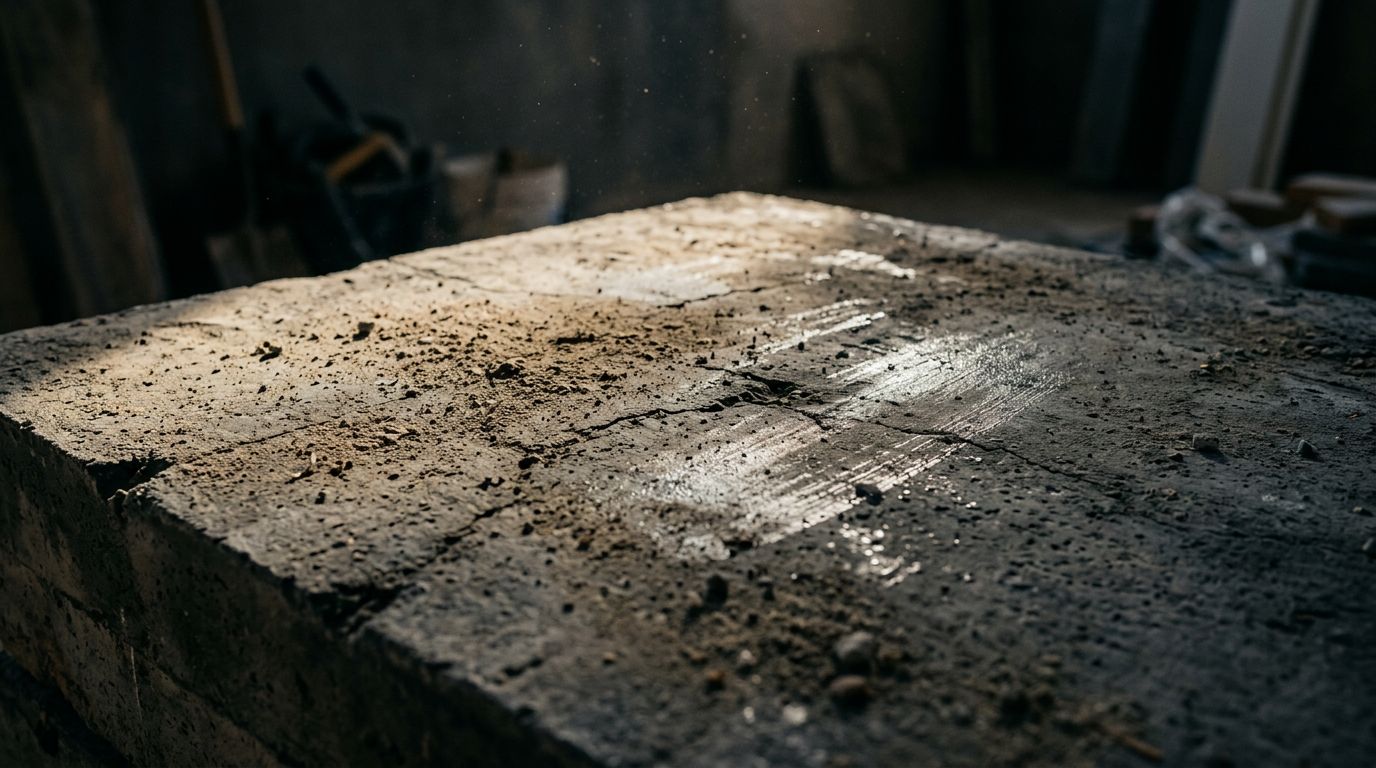
Dust may seem harmless, but it acts like a release powder that sits between the slab and your new finish. When you coat over concrete dusting, the product bonds to loose particles rather than the structural floor itself. If you are working with deteriorating concrete that produces excessive powder, the surface lacks the integrity to hold a bond. As the floor becomes airborne, you also face the health risks associated with crystalline silica, which makes proper cleanup essential. Once traffic, moisture, or heat hit the floor, that weak layer breaks and the coating comes with it.
A primer does not solve this issue. While it can harden the surface layer, the bond remains only as strong as the powder underneath. This is particularly problematic on porous concrete, which often fails to allow coatings to penetrate deeply enough to secure a lasting grip. That is why failure often starts at tire paths, damp edges, or high-traffic spots.
The risk is the same whether you are applying a concrete epoxy coating, acrylic paint, clear sealer, or a polyaspartic coating. In a garage, you may see hot-tire pickup or peeling where the car turns. In a basement, you may get blisters and lifting when humidity rises.
Some failures show up in days. Others take a few months, then spread from one dull patch across the room. Either way, the trouble usually started before the first coat dried.
If powder still comes off on your hand after sweeping, the coating will bond to dust, not concrete.
Light surface dust and active dusting concrete are not the same
Not every dusty slab has a structural problem. Light surface dust often comes from cutting, grinding, or poor cleanup after construction. If the concrete underneath is hard and solid, you can usually remove that dust and coat safely.
Freshly ground floors often look dusty even when the slab is sound. That kind of dust comes off with proper vacuuming and wipe-downs. Active concrete dusting, however, comes back after cleaning because the surface itself is weak.
This weakness often stems from poor curing processes, moisture, freeze-thaw wear, or old chemical exposure. You may also encounter laitance, a weak, chalky layer caused by a high water-to-cement ratio that rises to the surface during the curing process. Similarly, efflorescence can appear as a white powdery substance that blocks adhesion if moisture continues to migrate through the slab. An epoxy coating for concrete needs a stable surface profile rather than loose cement powder or surface contaminants.
If your substrate is porous concrete, applying a concrete densifier is a necessary step to harden and densify the slab before a film-forming product is used. To test your floor, rub your palm across the surface after vacuuming. If it still leaves a chalky residue on your hand, or if a screwdriver easily scratches the top layer, stop. Flaking, pitting, dark damp spots, and greasy areas are also warning signs. Those slabs need thorough repair and mechanical prep before any finish goes down.
How to prep the slab before epoxy, paint, or sealer
Proper surface preparation takes longer than applying the coating itself, and that is precisely why it matters. Whether you want an epoxy coating for garage floor, a basement concrete coating, or a commercial concrete epoxy coating, you should follow this specific order to ensure success.
- Clear the floor completely, including stored items, mats, and anything sitting against the walls.
- Begin with thorough sweeping and vacuuming, using a shop vac equipped with a fine-dust filter. Sweeping and vacuuming combined are essential because standard sweeping alone often leaves microscopic powder behind.
- Clean and degrease any stained spots. Oil, tire dressing, soap residue, and silicone sprays can block adhesion just as effectively as dust.
- Check the slab for weak areas, old paint, curing compounds, sealers, and hidden contamination. If water beads on the surface rather than soaking in, something is still there preventing a bond.
- Repair cracks, spalls, and soft spots, then perform mechanical prep. Diamond grinding is highly recommended for residential jobs because it provides the ideal level of surface abrasion to remove weak cement paste and expose sound concrete. If the slab is too fragile for grinding, consider using a high-quality penetrating concrete sealer as a durable alternative.
- Vacuum again after the mechanical prep is finished, and ensure the slab is completely dry before applying your chosen coating. Basements and shaded areas require extra attention regarding moisture.
Corners, control joints, and edges deserve extra care because dust hides in these recessed areas, and coatings often fail there first. A quick wipe test helps as well. Run a white cloth across the surface after your final cleaning; it should come up nearly clean.
For garages, this guide to preparing garage floors for epoxy coatings lays out the prep sequence in a practical order. If moisture is a concern, tape a small sheet of plastic to the slab for 24 hours. If condensation forms under the plastic or the concrete darkens, you may be dealing with moisture migration, and you should consider installing a professional vapor barrier before proceeding.
Choose the finish after the prep is right
Once the slab is properly prepared, choosing the right finish becomes a much simpler process. An epoxy coating for concrete works exceptionally well when you require significant film build, vibrant color, and high chemical resistance. A concrete epoxy coating is a common choice for a garage floor because it forms a durable, thick film that outperforms standard paint. For industrial environments, a self-leveling epoxy provides a smooth, heavy-duty surface that stands up to constant use.
A polyaspartic coating is an excellent alternative that cures much faster, which helps when working on tight project schedules. However, speed never excuses poor preparation. In commercial spaces like service bays and warehouses, a commercial concrete epoxy coating demands strict surface cleaning, as heavy traffic will expose weak adhesion very quickly. To improve safety in these areas, you might also consider adding a broadcast medium to create a non-slip surface.
Some floors are better off without a thick film. Concrete polishing keeps the slab exposed and dense, while concrete staining adds aesthetic appeal without the peeling risk associated with paint. For those looking for simpler protection, a water-based sealer or an acrylic sealer can provide a clean look, while a penetrating concrete sealer works by soaking into the pores to provide internal protection. Achieving effective dust proofing is often the primary goal of these treatments. Whether you are using a penetrating concrete sealer or a decorative stain, remember to apply two coats to ensure even coverage and long-term performance.
Below-grade slabs need extra caution because moisture can move through them even when the surface looks dry. If you are weighing options for a basement floor, review moisture-safe epoxy coatings for basements before choosing a system.
A reliable garage floor epoxy coating company will never promise adhesion on a dusty, contaminated slab. In honest concrete contracting, the right answer is sometimes simply not yet.
Frequently Asked Questions
Can I just use a primer to lock down the dust?
No, a primer will only bond to the top layer of dust, not the structural slab. If the dust itself is loose, the primer will peel away along with the coating, rendering the entire application useless.
How do I know if my concrete is too dusty to coat?
Perform a simple palm test by rubbing your hand across the surface after vacuuming; if you see a chalky residue, the surface is too weak. Additionally, if a screwdriver can easily scratch the surface or if the concrete flakes when scraped, it requires mechanical repair before coating.
Is power washing enough to remove concrete dust?
Power washing is often insufficient because it can leave behind trapped moisture and may not remove all the microscopic powder, especially in porous slabs. Mechanical methods like diamond grinding are preferred to physically abrade the surface and remove the weak cement paste.
What should I do if my concrete is too fragile for grinding?
If the slab lacks the structural integrity to be ground, you should avoid film-forming coatings entirely. Instead, use a high-quality penetrating concrete sealer, which soaks into the pores to strengthen the concrete from within without relying on a surface bond.
Conclusion
Dust is a small problem with expensive consequences. When you coat over dusty concrete, early failure is the likely result because the bond never reaches the solid substrate. Ultimately, the key to avoiding concrete dusting issues is thorough surface preparation. A floor that looks clean can still hold enough powder to break adhesion, so you must vacuum, degrease, and confirm the slab is sound and dry before applying any product.
If you find that you cannot achieve a perfect mechanical profile for heavy epoxy, consider safer alternatives. A penetrating concrete sealer or a quality water-based sealer are often more forgiving options for residential users. Conversely, be wary of using standard concrete floor paint on dusty slabs, as it is a high-risk option that frequently peels when the underlying surface is not perfectly prepped.