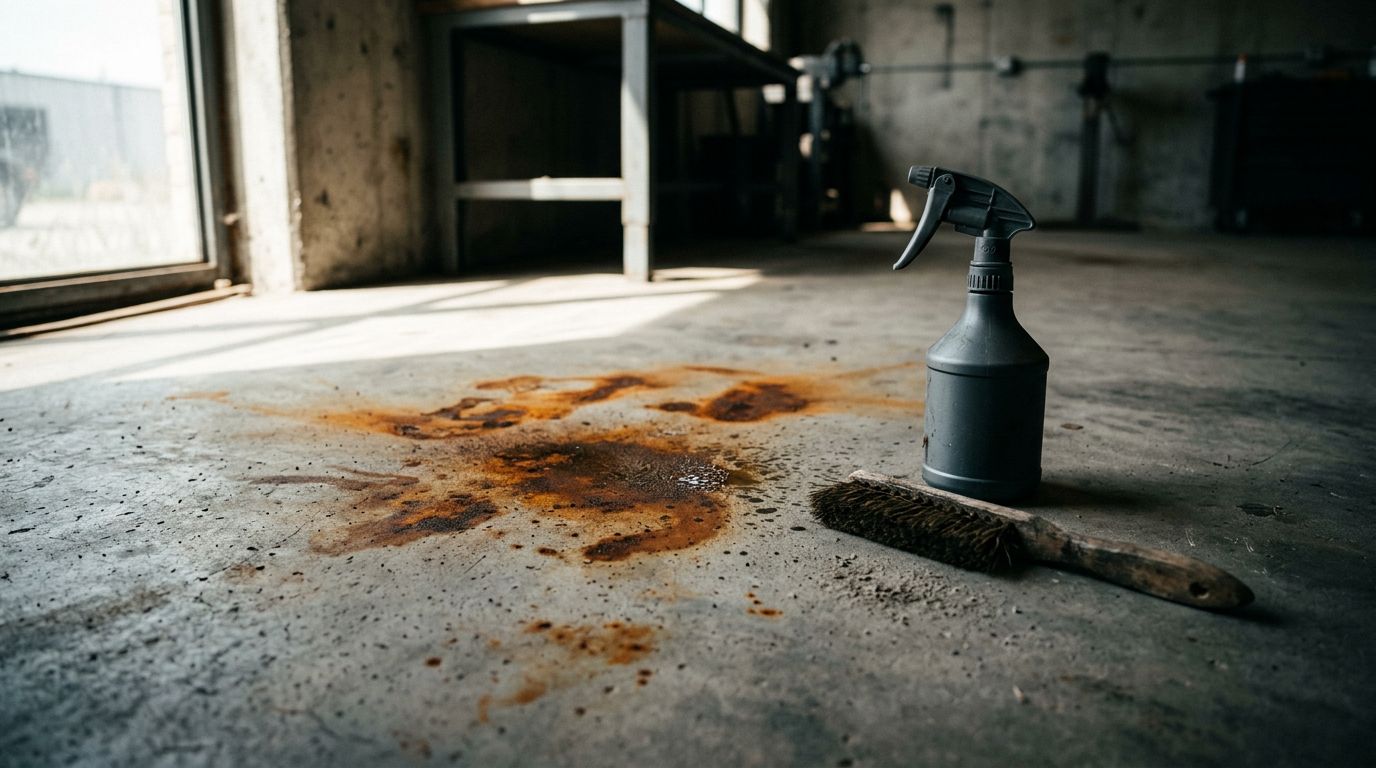
Orange-brown marks on a floor can make a clean garage, basement, driveway, or sidewalk look worn out fast. The good news is that most rust stains concrete surfaces collect can be lifted without grinding, harsh acids, or a full surface redo.
The trick is to identify the stain first, then start with the mildest cleaner that makes sense. That matters even more if the slab is sealed, coated, polished, or part of a space you plan to upgrade later.
Key Takeaways
- Identify Before Cleaning: Always confirm the orange or brown stain is actually rust before treating, as oil, dirt, and efflorescence require different removal techniques.
- Start Gentle: Begin with mild household solutions like dish soap, white vinegar, lemon juice, or crushed vitamin C to avoid damaging the concrete surface or finish.
- Protect Your Finish: Always perform a spot test in an inconspicuous area, especially if your floor is sealed, polished, or has an epoxy or polyaspartic coating.
- Eliminate the Source: Rust will return if you do not remove the underlying cause, such as rusting metal furniture, leaking appliances, or iron-rich irrigation water.
- Upgrade Carefully: If household remedies fail, move to dedicated masonry rust removers containing oxalic acid, but avoid harsh chemicals like bleach or muriatic acid whenever possible.
First, make sure the stain is really rust
Rust has a distinct look of its own. These iron oxide stains usually show up as orange, red-brown, or yellow-brown spots. You will often find them under metal patio furniture, shelf legs, tools, fertilizer stains, or underneath a dripping water heater. On unsealed concrete, those colors can soak in and spread wider than the original metal contact point.
Other stains require different treatment. Oil leaves a dark, greasy patch. Dirt looks gray or brown and often lightens with soap. Efflorescence is white and chalky, and it comes from salts moving through the slab with moisture. If you use a rust remover on efflorescence, you may waste time and dull the surface.
This quick comparison helps:
| Stain type | Usual look | Common source | Best first move |
|---|---|---|---|
| Rust | Orange or brown rings, drips, or spots | Metal objects, fertilizer, well water | Mild acid like vinegar or vitamin C |
| Oil | Dark, greasy shadow | Cars, machines, cooking oils | Degreaser or dish soap |
| Dirt | Surface film, tracked-in grime | Foot traffic, dust, mud | Soap and water |
| Efflorescence | White, powdery or crusty | Moisture moving through concrete | Dry brushing, then moisture check |
If your driveway and sidewalks already have a sealer, an epoxy coating for concrete, or a polyaspartic coating, the stain may sit closer to the surface. That is helpful. Still, stronger cleaners can haze or soften a finish if you leave them on too long.
Unsealed slabs are more absorbent. That means the rust often sits deeper, so it may need more than one treatment. Before you clean, remove the metal source. Otherwise, the stain can come right back after the floor dries.
Start with the gentlest rust removal methods
Mild methods often work better than most people expect. While rust on concrete is notoriously stubborn, light stains usually fade when addressed in stages.
Follow this order to safely treat the surface:
- Sweep and vacuum the area thoroughly. Loose grit can scratch the floor while you scrub.
- Wash the spot with warm water and a few drops of dish soap. Use a scrub brush to agitate the area, then rinse with water.
- If the mark remains, apply white vinegar to the stain and let it sit for 5 to 10 minutes. Alternatively, lemon juice is highly effective for lighter discoloration.
- Scrub the area again using your scrub brush. Rinse with water and check the color once the surface dries completely.
- For very light, fresh surface marks, a light spray of WD-40 can sometimes lift the rust without harming the finish.
- For small, persistent rust spots, crushed vitamin C tablets mixed with a little water can act as a gentle chelating agent. This simple vitamin C demo shows the basic method.
- Repeat the process once or twice before moving on to a stronger product.
Spot test any cleaner in a hidden area first, especially on sealed, polished, dyed, or coated concrete.
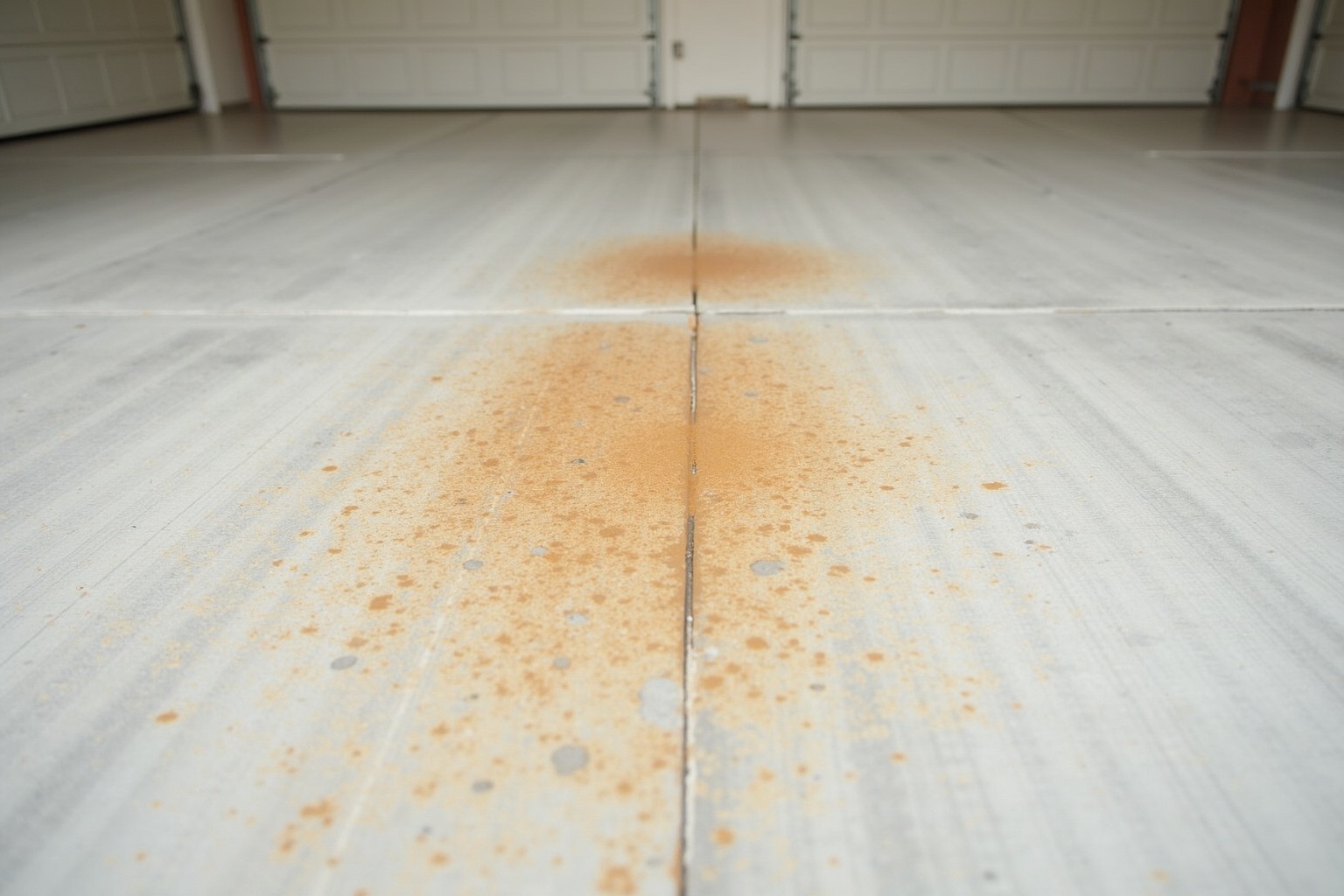
A few safety notes matter here. Do not use a wire brush that sheds metal, as those tiny fragments can create fresh rust later. Skip bleach as well. It does not remove rust effectively, and mixing it with other cleaners is unsafe.
If your floor has a concrete epoxy coating or any topcoat that still looks sound, stick with pH-neutral soap first. A mild acid may still work, but use less, shorten the dwell time, and rinse quickly. The same caution applies to floors that have undergone concrete polishing or decorative concrete staining, as those finishes can change color or sheen if the cleaner is too aggressive.
When mild cleaners don’t work, step up carefully
If vinegar, lemon juice, or vitamin C barely change the spot, it is time to upgrade to a dedicated concrete rust remover. These professional-grade solutions are often designed to work on various types of stone and masonry surfaces. When shopping, look for a biodegradable concentrate that allows you to adjust the strength based on the severity of the stain.
Before opening the container, wear gloves and eye protection. Ensure you have proper ventilation by opening garage doors or using fans. If you are dealing with a larger area or vertical surfaces, a pump sprayer is an effective tool for achieving an even application without waste.
Most effective formulas utilize oxalic acid, which is generally safer for homeowners than the extremely aggressive muriatic acid. While muriatic acid is powerful, it is highly corrosive and can easily damage the concrete surface if handled incorrectly, so beginners should stick to professional concrete rust remover products that are specifically formulated for masonry.
Apply the cleaner only to the affected area. After letting it dwell for the time specified on the label, scrub the spot with a stiff nylon brush and rinse the area thoroughly. On unsealed concrete, one pass may lighten the stain without removing it completely. A second application often yields better results than one long, aggressive treatment.
Always read the label instructions and never mix your cleaner with bleach, ammonia, or other chemicals. If the product requires a neutralizing agent, follow that step precisely. Any leftover residue can interfere with future sealers or coatings.
For larger stains or stubborn, old marks, Concrete Network’s rust stain guide provides additional context on when to transition from household remedies to specialized masonry cleaners.
Keep in mind that some stains reappear because the source is located deep inside the slab. Rusting rebar, embedded metal mesh, or iron-rich water can cause the orange bloom to return repeatedly. In these cases, cleaning improves the appearance, but it will not resolve the root cause. Proper concrete care often requires addressing these underlying moisture or metal corrosion issues first.
Protect the floor and know when to call a pro
Once the stain is gone, rinse the area well and let it dry fully. Then, look for the reason it formed. A rusty shelving foot, metal pet bowl, leaking appliance pan, a bag of fertilizer, or runoff from a sprinkler system is often the culprit. Distinguishing these from battery acid stains is important, as acidic battery leaks may require different neutralizing agents. Fix the source to prevent the stain from returning.
Protection is equally important. A quality concrete sealer helps block moisture and prevents rust from settling deep into the concrete pores. If your concrete is dusty or soft, silicate sealers are an excellent choice because they densify the surface while providing long term protection. If you are planning a full surface upgrade, thorough preparation is essential. Rust left behind can show through a new concrete epoxy coating, and lingering chemical residue can ruin adhesion. This is true for interior garage floors, basement concrete coatings, or commercial concrete epoxy coating projects. These same principles apply to exterior surfaces, including stone or concrete paver blocks.
Before applying any new finish, professional power washing is often necessary to remove deep contaminants. A reputable garage floor epoxy coating company will never apply a new finish over active rust, old cleaning agents, or moisture issues. Before you begin concrete staining or concrete polishing, ensure the slab is completely clean and dry.
Call a professional if any of these apply:
- The stain covers a large area or has been there for months.
- Rust keeps returning in the same spot despite your cleaning efforts.
- The mark seems to come from deep inside the slab.
- The floor already has a failed coating, peeling sealer, or a patchy finish.
- You are cleaning in preparation for a new floor system or coating.
If you are weighing repair, surface prep, or a new finish, review these professional concrete flooring services before you make the next move. A pro can determine if your floor requires professional rust stain removal, diamond grinding, moisture mitigation, or a fresh epoxy coating for concrete surfaces.
Frequently Asked Questions
Can I use bleach to remove rust stains from concrete?
No, you should avoid using bleach. It is ineffective at removing rust and can be dangerous if it accidentally mixes with other cleaning agents or chemicals used during the process.
Is it safe to use a wire brush for scrubbing rust spots?
It is not recommended to use a wire brush. Metal bristles can break off and lodge in the concrete, leading to new rust spots as those tiny fragments oxidize later.
Why does the rust stain keep coming back after I clean it?
The stain likely returns because the source—such as rusting rebar, embedded metal mesh, or persistent moisture—is located beneath the surface. You must address the root cause, or the oxidation will continue to migrate through the concrete.
Will cleaning products damage my epoxy or sealed concrete floor?
Strong acids or abrasive scrubbing can haze, soften, or discolor protective coatings. Always use pH-neutral soaps first and stick to gentler, diluted solutions while minimizing the amount of time the cleaner dwells on the surface.
Conclusion
Dealing with discolored surfaces does not need to cause a panic. In most cases, you can successfully remove rust from concrete by starting with gentle solutions, performing a spot test first, and only moving to stronger chemical treatments when milder methods stop working.
The type of flooring matters as much as the stain itself. Sealed and coated concrete requires a lighter touch to avoid damage, while unsealed slabs often need more than one round of cleaning to fully lift the pigment.
Ultimately, identifying the source of rust stains concrete is the key to a permanent fix. Always clean the root cause of the oxidation, not just the mark on the floor. That is the best way to ensure the orange ring does not come back.