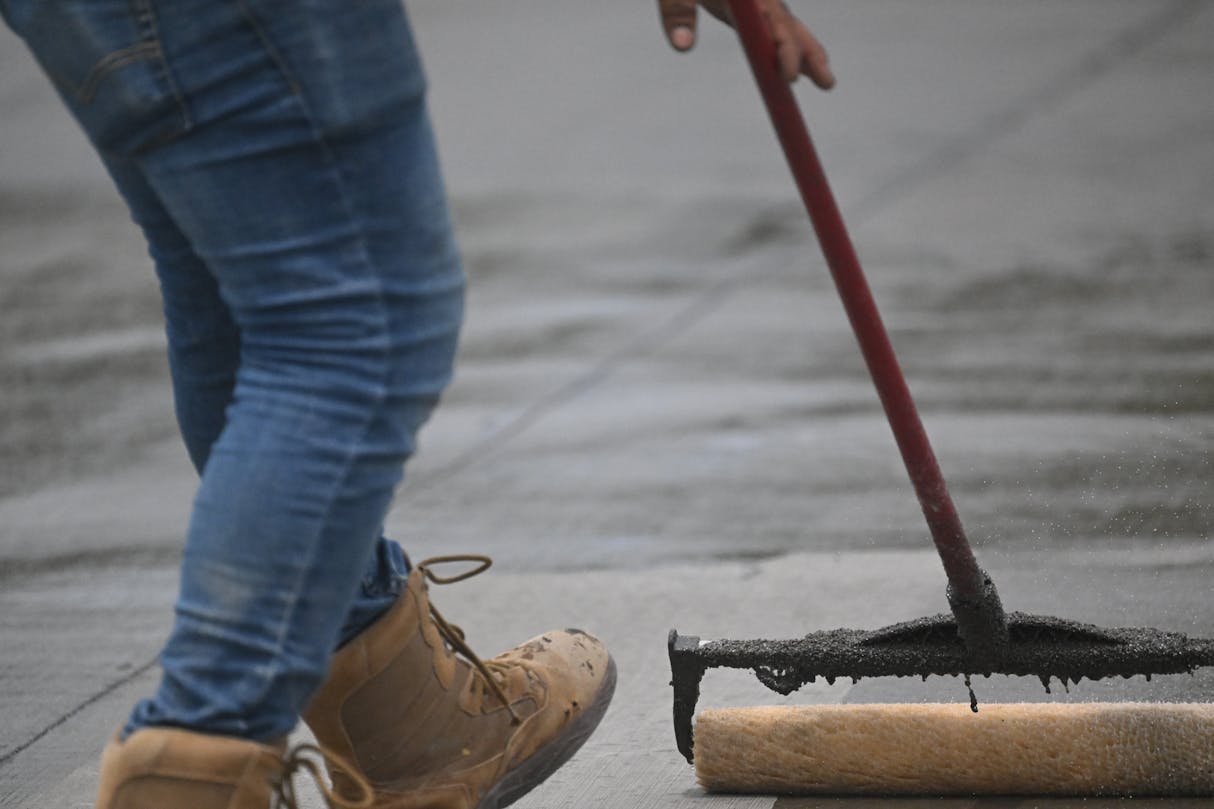
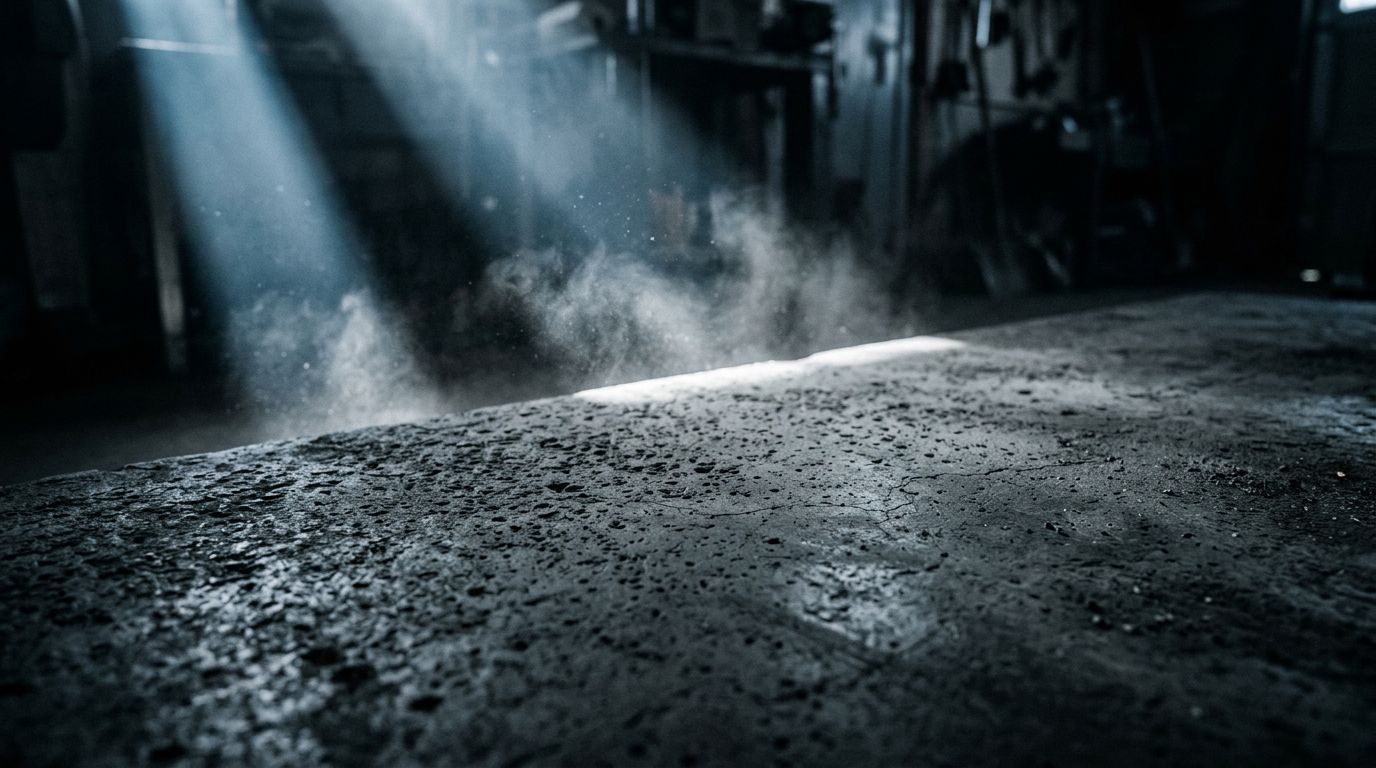
If your floor keeps leaving a gray film on shoes, shelves, or stored boxes, the slab is not simply dirty. Concrete floor dusting means the concrete surface is breaking down into fine powder.
That powder spreads fast in garages, basements, and work areas, and it usually gets worse over time. The good news is that most dusty floors follow a pattern, so the right fix starts with reading the slab correctly.
Key Takeaways
- Surface Weakness is the Root Cause: Concrete dusting occurs when the top layer of the slab is weak, often due to improper water-cement ratios during installation, poor curing, or long-term wear and tear.
- Distinguish Dust from Dirt: A truly dusty floor will continuously produce a chalky film even after cleaning, and it will often fail a simple scratch test using a coin or screwdriver.
- Assess Before You Invest: Before choosing a fix, inspect your slab for signs of moisture, surface contamination, and structural integrity to determine if the floor needs a simple densifier or a more comprehensive resurfacing.
- Hardening vs. Coating: While cleaning provides temporary relief, permanent solutions require either chemical densification to strengthen the concrete or a high-quality coating (like epoxy or polyaspartic) to lock the surface in place.
- Moisture is a Dealbreaker: Always perform a moisture test before applying coatings in basements or garages, as trapped vapor pressure is a leading cause of premature finish failure.
What makes a concrete floor turn dusty
Concrete dust usually originates from a weak surface layer. When the top of a slab lacks integrity, normal foot traffic, vehicle tires, sweeping, and moisture grind it into a fine powder.
One common cause is an improper water-cement ratio during the mixing process. If the concrete slump is too high, or if the mix is overly saturated, the top layer fails to cure with adequate density. Problems often arise during finishing operations when excessive bleed water is improperly worked back into the surface. This creates a soft, chalky film known as laitance. While this weak surface layer may appear solid after initial installation, it eventually breaks down and rubs off like chalk under pressure.
Age also plays a significant role in floor degradation. Over time, older slabs lose surface strength due to years of physical abrasion or chemical processes like carbonation, which lowers the pH of the concrete and reduces its durability. In a garage, tires drag abrasive grit across the concrete surface, while in a warehouse, heavy pallet jacks and carts cause similar wear. In a basement, moisture migrating up through the slab can carry salts to the top, leaving a powdery residue that further compromises the material.
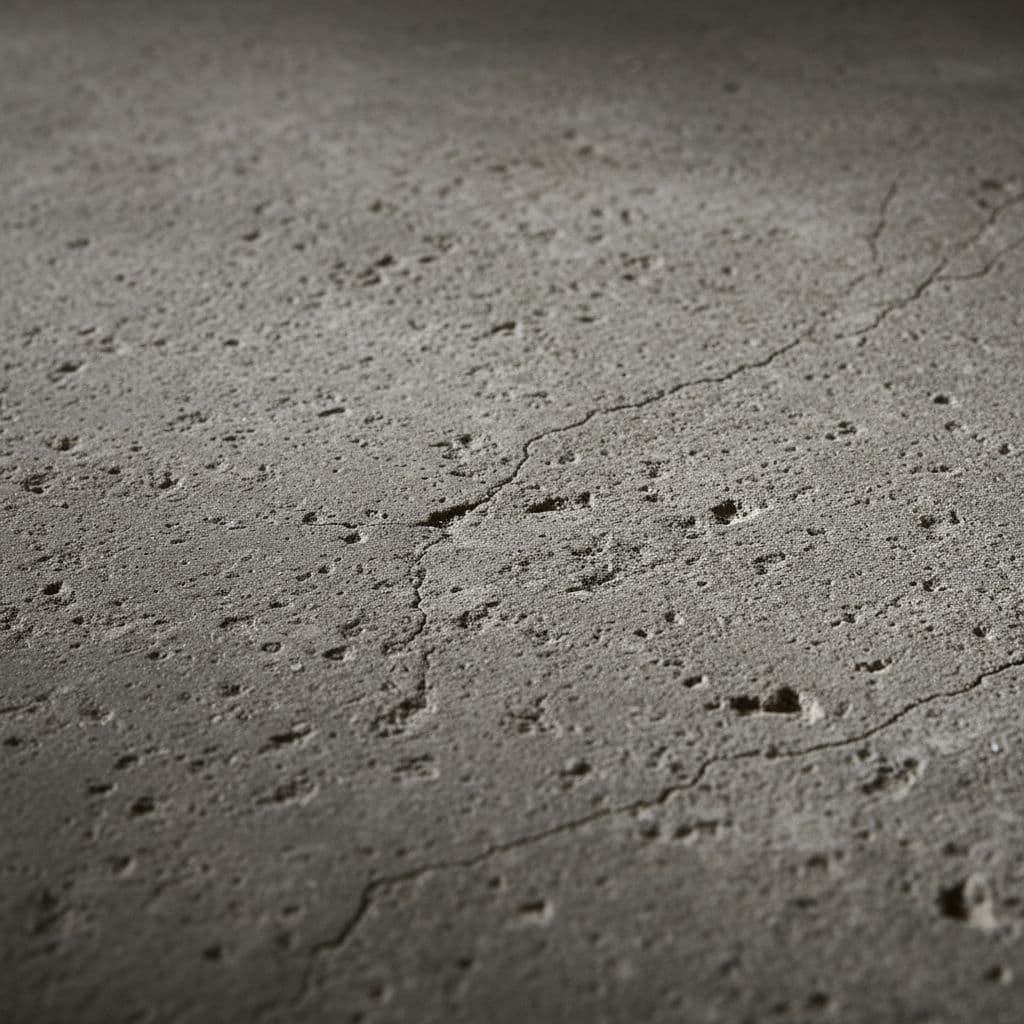
Dust often starts with a weak, chalky surface layer.
Inadequate curing practices can create similar issues. The hydration of cement requires a controlled environment to reach full strength, but if the slab dries too fast, freezes early, or faces heavy traffic too soon, the top will never harden properly. Furthermore, improper floating and troweling can prematurely seal the surface before the internal moisture has a chance to evaporate, leading to structural weaknesses.
Sometimes the dust is light and fine, while other times it is accompanied by pitting, flaking, or small pop-outs. These signs are important because they indicate whether the slab only requires a chemical hardener or if it has sustained deeper damage.
A dusty floor acts differently than one that is simply dirty. You may sweep the floor today, but the film returns by tomorrow. The surface often feels dry, chalky, or rough to the touch. If you drag a screwdriver lightly across the floor and it powders easily, the slab is actively shedding material rather than just holding onto surface dirt. This distinction is vital, because while routine cleaning removes loose particles, it does not stop the concrete from producing more dust over time.
Check the slab before you choose a fix
Before you buy a sealer or call for professional help, inspect the floor to identify the specific surface preparation requirements needed for a lasting repair. A 10-minute look can save you from a costly product choice.
Start with safety. Fine concrete dust can contain crystalline silica, so wear a good respirator or N95, safety glasses, gloves, and closed-toe shoes. Use a HEPA vacuum when possible. If you need grinding, use tools with dust shrouds and vacuum collection. Dry sweeping or open grinding can fill the air fast.
Use this step-by-step check:
- Clean one small area first. Vacuum or damp mop a test spot, then wait a day or two. If the dust returns quickly, the slab is still breaking down.
- Do a scratch test. Lightly scrape the surface with a coin, key, or screwdriver. Minor marks are normal. Powdering, gouging, or crumbling points to a weak surface, whereas high-quality hardened concrete should easily resist these efforts.
- Look for moisture signs. Dark patches, white residue, peeling old coatings, or damp smells all suggest moisture intrusion. This often happens if there is no vapor retarder installed beneath the slab. You can tape down a sheet of plastic for 24 hours and check for condensation or darkening under it.
- Check for contamination. Oil, grease, paint, old glue, and curing compounds block some hardeners and coatings. A floor can be dusty and contaminated at the same time.
- Rate the damage honestly. Light dusting on a sound slab often responds well to a densifier or penetrating hardener. If you see scaling, deep pitting, loose patches, or soft edges at cracks and joints, the floor may need resurfacing or replacement.
If the slab crumbles under light scratching, a sealer alone won’t solve the problem.
This is where many people go wrong. They treat every dusty floor like the same problem, then wonder why the finish fails. The slab has to tell you what it can support.
Cleanup helps, but hardening or coating stops the cycle
Temporary cleanup still matters. Vacuuming, damp mopping, and better dust control reduce tracked-in grit and make the space safer. In shops and garages, routine cleanup also keeps dust out of storage bins, tools, and HVAC returns.
Still, temporary cleanup only removes what has already come loose.
Cleaning gets rid of the powder you see. It does not harden the weak concrete making the next layer of powder.
Long-term fixes work by either hardening the surface or isolating it under a bonded finish.
A silicate densifier, also known as a concrete densifier or liquid hardener, creates a chemical reaction within the slab. By applying sodium silicate to porous concrete, the product penetrates the surface to fill voids and create a denser, more durable matrix. A penetrating sealer or surface hardener works in a similar way to improve the floor. These products are a good fit when the slab is still structurally sound but the surface is soft. They do not hide major damage, and they need clean, porous concrete to work well.
Concrete polishing often starts with densification. With proper grinding and polishing, the floor becomes tighter, smoother, and easier to clean. That makes concrete polishing a solid option for interior slabs that need a durable, low-dust finish without a thick film on top.
Sealants and coatings solve a different problem. They create a barrier that locks down dust and protects the slab from stains, abrasion, and spills. An epoxy coating forms a film on top of the floor, and this type of finish can work well in garages, basements, and light commercial spaces when prep is done right. A polyaspartic coating also seals the surface, cures faster, and often handles UV exposure better than many epoxy systems.
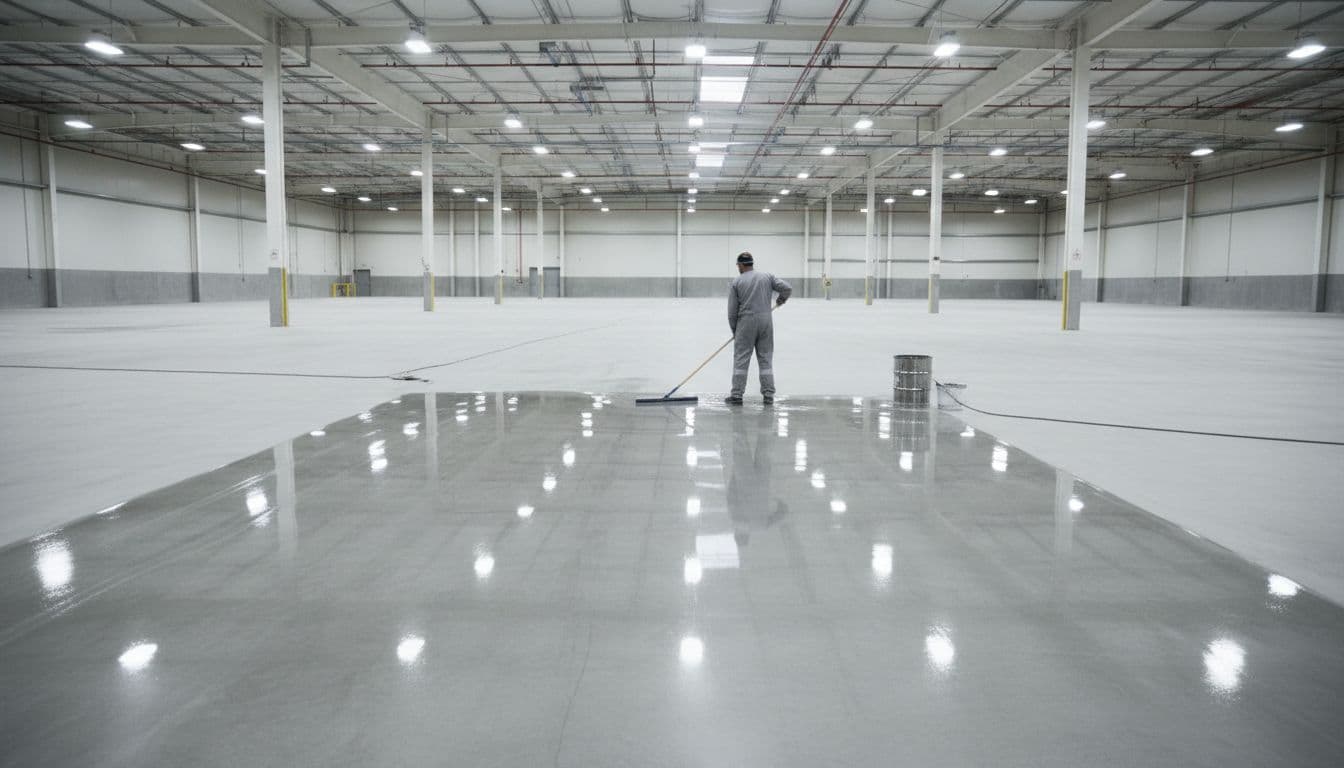
Long-term fixes depend on strong prep and the right product family.
This quick guide helps match the problem to the treatment:
| Floor condition | Usually a good fit | Main limit |
|---|---|---|
| Mild dusting, sound surface | Silicate densifier or surface hardener | Won’t hide pitting or deep wear |
| Decorative indoor finish | Concrete polishing | Needs grinding and sound concrete |
| Need color change | Concrete staining plus sealer | Stain adds color, not strength |
| Need wear resistance and abrasion resistance | Epoxy coating or polyaspartic | Prep and moisture control are critical |
| Heavy surface failure | Resurfacing or replacement | Coating alone may fail |
One more point matters here. Concrete staining changes color, not strength. If dust is the main issue, stain alone will not fix it. Pair decorative treatments with a densifier or the right sealer system when the slab condition allows it.
Picking the best finish for garages, basements, and work spaces
Garages have their own demands. Hot tires, road salts, oil drips, and weekend projects punish the surface. An epoxy coating can lock down dust and make your garage floor easier to clean, but only if the slab is clean, dry, and mechanically prepped. If the floor has moisture vapor issues or UV exposure at the door, a system with a polyaspartic coating top layer may make more sense.
Basements need more caution because they sit below grade. A basement concrete coating should never go down before moisture testing. If vapor pressure is high, a film-building coating may blister or peel. Furthermore, if a curing compound was applied during the original pour, it can act as a bond-breaker that prevents the finish from adhering. In some cases, a penetrating treatment is the safer choice for a basement floor.
For retail, warehouses, and service bays, traffic level drives the decision. A commercial concrete epoxy coating works well when you need chemical resistance and a uniform finish. Polished concrete may be better for dry interiors that need low maintenance and a clean look.
A reputable garage floor epoxy coating company won’t promise that every dusty slab can be saved with one product. Severe scaling, soft patches, or widespread surface loss may require grinding out bad material, resurfacing, or full replacement. Good concrete sealing means matching the repair plan to the slab’s actual condition, not covering up a failure and hoping it holds.
If you want professional concrete coating services in Atlanta, ask how the contractor tests for moisture, contamination, and surface hardness before quoting the job. Those answers tell you more than the color chart ever will.
Frequently Asked Questions
How can I tell if my concrete floor is dusting or just dirty?
To determine if your floor is dusting, clean a small patch thoroughly and check it again after 24 hours; if a fresh film of powder has returned, the slab is likely breaking down. You can also perform a scratch test by running a screwdriver or key across the floor. If it gouges the surface or produces significant powder, the concrete itself is failing rather than just holding onto surface debris.
Can I just paint over the dust to seal it in?
Applying paint or a standard coating directly over a dusty surface is not recommended because the finish will lack a stable base to bond to. The coating will eventually peel, bubble, or flake off as the underlying concrete continues to turn into powder. You must first remove loose material and prepare the surface, often by using a densifier to harden the concrete before applying any topcoat.
What is a silicate densifier and how does it work?
A silicate densifier is a chemical treatment that penetrates the porous surface of concrete to react with calcium hydroxide, forming a denser, crystalline structure. This process fills the microscopic voids in the slab, significantly increasing surface hardness and reducing the permeability that leads to dusting. It is an excellent, low-maintenance solution for floors that remain structurally sound but have become soft or chalky.
Are there specific safety concerns when cleaning concrete dust?
Yes, fine concrete dust can contain crystalline silica, which is hazardous if inhaled over time. Always wear a properly fitted N95 respirator or better, along with safety glasses and gloves, during the cleaning or grinding process. Whenever possible, use a vacuum equipped with a HEPA filter rather than dry sweeping, which releases dangerous particles into the air.
Conclusion
A dusty concrete floor is a surface problem first and a cleaning problem second. By addressing the weak surface layer early, you can prevent the cycle of dusting and transform your floor into durable, hardened concrete. Once you evaluate the slab to determine if it is mildly friable or badly deteriorated, the right path forward becomes clear.
For sound concrete, using a densifier, a professional polishing system, or a well-prepped coating can seal the pores and improve moisture retention, which is vital for the long-term health of your concrete surface. However, for badly damaged slabs, the honest answer may be resurfacing or replacement, because no coating can restore structural integrity to failing concrete.