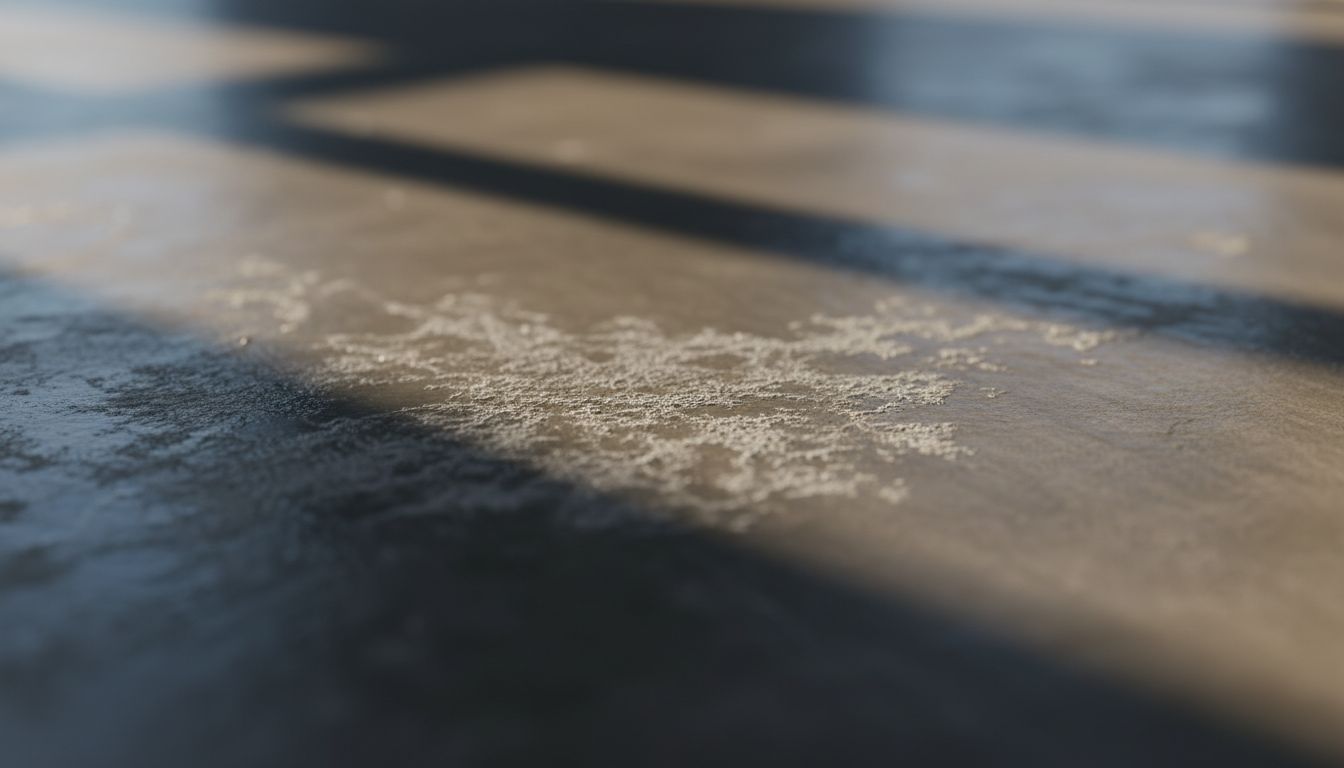
That white dust on your floor often isn’t dust at all. It’s usually efflorescence, a salt deposit left behind when moisture moves through concrete and evaporates.
The powder itself usually doesn’t mean the slab is failing. Still, it does mean water is traveling where you may not want it. That’s why the right fix starts with the moisture source, not the broom.
What efflorescence on concrete floors actually means
Concrete looks solid, but it’s full of tiny pores. When water moves through those pores, it can pick up natural salts from the slab or the ground below. Once the water reaches the surface and dries, the salts stay behind as a white, powdery film.
That is why efflorescence on concrete floors often shows up after rain, during humid weather, or on newer slabs that still hold moisture. It can appear in a basement, across a garage floor, or on an interior slab under finished living space. For a plain-language overview, this guide on efflorescence causes, prevention and removal gives a helpful summary.
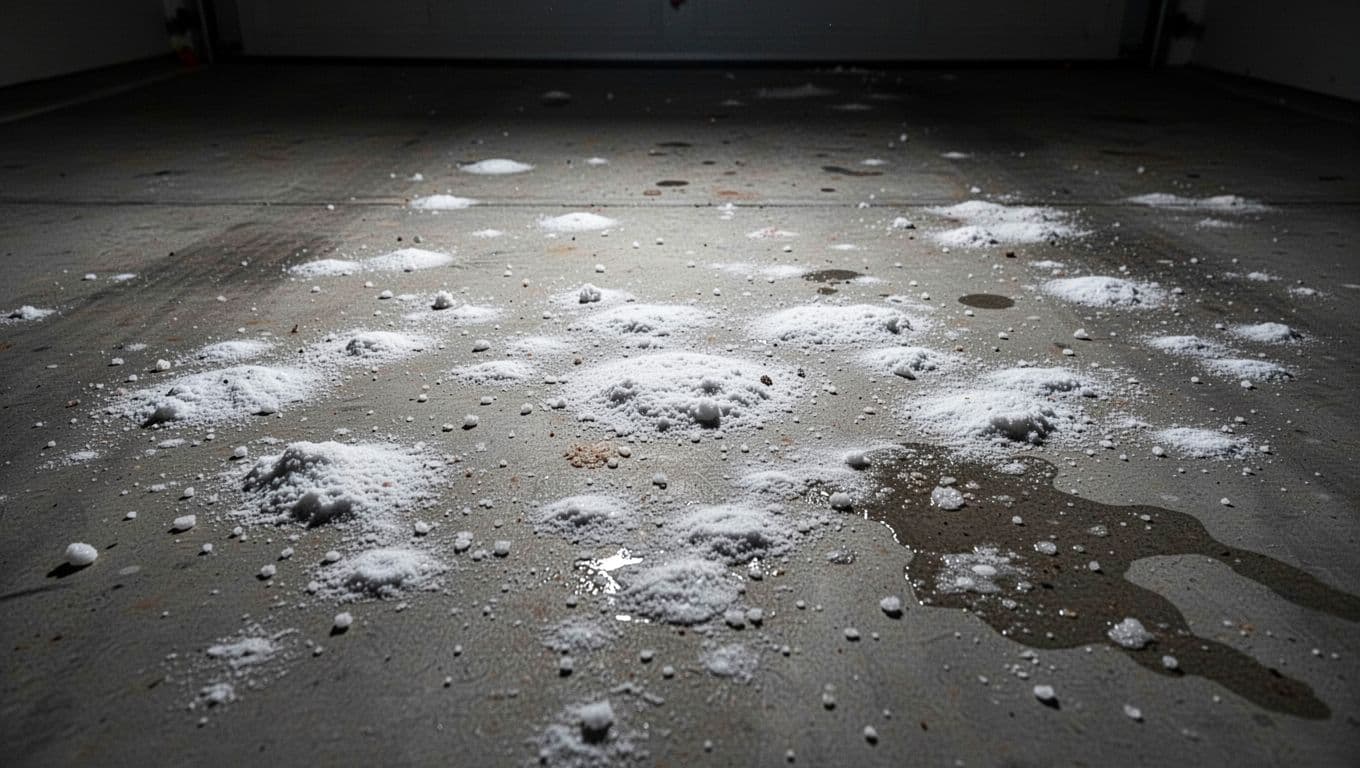
Efflorescence is easy to mistake for drywall dust, road salt, or mildew. The difference is the pattern. It often forms in patches, cloudy blooms, or crusty lines near cracks, joints, and damp spots. If it keeps returning, the slab is still getting wet.
Why it shows up in basements, garages, and interior slab floors
Location matters because each space points to a different water path. In basements, ground moisture is the usual suspect. In garages, wet cars, rain blowing in, poor drainage, or missing sealers are common triggers. On interior slab floors, the issue may come from moisture rising through the slab, high indoor humidity, or an old vapor barrier that never worked well.
For owners and managers, good concrete dealing starts with diagnosis, not cleanup. Check the outside first. Downspouts that dump water near the house, soil that slopes toward the slab, and clogged gutters can all feed the problem. Then check inside for condensation, damp walls, or a room that feels muggy for no clear reason.
This quick table helps narrow the source:
| Location | Common clue | Likely cause |
|---|---|---|
| Basement | Musty air or damp wall base | Ground moisture, failed vapor barrier, high humidity |
| Garage | White residue near the door or tire path | Rain, wet vehicles, poor drainage, slab moisture |
| Interior slab floor | Hazy patches under rugs or near exterior walls | Moisture migration, sealing mistake, trapped moisture |
If the slab is newer, curing and sealing mistakes can matter too. Concrete that cured poorly may stay more porous, and sealing too soon can trap moisture below the surface. This article on understanding curing to avoid floor cracks explains why early slab conditions can affect later floor problems.
If the white film comes back after cleaning, the cleaner didn’t fail. Moisture is still moving through the concrete.
How to clean efflorescence without making the problem worse
Start with the least aggressive method. Dry brushing and vacuuming often remove light powder. If residue remains, use a stiff brush and a small amount of water or a pH-neutral cleaner. Then let the slab dry fully and watch the same area for a few days.
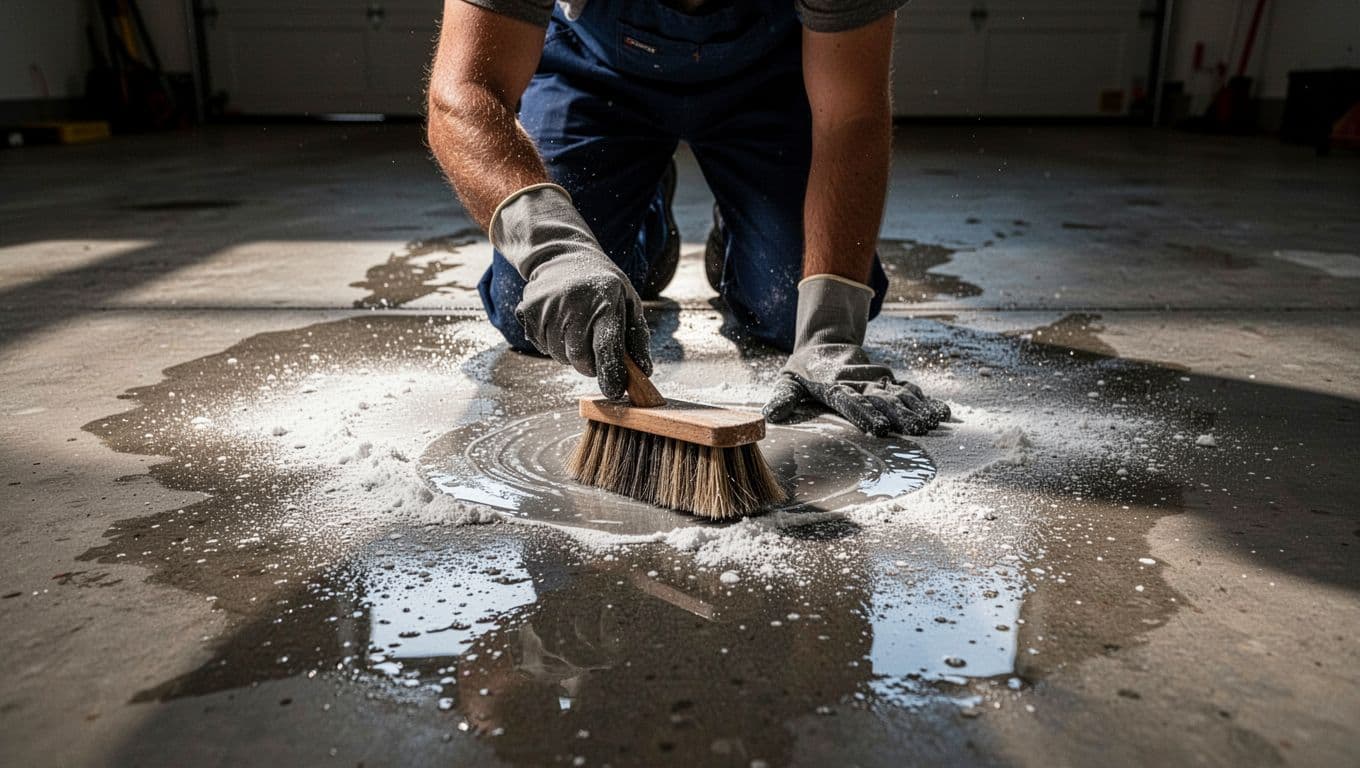
A simple cleanup process works best:
- Sweep or vacuum loose powder first.
- Scrub the spot with a stiff brush and clean water.
- Use an efflorescence cleaner only if basic washing doesn’t remove it.
- Rinse well, then let the floor dry completely before judging the result.
Avoid strong acids unless the product is made for concrete and the surface condition allows it. Acid can etch the slab, dull a finish, or create another issue on floors meant for coating or polishing. If you want a second visual reference, SUNDEK has a useful guide on how to identify and remove concrete efflorescence.
Recurring buildup points to a bigger water problem. That may mean missing or failed vapor barriers, drainage problems outside, plumbing leaks, or indoor humidity that stays too high. A dehumidifier can help in some basements, but it won’t fix water pressure coming up from below.
When coatings help, and when they don’t
A coating can protect a floor, but it can’t solve active moisture. That matters if you’re planning a concrete epoxy coating, an epoxy coating for garage floor, or any other finish. If salts are already pushing to the surface, an epoxy coating for concrete can lose bond, haze over, or peel.
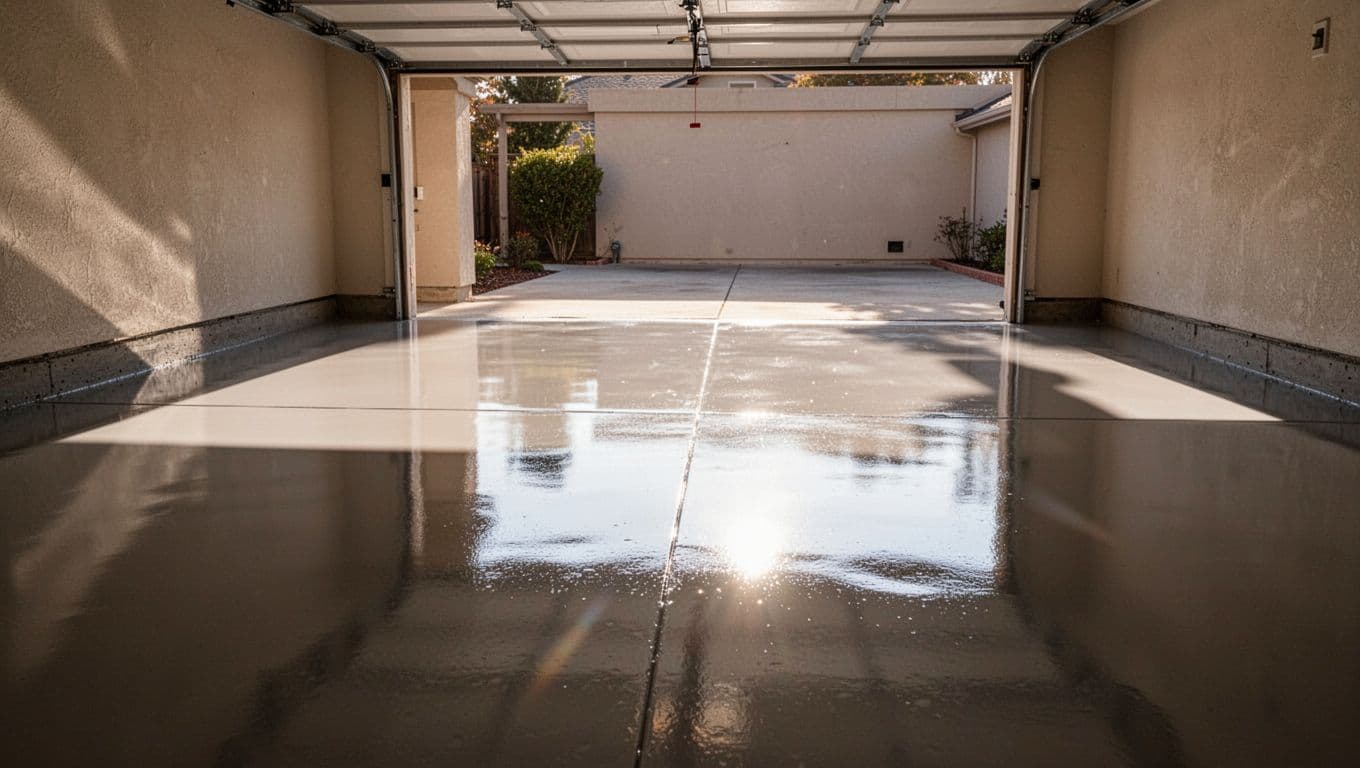
Once the slab is dry and the source is controlled, coatings make more sense. A durable concrete epoxy coating can reduce dust, resist stains, and make cleanup easier. In sunny garages, a polyaspartic coating may work well as a top layer because it handles UV exposure better. For lower-level rooms, a basement concrete coating needs moisture testing first. The same rule applies to commercial concrete epoxy coating in shops, storage areas, and service spaces.
Other finishes still need a stable slab. Concrete polishing won’t hide moisture movement, and concrete staining can turn blotchy if salts keep surfacing. Before you hire a garage floor epoxy coating company, ask how they test for moisture vapor, how they repair cracks, and what they do when efflorescence is already present.
White powder is easy to brush away. The hard part is following it back to the water that caused it.
When you treat efflorescence concrete floors as a moisture clue, you make better choices. Clean the deposit, fix the water path, and only then decide on a finish. A clean slab and a dry slab are not the same thing.