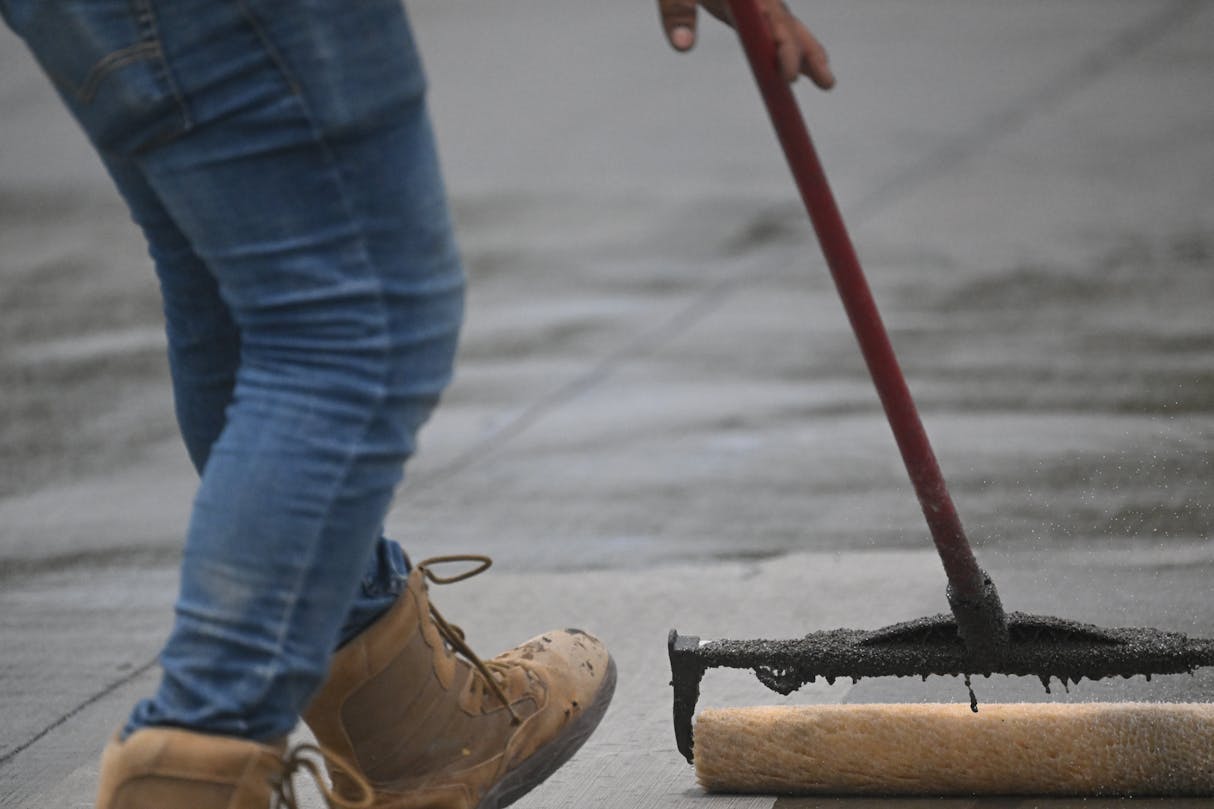
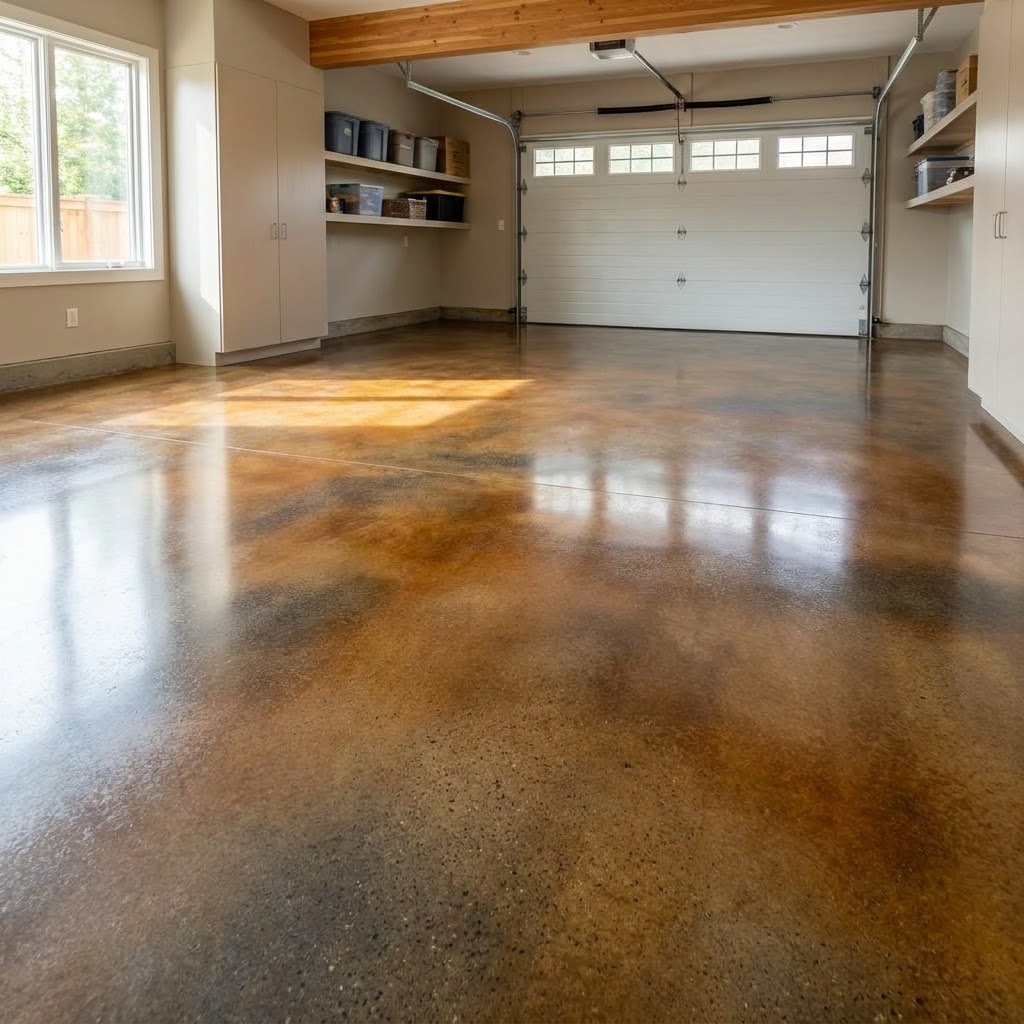
A properly sealed concrete stain finish lasts 8 to 12 years indoors before it needs a fresh topcoat, and 3 to 5 years outdoors where UV and weather work against it. The stain color itself does not fade or wear off, because it bonds into the slab. What fails first is the sealer on top, and that is a recoat, not a redo. How long yours lasts depends on grinding, slab condition, and foot or tire traffic.
Prep and grinding come before any color question
Before we talk about color or sheen, we talk about the slab. Stain only reaches as deep as the concrete lets it. A slab coated in old mastic, curing compound, or a previous sealer will not accept stain evenly, no matter how many coats go down.
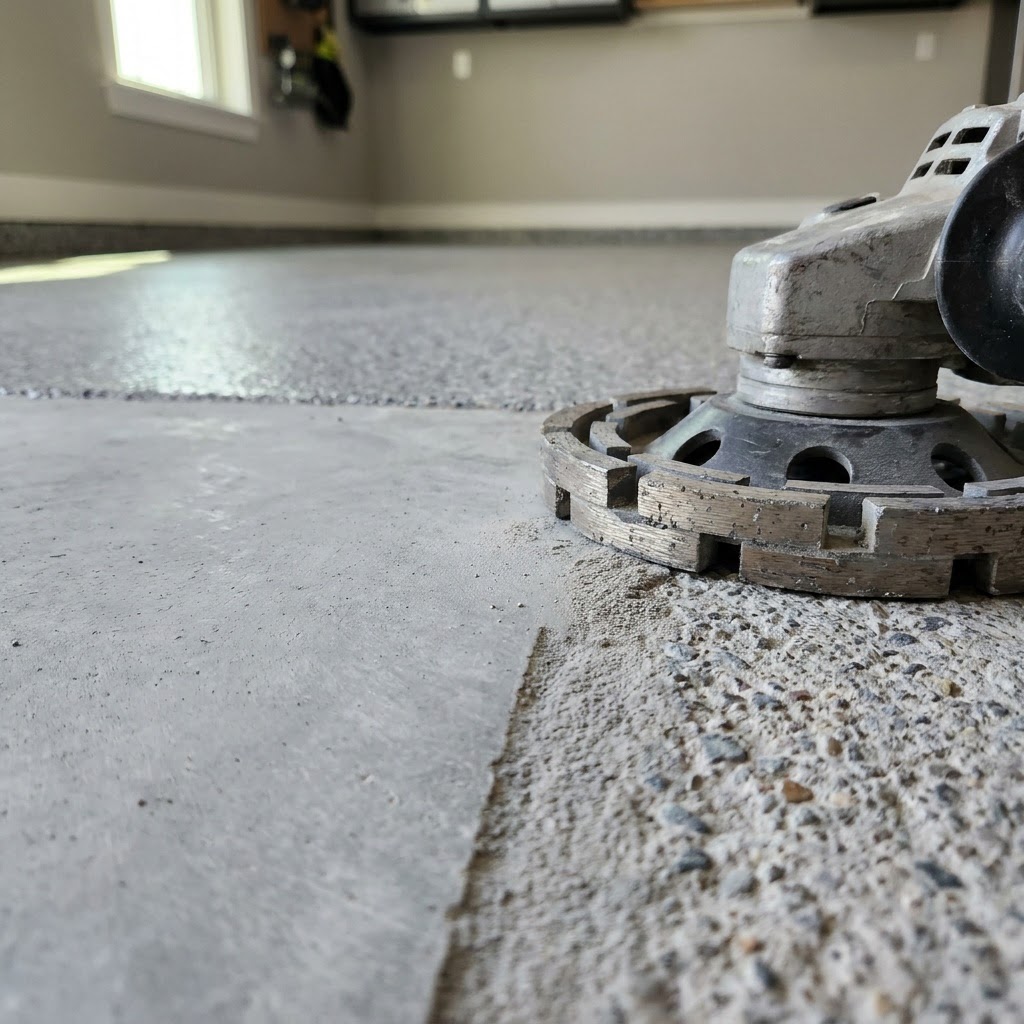
On slab-built homes around here, we run a diamond grinding pass with progressively finer metal-bond and resin-bond heads, typically moving through a 16- to 80-grit sequence depending on what the surface is hiding. Grinding opens the pores of the concrete so acid stain or water-based stain can actually penetrate instead of sitting on top. Skip that step, and the stain blotches or lifts in sheets within a year.
This is the same reason a peeling epoxy job usually traces back to a slab that was never profiled correctly. Stain is less forgiving of shortcuts, not more. It just hides the problem better at first, then fails later when nobody is looking.
What actually wears out: the sealer, not the color
Concrete stain is a chemical reaction or a dye penetration, not a surface film. Acid stain reacts with the lime in the concrete and becomes part of the slab. Water-based stain works more like a dye, sitting slightly shallower, but still well below the surface.
The sealer on top is the part that takes the abuse. Garage sealers see tire shear, hot tire pickup, road salt, and de-icer drag-in. Interior sealers see foot traffic and furniture legs. A sealer rated for foot traffic typically holds up 2 to 4 years before it starts dulling. A heavier wear layer, like a polyaspartic topcoat, can push that past 5 years even in a garage.
That is also why staining and coating are often paired. Many Alpharetta and Woodstock garages get a concrete staining treatment for color, then a polyaspartic coating on top for durability. The stain supplies the look. The topcoat supplies the years.
Indoor vs. outdoor vs. garage: lifespan is not one number
Where the slab lives changes everything. A stained sunroom floor and a stained driveway are not the same bet.
| Location | Typical sealer life | Main wear factor |
|---|---|---|
| Interior living space | 8 to 12 years | Foot traffic, furniture drag |
| Garage floor | 3 to 6 years | Hot tires, de-icing salt, tool drops |
| Covered patio | 4 to 7 years | Humidity, indirect UV |
| Uncovered driveway or walkway | 2 to 4 years | Direct UV, freeze-thaw, snow salt |
Humidity matters more in Georgia than most homeowners expect. A slab curing at 70 to 90 percent relative humidity, which is common here from May through September, needs extra dry time between grinding, staining, and sealing. Rush that window and the sealer can haze or trap moisture, which shortens its working life regardless of how good the stain color looks underneath.
What shortens a stain finish faster than it should
- No grinding before staining. Mastic, paint, or old sealer blocks penetration and causes uneven, early peeling.
- Sealing over a damp slab. Concrete needs to read low on a moisture test before sealer goes down, or it clouds and delaminates.
- Skipping a maintenance recoat. Waiting until the sealer is gone in patches means re-grinding, not just re-sealing.
- Harsh cleaners. Acidic cleaners and some degreasers strip sealer faster than foot traffic ever will.
- Salt and de-icer left to sit. Chloride residue pits sealer, especially in unheated garages through a Marietta or Woodstock winter.
Extending the life you already have
A maintenance recoat is cheaper than a redo, and it is the single biggest lever a homeowner controls. Most interior stained floors need a fresh sealer coat every 3 to 5 years, applied in 1 to 2 thin passes, with 24 to 48 hours of cure time before furniture goes back.
Sweeping grit regularly matters more than it sounds. Grit acts like sandpaper under foot traffic and rolling wheels. A dust mop or soft broom twice a week does more for sealer life than any cleaner on the market.
If you are deciding between stain and a different finish entirely, it helps to compare wear characteristics directly against epoxy coating or polished concrete, both of which handle heavy garage traffic differently than a stained and sealed floor. Cost on any of these depends on how much grinding the existing slab needs, the square footage, and whether there is damage to repair first. The only way to get a real number is a free, itemized estimate that accounts for your slab’s actual condition.
Frequently asked questions
Does concrete stain fade over time?
The stain color itself does not fade, since it reacts with or penetrates the slab. What dulls is the sealer on top, which is a recoat issue, not a color issue.
Can a stained floor be restained without full regrinding?
Usually not for a color change. Going lighter or changing hue typically needs a fresh grind pass to remove the old stain’s penetration. Recoating the sealer, by contrast, rarely needs regrinding.
Is acid stain more durable than water-based stain?
Acid stain penetrates slightly deeper and resists wear a bit longer, but the difference is modest. Sealer quality and reapplication schedule matter more than which stain type was used.
How do I know when it’s time to recoat?
Watch for dulling patches, water that no longer beads, or a slightly rough chalky feel underfoot. Those are signs the sealer has worn through, not that the stain has failed.
Does a stained garage floor need a different sealer than a stained interior floor?
Yes. Garage floors need a sealer built for tire shear and chemical exposure, often paired with a polyaspartic topcoat, while interior rooms can use a lighter-duty sealer rated mainly for foot traffic.
If your stained floor is losing its shine or you are planning a new stain job and want the grinding done right the first time, request a free estimate and we will walk the slab with you before anything goes down.