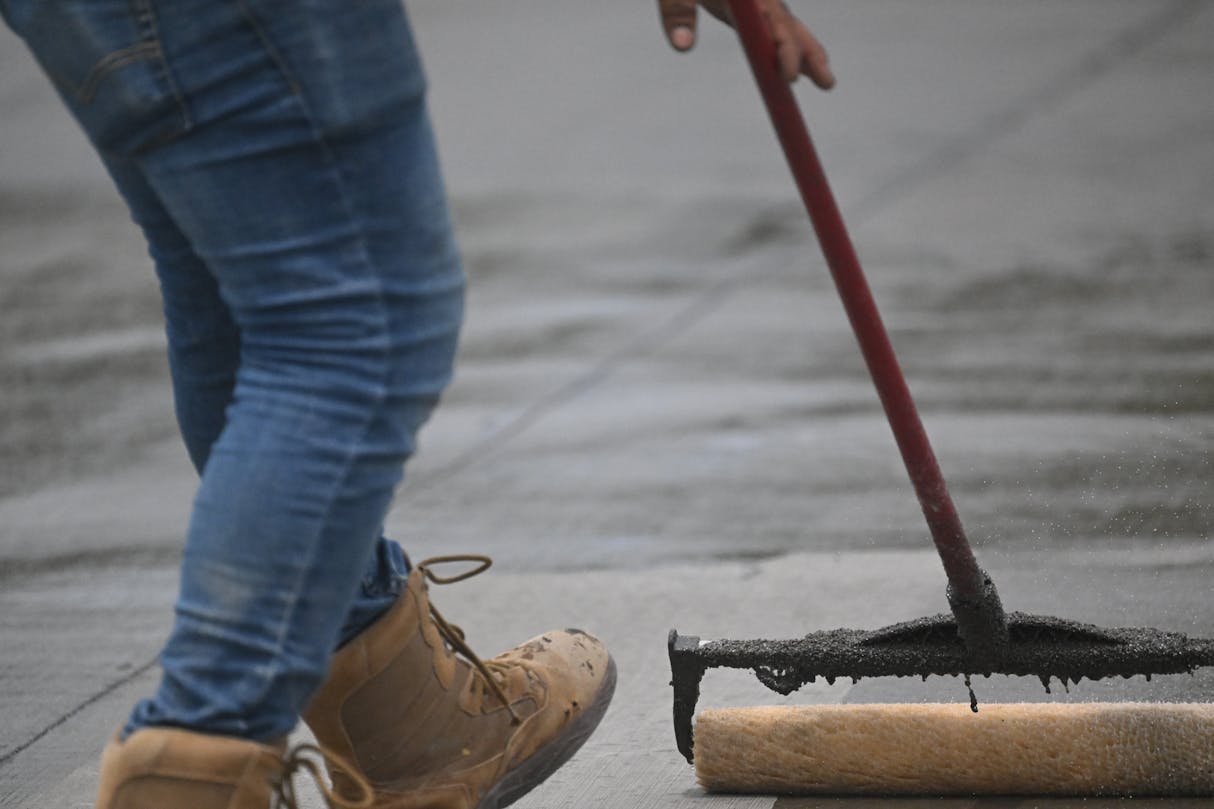
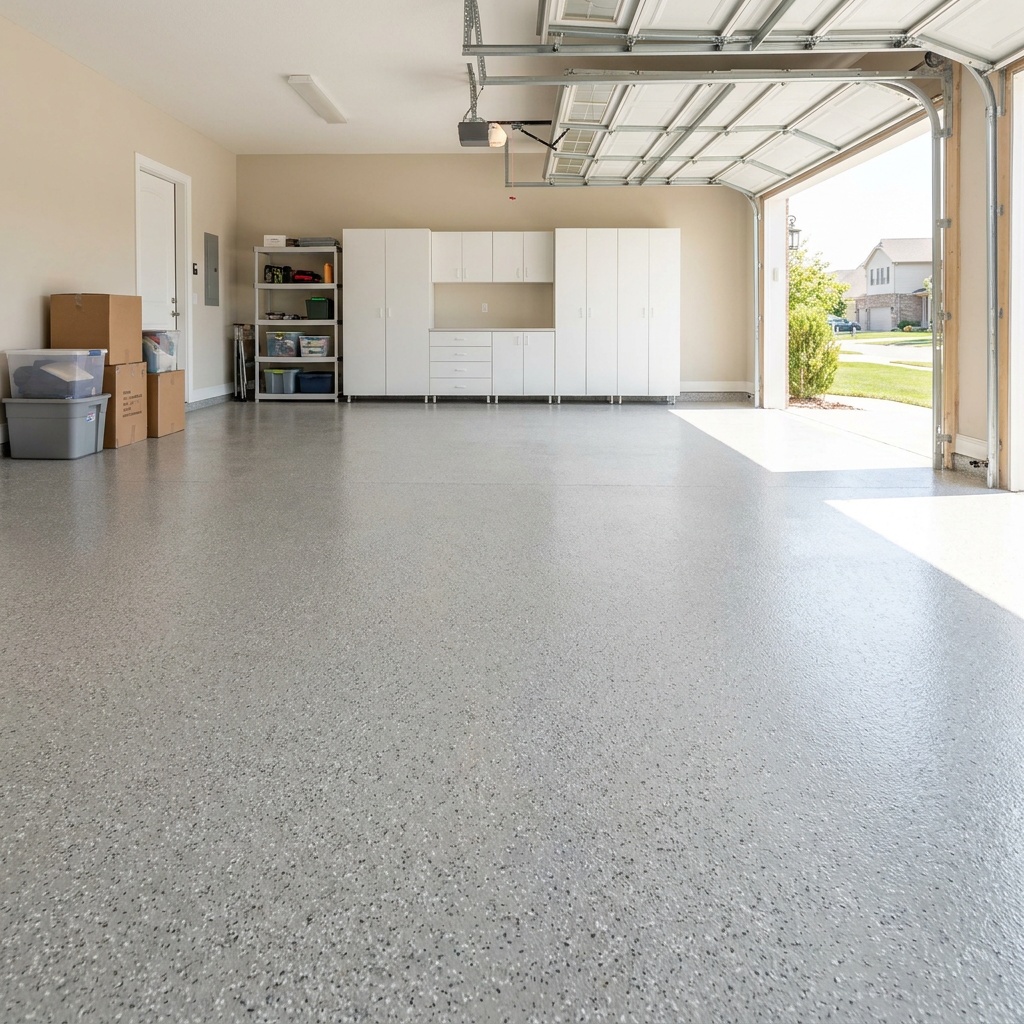
A peeling epoxy floor almost always traces back to one thing: the concrete was never mechanically ground before the coating went on. Box-store DIY kits rely on an acid etch or a light scuff, not a diamond-ground surface profile. Without that grind, epoxy sits on top of the slab instead of bonding into it. Fixing it means stripping the failed coating and grinding the slab properly this time.
Why DIY kits peel in the first place
Most kits ship with an etching solution instead of grinding equipment. Etching opens microscopic pores. It does not remove sealers, laitance, or old paint. It does not create the surface profile a coating needs to lock in.
We see the same pattern on service calls across Alpharetta, Milton, and Woodstock garages. The coating looks fine for a few months. Then hot tires lift it in sheets near the driver’s side. Peeling almost always starts at expansion joints or tire tracks first.
What actually needs to happen before recoating
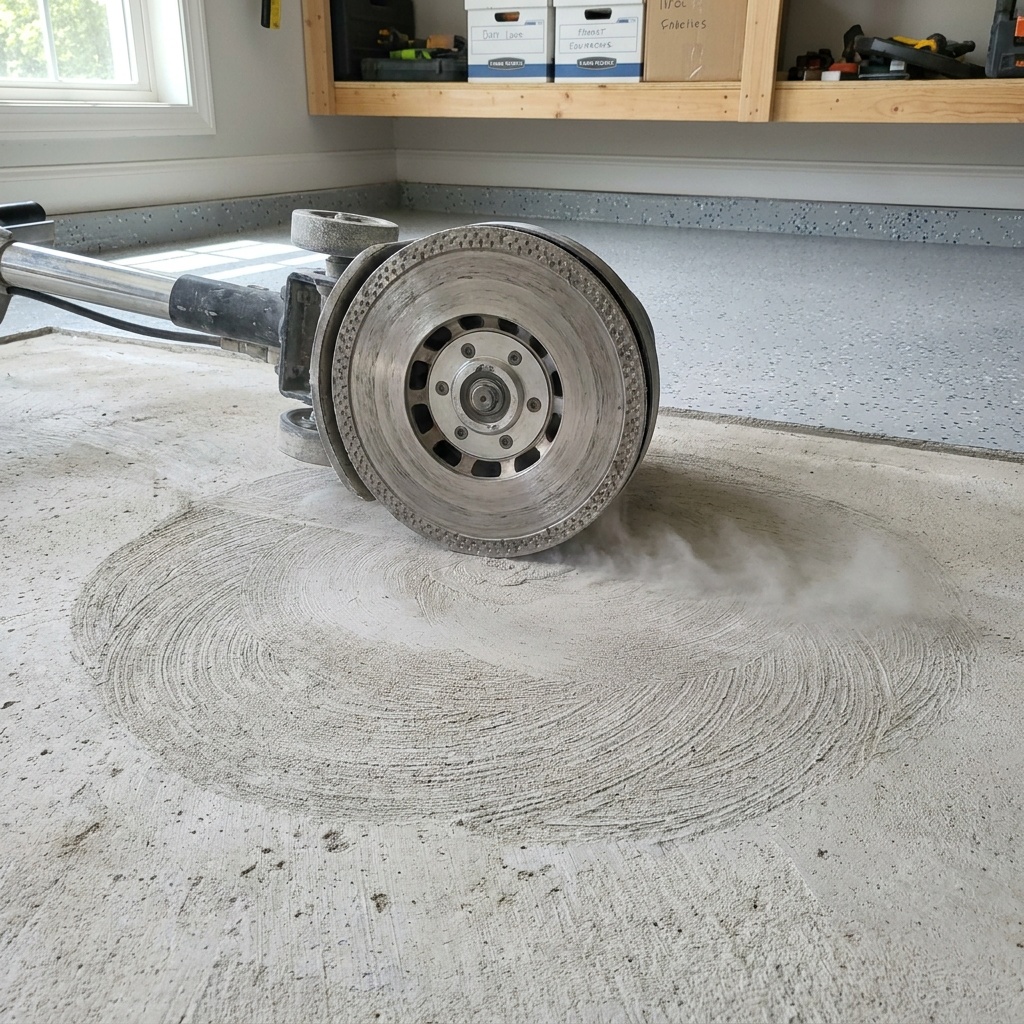
Removing a failed DIY coating is not a light sand. It requires diamond grinding down to bare, open concrete, often a 16- to 30-grit metal-bond pass to strip material, followed by a finer pass to set the profile.
The goal is a surface profile in the CSP 2 to CSP 3 range, rough enough for a two-part epoxy or polyaspartic to mechanically key into the slab.
Any oil staining, rust, or spalled areas under the old coating get addressed at this stage too, not painted over.
Moisture and humidity matter here too
Georgia clay holds moisture. If the slab was damp or humidity was above 85 percent when the kit went down, that’s often a second failure layered on top of poor prep. We check slab moisture and ambient humidity before any new coating goes down. We hold off if conditions fall outside the coating manufacturer’s range.
DIY kit process vs. a proper regrind and recoat
| Step | Typical DIY kit | Professional regrind and recoat |
|---|---|---|
| Surface prep | Acid etch or light scuff | Diamond grinding, 16-30 grit metal bond, then fine pass |
| Surface profile | Uneven, often CSP 1 or less | Consistent CSP 2-3 |
| Coating material | Water-based single coat, thin mil | Two-part epoxy or polyaspartic, multiple coats |
| Cure time before use | 24 hours claimed | 24-48 hours light traffic, 3-5 days full cure |
| Expected lifespan | Months to 1-2 years | Many years with normal care |
Coating choices once the slab is right
A properly ground slab can take an epoxy coating system with a color flake broadcast, or a faster-curing polyaspartic coating if the garage needs to go back into service quickly. Polyaspartics can often be walked on within hours and driven on within a day or two. That matters for a one-car garage that doubles as the main entrance to the house.
Either system needs the same grinding step first. Skip that again, and the same peeling shows up again.
What drives the cost of a redo
Removing a failed coating almost always adds more labor than a first-time install, because the old material has to come off before grinding can even start. Square footage, how much of the old coating is still adhered versus flaking, and whether there’s oil staining or spalling underneath all factor into the scope. The only way to know the real number for a specific garage is a walk-through. Request a free, itemized estimate through our contact page and we’ll lay out exactly what the job needs.
Signs you’re dealing with a peeling coating, not just wear
- Coating lifts in sheets or large flakes, not fine dust
- Peeling starts at tire tracks or expansion joints
- Bare gray concrete shows under the flakes, no bonding layer visible
- Peeling appeared within the first year of the DIY install
If that list matches your garage, more coats over the top won’t fix it. The slab needs to go back to bare concrete first. That’s the premise behind every job we take on, whether it’s a single-car garage in Suwanee or a multi-bay shop floor in Marietta. Our homepage has more on how coating systems get matched to different spaces.
Frequently asked questions
Can I just sand the peeling spots and patch them?
No. Spot patching over unbonded coating almost always fails again within months. The whole floor needs grinding to a consistent profile.
How long does a full regrind and recoat take?
Most single-car garages take one to two days: a day for grinding and prep, then coating application with cure time before the floor is back in use.
Will grinding remove all the old epoxy?
Yes. Diamond grinding removes the failed coating along with residue, leaving bare concrete ready for a new profile.
Is a peeling floor a sign the concrete itself is damaged?
Not usually. Peeling is a coating-adhesion problem, not a structural one. Grinding typically reveals sound concrete underneath.
If your garage floor is flaking, curling, or peeling after a DIY attempt, get it looked at before adding another coat on top. Contact us for a free, itemized estimate and we’ll tell you exactly what the slab needs.