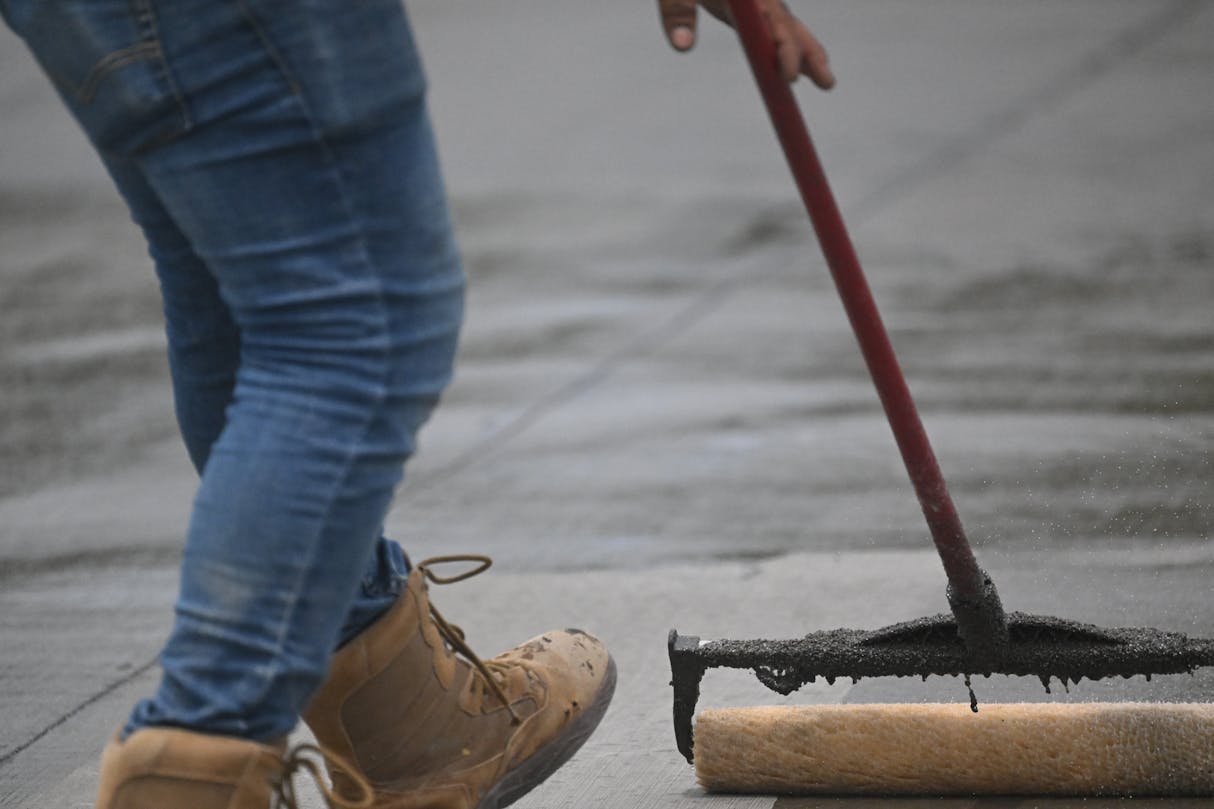
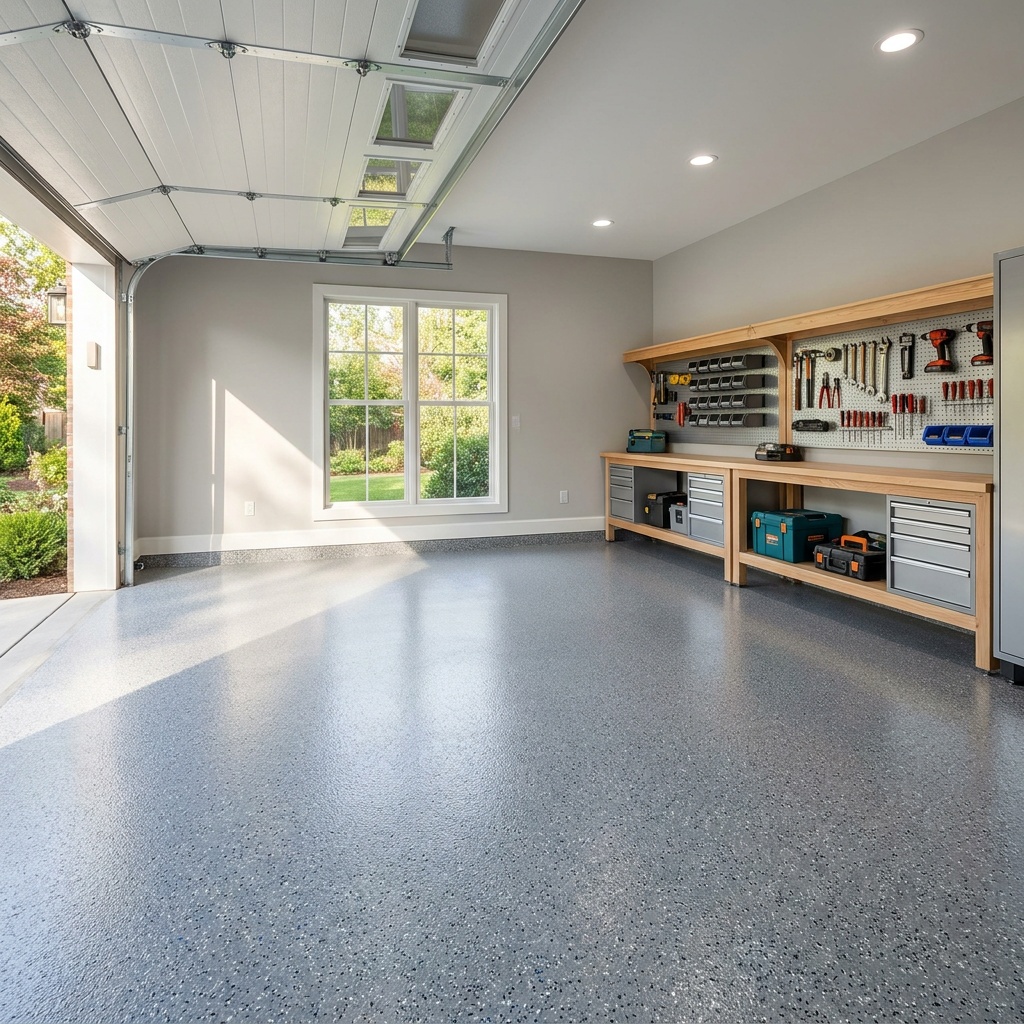
Epoxy, polyaspartic, and polyurea are all resin coatings that bond to concrete, but they cure at different speeds and hold up differently under heat and impact. Polyaspartic is the fastest curing and handles temperature swings well, which is why it dominates Atlanta garage installs. Epoxy is the most affordable build coat and still works fine under a polyaspartic topcoat. Polyurea is the toughest and most flexible, usually reserved for floors that take heavy abuse. The right pick depends less on the topcoat and more on what happens to the slab before any of them go down.
Every coating conversation should start with the concrete, not the chemistry. A coating is only as good as the surface profile underneath it. If the slab isn’t ground to open the pores, no resin on earth will stay put. That’s the failure we get called out for most.
Why grinding comes before any product decision
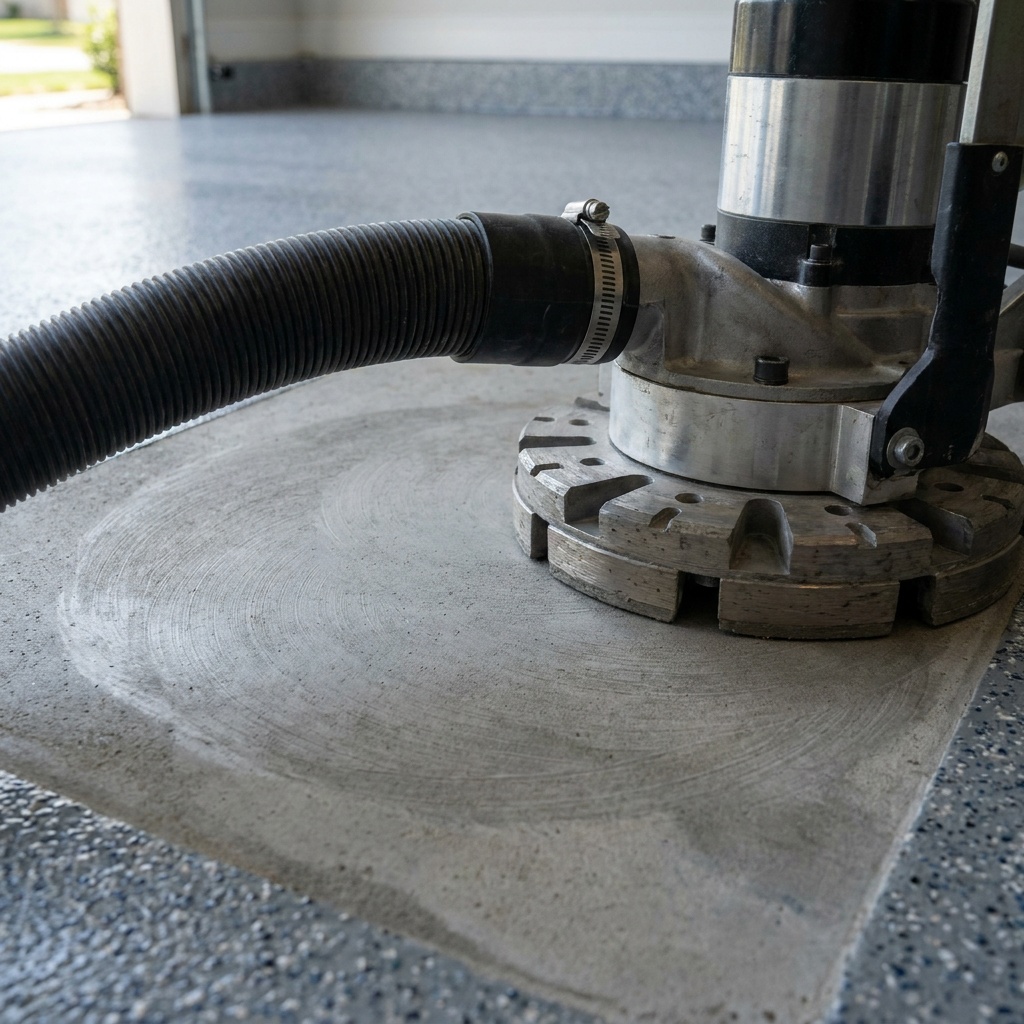
We diamond-grind every floor before coating. No shortcuts, no acid etching as a substitute. Grinding removes laitance, old sealer, and surface contamination down to a consistent profile, usually a CSP 2 to CSP 3 range depending on the coating system going over it. We typically run a metal-bond sequence starting around 20 or 30 grit and stepping up through 40, then 80, to leave enough tooth for mechanical bond.
Skip that step and epoxy peels in sheets within a year or two. We see it on driveways and garages where a previous coating was rolled over painted concrete or a glossy old sealer. Grinding also exposes cracks, low spots, and moisture issues before they get sealed under a coating that then has to be torn out later. On slab-built homes around here, red clay movement and seasonal humidity swings make that inspection step non-negotiable.
What actually separates the three coatings
Once the slab is right, the coating choice comes down to cure speed, chemical resistance, and how the floor will get used.
- Epoxy builds film thickness well and resists hot tire pickup better than paint, but it cures slowly and can amber under UV exposure over time.
- Polyaspartic cures fast, often walkable in 4 to 6 hours and ready for vehicle traffic in 24 to 72 hours, and it resists UV yellowing far better than straight epoxy.
- Polyurea is more flexible and abrasion-resistant, useful where a floor takes drops, impacts, or fast temperature changes.
Most Atlanta garage systems we install combine a two-part epoxy primer or base coat with a polyaspartic topcoat. That gets the epoxy’s build and adhesion with the polyaspartic’s speed and UV stability. Straight polyurea systems are less common in residential garages, mostly because they’re overkill for a car and a workbench.
Comparing the three systems
| Factor | Epoxy | Polyaspartic | Polyurea |
|---|---|---|---|
| Typical cure to walk on | 24 hours | 4 to 6 hours | 2 to 4 hours |
| Cure to vehicle traffic | 5 to 7 days | 24 to 72 hours | 24 to 48 hours |
| UV stability | Can yellow over time | Strong UV resistance | Strong UV resistance |
| Install temperature range | 60 to 90°F | 35 to 95°F | 25 to 100°F |
| Typical wear layer | 8 to 12 mils | 6 to 10 mils | 10 to 20 mils |
Humidity matters too. Most of these products want ambient humidity under 85 percent during application and cure, which is why late-summer installs get scheduled around dew point, not just the calendar.
Matching the coating to the floor’s job
A garage that mostly parks two cars and holds a lawn mower doesn’t need the same coating as a garage that doubles as a workshop with a rolling jack and dropped tools. For daily parking and light storage, an epoxy base with a polyaspartic topcoat covers it. For workshops, home gyms, or floors that see chemical spills and constant tool drops, a heavier build or a polyurea-blended topcoat earns its keep.
If the floor is more showroom than garage, polished concrete or a stained finish might suit the look better than a flake system. Either way, the prep sequence stays the same. Grinding first, moisture check second, coating choice last.
What a system costs depends on how much grinding the slab needs, existing damage, square footage, and which coating system fits the use case. That’s not something to guess at over the phone. A walk-through and an itemized estimate through our contact page gets you real numbers for your floor.
Frequently asked questions
Can I put polyaspartic over old epoxy without grinding?
Not reliably. Recoating over an intact, properly bonded epoxy is sometimes possible, but if the original coating shows any peeling or delamination, grinding back to bare concrete is the safer call.
How long before I can park a car on a new coating?
Most polyaspartic systems handle light foot traffic in 4 to 6 hours and full vehicle weight within 24 to 72 hours. Epoxy-only systems usually need closer to a week before parking.
Does polyurea cost more than epoxy or polyaspartic?
Material cost varies by manufacturer and thickness. What drives the final number is prep work, square footage, and coating system, which is why we quote each floor individually rather than by a flat rate.
Ready to find out which system fits your garage. Request a free, itemized estimate through our contact page and we’ll walk the slab with you before recommending anything.