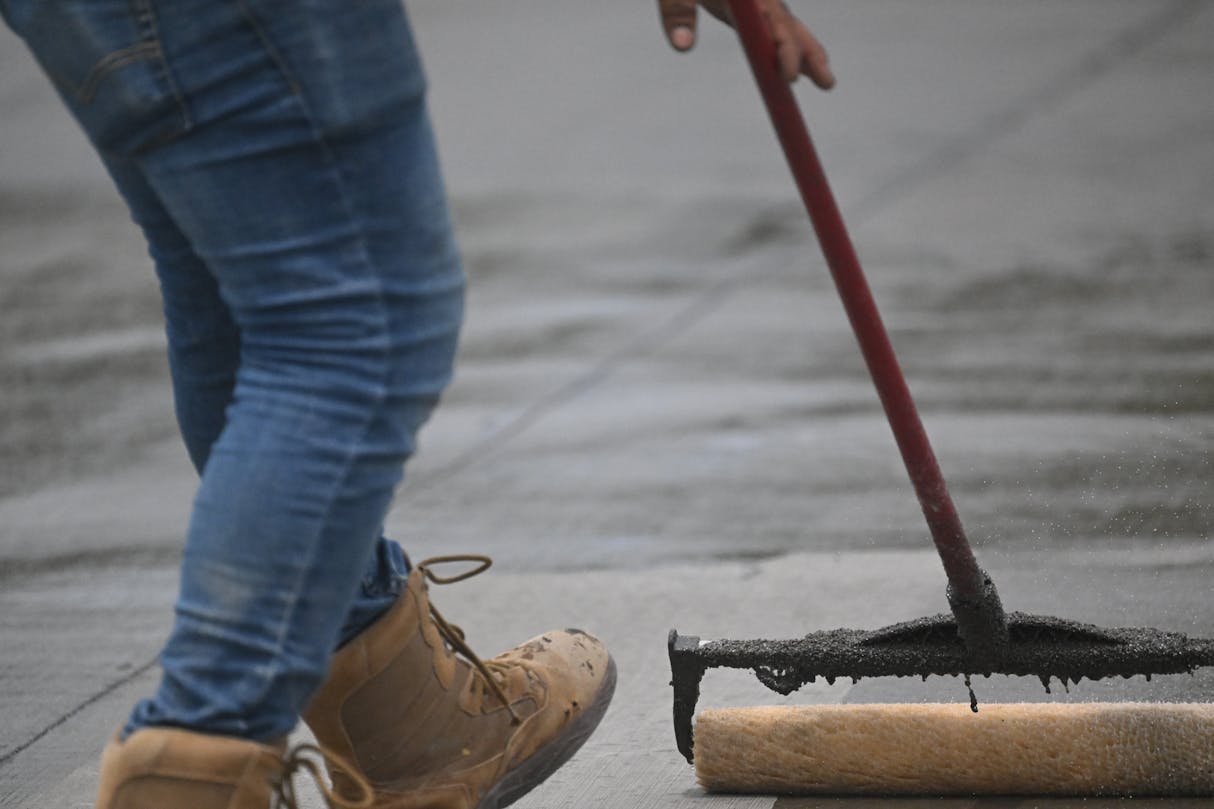
Stained Concrete Floors — Atlanta Metro
Stained Concrete Floors in Atlanta, GA
Acid and water-based concrete staining for garages, patios, and interior floors — a mottled, one-of-a-kind color finish sealed to hold up to real use, without a thick applied coating.
Pricing depends heavily on your slab’s age, porosity, and existing sealer or coating history — there’s no reliable generic rate per square foot for this system. We assess your specific concrete in person and write a fixed-price estimate before any work starts.
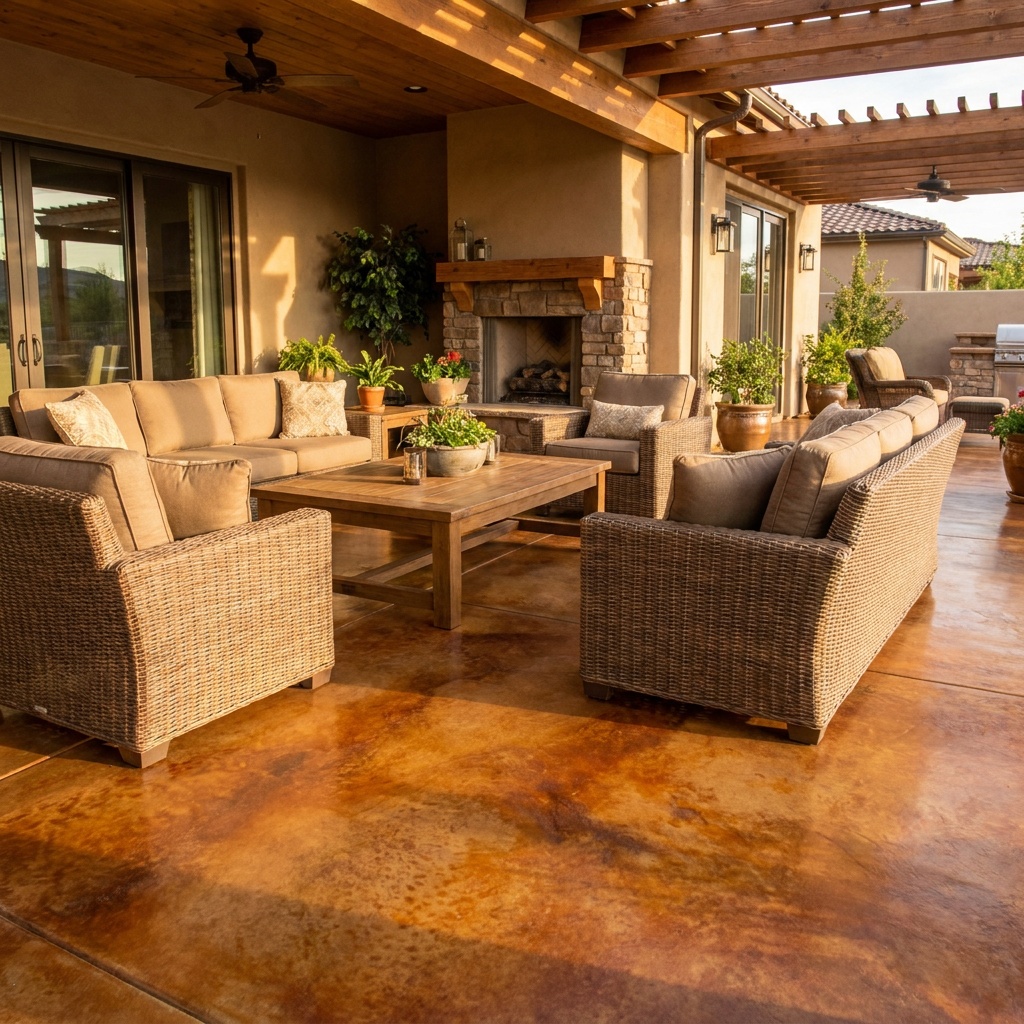
Stained concrete is a decorative finish, not a coating in the epoxy or polyaspartic sense — a penetrating acid or water-based stain reacts with or colors the surface of your existing slab, then a clear sealer topcoat protects it and adds sheen. The result is a mottled, variegated color rather than a flat, uniform tone, since the stain reacts differently across variations already present in the concrete. Because pricing depends heavily on your slab’s age, porosity, and how many coats of stain and sealer it needs, we don’t publish a generic per-square-foot number for staining the way we do for epoxy — ask for a fixed-price estimate instead. Sealers typically need about 24 to 72 hours before foot traffic and roughly a week before furniture or heavy use returns, though the exact schedule depends on the product and Georgia’s humidity.
The Material Science
What stained concrete actually is
Two different chemistries fall under “concrete staining,” and they produce different looks. Acid-based stain is a diluted metallic-salt solution that reacts chemically with the lime naturally present in cured concrete, etching into the surface and permanently bonding a translucent, mottled color into the slab itself — no two acid-stained floors ever look exactly alike, because the reaction follows the concrete’s own mineral variations, old trowel marks, and curing history. Water-based stain works differently: it’s a pigmented, water-carried color that soaks into the concrete’s pores rather than reacting chemically, giving a broader color palette (including blues, greens, and other tones acid stain can’t produce) with a more consistent, less mottled result.
Either stain goes down on bare, clean concrete — there’s no base coat and no build-up of material thickness the way epoxy or polyaspartic systems apply layer over layer. Once the stain has reacted or dried, a clear sealer goes on top, which is what actually protects the color from foot traffic, UV, and moisture, and gives the floor its sheen, from a low matte to a glossy wet look. The sealer does structural work here, not just cosmetic work — an unsealed stained floor wears unevenly and loses color faster, especially outdoors.
Prep, Explained
Why prep still matters, even without a coating buildup
Staining looks like a lighter-touch process than epoxy, and it is — but the slab still has to be right before any stain goes down, for a different reason than coating adhesion. Acid stain reacts with the concrete’s own surface chemistry, so an existing sealer, an old coating, curing-compound residue, or the same hardened surface skin that leads epoxy to peel will block the reaction and leave the color patchy or refuse to take at all. We assess the slab and, where needed, mechanically prep it — removing old sealers or coatings and opening the surface — before staining, the same honest-about-prep approach we use on every job regardless of which system you choose. Skipping this step is exactly how a DIY stain job ends up blotchy in spots instead of evenly mottled across the whole floor.
Who This Is For
Who stained concrete is the right fit for
You want a floor with real character, not a flat single color
If you’re picturing the space your neighbors ask about, stained concrete gives a variegated, natural-stone-like color effect that a solid epoxy color can’t replicate — every acid-stained floor is genuinely one of a kind, shaped by your own slab.
You’re finishing a patio or interior space, not a daily-traffic garage
Stained concrete is a strong fit for covered patios, basements, sunrooms, and interior rooms where a decorative look matters more than the vehicle-traffic durability a garage floor needs.
You tried a DIY stain kit and it came out blotchy
Uneven color usually traces back to inconsistent surface prep or an old sealer blocking the reaction in spots. We can assess whether the floor can be revived with a fresh seal coat or needs to be stripped and restained.
Get an honest read on your slab before you commit to a look
Get a Fixed-Price EstimateHow It Compares
How stained concrete compares to the other systems
Stained concrete trades the thick, uniform, high-gloss look of epoxy and polyaspartic for a decorative, variegated color effect with a thinner sealer topcoat — it won’t stand up to daily vehicle traffic and hot tires the way a properly prepped epoxy or polyaspartic system will, so we don’t recommend it as a primary daily-driver garage floor. Compared to polished concrete, which uses no color layer and relies on mechanical grinding for its sheen, staining is the choice when you want intentional color rather than the concrete’s natural gray tone. See the full comparison and published $/sq-ft ranges on our pricing guide.
Frequently Asked Questions
Stained concrete, specifically
Concrete staining vs epoxy — which is better for my garage or patio?
It depends on what the space needs to do. Epoxy and polyaspartic systems build a durable, uniform-color film designed to handle daily vehicle traffic, hot tires, and chemical spills — the right choice for a working garage. Stained concrete produces a thinner, decorative, variegated color finish that’s better suited to patios, basements, sunrooms, and interior spaces where the look matters more than standing up to a parked car every day. If you want a genuinely one-of-a-kind mottled color and your space isn’t a daily-traffic garage, staining is usually the better fit; if you need maximum durability under vehicles, epoxy or polyaspartic is the stronger choice. We’ll walk through both during your estimate.
What’s the difference between acid-based and water-based concrete stain?
Acid stain is a diluted metallic-salt solution that chemically reacts with the lime in cured concrete, permanently etching a translucent, mottled color into the slab itself — the color and pattern depend on your concrete’s own mineral makeup, so results vary from floor to floor and can’t be fully previewed on a sample. Water-based stain is a pigmented color that soaks into the concrete’s pores rather than reacting with it, offering a wider color range, including tones acid stain can’t produce, with more consistent and predictable coverage. Acid stain tends to give the more dramatic, variegated look; water-based stain gives more control over the final color. We’ll help you choose based on the look you want and your slab’s condition.
Will a stained concrete patio hold up to Georgia weather and sun?
Yes, with the right sealer and a resealing schedule. The stain color itself is generally UV-stable once it has reacted with or absorbed into the concrete, but the sealer on top is what takes the ongoing wear from sun, rain, and temperature swings, and it will need to be refreshed periodically — more often on an exposed patio than an interior floor. We use exterior-rated sealers for outdoor applications and can talk through the resealing interval that fits your specific space during your estimate, rather than promising a one-time-forever finish.
Does a stained concrete floor need to be resealed, and how often?
Yes. Unlike the underlying stain color, the sealer wears down over time from foot traffic, UV exposure, and cleaning, and resealing is a normal, expected part of maintaining a stained floor rather than a sign something went wrong. Interior floors under normal foot traffic typically go longer between reseals than an exposed patio or a floor that gets vehicle traffic. We’ll give you a realistic resealing interval for your specific space and sealer type as part of your estimate, so it’s not a surprise a year or two in.
Get In Touch
Talk to us about your stained concrete project.
No obligation, just a conversation about your slab, the look you want, and what it would take to do it right. Continue to the contact form on our homepage to get started, or call 678-758-2780.