Church lobbies are high traffic areas that take more abuse than many people expect. When you consider the impact of rainwater, coffee spills, stroller wheels, moving chairs, and heavy Sunday foot traffic, it becomes clear that selecting the right concrete floor finishes is essential for long-term durability.
That means the surface has to do more than look clean. It needs to handle moisture, resist scuffs, stay safe underfoot, and ensure your interior concrete floors still feel welcoming after a full morning of guests.
For church leaders and facility teams, the best choice usually comes down to the slab itself, the amount of upkeep you can support, and the look you want people to notice first.
Key Takeaways
- Evaluate the Slab First: The longevity of any concrete finish depends entirely on the condition of the underlying slab; moisture testing and structural repairs must be addressed before any topcoat is applied.
- Match Finish to Traffic: Polished concrete offers a low-maintenance, clean aesthetic for general lobby areas, while epoxy and polyaspartic coatings provide superior spill and stain resistance for high-traffic zones like coffee stations and entryways.
- Balance Aesthetics and Acoustics: Hard concrete surfaces can increase ambient noise levels, so consider pairing your chosen finish with rugs, wall panels, or other acoustic treatments to maintain a welcoming environment.
- Prioritize Safety: Regardless of the aesthetic, ensure your floor finish incorporates slip-resistant properties, particularly in entryways where moisture from outdoors is frequently tracked inside.
What a church lobby floor needs to handle
A church lobby acts as a busy greeting area, a spill zone, and a critical walkway for high traffic areas all at once. People cross it before services, after services, and during every event in between. Some guests are in dress shoes, some are carrying drinks, and others are guiding children or using walkers.
That mix changes what matters most. The durability of the finish comes first, because a lobby floor that chips or stains quickly becomes an expensive maintenance burden. Slip resistance is also a priority, especially during wet months when shoes track in water from the parking lot. These performance requirements are often more demanding than those found in standard residential concrete floors.
Moisture management matters, too. Existing concrete slabs can pull vapor through the surface, and that can weaken coatings or cause discoloration over time. Because the same concern shows up in basement concrete coating projects, your professional team must ensure the surface preparation is just as careful here.
Comfort deserves attention as well. Hard concrete can feel rough during long volunteer shifts, and it can make a room sound louder. If your lobby is also a gathering space, the finish should work with rugs, benches, wall panels, or other soft elements to dampen sound.
The floor choice is only as good as the surface preparation beneath it.
If the project includes concrete detailing, such as crack repair, patching, or leveling, that work should happen before anyone picks a topcoat. That simple step protects the budget and ensures long-term results.
Polished concrete for bright, open lobbies
Polished concrete is an excellent choice when the existing concrete is in good condition and the church wants to achieve a clean, modern aesthetic. Through a precise process of grinding and polishing, the slab is transformed into a smooth, reflective surface that enhances the brightness of a lobby without the need for an additional coating layer.
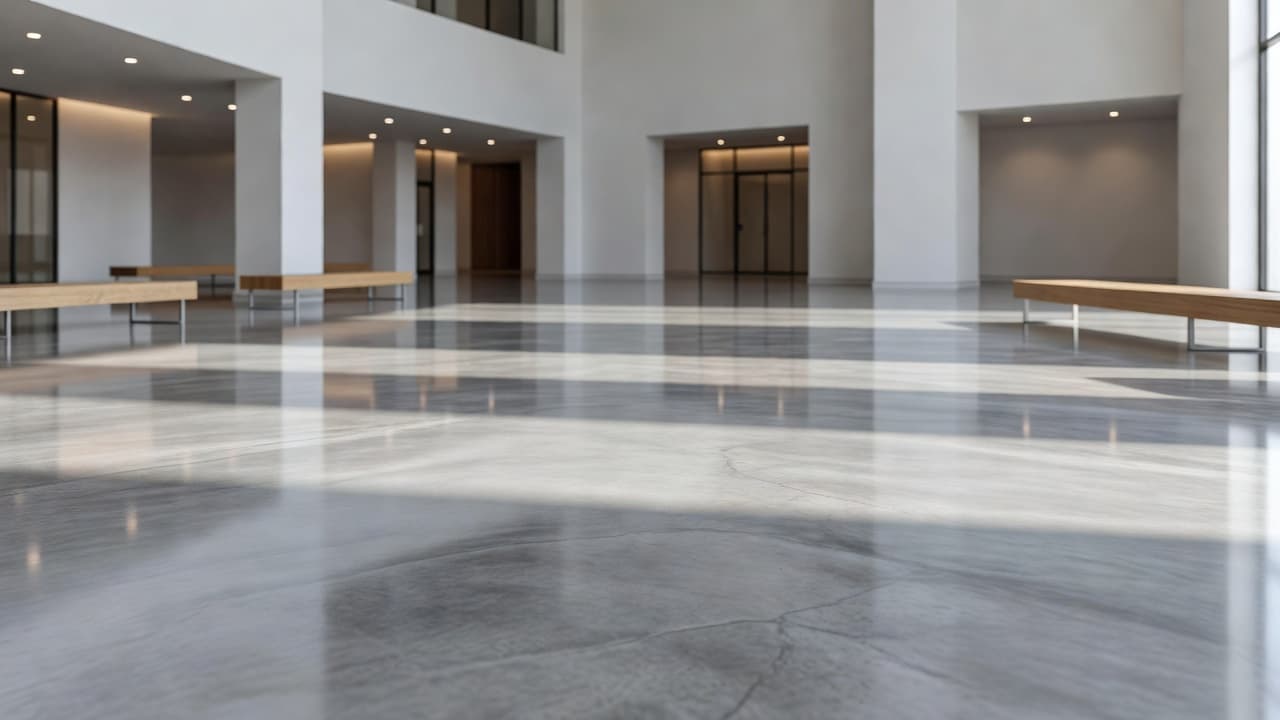
As a popular low maintenance option for decorative concrete applications, these floors are remarkably easy to care for. Dust mops and neutral cleaners are usually sufficient for daily upkeep, and because there is no paint or film to peel, the surface remains durable over time. For churches seeking a simple, refined look, this longevity is a significant advantage.
Polished concrete also performs well in spaces that already benefit from ample natural light. The reflective surface helps distribute that light across the room, which makes the lobby feel larger and more open. If the building committee desires a specific color palette, a light stain can be applied to the slab before it is polished to provide a warmer tone along with lasting protection.
However, this finish is not the ideal solution for every facility. It will not hide major structural flaws, so the existing concrete must be in relatively good shape to achieve a high-quality finish. Furthermore, it does not offer the same level of chemical resistance as a dedicated resinous coating. Areas such as coffee stations, nursery entrances, and heavy loading paths may show signs of wear more quickly if traffic is particularly high.
Sound management is another important consideration. Because a hard, reflective surface can cause more echoes than carpet or vinyl, it is wise to pair this finish with acoustic wall treatments if the lobby is meant to be a quiet or reflective space.
Epoxy and polyaspartic systems for busier churches
When a lobby gets wet, messy, or crowded, epoxy floor coatings become a highly attractive solution. These systems create a thicker protective layer than polishing alone, covering minor imperfections while resisting stains from coffee, salt, or cleaning chemicals.
While many people first encounter this technology through projects for concrete garage floors, the same chemistry is exceptionally effective in a church lobby when the installer understands commercial flooring requirements.
A high-performance commercial concrete epoxy coating is a smart choice for vestibules, coffee areas, and high-traffic entry zones that demand superior durability. Because these areas experience much more wear than residential spaces, a contractor with industrial concrete flooring experience should explain moisture testing, crack repair, and slip resistance before installation begins.
A recent church foyer epoxy project shows how a subtle, stone-like finish can feel warm without looking busy. For churches seeking a more unique or artistic aesthetic, metallic epoxy is also available as a design option. These choices allow for a welcoming entrance that avoids a sterile, showroom feel.
A polyaspartic coating can be used as a top layer over epoxy or as a faster-curing alternative for busy facilities. Because polyaspartic coatings cure quickly and resist UV light, they are ideal for bright entryways with large glass doors. This speed is a major benefit when a church needs to return a space to service after a short shutdown.
There are limits to consider, however. Any epoxy floor coatings system depends entirely on proper surface preparation, as shortcuts will significantly shorten the life of the installation. The same principle applies to the wear patterns analyzed in the warehouse epoxy vs polished concrete guide, where the intensity of foot traffic determines the longevity of the finish.
Gloss alone does not make a floor safe. Texture, topcoat choice, and mat placement matter too.
For lobby work, a satin or lightly textured topcoat often makes more sense than a high-gloss finish. That approach provides a clean, professional aesthetic while improving traction during wet weather.
Concrete staining and hybrid looks
Some churches want color, but they do not want a thick coating. That is where stained concrete floors fit perfectly. Unlike paint that sits on top, these stains work by reacting with the slab or soaking deep into the surface, so the result feels natural and will not peel at the first sign of wear. Depending on the desired aesthetic, you can choose between acid stains for a variegated, organic look or water-based stains for more consistent, vibrant colors. For those looking for even more character and depth, concrete dyes can be used to add intense color without masking the concrete texture.
This finish suits historic churches, fellowship halls, and lobbies that should feel warm instead of glossy. To maintain the longevity of the floor, these stains are typically finished with high-quality concrete sealers that provide the necessary protection while making the surface much easier to clean. While staining keeps the natural look of the slab, churches that prefer more intricate textures might consider stamped concrete overlays as a decorative alternative to create specific patterns or designs.
The primary strength of staining is the unique character it adds. It keeps the original concrete visible, which is an excellent choice when the slab has a beautiful texture or when the interior design calls for an earthy, timeless tone. However, the downside is that staining will not hide existing damage. Hairline cracks, patch marks, and uneven repair work often remain visible through the stain.
That is why the condition of the surface matters so much. If the project involves extensive repair work like patching, resurfacing, or leveling, the finish selection should happen after the repair plan is finalized. A stained floor on a weak or damaged slab may look good initially, but it will likely age poorly.
Moisture testing is also essential here. If the lobby sits on a slab with vapor issues, treat it like a moisture-sensitive finish. The same logic used for a basement concrete coating job applies, because trapped vapor can negatively affect the color, the sheen, and the lifespan of the protective sealers.
How to choose the right finish for your church
The right floor depends on how the lobby is used, how much you want to spend, and how often the team can clean and maintain it. A large congregation with heavy weekly traffic may need a different answer than a smaller campus with one worship service and occasional events.
This table provides a quick way to compare the most common options for commercial flooring in church environments.
| Finish | Best fit | Main strengths | Main trade-offs |
|---|---|---|---|
| Polished concrete | Bright, low maintenance lobbies | Clean look, dust control, lower upkeep | Shows slab flaws, can echo more |
| Concrete staining | Warm, natural-looking spaces | Color without peeling, works with existing character | Less coverage for damage, color variation |
| Epoxy or commercial concrete epoxy coating | Busy entry zones, coffee areas, event space | Strong stain resistance, broad design options, easy cleanup | More prep, moisture sensitivity |
| Polyaspartic coating | Tight schedules, high-use edges | Fast cure, UV stability, strong topcoat performance | Higher cost, prep still matters |
Budget often drives the final decision. Polished concrete and staining can be easier on the budget when the slab is already in good shape. Epoxy and polyaspartic systems usually require a higher investment, but they offer superior durability and can pay off in easier cleanup and long-term protection. If the current slab is in poor condition, applying microtoppings can provide a fresh, uniform surface before the finish is applied.
Maintenance requirements are just as important as initial costs. If the church staff needs a low maintenance solution that only requires dust mopping and light washing, polished concrete is hard to beat. If the team needs better spill protection near coffee stations or nursery halls, a resinous coating system makes more sense. Regardless of the finish, remember that sealing concrete regularly is vital for protecting stained or bare floors from wear and moisture.
Acoustics should also stay on the checklist when considering interior concrete floors. Hard surfaces can make a lobby feel lively, but they can also make it loud. If the church leadership wants a quieter feel, pair the floor with rugs, ceiling treatments, or a carpeted side area. For a direct comparison with soft-surface alternatives, the commercial carpet for churches guide is helpful when sound control is a priority.
Most of all, evaluate the slab before choosing a finish. If moisture levels are high, if cracks are active, or if the concrete needs major repair, those issues must be addressed first. A beautiful finish cannot make up for a weak or compromised base.
Frequently Asked Questions
Can I use polished concrete if my lobby floor has cracks?
Polished concrete is generally not the best choice for damaged floors because the process does not hide structural flaws, cracks, or patches. If your existing slab has significant imperfections, you may need to consider a thicker epoxy coating or a resurfacing overlay to achieve a uniform appearance.
How do I keep a concrete lobby floor from being slippery?
Safety is a top priority in high-traffic church lobbies. To improve traction, ask your contractor to incorporate a slip-resistant additive into the final topcoat or opt for a satin finish with light texture rather than a high-gloss surface.
Is concrete flooring too loud for a busy church lobby?
Concrete is a hard surface and can reflect sound, which may increase echo in large, open lobbies. You can easily manage this by incorporating soft elements like area rugs, acoustic ceiling treatments, or upholstered furniture to help dampen noise and create a more comfortable gathering space.
Which finish requires the least amount of maintenance?
Polished concrete is typically the easiest to maintain, as it requires only regular dust mopping and occasional cleaning with neutral soap. Because it is part of the slab itself rather than a surface coating, there is no risk of the floor peeling or chipping over time.
A finish that fits the ministry
The best church lobby floor is the one that matches the building’s traffic, moisture conditions, and long-term upkeep plan. When selecting from various concrete floor finishes, we find that polished concrete remains a top choice for churches needing a blend of aesthetic appeal and low maintenance. Meanwhile, epoxy floor coatings are ideal for high-traffic entryways where spills and heavy foot activity are common. If your facility calls for added warmth and character, stained concrete floors offer a sophisticated look that highlights the natural beauty of the slab.
A lobby floor should welcome people on Sunday morning and still look solid after the last guest leaves. Regardless of the material you select, sealing concrete is the final, essential step to protect your ministry’s investment and ensure long-lasting durability. When the slab is evaluated first, choosing the perfect finish becomes much easier.