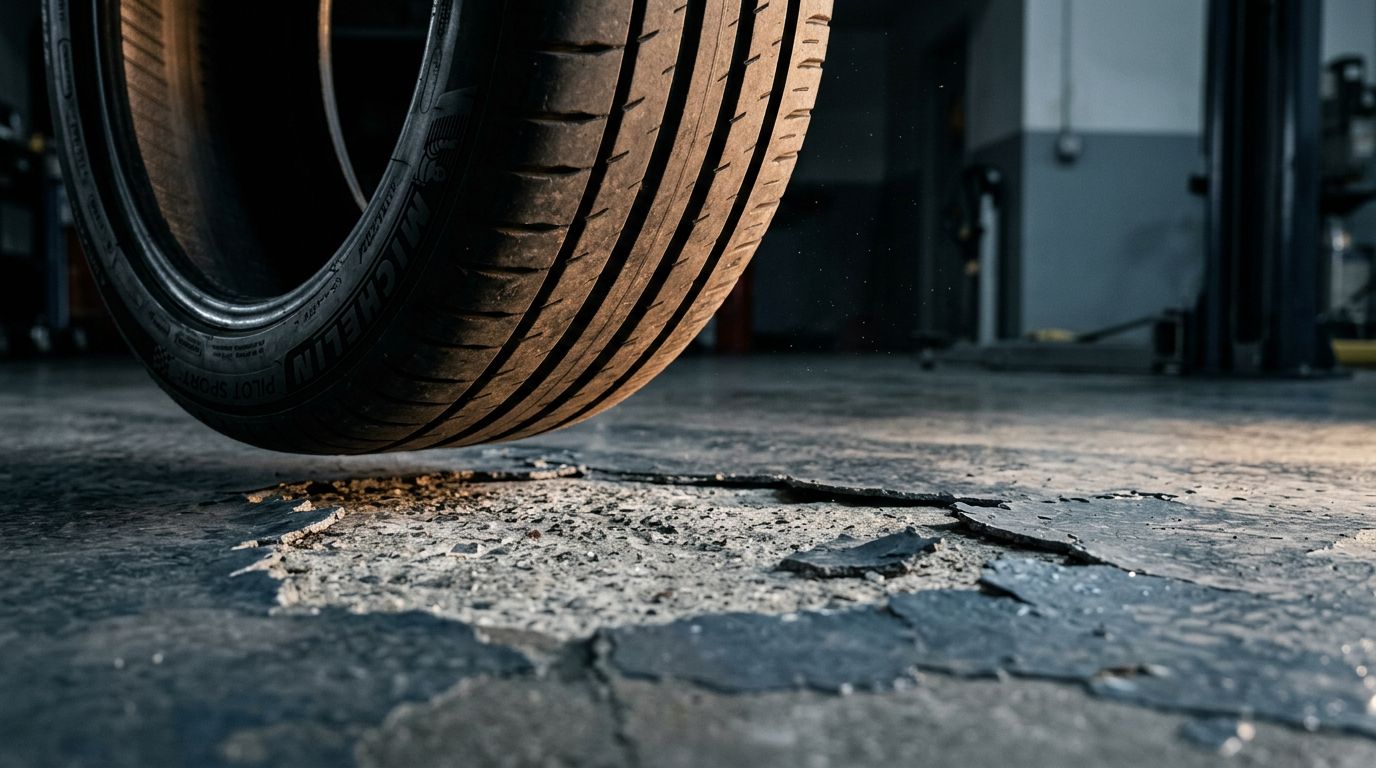
Nothing ruins a new surface faster than material stuck to your tires. Hot tire pickup occurs when warm rubber softens a weak finish, causing the bond to fail and pull the material loose from the concrete.
The good news is that this problem usually starts before the car ever rolls into the space. Proper preparation, moisture control, the right garage floor coating, and adequate cure time determine whether a floor stays intact or begins peeling after a few hot parking cycles.
Key Takeaways
- Prep is paramount: Hot tire pickup is almost always caused by a weak bond between the coating and the concrete, typically resulting from improper surface preparation, moisture, or trapped contaminants.
- Mechanical grinding beats chemicals: To ensure a durable bond, use diamond grinding to open the concrete pores rather than relying solely on acid etching or cleaning.
- Avoid budget kits: Low-cost, water-based DIY paints often lack the chemical durability and heat resistance required to withstand the plasticizers found in modern vehicle tires.
- Respect cure times: Even if a floor feels dry to the touch, parking on it before it is fully cured can lead to immediate delamination in high-traffic tire paths.
- Minimize physical stress: To extend the life of your coating, avoid sharp steering wheel turns while the vehicle is stationary and keep the floor free of abrasive grit and debris.
What hot tire pickup really is
Hot tire pickup usually shows up where the wheels rest. First, you may notice dull circles, slight tackiness, or small flakes. After a few more drives, those spots can peel into larger patches.
Heat is only part of the story. Hot tires warm up on the road, then press that heat and weight into one area. Rubber also carries oils, road grime, and softening agents. A key issue is the presence of plasticizers within the rubber, which can leach out and cause damage to floor coatings. This process, known as plasticizer migration, creates a chemical reaction that softens the surface layer. If the coating is thin, young, or poorly bonded, the tire can grip it like tape lifting fresh paint.
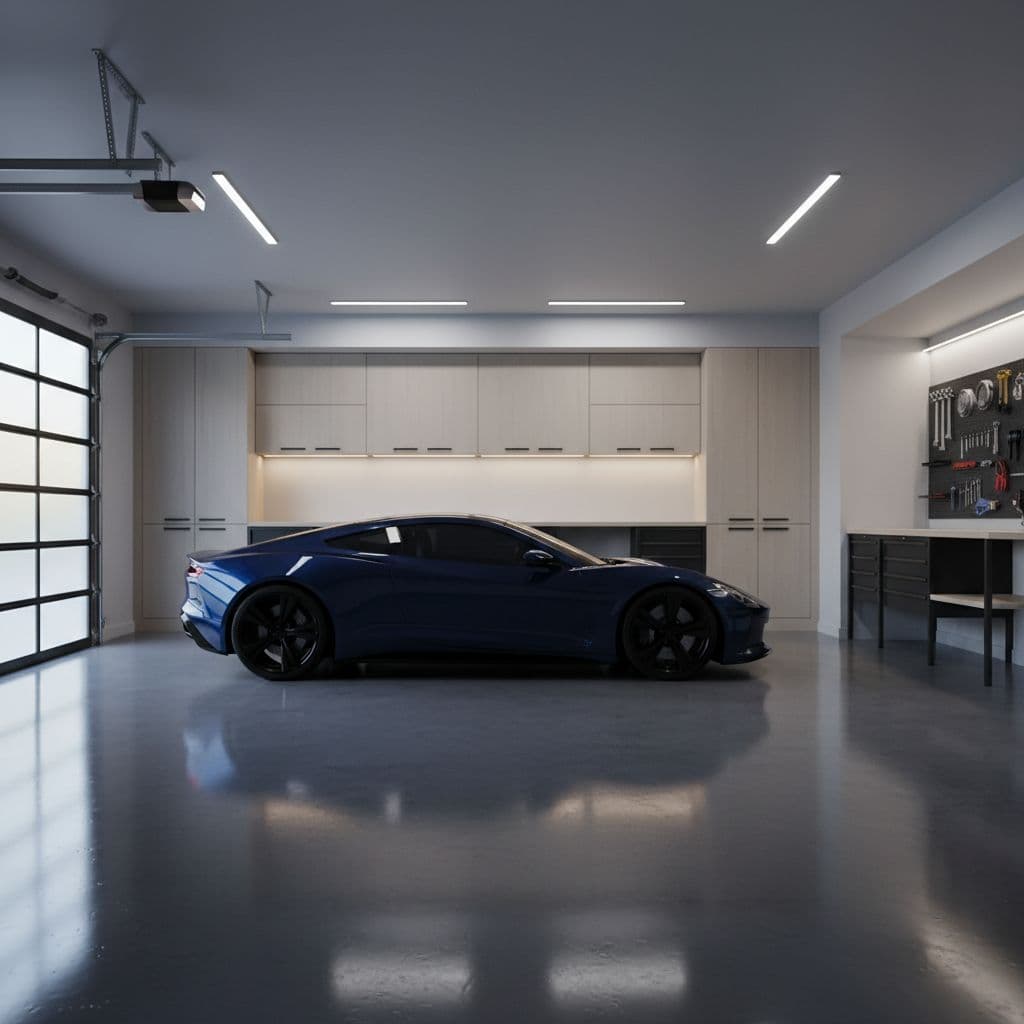
Most of the time, the tire did not create the whole problem. It exposed a weak bond that was already there. Old acrylic sealers, grease, concrete dust, or trapped moisture can keep a coating from grabbing the slab.
That is why a floor can look great right after installation and still fail later. A bargain paint kit is more likely to suffer from delamination, but even a well-made concrete epoxy coating can lift if the slab was not prepared the right way. In most cases, hot tire pickup is a bond problem that heat exposes.
Surface preparation is the whole job
If you remember one part of this article, remember the prep. A glossy topcoat cannot fix oil stains, smooth concrete, or a damp slab. When the base is weak, every layer above it is weak too.
For most garages, prevention follows a simple order:
- Remove contamination first. Oil, grease, silicone, curing compounds, and old sealers all interfere with adhesion. If water beads on the slab, the coating may not bond well.
- Open the surface. Diamond grinding gives the coating something to grip, and professionals often rely on industrial grinders to achieve the best results. The goal is to create a strong mechanical bond so the finish remains stable under pressure. Acid etching can help in light cases, but it does not match mechanical grinding on many garage slabs.
- Repair the slab before coating. Fill cracks, pits, and spalls, and flatten areas where water sits. If the floor has dips or rough patches, fix those before you think about a topcoat.
- Test for moisture. A taped plastic sheet can give you a rough clue, but proper moisture mitigation is much more reliable. This matters even more if the garage darkens after rain, feels damp, or connects to a lower level.
- Clean again, then coat. Vacuum every bit of dust. Follow mix ratios and recoat windows exactly.
If you want a deeper walk-through of the order that matters, this garage floor coating preparation guide is worth reading before you start.
Around job sites, you may hear the phrase concrete detailing. In plain English, it means handling slab problems before dressing up the surface. That includes cleaning, grinding, patching, and leveling. It is not glamorous, but it is what keeps an epoxy coating attached when tires heat up.
Moisture deserves extra attention because it causes many hidden failures. Water vapor can push upward through a slab even when the surface looks dry. If you coat over that pressure, the bond may weaken, blister, or peel in wheel paths. That is why proper prep matters on an epoxy coating for garage floor projects, a basement concrete coating job, or even a commercial concrete epoxy coating install.
Choose a coating that can take the heat
Once the slab is ready, your choice of coating makes all the difference. For most homeowners, the best options are a high-quality epoxy coating for garage floor use or a professional-grade polyaspartic floor coating. While ordinary floor paint is more affordable, it typically has the shortest lifespan when exposed to hot tires.
This quick comparison helps:
| Coating system | Where it shines | What to watch |
|---|---|---|
| Professional epoxy coating | Strong bond, good value, solid chemical resistance | Needs careful prep and full cure time |
| Polyaspartic coatings | Fast return to service, high durability, UV stability | Costs more and sets fast during application |
| Water-based epoxy or DIY kits | Low upfront price | Most likely to peel, wear, or lift under hot tires |
A solid epoxy coating often provides the best value when surface preparation is handled correctly. If you need a faster return to service, a polyaspartic floor coating is a smart pick because it offers superior performance and a rapid cure. If you are comparing both, this guide to epoxy vs polyaspartic garage coatings lays out the main tradeoffs. Some installers also utilize polyurea technology, which is closely related to polyaspartic systems and offers excellent flexibility and impact resistance.
Other finishes have their place, but they serve different needs. Concrete polishing can look clean and reduce dust, while concrete staining adds color without the look of paint. Both can work in some spaces, but they do not address hot tire pickup the way a bonded coating system does.
That is also why product labels matter. A true epoxy coating for concrete is not the same as a water-based epoxy or a one-part paint often found in entry-level DIY kits. Read the technical data sheet rather than just the front of the box. Look for specific surface preparation requirements, moisture limits, and most importantly, the heat resistance rating to ensure the product can withstand the high temperatures generated by your tires.
Curing time and everyday habits matter
Even a well-prepped floor can fail if you rush the process. Being dry to the touch is not the same as being fully cured. The surface may feel hard while the layers underneath are still soft.
If a coating has not fully cured, hot tires can pull it loose in a single parking cycle.
Follow the product sheet or the installer’s written timeline carefully. Many epoxy systems need several days before vehicles can park on them. Some polyaspartic systems shorten that window, but humidity, slab temperature, and coat thickness still affect the actual curing time.
Daily habits help once the floor is in service. Sweep grit often because sand works like sandpaper under tires. Wipe up oil and brake fluid before they sit for too long. You should also avoid rubber backed mats until the floor has fully cured. As a smart preventative measure, using tire mats or parking pads can provide an extra layer of protection while the floor settles or serve as a long term solution to shield your coating from high heat. Additionally, try not to crank the steering wheel hard while the car is standing still.
A floor coating is tough, but it is not indestructible. If you park a hot car, turn the tires sharply, and grind road grit into the surface every day, even a high quality system will show wear sooner. Better habits reduce stress on the top layer and help the finish last longer.
Common mistakes, warning signs, and when to recoat
Most early failures come from a short list of mistakes:
- Coating over oil, old paint, or a sealer that should have been removed
- Skipping moisture testing because the slab looks dry
- Trusting acid etch alone on dense, hard-troweled concrete
- Buying the cheapest one-part product for a heavy-use garage
- Parking on the floor before the coating has fully cured
- Coating over a failing old layer instead of grinding it off
If you hire a garage floor epoxy coating company, ask how it handles each of those points. Ask what prep tools it uses, how it tests moisture, and how long it requires before vehicle traffic. Those answers tell you more than a color chart ever will.
Failure signs are usually easy to spot once you know what to watch for. Peeling in high-traffic areas like tire paths is the classic indicator. Blisters, hollow-sounding spots, lifting at the edge of chips, or flakes that come up with a putty knife also point to bond trouble. You should also watch for edge lifting near joints, which can occur due to the natural expansion and contraction of the concrete.
A small chip from a dropped tool can often be sanded and patched. Widespread peeling is different. If the coating is letting go in several places, patching one spot often leaves a weak edge that peels next.
A full recoat is often the better fix when wheel paths keep lifting, moisture is pushing from below, or several old layers are stacked under the surface. Start by removing weak material, correcting the cause, and cleaning the concrete substrate again. Keep in mind that indoor garage products are formulated differently than coatings meant for an outdoor concrete driveway, so always select materials designed for your specific environment. If puddles form where the tires sit, repairing low spots in garage floors before recoating helps keep the same problem from returning.
Frequently Asked Questions
Can I just paint over my existing peeling floor to fix hot tire pickup?
No, painting over a failing surface will not solve the underlying bond issue. The existing loose coating must be removed, the concrete substrate cleaned and ground, and a fresh, professional-grade coating system applied to ensure long-term adhesion.
Does concrete moisture really affect my garage floor coating?
Yes, moisture vapor rising through the slab is a leading cause of bond failure. Even if the concrete looks dry, internal pressure can cause the coating to blister, lift, or peel in the areas where your tires sit.
How long should I wait before parking on a new floor coating?
While some fast-curing polyaspartic systems allow for quicker access, most professional epoxy coatings require several days of cure time. Always follow the specific manufacturer’s technical data sheet, as humidity and temperature can significantly impact how fast the surface hardens.
Are there any simple ways to protect my floor while I park?
Yes, using tire mats or temporary parking pads can distribute heat and provide a protective buffer between your tires and the coating. This is especially helpful if you want to be extra cautious while the floor is relatively new or during periods of extreme heat.
Keep the coating on the floor
A garage floor should not come home on the bottom of your tires. When the slab is clean, dry, repaired, and protected with a high-quality system, you gain the benefit of cross-linking. This chemical process creates a dense, durable bond that allows a professional garage floor coating to easily resist the thermal stress caused by hot tires.
Most failures start with skipped prep or rushed use, not bad luck. If your floor already shows peeling in wheel tracks, treat it as a bond problem and fix the root cause before you apply a new layer. Proper surface preparation is the only way to ensure your finish stays on the concrete where it belongs, effectively eliminating hot tire pickup for years to come.