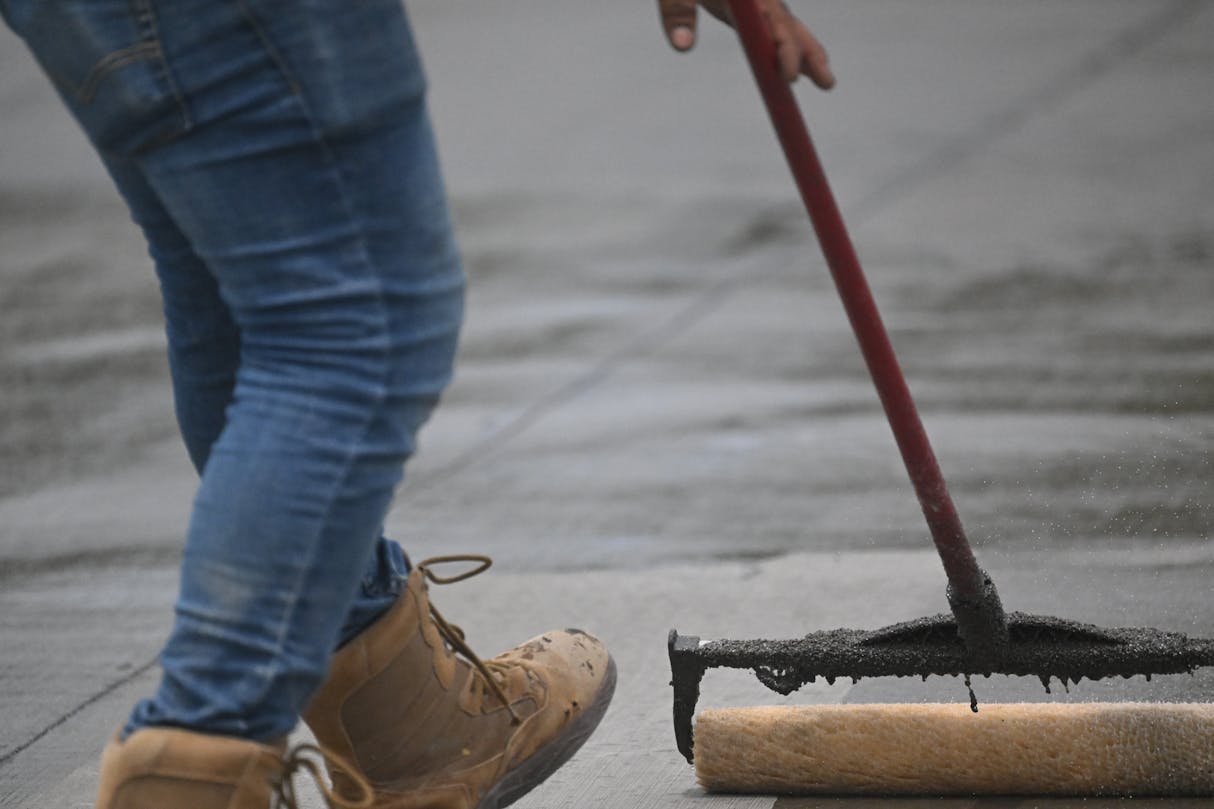
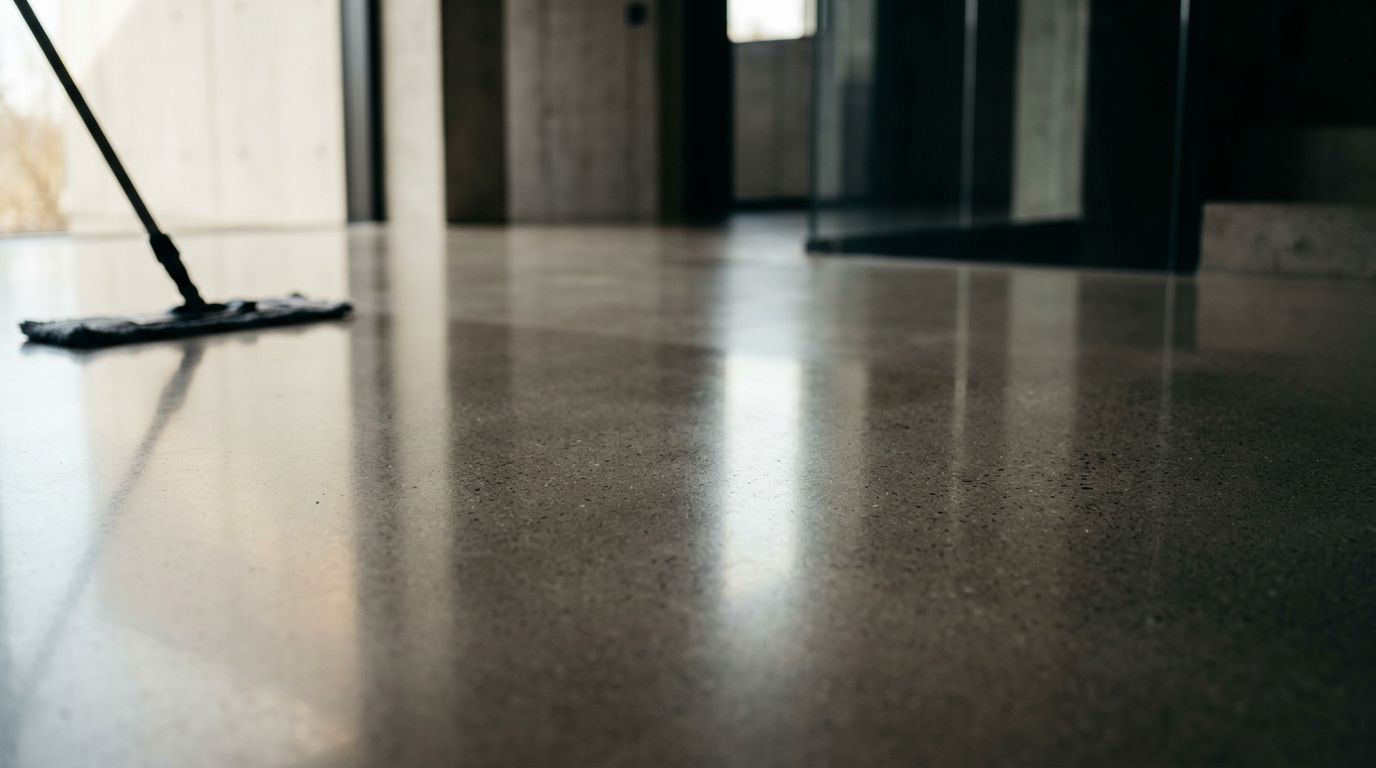
Polished concrete floors have become a favorite for modern spaces due to their exceptional durability and sleek aesthetic. When you clean polished concrete the wrong way, however, that signature high-gloss finish can quickly go flat, leaving behind cloudy film, visible footprints, and a dull appearance. These surfaces are a popular choice for sustainable flooring because they serve as a low maintenance option, provided you use the right techniques to protect the sheen.
Homeowners, facility managers, and commercial cleaners often run into issues with residue for the same reason. While polished concrete is designed for longevity, it does not hide film or buildup. A clear, consistent routine keeps the surface bright and pristine, which starts with understanding exactly why haze shows up in the first place.
Key Takeaways
- Avoid Over-Cleaning: Using too much detergent or failing to measure dilution ratios correctly is the primary cause of hazy, dull, or sticky film buildup on polished concrete.
- Prioritize Dry Maintenance: Always use a microfiber dust mop or soft-bristle broom to remove loose grit and debris before applying liquid cleaners to prevent scratching and muddy mop water.
- Use pH-Neutral Products: Steer clear of acidic, alkaline, wax-based, or soap-heavy cleaners, as these can etch the concrete surface or leave behind residue that attracts grime.
- Master the Wet Pass: Damp mop sparingly with a microfiber pad, frequently changing your water, and perform a final rinse with distilled water if hard water minerals are causing streaks.
Why polished concrete turns hazy after cleaning
Polished concrete floors reflect light exceptionally well, meaning any leftover residue or soap film becomes immediately visible. During the process of concrete grinding and the subsequent application of water-based sealers, the surface becomes incredibly dense and non-porous. Because these polished concrete floors no longer absorb liquids, any soap film, mineral deposits, or dirty water sit on the surface rather than disappearing into the slab. Over time, this film traps dirt and debris, which dulls the floor and makes it look hazy.
The most common cause of this buildup is using too much detergent. A little extra cleaner may seem harmless, but it dries into a thin film that is difficult to remove. The same issue occurs when cleaning crews guess at dilution ratios instead of measuring them. If the product is too strong, the floor dries dull.
Dirty mop water is another primary culprit. Once the water turns gray, you are effectively spreading soil across the floor. String mops often exacerbate this issue because they hold excess moisture and deposit it into edges and joints. Using a microfiber mop or pad leaves significantly less residue behind.
Hard water also contributes to haze. Minerals in tap water can dry on the surface as faint white streaks. In some instances, the problem is not the cleaner itself, but the mineral content left behind after the water evaporates. Promptly cleaning liquid spills is also essential to prevent stains and avoid unnecessary film buildup.
Incompatible products create further trouble. Avoid acidic cleaners, which can cause surface etching, as well as highly alkaline degreasers, wax-based products, and soap-heavy floor cleaners. These products can dull the finish, leave streaks, or build a layer that attracts grime. If your property also features a concrete epoxy coating, a polyaspartic coating, or areas with concrete staining, do not assume one bottle works on every floor. This comparison on choosing between epoxy and polished concrete floors helps show why different surfaces require specific maintenance.
This distinction is especially vital in mixed-use buildings. A garage floor epoxy coating company may suggest a strong cleaner for coated systems, but an epoxy coating for garage floor traffic, a basement concrete coating, an epoxy coating for concrete, or a commercial concrete epoxy coating may all tolerate harsh products that polished concrete cannot handle.
A residue-free routine for polished concrete
A polished floor should look clean because it is clean, not because it has product sitting on top. Establishing a consistent cleaning routine for daily maintenance ensures your floors retain their luster without attracting dirt. The safest approach uses a dry pass first, a high-quality ph-neutral cleaner, and fresh water when the floor needs a final rinse.
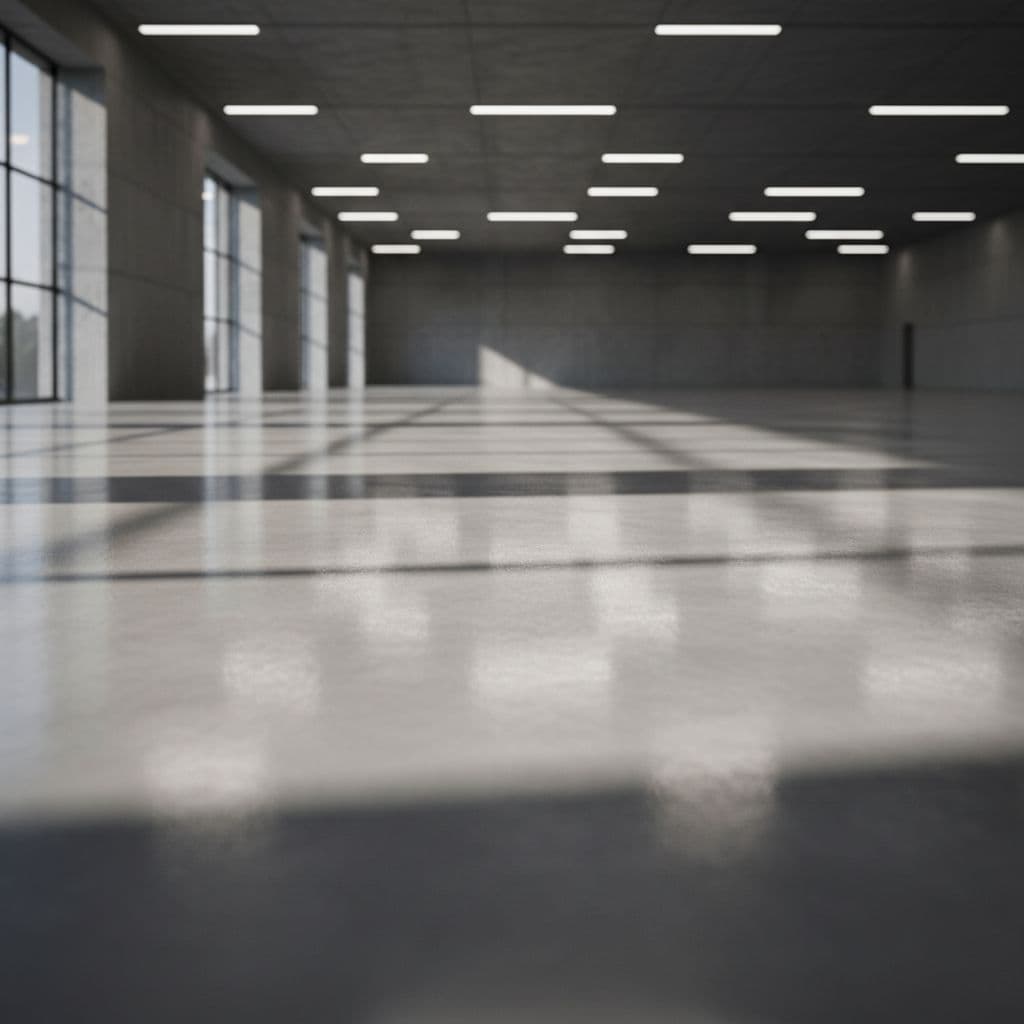
Use this process for residential polished concrete, offices, retail floors, and most common slabs:
- Remove dry grit first. Use a dust mop with a clean microfiber pad or a soft bristle broom to clear away loose debris. Vacuuming with a soft floor attachment is also effective. Sand, dust, and fine grit scratch the surface over time and will muddy your mop water quickly.
- Mix cleaner exactly as labeled. Always use a ph-neutral cleaner specifically formulated for polished concrete and avoid harsh chemicals that can etch or dull the finish over time. Measure your solution carefully, as using too much cleaner does not result in a cleaner floor and often leaves behind a film.
- Damp mop, don’t flood. Using a microfiber mop, lightly wet the pad and work in small sections. Excessive water leaves behind minerals, pushes dirt into surface pores, and significantly slows drying time.
- Change water and pads often. If the water appears dirty, replace it immediately. For a large commercial property, it is best to use an automatic floor scrubber equipped with a nonabrasive pad and a clean recovery system to ensure consistent results.
- Rinse when needed. A rinse is not always required, but it helps if you accidentally used too much cleaner, if the floor feels tacky, or if your building has hard water. Use fresh water, and for stubborn mineral haze, use distilled or soft water for the final pass.
If the floor feels slick or sticky after it dries, residue is still there.
For professional janitorial teams, labeling bottles by surface type saves a lot of grief. The right routine for polished concrete is different from coated floors in service areas or garages. If you are caring for a lower-level slab, this guide on maintaining concrete floors in basements explains why moisture and soil tracking change the cleaning plan.
How to remove haze that’s already there
If haze is already on the floor, start simple. Re-clean a small test area with a properly diluted ph-neutral cleaner and a fresh microfiber pad. Then rinse that area with clean water. If the spot dries clear, the problem was residue, not damage to your polished concrete floors.
When hard water is the issue, use distilled or deionized water for the final pass. That often clears faint white streaks. In a facility, switching the final rinse water can make an immediate difference.
If the haze does not change, look at what was used before. Wax-based products or soap-heavy cleaners can leave a buildup that is incompatible with your existing concrete floor sealer or protective coatings. In that case, a deeper residue-removal clean may be needed. If the floor still looks flat after residue is gone, the guard may be worn, or you might require professional maintenance involving diamond pads to buff out scratches and restore the finish. If the surface remains dull, you may need to look into professional floor restoration services.
For crews handling daily concrete dealing across mixed spaces, especially in areas with high foot traffic, the biggest mistake is treating every gray floor the same.
Mistakes that keep bringing haze back
- Using too much cleaner because the floor looks extra dirty
- Mopping with dirty water or a loaded string mop
- Skipping the dry dust-mop step to remove loose dirt and debris
- Using acidic, highly alkaline, wax, or soap-heavy products
- Guessing at dilution instead of measuring
- Letting cleaner dry on the floor before picking it up
- Using abrasive pads that can dull the sheen
Most haze problems come from habits, not the floor itself. Fix the routine, and the shine usually comes back.
Frequently Asked Questions
Why does my polished concrete floor look cloudy after I clean it?
Cloudiness is almost always caused by soap residue, mineral deposits from hard water, or using a cleaning product that is not pH-neutral. Because polished concrete is non-porous, any leftover detergent dries on the surface as a film rather than being absorbed, which creates that dull, hazy appearance.
Can I use the same cleaner on my polished concrete as I do on my garage epoxy floor?
No, you should not assume cleaners are interchangeable. Polished concrete is sensitive to acidic or highly alkaline products that coated garage floors might tolerate, so always use a dedicated pH-neutral cleaner specifically formulated for polished concrete.
How often should I change my mop water when cleaning concrete floors?
You should change your mop water as soon as it begins to look grey or dirty. Continuing to mop with soiled water simply spreads grit and contaminants across your floor, which will leave behind a dull, streaky finish once the surface dries.
What is the best way to remove existing white streaks or haze?
Start by re-cleaning a small test area using a correctly diluted pH-neutral cleaner and a fresh microfiber pad, followed by a rinse with distilled or deionized water. If the haze disappears, your previous issues were likely caused by hard water minerals or soap residue rather than actual damage to the concrete finish.
Keep the shine clear
A polished slab does not require heavy products to look its best. It simply needs less residue, better tools, and clean water used at the right time.
To ensure your polished concrete floors dry clear, keep the process simple. Always remove debris with a dry dust mop first, clean with a pH-neutral cleaner, use microfiber pads, and replace your water frequently. If you notice a hazy film appearing, address the buildup before assuming the surface is worn out.
Establishing a consistent cleaning routine is the most effective way to protect your investment. Whether you prefer using an automatic floor scrubber for large areas or simple manual tools for smaller spaces, regular care preserves the high-gloss finish. By committing to light daily maintenance, you ensure the longevity and clarity of your concrete surfaces for years to come.