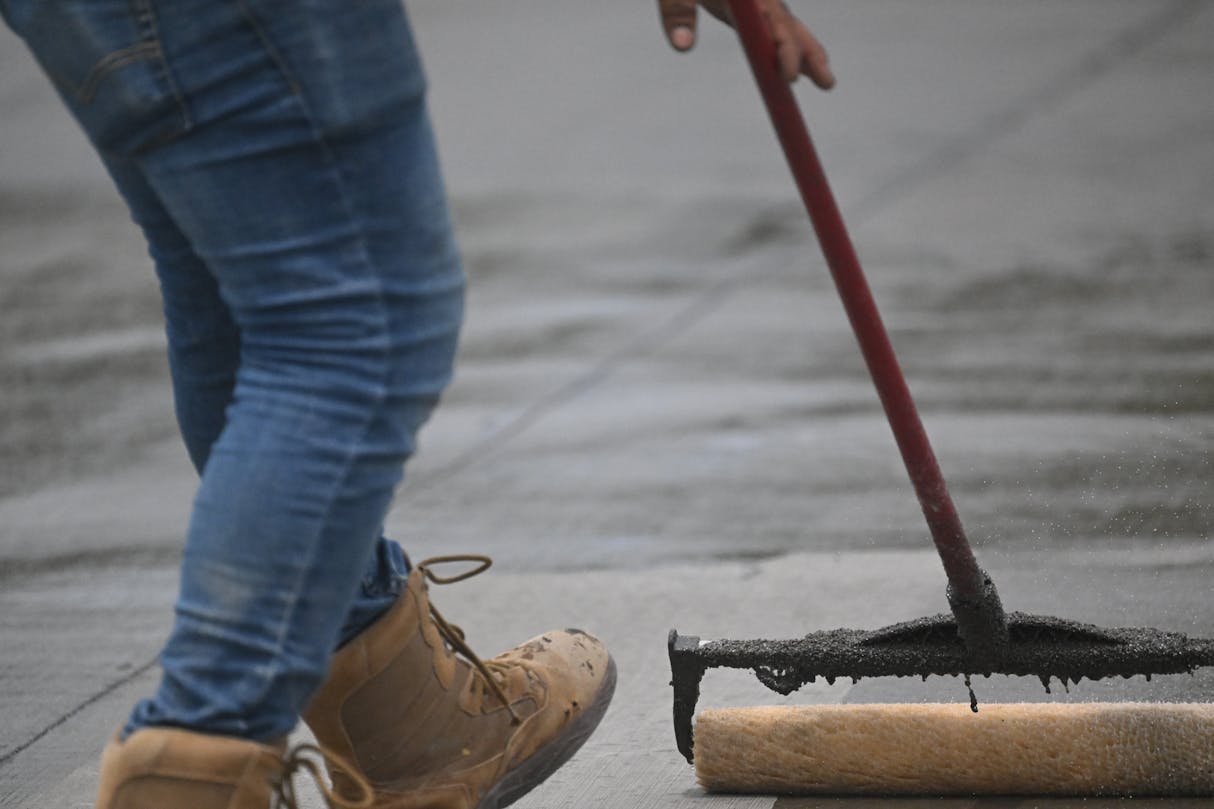
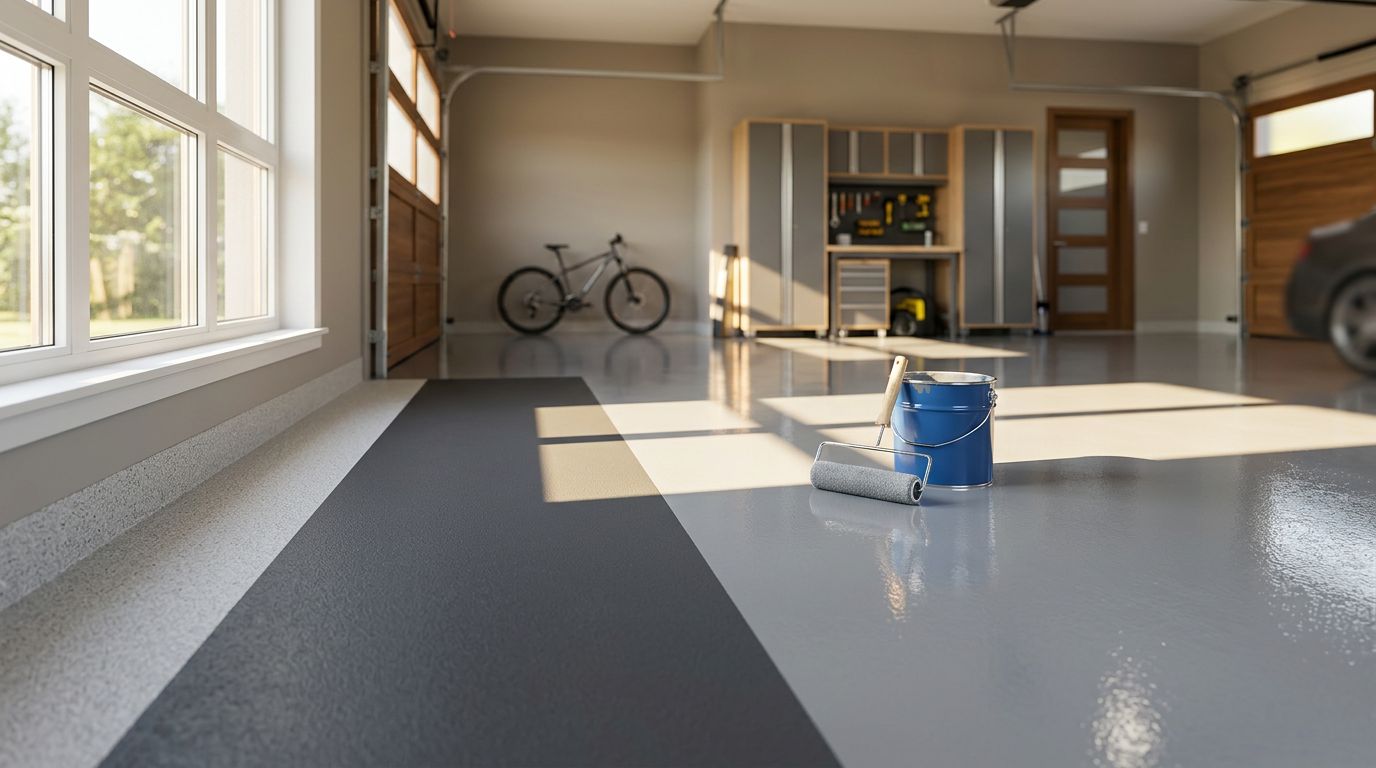
A garage floor takes a beating. Hot tires, road grit, oil drips, lawn chemicals, and wet shoes all hit the same slab. If your concrete is dusty or stained, the right garage floor coating can make the space feel cleaner and easier to live with.
The tricky part is choice. Epoxy sounds simple until you hear about peeling. Polyaspartic sounds perfect until you see the price. And sometimes the best “coating” isn’t a coating at all.
Below is a practical comparison, real-world 2026 costs, and how to pick based on downtime, sunlight, moisture, and how you actually use your garage.
Quick comparison of garage floor coating options (cost, downtime, lifespan)
Use this table to narrow your shortlist. Costs vary by region, floor condition, and system thickness, so treat these as planning numbers, not quotes.
| Option | Best for | Typical downtime | 2026 DIY cost (2-car garage) | 2026 Pro cost | Lifespan (typical) |
|---|---|---|---|---|---|
| Acrylic paint or 1-part “epoxy” paint | Lowest cost, quick cosmetic refresh | 1 day | $50 to $200 | $1 to $3 per sq ft | 1 to 3 years |
| Penetrating sealer (silane/siloxane) | Dust control, easier cleaning, minimal look change | Same day | $75 to $250 | $1.50 to $3 per sq ft | 2 to 5 years |
| Epoxy coating for concrete (2-part) | Value pick for most garages, solid chemical resistance | 2 to 4 days | $200 to $600 | $3 to $7 per sq ft | DIY 2 to 5, pro 7 to 12 years |
| Polyaspartic coating (often polyurea base) | 1-day return to service, better UV stability | 1 day | $400 to $900 (limited kits) | $6 to $12 per sq ft | 12 to 20 years |
| Concrete polishing (densified) | “No peel” finish, low maintenance, natural look | 1 to 2 days | Not common | $3 to $8 per sq ft | 10 to 20+ years |
| Concrete staining + sealer | Decorative, layered color, less “plastic” look | 1 to 2 days | $150 to $400 | $4 to $9 per sq ft | 3 to 7 years (reseal) |
Most homeowners end up choosing between a true epoxy system and a polyaspartic system. After that, polishing and staining are great if you prefer a more natural concrete look.
For a broader industry-style overview, see a 2026 garage floor coating guide and compare it to your budget and downtime.
Epoxy vs polyaspartic: the two workhorse systems homeowners actually buy
Epoxy systems (good value, slower cure, prep-sensitive)
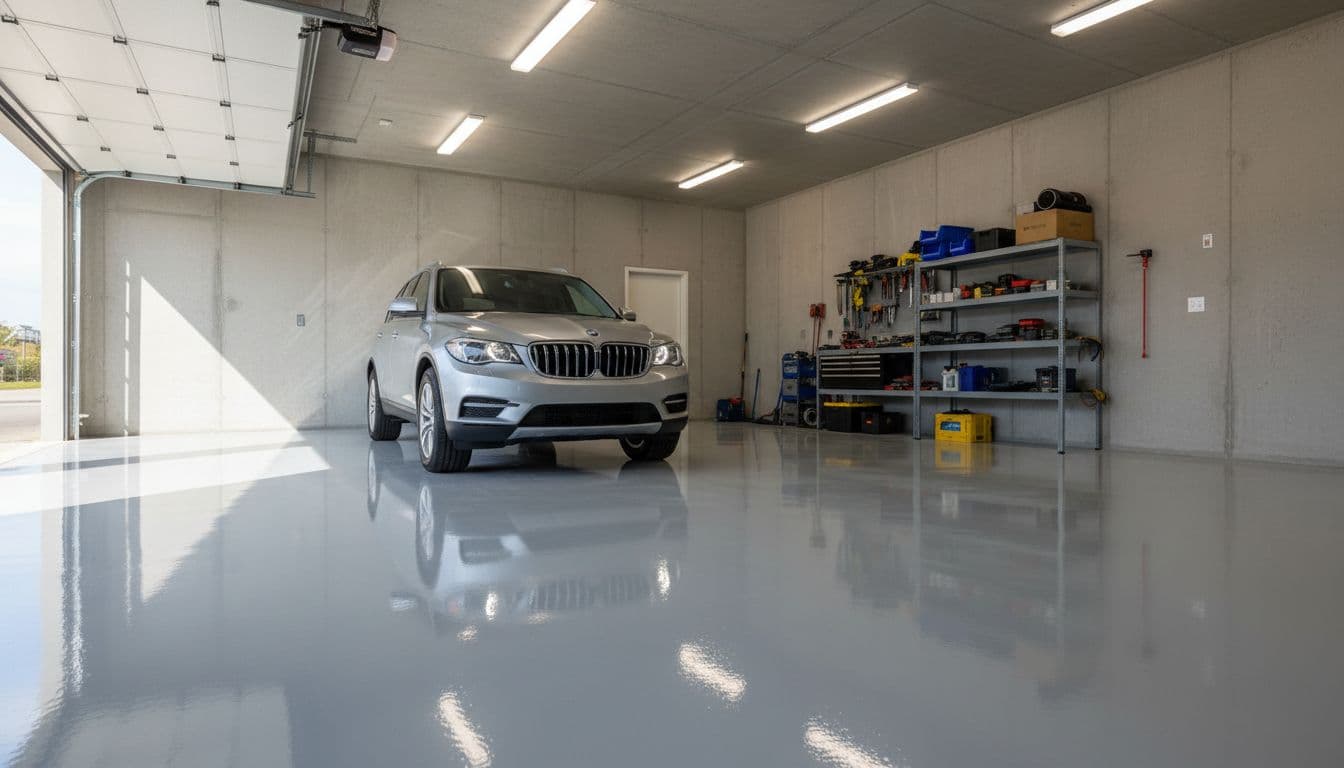
A concrete epoxy coating is the classic “coated garage” look. Done right, it’s glossy, easy to mop, and stands up well to oil and many household chemicals. It’s also a common choice for commercial concrete epoxy coating in light-duty shops and storage areas, mainly because it balances cost and performance.
The tradeoff is cure time and moisture sensitivity. If you want an epoxy coating for garage floor that lasts, the slab usually needs diamond grinding, crack repair, and a plan for vapor. Skipping prep is the fastest path to hot-tire pickup or peeling.
Plain-English pros and cons:
- Pros: strong build, good chemical resistance, lots of color and flake styles, often the best pro value.
- Cons: longer downtime, can amber in sunlight near the door, performance swings a lot by formula and surface prep.
Polyaspartic systems (fast return, UV-friendly, often higher cost)
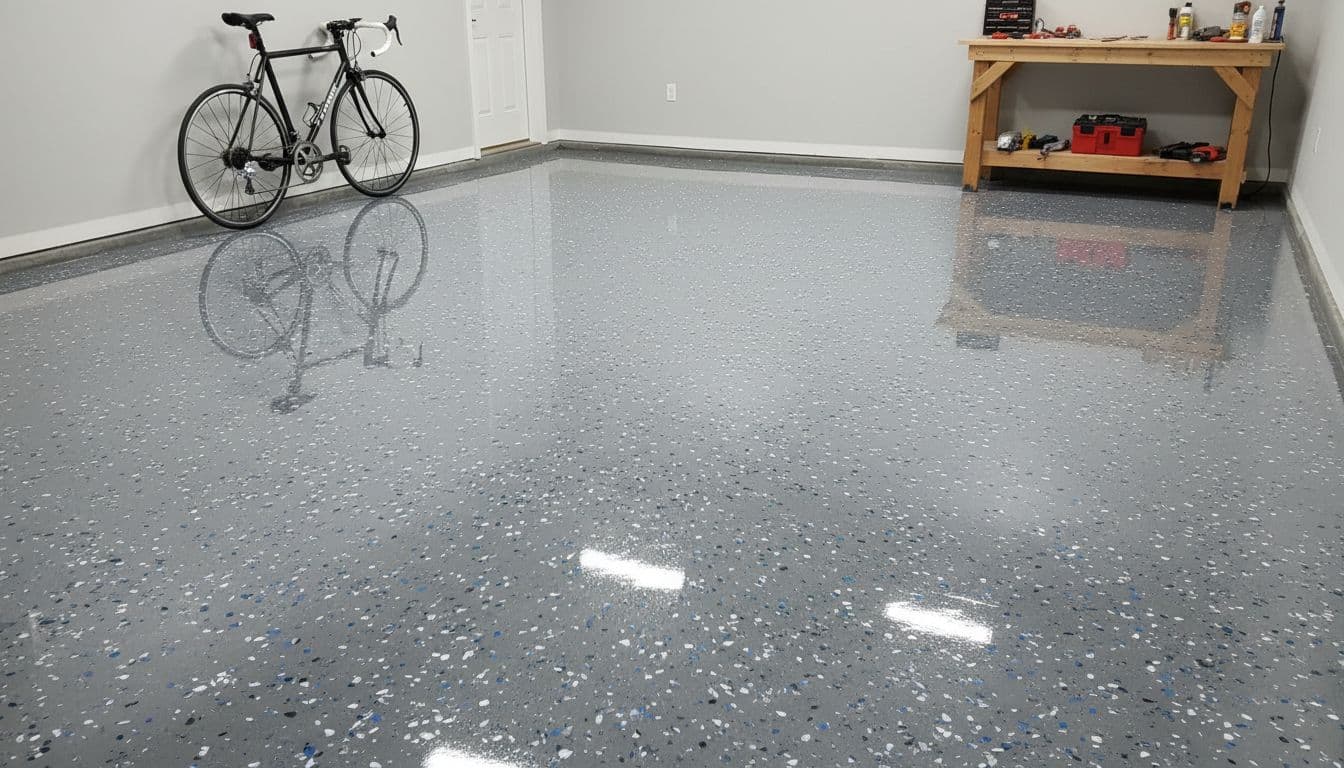
Polyaspartic systems (commonly paired with polyurea primers) are popular when you need a true 1-day install. They also tend to hold color better with sunlight at the garage threshold. If your garage door stays open often, that UV edge matters.
However, “polyaspartic” isn’t one universal product. Solids content, film build, and installer timing all change results. For a quick side-by-side explanation, this polyaspartic vs epoxy comparison is a helpful reference point.
Plain-English pros and cons:
- Pros: fast cure, strong wear resistance, better UV stability, great for busy households.
- Cons: higher price, shorter working time (installer skill matters), strong odor during install is possible depending on VOC level.
Other paths: sealers, paint, polishing, and staining (when you don’t want a “thick coating”)
Not every garage needs a thick film coating. Sometimes the goal is just to stop dust, brighten the space, and make cleanup easier.
Photo by Jae Park
Penetrating sealers soak into the slab and help with dusting and light staining. They don’t create a “plastic layer,” so there’s nothing to peel. On the other hand, they won’t hide blemishes, and they don’t love harsh degreasers.
Paint and 1-part coatings look good for a season or two, especially in low-use garages. If you park daily or turn the tires a lot, expect touch-ups. Think of it like painting a porch floor, it can work, but it’s not a forever finish.
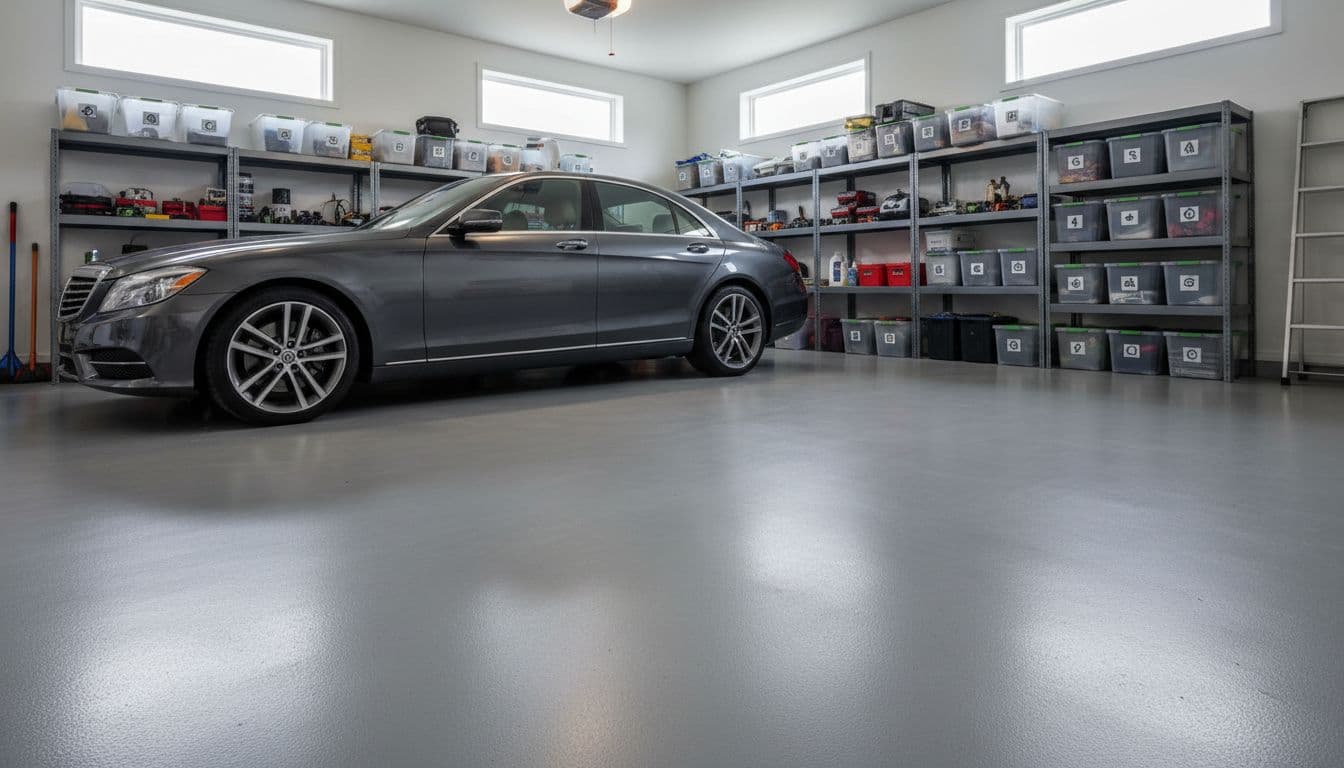
Concrete polishing is different. Instead of adding a peelable layer, the contractor mechanically grinds and densifies the surface. The result looks clean and stays that way with simple cleaning. If you hate the idea of coating failure, polishing is worth a serious look.
Concrete staining works when you want character, not a uniform paint look. Stain plus a compatible sealer gives a layered, natural finish. Plan on resealing on a schedule, especially where tires sit and turn.
These same decision points apply to a basement concrete coating, but moisture risk is higher below grade, so testing matters more.
Choosing the right finish for your garage (and your installer)
Start with what can ruin a job: moisture and prep.
If the slab isn’t prepped well, even a great product can fail early.
Ask how the contractor will prep (diamond grinding is common), how they’ll repair cracks, and whether they’ll test for moisture vapor. This is where “concrete dealing” makes or breaks a floor, meaning how they handle the slab you have, not the slab you wish you had.
Next, match the system to your real constraints:
- Budget: Pro epoxy is often the best cost-per-year. Polyaspartic costs more up front but can fit long-term plans.
- Downtime: Need 1-day return? Polyaspartic usually wins. Epoxy often needs multi-day cure.
- Sunlight: If UV hits the floor by the door, ask about UV stability and topcoat choices.
- Heavy vehicles and turning tires: Favor thicker, pro-installed systems with proper primer and topcoat.
- Chemical spills: Ask what the system resists (oil, brake fluid, gasoline, fertilizer) and what it doesn’t.
- Moisture issues: A coating can blister if vapor pressure is high. In that case, moisture-mitigating primers or non-film options may be safer.
Details that change day-to-day feel:
- Sheen: Gloss looks sharp but shows dust. Satin hides dirt better and still wipes clean.
- Color flakes: Flake broadcasts grit and small stains, and it can improve traction.
- Anti-slip additives: Great for wet climates, but too much can feel rough on bare feet.
- VOC and odor: Low-VOC options exist, but curing still smells. Plan ventilation and ask about re-entry times.
Before hiring any garage floor epoxy coating company, get clear answers to these warranty questions:
- What voids the warranty? (hot tires, moisture, chemicals, cleaning products)
- Is surface prep spelled out in writing?
- Does it cover peeling only, or also wear-through and yellowing?
- Who handles repairs, employees or subcontractors?
- What’s the maintenance plan to keep coverage?
For lifespan expectations across systems, compare notes with this garage floor coating lifespan guide, then weigh it against your use and budget.
Conclusion
A garage floor finish is like a good jacket. The “best” one depends on weather, wear, and how often you’ll use it. Start by deciding whether you want a film-forming garage floor coating (epoxy or polyaspartic) or a more natural approach (polishing or stain and seal). Then focus on prep, moisture, and a clear warranty, because those details decide whether the floor looks great in year one or still looks great in year ten.