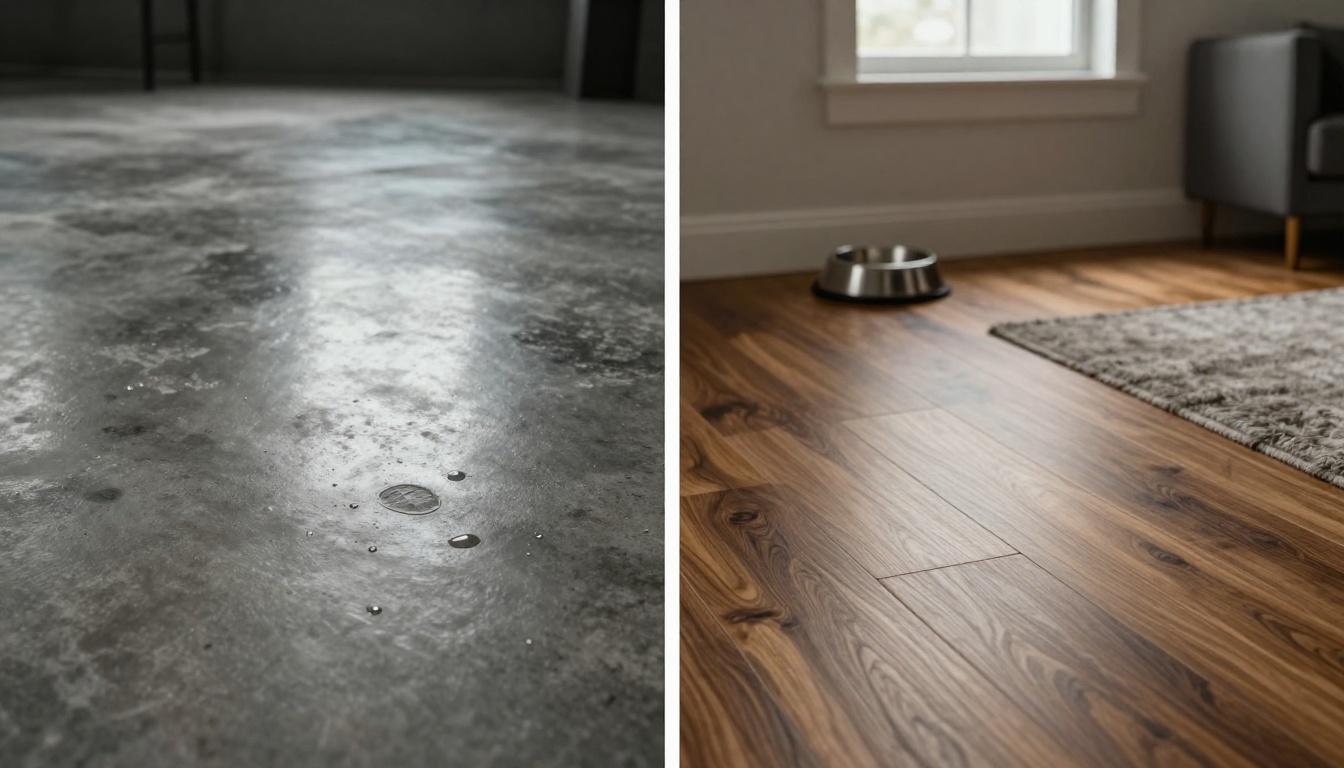
Basements and first floors live a hard life. They see wet boots, dropped toys, pet bowls, and the occasional mystery puddle. They also take the brunt of moving day, treadmill days, and holiday crowd days.
That’s why the polished concrete vs LVP decision matters more downstairs than it does in a quiet bedroom. Both can look great. Both can perform well. But they fail in different ways, and the wrong pick can be expensive to undo.
This guide compares polished concrete and luxury vinyl plank (LVP) with a simple focus: durability over time, comfort underfoot, and cleaning in real homes. Moisture and slab condition are the deal breakers, and the “best” floor depends on how you actually use the space.
How basements and first floors stress your flooring (and why it matters)
Basements don’t behave like upstairs rooms because they touch the ground on multiple sides. Even if the space feels dry, the slab can still move moisture vapor. Humidity swings also hit basements harder, especially in spring and summer. Add a dehumidifier that cycles on and off, and the air can change fast.
First floors have different stress, but it’s still serious. Most homes funnel traffic through the kitchen, mudroom, hall, and living area. Dirt and grit get tracked in daily. Chairs scrape. Pets run and pivot. Kids drag bins like they’re moving furniture for a living.
It also helps to be clear about what you’re buying.
Polished concrete is not a “floor covering.” It’s the concrete slab itself, ground smooth and polished, often with a densifier and a protective guard or sealer. LVP is a floating vinyl plank system. It sits over the slab (or subfloor) with underlayment, using click-lock seams.
That difference changes everything. In a basement, a flooring mistake can trap moisture. It can also hide problems until they smell bad.
Moisture moves through concrete, even when it looks dry
Concrete is porous. Water can travel through it as vapor, and sometimes as liquid if there’s pressure from outside soil. A slab can feel dry to your hand while still releasing enough vapor to cause trouble under certain floors.
That’s why “dry to the touch” doesn’t mean “dry enough for flooring.” LVP can be labeled “waterproof,” yet moisture vapor can still collect under a floating floor. Coatings can also fail if moisture pushes from below.
Watch for warning signs that often show up downstairs:
- Musty odors that return after you clean
- White, chalky residue on the slab (efflorescence)
- Damp spots that appear after heavy rain
- Baseboards that curl, swell, or separate
Before you commit to LVP or any coating, moisture testing is worth the time. It’s like checking the roof before you remodel the attic. You want the truth before you build on top of it.
Traffic patterns downstairs: grit, furniture, and rolling loads
Grit is tiny sandpaper. It gets under shoes, pet paws, and stroller wheels. Over time, it scratches glossy surfaces and dulls softer ones. Meanwhile, chair legs and couch feet create point loads, meaning lots of weight in a small spot.
Basements also tend to change roles. Today it’s a playroom. Next year it’s a home gym. After that it’s a workshop. Those uses bring heavy equipment, rolling tool chests, and sharp impacts from dropped weights.
First floors see the same stress near entry doors and kitchens. Water bowls spill. Ice melts off boots. A fridge might get nudged during cleaning, and those small moves can leave big marks on the wrong material.
Durability showdown: which one holds up better over time?
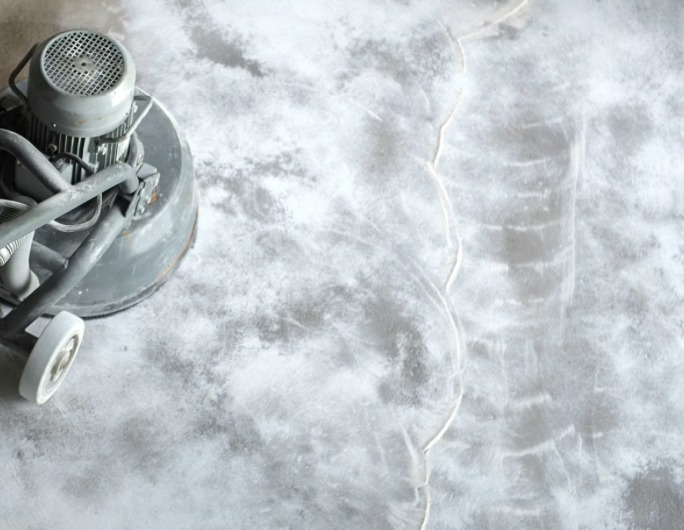
 Photo by Jan van der Wolf
Durability isn’t just “will it scratch.” It’s also, “what happens when something goes wrong?” Real homes deal with spills, leaks, dragging furniture, and moisture that shows up at the worst time.
Here’s how these floors usually fail:
| Real-life issue | Polished concrete | LVP (floating) |
|---|---|---|
| Scratches from grit | Possible, more visible in high gloss | Possible, depends on wear layer |
| Dents from heavy items | Unlikely | More likely (especially with thin cores) |
| Water from leaks | Often cleanable and re-protectable | Can trap water under planks |
| Long-term wear | Can be refreshed with guard/burnish | Wear layer can thin, planks may need replacement |
In many basements, polished concrete wins on “survival” because there’s less to swell, separate, or grow mold underneath. On the other hand, LVP can hold up well on a dry, flat slab, especially in a family room where comfort matters most.
Polished concrete durability: hard surface, fewer layers to fail
Polished concrete is basically one big piece, because it is the slab. That means no plank seams to open and no underlayment to stay damp. It also doesn’t swell from water the way wood-based products can.
A densifier hardens the surface and helps reduce dusting. With proper finishing, polished concrete handles abrasion well, which matters in entry paths and high-traffic zones. If you like a modern look, it can also make a basement feel larger because it reflects light.
Still, it’s not invincible. A high-gloss finish can show fine scratches, especially where grit gets tracked in. Concrete can also stain if you leave spills too long, or if the floor lacks the right guard or sealer. Hairline cracks may stay visible, since you’re looking at the slab itself. Many homeowners accept that as character, but it’s a real consideration.
LVP durability: tough wear layer, but water and seams are the weak spots
LVP is popular because it’s easy to like. It’s warmer underfoot than concrete, it hides small crumbs and scuffs, and it comes in styles that mimic wood well.
Durability depends a lot on the wear layer and the core. A thicker wear layer usually resists scratches better, but grit can still mark it over time. Heavy furniture can dent LVP, especially under small feet or casters. Protective pads help, but they don’t fix a soft core.
Seams are another weak point. Click-lock joints can separate if the slab isn’t flat or if the floor sees temperature swings. Once seams open, dirt and moisture find a way in.
Basements add a bigger risk: moisture trapped under the floating floor. Even when planks are marketed as “waterproof,” that doesn’t mean your basement system is waterproof. Water can still sit under the underlayment after a small leak. That can lead to odor, mold, or a floor that needs to come up to dry.
What happens during a leak or flood, and which floor is easier to save
Picture a simple event: a water heater leaks overnight, or a washer hose drips behind the machine. Water spreads quietly, then finds the lowest spot.
With polished concrete, you usually focus on cleanup and drying. Once the slab dries, you may reapply guard in the affected area if needed. Some stains might require spot treatment, but the floor often survives.
With LVP, the planks may look fine on top while water sits underneath. Drying the surface doesn’t solve the hidden moisture. In many cases, you end up pulling planks and underlayment to dry the slab. If the click-lock edges swell or deform, the floor may not go back together.
If you find water, act fast:
- Stop the source: Shut off the valve, kill power if needed.
- Dry quickly: Fans plus a dehumidifier, right away.
- Document damage: Photos help with insurance and warranties.
- Don’t trap moisture: Avoid covering wet areas with rugs or plastic.
Comfort and sound: what it feels like to live on each floor
Comfort can be the tie-breaker. People don’t just look at floors, they stand on them while cooking, folding laundry, or cheering at a basement movie night.
Concrete feels firm because it is firm. LVP feels softer because it has flex and often has a thin pad under it. Neither is “right” for every family, so it helps to decide what bothers you most: cold feet, leg fatigue, or noise.
Warmth underfoot: concrete feels cooler, LVP feels softer
Concrete often feels cold even when the room is heated. That’s thermal mass. The slab holds temperature and pulls heat from your feet faster than other materials. In a basement, that cool feel can be a perk in summer, but it can be unpleasant in winter.
Simple comfort fixes for polished concrete work well:
Rugs in seating zones help a lot. Runners in hallways cut down the cold shock. Many homeowners also keep slippers at the basement door, like a “shoe station” for warm feet.
LVP feels warmer because it’s less dense and doesn’t conduct heat as fast. Underlayment can add a bit more cushion, but thicker isn’t always better in a basement. If moisture is present, the wrong pad can hold water and slow drying. Also, a soft underlayment can make click-lock seams flex, which can shorten the floor’s life.
Noise and echo: basements can get loud fast
A polished concrete basement can echo, especially with bare walls and open ceilings. Sound bounces like a handball in a small court. That matters if your basement is a home office, music room, or TV space.
LVP tends to absorb a bit more sound than concrete, but it can add its own noise. On an uneven slab, a floating floor can “click” underfoot. It can also feel hollow, which some people hate.
You can improve sound either way. Area rugs, soft furniture, and curtains help. If you finish the basement, insulation and acoustic panels can reduce echo a lot. For LVP, the biggest sound upgrade is often slab prep, because a flatter base means fewer voids and fewer noises.
Cleaning and maintenance: what you will actually do week to week
Most homeowners want one thing: a floor that doesn’t punish you for living on it. Basements and first floors need simple routines, not special rituals.
The good news is that both polished concrete and LVP can stay clean with basic tools. The bad news is that the wrong cleaner can shorten the life of either one.
Cleaning polished concrete without dulling it
Polished concrete is easy to keep looking good when you treat it like a finished surface, not raw garage concrete.
A simple routine works:
Dry dust mop often, because grit causes wear. Then damp mop with a pH-neutral cleaner and clean water. Use a microfiber pad, not a string mop that dumps water in corners.
Avoid common mistakes. Vinegar and other acidic cleaners can dull or etch protective layers over time. Harsh degreasers can also break down guards and leave the floor looking patchy. Too much water is another issue, especially if it seeps into saw cuts or cracks and carries dirt back out.
For long-term care, some floors need periodic burnishing or re-guarding, depending on traffic and the sheen you want. That refresh is usually faster than a full replacement, and it doesn’t involve ripping out planks.
Spill habits matter, too. If you wipe pet accidents and food spills quickly, staining risk drops a lot. Entry mats also pull their weight, because they catch grit before it becomes a scratch.
Cleaning LVP without damaging seams or leaving haze
LVP cleaning is straightforward, but seams change the rules. You want a clean surface without pushing water into joints.
Start with sweeping or vacuuming using a hard-floor setting. Next, use a manufacturer-approved cleaner with a well-wrung mop. Less water is better. If you see standing water, you used too much.
A few products cause problems. Steam mops can force heat and moisture into seams, and they can void warranties. Waxy “shine” cleaners often leave residue that turns the floor dull and slippery over time. Strong solvents can soften the surface, especially if you scrub hard.
LVP has one maintenance advantage: you can sometimes replace a damaged plank. That’s great after a deep gouge. Still, matching can be tough years later if the style gets discontinued or fades slightly. If you want LVP in a basement, buying an extra box and storing it flat can save stress later.
Conclusion: choosing the right basement or first-floor floor
If moisture risk is high, or you want the most flood-tolerant option, polished concrete usually wins because there’s less to trap water. If you want a softer feel and warmer comfort, LVP can work well when moisture stays controlled and the slab is flat.
Before you decide, run through a quick reality check: moisture test results, how the room will be used, your comfort priorities, and how you like to clean. Get the slab evaluated if you’re unsure, because the best-looking floor won’t help if the base underneath can’t support it.
Comments are closed