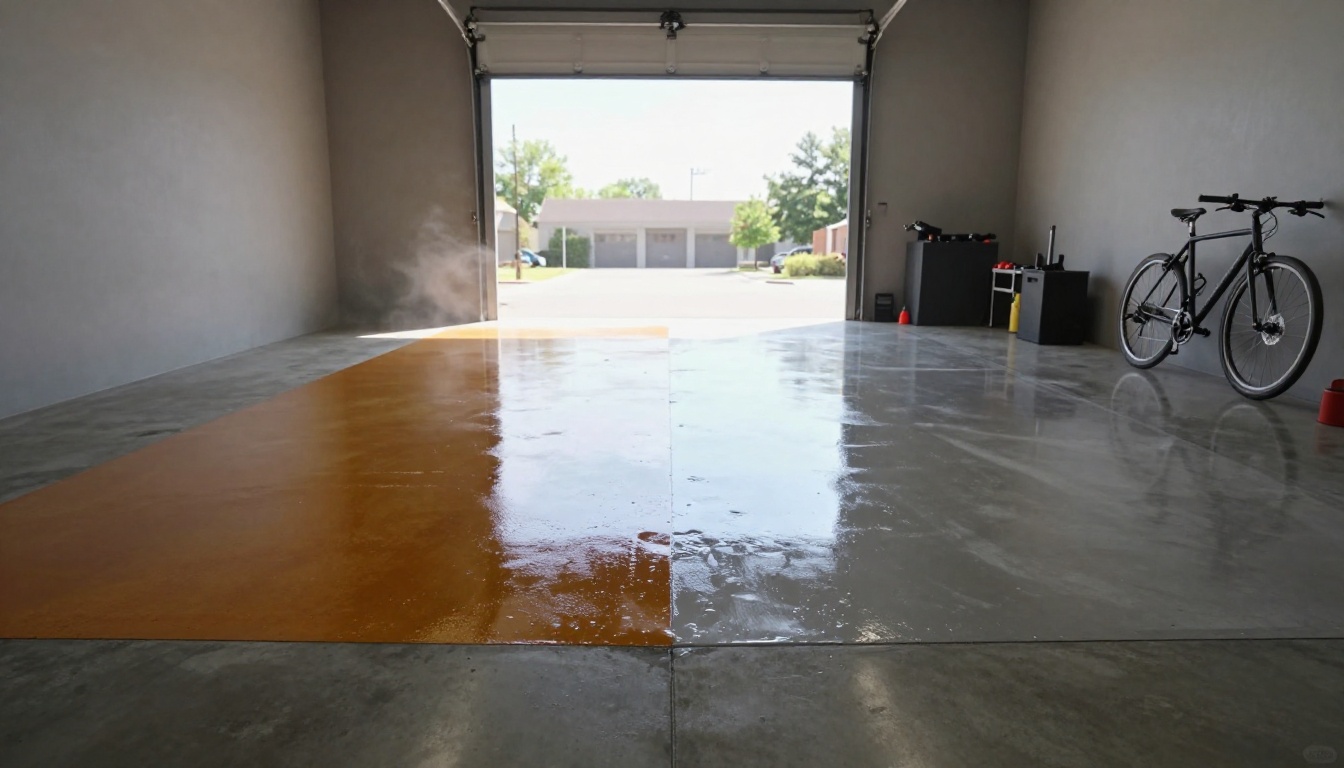

Atlanta summers don’t play nice with garage floors. The air gets thick and humid, the sun pours in when the door’s open, and every drive home brings tire heat onto the slab. If your garage is also your gym, workshop, or hangout spot, the floor takes even more abuse.
That’s why the Epoxy coating vs polyaspartic question matters here more than it might in a mild climate. Both can look great. Both can protect concrete. But hot weather, UV exposure near the door, and moisture moving through concrete can tilt the outcome.
This guide focuses on three things most homeowners care about: how each system behaves in summer, how fast you can use the garage again, and what the total cost looks like over time (including repairs and re-coats).
How Atlanta heat and humidity test garage floor coatings
Concrete seems solid and “done,” but it still breathes. In Atlanta, that matters because humidity swings and summer storms can push moisture up through the slab. Add high surface temps from sun and hot tires, and a garage coating has a tougher job than most interior finishes.
Homeowners usually notice problems in simple, frustrating ways: bubbles that weren’t there last month, peeling near a corner, a patch that looks darker, or a glossy floor that turns dull in the traffic lane. Those issues can show up with epoxy or polyaspartic if the slab wasn’t tested and prepped for local conditions.
Another Atlanta factor is heat soak. On a July afternoon, the first few feet inside the door can get much warmer than the back of the garage. That uneven temperature can stress a coating, especially if the concrete already has moisture pressure underneath.
Hot slabs, moisture vapor, and why coatings can bubble or peel
Concrete can hold water for a long time, even when it looks dry. When the air outside is humid, or after heavy rain, moisture vapor can move upward through the slab. If a coating is too “tight” for the slab conditions, pressure can build and show up as bubbling, pinholes, or peeling.
A few real-world signs you should take seriously before coating:
- Dark, damp-looking areas that come and go
- Damp corners near exterior walls
- White powdery residue on the concrete (efflorescence)
- An old paint or coating that peeled in sheets
No coating choice fixes a moisture problem by itself. Moisture testing and surface prep are the make-or-break steps. A contractor should test the slab, fix cracks and spalls, and mechanically grind the surface so the coating can bond properly. If someone wants to “acid wash and roll it on,” that’s when summer humidity tends to expose the shortcut.
Sunlight at the garage door, UV fade, and yellowing over time
The sun hits one part of your garage floor harder than the rest: the area near the door. That strip often gets direct light for hours, especially in front-facing garages. Over time, UV can change the look of certain coatings, even if the floor is still bonded.
Many epoxy coatings can amber or yellow with UV exposure. It doesn’t always look “yellow,” either. A light gray can start to look warmer near the entrance, or a clear coat can shift the gloss and make flakes look slightly tinted.
Polyaspartic topcoats are commonly chosen because they tend to stay clearer and more color-stable in sun-exposed zones. If you care about keeping a bright, clean tone at the door line, UV performance should be part of the decision, not an afterthought.
Epoxy vs polyaspartic: durability, look, and summer performance
Both systems can protect Atlanta garage slabs from hot tires, oil drips, road salts, and daily wear. The better question is what you want the floor to do for you, and how much risk you’re willing to take on cure time, UV exposure, and install conditions.
Here’s a quick side-by-side snapshot to frame the decision:
| Factor | Epoxy systems | Polyaspartic systems |
|---|---|---|
| Return to service | Slower cure, often needs more downtime | Faster cure, quicker return |
| UV at garage door | Can amber over time | Typically better UV stability |
| Look options | Great for flakes, metallic styles, thicker build | Very clear topcoats, high-gloss looks |
| Heat and hot tires | Can perform well when designed right | Often handles heat swings well |
| Installer timing | More working time | Fast set, skill matters more |
| Typical price feel | Often lower | Often higher |
Where epoxy shines: strong build, great design options, budget-friendly value
Epoxy is popular for a reason. It can create a thicker, solid base layer that hides small surface flaws better than a thin paint-like coating. With the right prep, epoxy bonds well and gives you lots of style choices, including full flake floors and metallic looks.
For homeowners who want a major visual upgrade without paying top dollar, epoxy can be a smart value, especially when the system includes a protective topcoat chosen for the garage’s conditions.
Atlanta tradeoffs are mostly about time and exposure. Epoxy usually needs more cure time, which can be a pain if your garage has to be back in service quickly. Some epoxy products also don’t love UV, so a sunny garage door zone can shift color over time. And if the coating system isn’t designed to resist heat, hot tires can soften the surface and leave marks or cause “pickup.” That’s not inevitable, but it’s a risk when corners get cut on product choice or cure time.
Where polyaspartic wins: fast cure, better UV resistance, and strong scratch resistance
Polyaspartic coatings have become a go-to option for Atlanta garages because they match how people actually use the space. They often cure fast, which means less time parking in the driveway and less dust landing on a tacky surface.
A big advantage is the clear, UV-stable topcoat many homeowners want, especially for lighter colors and flake blends near the garage door. Polyaspartic systems also tend to hold gloss well and resist common garage messes like oil drips, fertilizer dust, and road grime.
There are tradeoffs. Polyaspartic materials can be less forgiving to install because they set quickly. That makes installer skill and planning a bigger deal, especially in warm weather. And cost is usually higher upfront. Still, many homeowners like paying more once if it means less downtime and fewer appearance issues at the sun line.
One more point: polyaspartic isn’t a magic shield against moisture. If vapor pressure is high, the slab still needs the right prep and, in some cases, a moisture-tolerant primer designed for that condition.
Which should you choose for your Atlanta garage, plus questions to ask any installer
If you only remember one thing, make it this: the “best” coating is the one that fits your garage’s sun, moisture risk, and schedule, and is installed with the right prep.
Many Atlanta homeowners end up choosing a hybrid approach, an epoxy base for build and appearance, plus a polyaspartic topcoat for UV stability and faster return to service. It’s common because it balances looks, performance, and summer realities.
A simple decision guide based on your timeline, sunlight, and how you use the garage
- You need to park inside again fast: Choose polyaspartic, since it often returns to service quicker.
- Your garage gets strong sun at the door: Choose polyaspartic (or an epoxy base with a polyaspartic topcoat) to help reduce yellowing and color shift.
- You want the best value with lots of design options: Choose epoxy as a base system, especially for full flake or decorative looks.
- You park heavier vehicles or drive in and out often: Choose a system with a heat-resistant topcoat, polyaspartic is a common pick for hot-tire performance.
- Your garage is a gym or workshop: Either can work, but prioritize scratch resistance and a finish that’s easy to clean, polyaspartic topcoats are often a good fit.
- You’ve had peeling paint or damp spots before: Don’t choose based on brand or price first, insist on moisture testing and a written prep plan.
Before you sign, ask a few direct questions. Clear answers usually signal a contractor who knows the local challenges.
- What moisture test will you use, and what happens if it fails?
- How will you prep the slab (grinding method, crack repair, edge work)?
- How many coats are included, and what type of topcoat protects from UV?
- What’s the cure time before foot traffic and before parking?
- What warranty details are in writing, and what voids it (hot tires, chemicals, moisture)?
Conclusion
Epoxy and polyaspartic can both perform well in Atlanta garages, as long as the slab is tested, the surface is properly ground, and the system matches your sun and heat exposure. Polyaspartic often has the edge for fast return to service and UV stability near the door. Epoxy can still be a strong value and a great-looking base, especially when paired with the right topcoat.
Before choosing, get a moisture test and a written scope that spells out prep, coats, and cure times. Your garage floor shouldn’t be a summer experiment, it should be a finish you can count on.
No responses yet