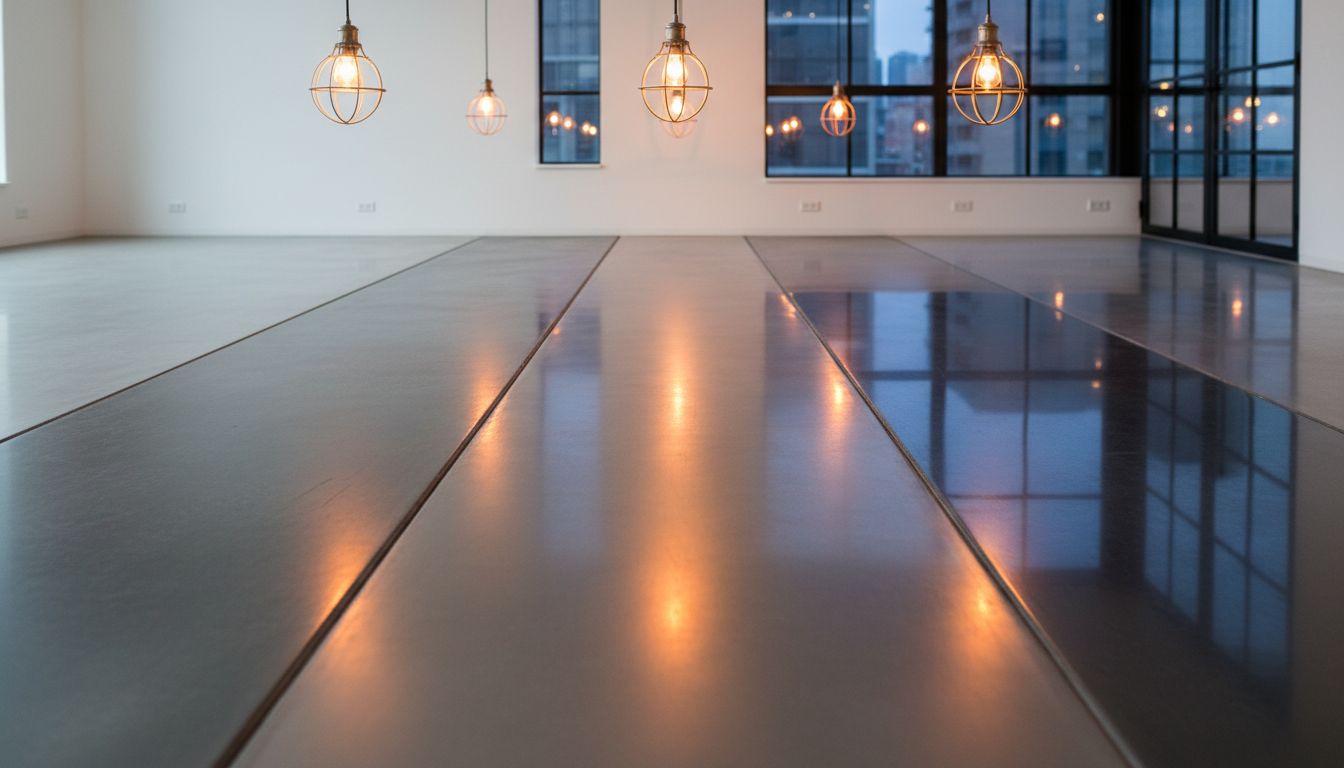

Picking a concrete finish sheen sounds like an appearance choice, until you live with it. The same floor can look spotless at noon, then show every smudge at night. That’s not bad luck, it’s sheen meeting light.
This guide breaks down what matte, satin, and gloss finishes really do on concrete. You’ll see what each sheen highlights, what it downplays, and what maintenance actually looks like in a garage, basement, or facility.
Concrete finish sheen explained (and why it’s not “just shiny or not”)
Sheen is about how a surface reflects light. On concrete, that reflection comes from a mix of surface texture and the protective layer on top. That top layer might be a sealer, a concrete epoxy coating, or another film-forming product. It can also come from concrete polishing, where mechanical grinding and polishing densify the surface and raise clarity.
A key detail: two floors can both be “gloss,” yet look different. One might be polished concrete with a guard, while another is an epoxy coating for concrete with a high-sheen topcoat. They’ll reflect light differently, and they won’t wear the same way. If you want a broader view of finish ranges, this polished concrete floors guide is a helpful reference.
Sheen also interacts with color and pattern. Concrete staining (especially darker tones) can make reflections look stronger, even at the same gloss level. Flake systems can visually “busy up” the floor, which changes what your eye notices first.
One misconception causes a lot of regret: gloss isn’t automatically more durable. Durability depends more on prep, thickness, chemistry, and how well it bonds. Another common myth is the opposite: matte isn’t maintenance-free. Matte hides glare, but it can still show stains and traffic shading.
For a deeper breakdown of how sealers and coatings relate to shine, see this high-gloss vs satin and matte discussion.
Matte vs satin vs gloss finishes on concrete: what each shows and hides
Matte, satin, and gloss can all be achieved with polished concrete, sealers, or coatings. What changes is what your eyes pick up first.
Matte gives diffuse reflection. You’ll see less glare and fewer swirl highlights. However, matte can show stains sooner because there’s less reflected light to “wash out” discoloration. In kitchens, basements, and shops, matte often looks calm, but spills can stand out.
Satin sits in the middle. It softens reflections but still looks “finished.” Many homeowners choose satin for an epoxy coating for garage floor because it balances cleanability with realistic day-to-day hiding power (light dust and fine scratches don’t jump out as much).
Gloss reflects strongly, so it can make a space feel brighter. On the other hand, gloss will spotlight mop marks, fine scratches, and uneven texture if prep or application varies. Gloss also makes traffic lanes easier to see in long corridors.
Here’s a quick side-by-side to make the tradeoffs clear:
| Concrete finish sheen | What it tends to show | What it tends to hide | Maintenance feel | Common good fit |
|---|---|---|---|---|
| Matte | Dark stains, oil spots, dull traffic shading | Swirl marks, light scratches, glare | Easier to “look clean,” still needs routine cleaning | Basements, offices, low-glare interiors |
| Satin | Some streaks if cleaner is wrong, moderate staining | Everyday dust, light scratches, minor footprints | Most forgiving overall | Garages, retail, most homes |
| Gloss | Swirls, fine scratches, streaks, tire scuffs | Some stains (reflection distracts), color variation | Most “showroom,” most wipe-downs | Showrooms, lobbies, bright commercial spaces |
If you hate seeing “everything” after cleaning, gloss is usually the wrong battle to pick. Satin is the safest bet for most spaces.
Choosing the right sheen for garages, basements, and commercial floors
How lighting, floor color, and traffic patterns change what you notice
Lighting is the silent judge of sheen. Low-angle sunlight from windows makes reflections longer and stronger, so gloss looks glossier and satin can start to “pop.” Under flat, overhead lighting, even gloss can look calmer.
Color matters too. Dark gray or espresso-stained floors tend to show dust and fine debris, no matter the sheen. Light gray can hide dust better, but it may highlight tire marks. If your floor has a flake broadcast, the pattern can disguise scratches across all sheen levels.
Traffic patterns decide where the “story” shows up. In a facility, the concrete dealing with pallet jacks or forklifts will polish itself in lanes over time, which can create uneven sheen. In garages, hot tires and turning wheels create scuffs that stand out more on gloss.
A simple decision tree for choosing sheen
- If glare bothers people (big windows, bright LEDs, offices), choose matte or satin.
- If you want the easiest “always looks good” balance, choose satin.
- If the space is meant to feel upscale and bright (lobbies, showrooms), choose gloss, but plan for more frequent detailing.
- If spills and oil drips are common (mechanical rooms, some garages), lean satin, and pair it with the right system (often an epoxy coating for concrete or polyaspartic coating).
- If you manage a warehouse or production area, focus first on performance specs and prep, then pick sheen. A commercial concrete epoxy coating can be matte, satin, or gloss, but the right build and texture matter more.
Cleaning do’s and don’ts (so your sheen stays consistent)
The biggest “sheen killer” isn’t foot traffic. It’s the wrong cleaner and tool.
A good baseline is the approach in this concrete floor cleaning guide, then match it to your coating or polished system.
- Do use pH-neutral cleaners for routine mopping. They reduce haze and streaking. This matters most on satin and gloss.
- Do use microfiber pads and keep them clean. Dirty pads drag grit, which creates micro-scratches that gloss will spotlight.
- Don’t use harsh degreasers every time. Save them for real oil contamination, and rinse well if the product requires it. Repeated strong degreasers can dull some finishes.
- Don’t “soap up” the floor. Too much cleaner leaves residue, which reads like dull patches or streaks.
- Do protect entrances with walk-off mats. Less grit means fewer scratch marks across any sheen.
For a basement concrete coating, prioritize moisture control and a cleaner that won’t leave residue. For an epoxy coating for garage floor, ask your installer what’s approved for tire plasticizers and oil cleanup. When hiring a garage floor epoxy coating company, request the exact care instructions in writing, and ask how to spot early wear before it turns into peeling.
Quick FAQ
Will matte stain more?
Matte doesn’t attract stains, but it can show stains sooner because it reflects less light. Good spill cleanup still matters.
Can I change sheen later?
Often, yes. Many floors can shift sheen with a new topcoat or a refreshed guard. Polished concrete can also be re-polished. The right path depends on the current system and surface condition.
Does gloss increase slip risk?
Gloss can feel slick when wet, especially with smooth coatings. Slip resistance depends on texture, additives, and contaminants. If slip risk is a concern, discuss texture options rather than assuming satin is “safe.”
What about outdoor UV exposure?
UV can discolor some coatings outdoors. If your slab sees sunlight, ask about UV-stable options, which is one reason many installers steer exterior work toward a polyaspartic coating or other UV-resistant systems.
Conclusion
The best concrete finish sheen is the one that fits your lighting, traffic, and tolerance for visible marks. Matte lowers glare but won’t erase stains. Gloss looks sharp but demands disciplined cleaning. Satin stays the most forgiving for most homes and many commercial spaces.
Before you commit, picture the floor on a sunny afternoon and after a busy day. That mental test often picks the right sheen faster than any brochure.
Comments are closed